

What’s happening in the night sky above you ✨ and how to see it 👀 ☀️ Eclipses 🌙 Moon 🛰️ ISS ☄️ Comets
Joined April 2023
- Tweets7.9K
- Following418
- Followers530
- Likes16.4K




Pinned Tweet
To find out what’s happening in sky above your home right now, go to skycalpro.com

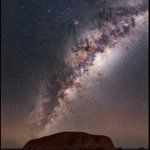
Milky Way over Uluru
The central regions of our Milky Way Galaxy rise above Uluru/Ayers Rock in this striking night skyscape.
Image Credit: Babak Tafreshi ( TWAN )
#Astronomy

The Deep Lagoon
Dominated by the telltale red emission of ionized hydrogen atoms recombining with stripped electrons, this stunning, deep view of the Lagoon's central reaches is about 40 light-years across.
Image Credit: Adam Block, Mt. Lemmon SkyCenter, Univ. Arizona
#Astronomy

Rainbows and Rays over Bryce Canyon
Located in Utah, USA, Bryce Canyon itself contains a picturesque array of ancient sedimentary rock spires known as hoodoos.
Image Credit: John Rummel
#Astronomy


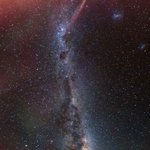
Milky Way and Aurora over Antarctica
Even further in the distance, visible as extended smudges near the top, are the Large and Small Magellanic Clouds, satellite galaxies near our huge Milky Way Galaxy.
Image Credit: LI Hang
#Astronomy

The Sombrero Galaxy from Hubble
Fifty million-year-old light from the Sombrero Galaxy can be seen with a small telescope towards the constellation of Virgo.
Image Credit: Hubble Heritage Team ( AURA / STScI / NASA )
#Astronomy

Launch imminent:
SpaceX Falcon 9 — Starlink (15-16).
Due to Launch in 45 Mins. from Vandenberg SFB, United States.
Image: SpaceX
#Space #RocketLaunch

ALT Starlink night fairing Launch-level image associated with Starlink (15-16). Credit: SpaceX. Licence: CC BY-NC 2.0.
Launch imminent:
SpaceX Falcon 9 — Starlink (15-16).
Due to Launch in 45 Mins. from Vandenberg SFB, United States.
Image: SpaceX
#Space #RocketLaunch

ALT Starlink night fairing Launch-level image associated with Starlink (15-16). Credit: SpaceX. Licence: CC BY-NC 2.0.
Visible in the next hour:
Lunar Clair-obscur effect - Zeno Steps.
Moon visible in Europe, Africa & western Asia.
#Astronomy
#MoonHour

Infrared Trifid
Where visible light pictures show the nebula divided into three parts by dark, obscuring dust lanes, this penetrating infrared image reveals filaments of glowing dust clouds and newborn stars.
Image Credit: J. Rho ( SSC/Caltech ), JPL-Caltech, NASA
#Astronomy

Ultraviolet Rings of M31
While its spiral arms stand out in visible light images of Andromeda, the arms look more like rings in the GALEX ultraviolet view, a view dominated by the energetic light from hot, young, massive stars.
Image Credit: GALEX, JPL-Caltech, NASA
#Astronomy

Comet PanSTARRS, Moon, and Venus
Over the trees, far in the distance, are bright Venus and an even brighter crescent Moon.
Image Credit: Amit Kamble ( Auckland Astronomical Society ); Rollover Annotation: Judy Schmidt
#Astronomy

Today: Full Moon 'Hunters Moon', 100% illuminated, distance 366,692 km
#Astronomy #Moon
Moon visualization: NASA SVS — rendered from LRO data

Visible in the next hour:
Lunar Clair-obscur effect - L-Shaped Mountain.
Moon visible in Africa, Asia & the Indian Ocean region.
#Astronomy
#MoonHour

Comet PanSTARRS and a Crescent Moon
A crescent moon dominates the image center.
Image Credit: Yuri Beletsky ( Las Campanas Observatory, Carnegie Institution )
#Astronomy

The First Rocket Launch from Cape Canaveral
Shown above, the Bumper V-2 was an ambitious two-stage rocket program that topped a V-2 missile base with a WAC Corporal rocket.
Image Credit: GRIN, NASA
#Astronomy

Launch imminent:
CASC Unconfirmed Vehicle — TBD.
Due to Launch in 50 Mins. from Wenchang Satellite Launch Center, China.
#Space #RocketLaunch

Charon
Charon is seen in unprecedented detail in this image from New Horizons.
Image Credit: NASA, Johns Hopkins Univ./APL, Southwest Research Inst.
#Astronomy

SkyCalPro.com retweeted

This picture has never seen a desktop. Data beamed directly from the #Vespera II telescope onto my iPhone and slightly adjusted in the incl. SkyColor app.
Why am I showing you this?
Well, this is a refreshing approach to dive in the deep sky. It eliminates the need for special software, a powerful computer, advanced skills and a lot of TIME.⏳🔭
#astrophotography #galaxies NGC7331 & friends


50 Miles on Pluto
A 50 mile (80 kilometer) trip across Pluto would cover the distance indicated by the scale bar in this startling image.
Image Credit: NASA, Johns Hopkins Univ./APL, Southwest Research Inst.
#Astronomy
