
Turning complex finance into simple steps | Family, investing, and building for the future
Joined October 2011
- Tweets1K
- Following710
- Followers265
- Likes1.3K




Donatas Macinskas 🇱🇹🇺🇦 retweeted

Here’s something almost no one knows:
A Lithuanian biotech team Genomika encoded the national anthem into DNA molecules.
Yes — literal music stored in living material.
They also encoded works by composer Čiurlionis.
Not science fiction.
Just Lithuanian innovation at work.

Donatas Macinskas 🇱🇹🇺🇦 retweeted

Kaunas welcomed @NordVPN ambassador Shaquille O’Neal into their home. 👋💚

Donatas Macinskas 🇱🇹🇺🇦 retweeted

🇱🇹🇱🇻🇪🇪 Thirty-seven years ago, two million Lithuanians, Latvians, and Estonians joined hands in the #BalticWay and sent a powerful message to the world: we will be free!
Standing shoulder to shoulder across more than 600 kilometers, they showed that truth is stronger than lies, courage stronger than fear, and unity stronger than oppression.
What began as a peaceful call for freedom became one of Europe’s greatest success stories. #Lithuania, #Latvia, and #Estonia broke free from the Soviet empire, restored their independence, and rebuilt their democracies. They returned to the family of free European nations, joined NATO and the EU, and built strong, resilient, and prosperous states.
Today, the Baltic Way stands as a tribute to people who refused to surrender their dignity, their identity, and their freedom. It reminds us that when free nations stand together, no tyranny can silence their voice or determine their future.


Donatas Macinskas 🇱🇹🇺🇦 retweeted

In the next few years @SoFiStadium will host the Super Bowl, World Cup, and Olympics!
Brand awareness 🐎🚀
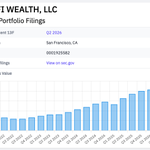
Institutional ownership 🚀🚀
Memember growth 🦫🚀
📈📈 ?? 🤷🏼♂️
unavailable
Donatas Macinskas 🇱🇹🇺🇦 retweeted

4 years in the making. The $SOFI interview is here.
We sat down with CEO @anthonynoto to ask the questions retail investors have been asking for.
We didn't hold back:
• Capital Raises & SoFi's Valuation
• "Sandbagging" Guidance
• The Future of Loans (Home & Personal)
• Crypto, Smart Card, & Payments
• International Expansion
• Big Business Banking
• Artificial Intelligence in Banking
• And the big one: Are you buying the stock?
You don't want to miss this one.
Donatas Macinskas 🇱🇹🇺🇦 retweeted

35 years ago today, unarmed Lithuanian civilians stood in front of Soviet tanks to defend their country’s freedom.
The true nature of Soviet brutality was laid bare when 14 innocent people were shot and crushed by tanks at the Vilnius TV Tower.
As we commemorate the victims of January 1991 in Vilnius, we remember that Ukraine today is resisting aggression driven by the same imperial agenda.

Donatas Macinskas 🇱🇹🇺🇦 retweeted

SoFi just became the first nationally chartered bank to launch a stablecoin on a public blockchain 👀
With SoFiUSD, the fintech firm is offering 24/7 near-instant settlement and cash-backed reserves held at the Federal Reserve - no liquidity or credit risk.
CEO Anthony Noto says SoFi is bridging traditional finance and blockchain to solve “real-world challenges” in financial services.
$SOFI is up nearly 77% this year. Could this move set a new standard for banks entering crypto?
Read more ⬇️
investorsobserver.com/news/s…
@SoFi

Donatas Macinskas 🇱🇹🇺🇦 retweeted

Lithuania spent the night closing and reopening the sky over Vilnius Airport as waves of balloons drifted in from Belarus - disrupting 7,400+ passengers and 50 flights.
Officials say this wasn’t random: the launches were deliberately timed to keep approach routes blocked and rattle a EU & NATO capital.
A low-tech tool with high impact – a sharp reminder that hybrid pressure is very much by design.
Donatas Macinskas 🇱🇹🇺🇦 retweeted

Do you guys really believe this? I give this a 5% chance of happening! In fact, I’ll gladly cash app anyone $100 bucks if you like and repost provided $SOFI gets in on this round.


Donatas Macinskas 🇱🇹🇺🇦 retweeted

Our registered offering successfully closed! SoFi significantly strengthened its already strong position with greater strategic and financial flexibility. As discussed in connection with our Q2 2025 earnings release, SoFi’s capital position was already adequate for our plans and more than adequate relative to our required capital ratios. Which may beg the question…why raise more capital?
Here is our perspective on what this additional capital means for SoFi and our members. This opportunistic capital raise:
1) Is a proactive step to provide flexibility to pay down expensive debt and to further strengthen SoFi’s ability to consider opportunistic acquisitions (though none are currently contemplated).
2) Gives SoFi an even stronger position for potentially greater growth (organic or inorganic) than we currently have planned and communicated over the intermediate to long-term horizon.
3) Increases SoFi’s net cash position, and the additional net interest income from greater net cash would reduce interest expense, assuming a pay down of debt. As such, the combination is neutral to EPS.
In essence, this additional capital will fuel continued innovation and growth as SoFi strives to help members get their money right. Thank you to shareholders for their support!
investors.sofi.com/news/news…

Donatas Macinskas 🇱🇹🇺🇦 retweeted

Chill out your Friday—or should we say SoFriday? 😏 Unlock SoFi Plus today to get $10 in rewards points* and kick off happy hour—on us 🍸
Use this link to get SoFi Plus—and extra discounts, savings, rewards, and more—for $10/mo^ or at no cost with eligible direct deposit. Offer ends 7/18 👉 SoFi.com/sofriday

Donatas Macinskas 🇱🇹🇺🇦 retweeted

🚨Breaking $SOFI Galileo deals: Mercantil Banco Chooses Cyberbank Digital from Galileo to Embrace Digital Transformation. businesswire.com/news/home/2…


Donatas Macinskas 🇱🇹🇺🇦 retweeted

🧵1/6
Europe won't survive sleeping through another wake-up call. We should jump out of bed and throw on a shirt. We should do what we can, with what we’ve got. And we’ve got a lot. Here's how to step things up as the US steps down:

Donatas Macinskas 🇱🇹🇺🇦 retweeted

Interesting insights from a former colleague at $SoFi
linkedin.com/posts/kirk-chap…

Donatas Macinskas 🇱🇹🇺🇦 retweeted

$sofi
Please repost so we can get more input. Do not vote if you are not a shareholder.
LET'S REVIEW SOFI'S MANAGEMENT OF THE BUSINESS IN 2024
(You are going to be the Board Member casting the deciding vote)
This is a continuation of my post highlighting the deferred tax credit issues I posted a couple days ago.
Again this is for educational purposes and is not investment advice.
I am going to try to put you in the Board room on Monday, October 2 , 2023. I will give you all the information that was available at that time, and I will set forth discussions I believe could have occurred at that timed or over several board meetings. You will be casting the deciding vote.
Many people on X and Youtube have argued that Sofi should roll out many new products in 2024. So before we enter our hypothetical Board room, let's discuss the product options we have at the time.
PRODUCT OPTIONS
1. Small Business Accounts
2. Small Business Loans
3. Business Custodial Accounts
4. Level 1 Options
5. Credit Cards
6. Zelle
7. Dark Mode
8. Better UI
9. Insurance
10. Travel benefits
11. Better Mortgage products
12. Better Invest product options
13. AI assistance
14. Tax products
15. Crypto
Company and Macro Background as of October 2023
Sofi started as a student loan business, both originating private student loans, but more importantly refinancing student loans at favorable rates. The Biden administration began year-long efforts to grant massive forgiveness to government loan borrowers, effectively decimating our student loan business.
We therefore pivoted and began focusing on originating personal loans for home projects and more importantly to refinance credit card debt people had with interest rates from 18% to over 30%. With low rates, this business grew dramatically, especially because of the over $1 trillion in credit card balances.
But then the FED began raising interest rates 11 times between March 2022 and July 2023 up to a 23-year high of 5.5%.
These interest rates and the prognosis for even higher rates dampened the appetite for the sale of personal loans. We were able to maintain brisk loan originations as rates were climbing and still could sell those loans at a good premium because of our high FICO credit profiles of our customers.
But the origination rates rose so much that it started to be more beneficial for us to hold those loans in inventory at fair values. While we would have to write-off the fair values over the term of the loans, the high coupon rate would more than make up for the write-off and generate us significant interest income.
The demand for members wanting these loans increased substantially, and our capital ratios that had been very high, were falling quickly.
Analysts were concluding that we would run out of capital ratio and need to stop lending, possibly further hurting our stock and lost term prospects.
Stock Price closed at $7.84 on Monday October 2, 2023, after being as low as $4.62 on January 6, 2023, rising partially related to the CEO buying millions of dollars of stock on the open market.
The Company has never been profitable and has over $600 million in deferred tax credit unused and convertible debt selling at a huge discount.
YOU ARE NOW ENTERING THE BOARD ROOM --SO PAY CLOSE ATTENTION
Because this is hypothetical, I will use 2 identifiers, one for Board members and one for Advisors. We don't know to what extent who said what so let's assume the advisors can be outside advisors or the executive team, but it is informative even hypothetically.
Board Member - at the rate we are originating loans, we could run out of cap space. What suggestions do we have for the next quarter and 2024. We have to have a plan to counter these rate hikes.
Advisors - We'll, we could slow down the personal loan originations, stretch out our capital ratio space and wait for the FRD to lower rates?
Board Member - That won't work. that plays into the analyst contentions that we will run out of capital. If we make any other investments, we will have significant losses and our stockholders and employees will lose confidence. We need better options.
Advisors - We have a few ideas on how we can boost capital ratio space. First, we have sufficient cash so we could buy back some of our 2026 convertible debt that is trading at a big discount, and for Gaap purposes, we will have a gain that would significantly jump our capital by 8x that gain. That could probably get us through most of the first half of 2024, but to survive longer, we may need to slow down lending. If we tighten our credit box on these loans, we can increase fair values of the loans we sell, and also hold some of these better loans in inventory for higher interest income.
Board Member - Ok let's get on that. How long will that take?
Advisors - Well. we need to poll the convertible debt holders, but our investment bank thinks we can close by late March or early April.
Board Member - Ok lets get the ball rolling on that, but that's not enough unless we get rate relief form the FED, when do we think that could happen.
Advisors - We don't see that happening until at least September.
Board Member -so we really need some other way to get capital ratio relief.
Advisors - Well, we have over $600 million of deferred tax credits. If we could hit full year 4 quarter profitability in 2024, we could release those tax credits into 2024 Gaap income, creating about an additional $4.8 billion of capital ratio.
Board Member - ok so the key is to be profitable this quarter and every quarter in 2024. Basically drive profitability any way we can. We then can not only release the deferred tax credits, but the generation of expanded EBITDA alone would boost capital ratios throughout the year. So how do we boost profitability?
Advisors - The first thing we need to do is get rid of the preferred stock with its high interest rates. Since we will be being some of that convertible debt back, we could issue another tranche of convertible debt due in 2029 with another capped call protection. If we set the terms so that we intend to buy back the shares on conversion, we can exclude those shares from fully diluted shares and that will allow us to post higher EPS for the year. We also can get a lot of additional cash from that issuance.
Board Member - ok lets look into doing that...I don't know how the market will react, but that seems to be a good plan. Any other things we need to do to enhance profitability?
Advisors - We have given a lot of thought to some ideas for expanding the loan origination credit box.
Board Member - I thought the suggestion was to tighten the credit box?
Advisors - Yes, for our loan originations, but we have some interest from loan buyers for an expanded credit box with greater returns. We think we can develop what we call a loan platform business that will originate loans directly for these loan buyers with an expanded credit box, and we service the loans, but they take all the credit risk and we also get a fee. The demand for this could be substantial, especially when the FED lowers rates later in the year.
Board Member - That sounds great if we can really expand that type of platform business. How long will it take to gauge interest and get that up and running?
Advisors - we think we can have it up and running in the third quarter.
Board Member - Ok let's do that. Keep us apprised of your progress. Does that get us where we want to be for 2024?
Advisors - No, we are in the process of investing into many potential products, and that cost could still cause us to have losses, so to ensure profitability we need to defer some of these expenses until 2025 after profitability and achieving more EBITDA and a more favorable FED environment.
Board Member - Ok, but slowing down the release of those products -- we may get some backlash from our members. How can we handle that?
Advisors - Well we can't really cut down marketing because our brand awareness is growing rapidly and we need to sustain that momentum, but maybe reduce a bit of that expense and some others.
But I think we can still get them dark mode, Zelle, work on the UI and better investment products and even look for a mortgage partner.
But the big items, small business loans and accounts, custodial accounts, tax products, level 1 options and credit cards, and some others -- we need to push those expenses and delay that work until 2025. Those expenses could run between $100 and $200 million, so if we delay most of those expenses, we can save 10 cents to 20 cents a share.
Board Member - that seems to be a good plan but we are going to have some customers and stock holders that won't be happy about that. But the choice is to go into 2025 with a significant boost in profitability, and even higher when we consider the income on a Gaap basis from accruing the deferred tax credits throughout the year and at the end of the year and make those investments in 2025, or we have another year of substantial losses and we can't count on the FED to bail us out and then our stock stays stuck at $7 or lower or worse , we run out of cap space.
Board Member - Ok let's call all these suggestions for a vote---(delay) ...it's a tie.
Now you cast the deciding vote below.
Do you approve of the management plans? Vote Yes if you do. Vote No if you think they should have spent the money in 2024 to release other products and incurred the costs and had a loss in EPS for 2024.
A yes vote also means you recognize how well Sofi management navigated the business.
93%Yes
7%No
742 votes • Final results Donatas Macinskas 🇱🇹🇺🇦 retweeted

KBW downgraded $SOFI today. I don't pull any punches in critiquing their analysis in this article . KBW is historically completely wrong about SoFi. This is a detailed description about how wrong they've been and why I think this analysis is garbage.
datadinvesting.com/p/kbws-so…

Donatas Macinskas 🇱🇹🇺🇦 retweeted
$sofi
@anthonynoto
BANK OF AMERICA'S OWN VALUATION LEADING TO A DOWNGRADE SUGGESTS THAT SOFI'S TARGET STOCK PRICES SHOULD BE
2024 - $13.52 TO $18.99
2025. $31.89 TO $44.73
2026. $50.25 to $70.56
This will be another longer post regarding valuation. I'll critique the B of A valuation in another post for internal consistency and methodology. This post will be a test of their valuation taking into growth based on B of A's own projections for Sofi.
Let's summarize a little background information.
Background Information On TBV
Back on November 1st, I posted the information below discussing in detail why analysts valuing Sofi as a bank based on TBV (Tangible Book Value) were wrong because that metric (a) does not compare Sofi with any specific bank, but a metric of over 200 banks, (b) does not take into consideration any of Sofi's other businesses or the differences from legacy banks, and (c) doesn't account for growth.
It's like using price per square foot to compare two houses with different construction in different parts of the country. (SEE BELOW FOR THAT DISCUSSION).
But more importantly, it's a "Static" method of valuation. While it can be argued that it takes into account the average growth expected on average by over 200 banks, it really doesn't, especially since it views all banks as average and really in no way accounts for differences in growth.
As @DataDInvesting pointed out today, the TBV method values a company as if were to fold. Stating it in valuation methodology, it estimates what would approximate liquidation value. While that is not entirely 100% accurate, it is close.
Suffice it to say, it doesn't account for an individual company's growth at all.
As I stated in a follow up post on November 7th, you could adjust a TBV method to account for TBV growth and I showed how that calculation would lead to a TBV multiplier of over 3.5, which would represent a value of Sofi's traditional bank operations over $14, and then you would have to add their tech platform, their Loan Platform business, Invest, referrals etc. which easily could lead to a current value between $14 and $18 - where it has been trading for a couple of weeks.
That being said, I also stated that even a revised TBV method like that doesn't adequately measure growth and risk.
So what does?
Well, you can calculate a PE Ratio for a company and then compare that ratio vs others in the industry or take a PE ratio of a company's peers and apply it to that company's earnings to estimate that company's value. (basically what the B of A note did prior to just punting and pulling his unsupported opinion of a 2x multiplier of TBV to set his target).
But, that is also a method that also doesn't adequately measure growth. Using the past 12 months earnings and applying an industry PE is almost worthless for valuing a growing company. Who determines what companies constitute its peers? Who are the companies and are they in a similar business. This also results in inaccurate general comparable of multiple companies not similar to the target company- the same exact problem with the static TBV method.
So we can shift to using future projected earnings, but then you have to consider who makes and verifies those estimates (how good are the estimates) and then you still have the comparability problems from using an industry PE ratio (or a PE Ratio that someone simply comes up with based on some black box or divining rod - which is what most analysts do).
Is there a better way. Yes. You can use Price earnings growth ratios know as PEG ratios which account for growth and can be used as a means to test your price targets vs. known company data or projected data.
In that way, you avoid the comparability issues (after all isn't money fungible), and actually doing a comparison of Sofi vs 1 to 3 of the closest comparables would take a significant amount of time and skill that frankly most analysts either do not have or do not have the time to research, review or compare.
Uniformly, people have agreed that a PEG ratio around 1 indicates a company's stock price is fairly valued, a PEG ratio below 1 indicates the company is undervalued. So we can use this to test the valuation of Sofi vs its stock price. (B OF A HAS A 1.53 PEG RATIO AND BERKSHIRE HATHAWAY HAS A .23 PEG RATIO)
So a PEG Ratio is calculated as follows:
PEG Ratio= (Price/earnings)/ Earnings % Growth Rate
Now you could use a trailing PEG, but let's see if you can guess what's wrong with that? You're right, it doesn't adequately measure future growth. And in Sofi's case, they only have profitability for 2024 as a full year, so that calculation is not that meaningful. So we should use a forward PEG ratio.
So if we set the PEG ratio as 1 (the fairly valued indicator), we can insert projections to see what the fair price would be based on various earnings growth scenarios (and thus calculate or test the price targets).
1= (Price/Earnings)/earnings % growth
lets do a bit of math on this and we get
1 x Earnings Percentage Growth=Price/Earnings
or
Earnings Percentage Growth = Price/Earnings
or
Earnings Percentage growth x Earnings = Price Target
Now lets look at some numbers.
LETS TEST OUT THE B of A $12 TARGET PRICE WITH THE PROJECTIONS ACTUALLY USED IN THE B OF A NOTE
2024 EPS $ .14
2025 EPS $ .33
2026 EPS $ .52
EPS Growth Rate 2024 to 2025 135.7% (19/14)
EPS Growth Rate 2024 to 2025 57.6% (19/33)
EPS Average Growth Rate 2024 to 2026
135.7+57.6=193.3/2=96.65 %
So even applying B of A numbers using next 2 years profit growth, lets look at this PEG test:
Using Growth Rates for 2025
2024 Target Price --
135.7 x .14=$18.99
(Note if you used consensus 2024 earnings, you would get a target price of 135.7 x .12=$16.28)
2025 Target Price --
135.57 x .33=$44.73
2026 Target Price --
135.7 x .52=$70.56
Using Average Growth Rates for 2025 and 2026
2024 Target Price --
96.65 x .14=$13.53
2025 Target Price --
96.65 x .33=$31.89
2026 Target Price --
96.65 x .52=$50.25
The only way you can possibly calculate target prices as low or lower than $16 using his numbers is to do what he kind of did -- assume a 2026 eps substantially lower than guidance, effectively killing the average growth rate - which is a good way to back into the number you want).
If you assume the midrange of 2026 guidance (remembering that Sofi has actually surpassed guidance almost every time), say $ .70, the average growth rate would have been 124% and the target prices would be:
2024: $17.36 (124 x .14)
2025: $40.92 (124x .33)
2026: $64.48 (124 x .52)
So using B of A's own projections of EPS (all B of A numbers) and calculating a fair target price (based on PEG ratio of 1), his target prices would be darn close to my previous projections of adjusted TBV over 3.5.
And using a midrange of Sofi guidance, you get numbers almost in the middle of his range.
Tomorrow, I will see if I have time to critique his actual methodology, which is kind of all over the map.
This post merely shows that his own methods are flawed and don't account for growth.
Someone may say, well you need to risk adjust the numbers, but these are his numbers and projections which he states include risk already.
So what do you think of his Note now?

$sofi
Another long post for educational purposes you might want to repost.
WHY MOST ANALYSTS USING TBV TO VALUE SOFI ARE WRONG
Many analysts have revised earnings estimates for Sofi much higher but have not raised their target price for the stock and claim its overvalued. They say it should only be valued as a bank.
Here's why they are wrong. First, they are valuing it as a bank only and thus ignoring not only the tech side but the platform lending, the referral programs and other modern aspects and differences of Sofi's online banking system and not having branches, not having legacy commercial loan problems and not having treasury investments substantially under water.
But even if you just value Sofi as a bank, they are doing it wrong.
They simply look at static, current tangible book value (TBV) of mature banks and compare that with their market stock price to calculate a multiple of book value and appply it to the current Sofi book value.
First, a little lesson on valuation. You can value a company through an intrinsic valuation model or a relative valuation model.
An intrinsic value model is typically based on the specific discounted cash flow (DCF) analysis of the company. In valuing any company on a dcf model, you have to calculate it's specific projected future cash flows with a degree of certainty based on its growth and discount them based on its risk.
In applying a relative valuation model, you look at one or more metrics of similar AND comparable companies and apply it to the company you are attempting to value.
The most typical relative valuation model familiar to most people is valuing residential real estate by looking at the average cost per square foot and multiplying that cost per square foot by the square footage of the house you are trying to value.
That concept also applies to valuing a company based on TBV. However, it's wrong to do it as i described how analysts are doing it above.
Similar to a DCF model, in calculating a value on a relative valuation model, you also need to consider both the applicable market and adjust for the differences I discussed above to make the current Balaton comparable to the average, which most analysts haven't done under the guise of starting they are valuing Sofi just as a bank.
But even valuing it as a bank based on a relative TBV model, you still need to make adjustments.
You must look at a bank's current tbv and project its 5 year growth in TBV and then discount it based on market rates and risk or you can apply a multiple that considers future growth and risk vs the lower growth of a mature bank and adjust the multiple based on that growth.
Simply applying a market based multiple for banks with less growth to the targets current tbv may be a simple calculation, but it's wrong from a valuation model perspective.
In fact, you should actually develop a DCF model and a relative TBV model as I explained and compare them.
Most of the analysts do neither correctly.
The way they value Sofi based on TBV is for the most part meaningless.
That type of valuation wouldn't be allowed as evidence the way they do it. It would be thrown out of court.
It's similar to using a city wide cost per square foot for residential real estate in Long Beach and applying it to Beverly Hills.
First, it's wrong to do that between properties in Long Beach generally without adjusting for lot size, location, type of construction, amenities etc... and it's totally ridiculous to apply it to Beverly Hills.
So sure, if you want to value Sofi as a bank, knock yourself out and don't give value to any of it's other businesses... that's bad enough.
But then compound your mistakes by not even valuing it correctly as a bank by not adjusting for any differences.
Donatas Macinskas 🇱🇹🇺🇦 retweeted

Old Man Yells at the Cloud | TCAF 167🎙️
@CliffordAsness joins @Downtown and @michaelbatnick to discuss the less efficient market hypothesis, value investing, the quant world, private equity, and more!🔥🆕
▶️podcasts.thecompoundnews.com…
Sponsored by: @public


