




Amber Z retweeted

A University of Chicago psychologist published a short paper in 1984 proving that the average tutored student outperformed 98% of students in a normal class, and almost nobody outside education research has read it.
His name was Benjamin Bloom.
He called it the 2 Sigma Problem.
Two of his PhD students, Joanne Anania and Joseph Arthur Burke, compared three ways of teaching the same material:
> A normal class with one teacher and a room full of students.
> Mastery learning, where students take regular quick tests and get corrections before moving on.
> One-to-one tutoring, combined with mastery learning.
The tutored students beat the normal class by two standard deviations.
In Bloom's words, "the average tutored student was above 98% of the students in the control class."
And about 90% of tutored students reached a level that only the top 20% of the normal class reached.
Here's the part that matters.
These were ordinary students in ordinary schools. Same kind of kids, different conditions.
Bloom's conclusion was blunt. One-to-one tutoring works, but it is too costly for most societies to provide at scale. So he set a challenge for researchers: find methods of group teaching that work as well as a personal tutor.
He also ranked the cheaper levers. Feedback and correction before moving on was worth about one standard deviation by itself. Graded homework, about 0.8. Cooperative learning, about 0.8.
For 40 years, that challenge mostly sat there.
Now AI tutors are being pitched as the answer.
But the early evidence says the design decides everything. A tutor that hands you answers is a shortcut. A tutor that makes you try, checks you, and corrects you is closer to what Bloom measured.
The 2 sigma never came from the tutor knowing more. It came from someone making sure you could not skip the hard part.
Who was the one person who taught you one-to-one and changed how you learn?

Amber Z retweeted

Yes: handwriting still matters.
A new study has confirmed that writing by hand activates far more complex and widespread neural networks in the brain than typing, underscoring its importance for learning and memory.
Researchers at the Norwegian University of Science and Technology used a high-density EEG cap with 256 electrodes to record brain activity in university students. They found that the intricate, sensory-rich movements involved in handwriting, especially cursive, trigger highly synchronized brain waves across extensive areas of the parietal and central regions. These coordinated patterns are strongly linked to memory formation, cognitive processing, and encoding new information.
In contrast, typing, which involves repetitive, simpler finger movements, produced significantly less neural connectivity and engagement. The difference was striking: the brain appears much less active during digital writing.
The researchers conclude that the unique motor and sensory experience of holding a pen plays a key role in brain development and learning. As a result, they argue that handwriting instruction should remain a core part of education to support deeper comprehension and cognitive growth in the next generation.
[ “Handwriting vs. Typing: A High-Density EEG Study on Brain Connectivity During Learning” — Norwegian University of Science and Technology (published in Frontiers in Psychology, 2025)]

Amber Z retweeted

Your brain physically rewrites itself every time you pick up a pen.
Neuroscientists at Norwegian University scanned students' brains while they handwrote letters versus typing the same letters on a keyboard.
The results shattered decades of assumptions about how we process information.
Handwriting activated massive networks in the sensorimotor cortex, the visual processing centers, and the hippocampus simultaneously. Complex neural symphonies lit up across multiple brain regions, creating rich interconnected pathways between motor control, visual recognition, and memory formation.
Typing the same letters? The brain activity looked like someone had dimmed the lights across entire cognitive districts. The neural networks that flourished during handwriting simply went dark.
The difference?
When you form letters by hand, your brain constructs elaborate spatial maps of each character. The motor cortex learns the precise pressure, angle, and trajectory needed to create an 'A' versus a 'B.' Your visual system tracks the ink flowing from pen to paper in real time. Your parietal lobe integrates hand position with eye movement. Your hippocampus encodes not just what you wrote, but how the writing felt, where you paused, which words required more pressure.
Typing activates almost none of that circuitry. You press a key, a letter appears. The motor movement is binary. The visual feedback is uniform. The spatial relationship between thought and symbol gets mediated by a machine that standardizes every character into identical fonts and spacing.
Your brain treats these as fundamentally different cognitive tasks.
The evolutionary context makes this obvious once you see it. Human hands developed for manipulation, creation, and fine motor control over millions of years. We painted on cave walls, carved bone tools, and shaped clay vessels long before we invented written language. When writing emerged 5,000 years ago, it built on top of existing neural infrastructure that already connected hand movement with symbolic thinking.
Keyboards appeared 150 years ago. Touchscreen typing maybe 20 years ago. From an evolutionary timeline perspective, we started using them approximately yesterday. Our brains are still running ancient software that expects physical engagement with symbols.
That software produces dramatically different learning outcomes.
Students who take handwritten notes consistently outperform students who type the same information on memory tests, comprehension assessments, and creative applications of the material. The difference persists even when researchers account for typing speed, note length, and time spent studying.
The act of forming letters by hand forces deeper processing at the moment of information encounter. You cannot handwrite as fast as someone speaks, so your brain must actively filter, summarize, and prioritize information in real time. The motor effort required to form each word creates additional memory traces that typing does not generate.
Children who learn to write letters by hand develop reading skills faster than children who learn letters primarily through typing or screen interaction. The sensorimotor experience of creating letterforms helps their brains recognize those same letterforms when they encounter them in text.
Adults who handwrite shopping lists, daily schedules, or meeting notes remember the information better than adults who type identical lists into phones or computers. The spatial memory of where you wrote something on a page provides retrieval cues that digital text does not offer.
These findings collide directly with how education and work environments have evolved over the past two decades. Schools replaced handwriting instruction with typing classes. Offices converted from paper systems to fully digital workflows. Students take notes on laptops. Professionals draft documents on screens.
We optimized for speed and efficiency while accidentally severing the neural pathways that evolution spent millions of years developing.
The implications reach beyond memory and learning into fundamental questions about human cognition. If the physical act of forming symbols changes how your brain processes ideas, what happens to thinking itself when you remove the physical component?
Digital text is infinitely searchable, instantly editable, and perfectly shareable. But it may be creating brains that process information more superficially, store memories less durably, and connect ideas more weakly than brains that regularly engage in handwriting.
The neuroscience suggests we traded cognitive depth for technological convenience without realizing what we were giving up.
Some of the most innovative thinkers across history were obsessive handwriters. Darwin kept detailed handwritten journals. Einstein worked through complex theories in handwritten notebooks. Virginia Woolf wrote her novels by hand before transcribing them. Steve Jobs famously took handwritten notes during Apple meetings even as he was building the most advanced computers on Earth.
Perhaps they intuited something about the relationship between hand, brain, and insight that we measured in brain scanners but somehow forgot in practice.
Your pen is literally a cognitive enhancement device that activates neural networks digital keyboards cannot reach.

Amber Z retweeted

🩸 Understanding your care can save your life.
For blood clot survivors, knowing your treatment helps you stay on track—and prevent another clot.
This #WorldAdherenceDay, we’re joining @worldheart to highlight the power of adherence.
👉 Learn more: world-heart-federation.org/w…
#DontMissAMoment #StopTheClot #BloodClotAwareness


Amber Z retweeted

Globally, women hold just 64% of the legal rights enjoyed by men.
“When we are not equal under the law, we are not equal,” said @antonioguterres on Sunday’s #InternationalWomensDay.
“It is time to make justice a reality for women & girls, everywhere.”
un.org/en/observances/womens…

Amber Z retweeted

Getting to zero: what will it take to end violence against women? More and better data are needed—but enough evidence already exists to invest in bold action at scale.
Read more in our latest issue: spkl.io/6014Axj2p
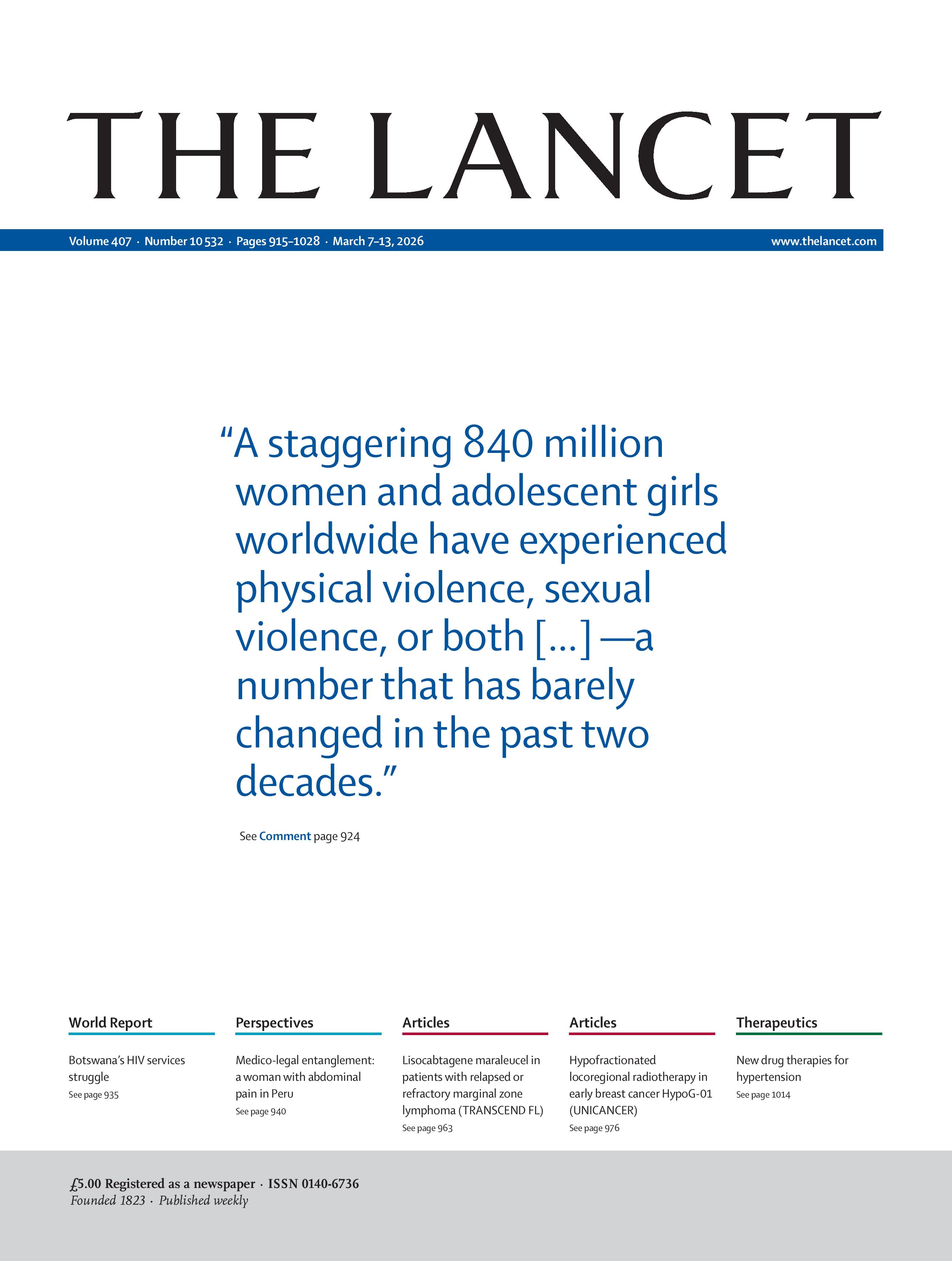
ALT March 7, 2026 issue of The Lancet. The cover quote: \u201CA staggering 840 million women and adolescent girls worldwide have experienced physical violence, sexual violence, or both [\u2026] \u2014a number that has barely changed in the past two decades.\u201D
Amber Z retweeted

BREAKING🚨: For the first time since 1863, Ramadan, Lent, and Lunar New Year are all taking place at the same time 🤯
An exceptional event that will only happen again in 2189.


Amber Z retweeted
Hair is an important part of who we are. It helps us express ourselves, and can tell important stories about a person's culture and heritage. This #BlackHistoryMonth, join us as we explore the history behind several iconic hairstyles!
- Sponsored by @Dove


Amber Z retweeted

Education is empowerment 📚
It's a human right, a public good & a public responsibility.
It bridges gaps, transforms lives & powers the future.
This #EducationDay & every day, let Nelson Mandela’s words inspire us in making inclusive & quality education a reality for all!

Showing this to my mother and telling her she couldn't have gotten me to bed earlier in my teen years 😂


16
Interesting. I must say that I don't write much by hand these days, and my memory is worse than ever. I feel like we traded volume of work accomplished (by typing) for deeper understanding. But who can read the atrocious handwriting these days?!😆

“Contrary to popular belief, handwriting is not merely a motor skill; it is also a written language skill.…handwriting leads to better perception of letters in reading than does keyboarding. Forming letters by hand might help create the letter form in the mind’s eye better than does selecting them by key press.”
One of my favourite articles in support of explicit handwriting instruction that includes teaching letter formation, directionality, and correct pencil grip to support both decoding and spelling skill development.
In the Minds Eye link: openbooksopendoors.com/wp-co…
#SORticle #Handwriting #Printing

4
Amber Z retweeted

Investing in girls’ rights👏 is both a moral duty 👏 and a strategic choice.
On this #DayOfTheGirl, @UN_Women stands with every girl whose rights are threatened, whose voice is silenced, and whose leadership goes unrecognized.
See our full statement: unwo.men/fOre50Xa0AF

Amber Z retweeted

As part of events to mark International #DayoftheGirl a few years ago, I was invited to write a letter to myself as a young girl. Here's what I wrote.
October 12, 2020
Dear Winnie,
You’re 12 in this photo with mum and dad. You’re excited to be starting a new school far away from home. But you’re also scared. I understand why.
You’re scared to be away from your parents.
You hate getting up early to take a cold shower and walk up a hill. Up to this day I still don’t like getting up early! But it’s worth it. Education is priceless.
The army has just overthrown the government in Uganda, and you’re scared to be under the dictatorship of Idi Amin, in which even miniskirts and lipstick are banned, and soldiers use any excuse for violence. But it will fall. You will make it through.
You will face further challenges later. At your next school you will be the only girl in your class. Later you will have to leave the country and be a refugee in the UK.
And that thing now where many assume that because you’re a girl you’re not equal to boys - well that never goes away, everywhere you go!
I want you to know this though: you will overcome.
You’re stronger than you realise. If you take a deep breath you’ll find a way to solve most problems.
Try those things that they say are not for girls like maths and physics and computer science! Because there’s nothing that’s for boys and not for girls.
Don’t be afraid to make mistakes, to fall. Brush yourself and get up. From your small village of Ruti, there’s no limit to where you can go. And wherever you go, Ruti will always be your home.
I want to tell you too the most important lesson you’ll learn. By joining together with other people, you’ll be able to build together the power to put right some of what’s wrong in the world. With others, you will have many adventures, achieve many good things in service to the world, and you will be happy!
All the best,
Winnie


Federal health cuts dismantled the CDC’s Division of Blood Disorders — NBCA’s partner in blood clot education for 20+ years. Now we need you. @lesllake will match every gift through Sept. 30, up to $100K. Donate today to double your impact: donate.stoptheclot.org/campa…
#StopTheClot

10
Amber Z retweeted
Federal health cuts dismantled the CDC’s Division of Blood Disorders — NBCA’s partner in blood clot education for 20+ years. Now we need you. @lesllake will match every gift through Sept. 30, up to $100K. Donate today to double your impact: donate.stoptheclot.org/campa…
#StopTheClot
*About a third are pre-trial detention
*The suicide rate is growing
* Prisons aren't doing enough to prevent deaths

🆕 New data reveals the global prison population reached 11.7 million in 2023. On #MandelaDay, learn why #PrisonersMatter and go behind the data.
Here are 5 key findings and the full report:
18
#sleep behind a paywall
Do you have trouble sleeping? 😴😵💫

The tips one commonly reads to get better sleep—eight hours a night, avoiding naps, cool rooms—are abundant. They’re also as insipid as they sound, @JenSeniorNY writes.
From The Atlantic’s August issue, what Americans get so wrong about sleep: theatlantic.com/magazine/arc…
19
Amber Z retweeted

☀️ Happy Monday ☀️
Let’s get this party started‼️
💫✨TEACHER LIST DROP ✨💫
⭐️drop your list
⭐️share this post & share others
⭐️Have an AMAZING day!
Let’s get those 📋👀.
@amazon 👉 tinyurl.com/56tp3e9p
#Teachersof𝕏 #clearthelist #backtoschool2025


Amber Z retweeted

A reminder to all the dads and all who father: your presence matters more than you know.
Teens who feel close to their dads report fewer struggles with depression and body image—and that connection can shape their well-being for years to come.
#fathersday


15. During the AP’s lawsuit, the Trump administration also announced it was taking control of membership in the White House press pool, ending decades of independent control by the White House Correspondents’ Association (@WHCA). whca.press/2025/02/25/whca-s…
19