

girl/boy dad & adventures @zemelgroup. formerly barstool and music stuff.
Tarrytown, NY
Joined February 2011
- Tweets177
- Following698
- Followers1.5K
- Likes570








tom zollo retweeted

DeltaNet-PC is out! It turns out that predictive coding offered a native mechanism for test-time memorization of sequential data all along. The crucial insight was to treat updates to the fast associative memory as an inferred latent variable, not a long term learned weight.

Um does anyone know how to withdraw papers from @iclr_conf 2027? Don’t see a withdraw button anywhere.

tom zollo retweeted

Announcing the 2nd iteration of our PhD Winter Internship, for Jan 2027. 1st iteration this year was a big success - PhDs from variety of disciplines got to have a taste of working at HRT, then return later for summer internships and/or full time work.
hudsonrivertrading.com/hrt-j…

great program, strong recommend even if you haven’t thought much about finance before

Announcing the 2nd iteration of our PhD Winter Internship, for Jan 2027. 1st iteration this year was a big success - PhDs from variety of disciplines got to have a taste of working at HRT, then return later for summer internships and/or full time work.
hudsonrivertrading.com/hrt-j…
tom zollo retweeted

calibration is such a deeply under-studied problem and its importance keeps becoming more apparent every day
There’s been lots of interest in LLM calibration over the last few years, especially recently for reasoning LLMs.
But most methods still require labeled data or extra inference-time compute. Sometimes we’re not that lucky: e.g., a personalized QA assistant running on-device still needs calibrated confidence, but may not have ground-truth labels or the resources to generate lots of extra tokens.
That’s exactly the challenge we address in our new paper: “Unsupervised Confidence Calibration for Reasoning LLMs from a Single Generation”
We tested this pretty extensively, generating over 5B tokens across 9 reasoning models (from 600M to 14B) and 5 tasks spanning math, science and open-domain QA.
Our approach substantially outperforms unsupervised baselines based on token probabilities or verbalized confidence (which itself requires extra compute). It also remains strong under distribution shift, works in a black-box setting or without generating a response, and improves downstream decision-making in selective prediction and simulated linguistic calibration.

tom zollo retweeted
Our new preprint on parallelizing training of temporally precise spiking neural networks is out!
We show up to 44x speedups over a conventional sequential baseline. 1/N

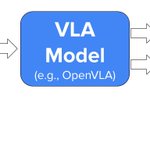
New models include MolmoAct from @jason_lee328 @allen_ai, NORA from @hungchiayu123, and UniVLA from @bqwluckyone @OpenDriveLab
Updated results show that the accuracy vs. calibration relationship may be dependent on model architecture and training objective, and that our approaches to prompt ensembling, action scaling, and time-aware monitoring generalize across models.
Paper: arxiv.org/abs/2507.17383
Github: github.com/thomaspzollo/vla_…
ty for making me feel sane @ziv_ravid


tom zollo retweeted

New work on continual learning and controllable memory from the Zgroup!

Last year we published our work on teaching an LLM to select questions to most efficiently gather information about an individual.
What's a natural follow-up? How about selecting questions and individuals to most efficiently gather information about a group!
We study a new problem setting: Adaptive Group Elicitation. Under real costs and missing data, the system must dynamically decide:
👉 ❓ Which question to ask
👉 👥 Which individuals to query
👉 🌐 How to leverage population structure to infer unobserved responses
We propose a framework that combines:
- LLM-based expected information gain for scoring candidate questions
- Heterogeneous GNN propagation to aggregate responses and attributes
- Per-round adaptive respondent selection under explicit budgets
By querying a small, informative subset of individuals, the model infers population-level responses through structured similarity.
