

Performance Capital Firm: https://xitter.gq/t.co/fuu6fxH14g | Always Pursuing Better | Esprit De Corpus | $2M/m Portfolio
Joined January 2022
- Tweets5K
- Following361
- Followers1.6K
- Likes6.9K






Pinned Tweet
11 Brutal Truths About Running An 8-Figure Publishing Business
The “publishing model" has been the talk of X lately.
Most have never fronted a dollar of ad spend.
We do $2M+/mo with it. We fund every campaign ourselves. We only get paid when the partner does.
Here's what it actually looks like from the inside...
1 - No Remorse
If a partner's funnel doesn't work, you eat the loss. Not them. You.
We've written off six figures on launches that never found a floor.
You don't get to be sad about it. You get to be faster next time.
2 - Educated Gambles Only
Every launch is a bet with your own money.
So you underwrite like it's your own money.
We run 11 hard checks before we even score a deal.
Trailing 12 month revenue, refund rate, audience depth, offer proof, and more.
One partner told us $250K/mo. We verified $2.58M trailing. Another told us a big number and couldn't show a bank statement.
People lie, numbers don't.
3 - Be Hyper-Liquid
Cash leaves on day 1. Cash comes back on day 3 for low ticket and day 10-14 for high ticket... if it comes back at all.
Meta doesn't care about your payout schedule.
If you can't float $5K to $10K a day per partner without sweating, you're not a publisher. You're a gambler with a thin bankroll.
4 - No Data = No Results
Every dollar we spend today is priced against $50M+ in past results.
Which hooks convert cold traffic. Which awareness level pays back fastest. What a $27 buyer is worth on day 30 in a trading offer vs a dog training offer.
We know because we already paid to find out.
If you don't have millions in spend behind your decisions, you're not optimizing. You're guessing with a nicer dashboard.
And guessing with your own capital has a name. It's called losing money slowly.
5 - See Further Than The Eye Can See
Every offer fatigues. Every funnel dies. Usually faster than the partner expects.
The partner sees their offer from the inside. We see it against 8 other markets, 40 ads a week, and every funnel type we've run this year.
So we're building the next thing before the current thing stops working.
Quiz funnel while the VSL is still scaling. Challenge funnel while the quiz is peaking. New front end while the old one is still profitable.
If you only react when the numbers drop, you're already 60 days late.
The partner's job is to see their customer. Your job is to see what's coming for their market before they do.
6 - The Longer You Hold On, The More You Suffer
Media buying: kill fast. Every day you keep a dead ad running is your money burning.
Partners: same rule. If the offer isn't working and the partner won't change it, wind it down.
We've done it. It hurts less than the alternative. The alternative is keeping an offer longer than you should out of pride and watching your profit slowly sink away.
7 - Airtight Security
You're holding partner customer data, merchant accounts, ad accounts, and your own capital... all under one roof.
That makes you a target.
One compromised inbox is a drained ad account, a hijacked merchant payout, or 40,000 partner customer records on a forum. Any one of those ends the business and takes the partner down with you.
So you spend on it like it's ad spend.
We've had our own scare this year. It was a DNS issue, not a breach. Still cost us a week and a lot of adrenaline.
If your security budget is $0, your risk budget is everything you and your partners have built.
Boring, but non-negotiable.
8 - Trust, But Verify
We love our partners. We still put non-circumvention, merchant control, attribution rights, and customer data ownership in every agreement.
Not because we expect a betrayal. Because contracts are what keep friendships intact when money shows up.
9 - It Takes A Village
Copywriters, media buyers, video editors, designers, funnel builders, ops, a CTO, an external sales floor, a fractional CFO.
One partner launch touches 12+ people before the first click.
Anyone selling you "publishing" as a solo laptop business is selling you a course.
10 - Bring Your Firehose
Creative velocity is the real constraint. Not budget.
40+ new ads a week per partner. Multiple formats. Multiple awareness levels. Every single week.
If your best hook is three weeks old, you're already losing.
11 - Nothing In Life Comes Easy
Our launch success rate this year was 29%.
That's the number nobody posts. It's also the only number that matters.
Most launches don't work. The ones that do pay for the ones that don't, and then some.
The model isn't hard to understand. Fund the launch. Build everything. Split the upside.
It's hard to survive. That's the part nobody's posting about.

Nate Sroor retweeted

This is our plan to hit $35M+ in 2027.
Just wrapped our second company offsite.
We rented a mansion in Scottsdale, flew the entire team in, and spent three days on one question:
How do we go from just under $20M in year two to $35M in year three?
Here's the recap:
1. Spend more. Raise LTV.
We're a full-service marketing and advertising firm backed by our own capital.
The more we spend, the more we make.
But every offer and market has a cap before you start seeing diminishing returns.
CPCs are also climbing this quarter and they’ll only continue going up over time.
So the only way to keep scaling is to make every customer worth more.
Across our portfolio, we’re working on building deeper backends…
Product suites, multiple mid-ticket options, AI tools, masterminds, etc.
The business that can afford to pay the most for a customer wins.
The preparation for climbing costs needs to happen now.
2. Creative quality over creative volume.
We've built systems that can reliably produce hundreds of ad creatives per day per partner.
We're ahead of the curve but here's the honest take:
Pretty soon, everyone will be able to do this.
So volume is no longer the game - quality is.
And quality comes from data, taste, and judgment.
Think of every ad as an investment.
You're putting real money behind a bet. Most bets lose and a few win big.
Which means two numbers decide everything: your win rate, and how fast you cut the losers.
Raise the win rate, prune faster, and you scale offers faster than competitors.
That's the entire creative focus for 2027. Not just the fastest output. The best.
3. Building autonomous hands.
We already built the brain.
Our internal system, Omnia, ingests every dollar we spend across every offer, learns what's working, and makes the next dollar smarter.
Now we're building the hands.
Today, when an image or video ad is finished, copy is written, paired, and ready to ship on Meta autonomously.
Next up:
When an ad wins, the system creates variants, generates new angles, pairs them with copy, and queues them for testing on its own.
That's one example but we're building this across the entire business.
The goal is a company where the humans make the judgment calls and the system does everything else.
4. 10X winners. Kill losers fast.
We can usually tell within 1 to 2 weeks whether a new offer is going to be a big winner.
Some take longer.
But we’ve made the mistake multiple times of keeping offers that are scraping by after months of optimization.
Right now, a handful of offers carry a disproportionate share of our revenue.
These are essentially power laws in motion which is normal.
But in 2027 we want more offers pulling real weight, and we want the slackers gone faster.
Because a slacking offer costs you in multiple ways:
The money it's losing.
The time and energy your best people pour into it instead of into winners.
And the opportunity cost/capacity it's occupying that a bigger offer could fill.
This is essentially the same way we’re thinking about ads.
Place the bet, get the result, and either cut fast or double down on what's working.
5. Who we are.
The biggest moat in the age of AI isn't as much tools as it is WHO YOU ARE.
It's really the people.
So the principles we're building 2027 around:
Maniacal urgency.
Going the extra mile.
Pro communication.
And leverage over labor.
When you have a team that moves at a maniacal sense of urgency…
goes the extra mile without being told…
Communicates clearly and precisely…
And leverages systems to multiply themselves…
Then who can compete?
Three years ago this company didn't exist.
We ended up cracking $8M in year one.
Pacing just under $20M in year two.
And year three we’re going to crush $35M.
We've hit every goal we've ever set and this one won't be any different.
Back to work 👊

We Scale Creators - Q3 By The Numbers
Jul 1 through Sep 20. All tracked inside Omnia:
$1.49M of our own money deployed on ads
$4.5M in portfolio revenue
3.03x blended ROAS, up 33%
33,100 customers acquired, up 57%
534 high ticket sales, up 48%
3,700 sales calls booked
$110,461 best single day
5 new partners signed and underwritten
Four things these numbers taught us...
1 - Efficiency beats "spending more on ads"
We spent 10% LESS than last quarter and produced more revenue, more customers, and more high ticket sales.
Everyone thinks scaling means adding budget. This quarter proved the opposite: better creative, better funnels, and better data deciding where every dollar goes multiplied output while spend went down.
The real game isn't spending more. It's making the same dollar do more every quarter.
2 - 33,100 people became customers of our partners in 82 days
Not leads. Not followers. Customers... people who pulled out a card and bought.
That's 400+ new buyers a day, every day, across the portfolio. Up 57% from last quarter.
Follower counts get screenshotted. Buyer counts build businesses. Every one of those 33,100 is now on a list, in an ascension path, and worth more next quarter than they were the day they bought.
3 - The back end is where the money lives
33,100 customers came in the front door this quarter. 534 high ticket sales closed.
Those aren't the same funnels... some of our offers run low-ticket ascension, others run straight to high ticket. But the pattern holds across the whole portfolio: front-end revenue keeps the machine liquid, and the back end is where the actual profit gets made.
If we judged any funnel on its first-sale numbers alone, we'd have killed half our winners. The front end buys the customer. The ascension is where the real money lives.
4 - The most important stat of the quarter: 67% of front-end customers booked a call
Read that again. Two out of every three people who bought a front-end product went on to book a sales call.
Up 60% from last quarter, and it didn't happen by accident: SMS sequences, tighter post-purchase flows, and better filtering before the calendar ever gets shown.
The sale isn't the finish line. It's the moment they're most ready to go deeper... and the booking rate on that moment is worth more than any ad optimization on the dashboard.
Q4 starts next week. Biggest quarter in WSC History ahead.

6
14
775
Paying An Agency A Retainer In 2026 Is A Low-IQ Move
Here's the reality of the marketing space that nobody says plainly.
Most agencies are too scared to work performance-only. And the few who try can only handle two or three clients before the math breaks them...
Think about what a retainer or setup fee actually is.
It's an agency pricing their own failure before the work starts. Get paid up front, because they can't guarantee there's anything to get paid from after.
If they were getting real results, consistently, the retainer would be the dumbest possible deal for THEM.
Why would anyone cap themselves at $5K a month to grow your business when they could take the risk and own a piece of the upside?
Nobody with a genuine track record chooses the salary over the performance upside.
They charge up front for one reason: they can't back themselves on performance.
The retainer isn't a business model. It's a hedge against their own work.
And paying it in 2026 is exactly what it looks like: funding their learning curve, carrying 100% of the risk, and calling it a partnership.
"But performance-only agencies exist." Barely.
The ones that try usually can't fund it... fronting real ad spend across multiple clients takes capital most agencies have never held.
So they run one or two deals, cherry-picked, undercapitalized, and quietly go back to retainers when a launch misses.
We refuse the entire premise.
We haven't taken a dollar from a partner in over 2 years. No retainers, no setup fees, no "media management" percentage.
Not one deal.
We've turned down easy money from people offering to pay us, because the moment a client pays you, the incentive is broken and we'd rather stay broke than aligned to nothing.
Instead we fund everything. $5K to $10K a day of our own capital per partner. We eat every failed launch. We get paid from profit or not at all.
That model took us to 8 figures a year. Not despite the risk.
Because of it.
When it's your money burning, you kill losers in days, you answer at 11pm, and you only sign offers you'd bet on... because you literally are.
Every agency reading this could switch tomorrow.
But they won't.
1
9
563
I get tons of DMs asking how we sign partners for our performance capital firm, We Scale Creators.
The honest answer: we have a strong lead acquisition system, but it's just not where most of our deals come from.
We signed 5 new partners last quarter. Cold outreach produced a couple of meetings. Zero of our best partnerships...
The real ones came from four places:
Results.
Sales agencies, funnel builders, and operators across the industry see our numbers from the inside. When your launches print, the people watching the money move become your pipeline. The best deal flow we've gotten comes from places we never expected.
Referrals.
Every creator knows ten more. Pay one partner on time, every single week, for two years... and the next deal books itself. Trust takes a long time to build, but once you have it, your name travels far and wide
Organic content.
Posts like this one. Operators read them, recognize their own problems, and reach out already sold on the model. Then we underwrite them and figure out if they're a good fit for our model.
And the strangest one: Former Partners.
We've had a partner churn, run it themselves, and return months later on our specific terms. Nothing validates the model like someone who tried and failed at the alternative.
Here's the part that actually matters though.
We reject most of what comes in. Not because we're picky for the fun of it. Because we don't need the deal.
We fund every launch with our own capital. A wrong partner doesn't cost us a retainer... it costs us real money, months of team focus, and creative firepower our winners needed.
So we're not looking for clients. We're looking for people who ride with us.
Who show up for their offer. Who care deeply about the success of their students. And who will be partners for years to come.
4
337
The Reality Of Running A Performance Capital Firm
Her's what our daily revenue numbers look like over the course of one week:
Monday: $78K
Tuesday: $21K
Wednesday: $54K
Thursday: $47K
Friday: $81k
Nobody posts this part, so I will...
Nothing changed between Monday and Tuesday. No ad died. No funnel broke. No one on the team did worse work.
That's a normal week running paid traffic at scale. The revenue doesn't arrive in a line. It arrives in lumps, and the lumps don't always explain themselves.
Here's why this matters more than any strategy I could post.
Most screenshots from people flexing their revenue is on a Friday type day.
Nobody shows you their Tuesday. So everyone scaling an offer thinks their volatility is a defect while everyone else enjoys a smooth ride up.
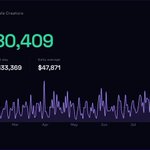
There's a reason why, in most of my tweets, I include a YTD revenue screenshot as well as our revenue from the day before.
There is no smooth ride. There never was.
The monthly number is made of brutal days, average days, and a handful of monsters that carry everything. Zoom out and it's a clean trend. Zoom in and it's chaos that would shake anyone judging the business one day at a time.
Which is exactly how most people judge it.
They scale on Thursday's confidence and panic-cut on Tuesday's fear.
They kill winning campaigns in a two-day trough that was just noise. They change five variables on a bad Wednesday and then can't read the data for two weeks because everything moved at once.
The discipline that actually makes money: decide in advance what a real signal is.
Spend thresholds, payback windows, kill criteria. Then let the noisy days be noisy without touching anything.
We review daily. We react weekly. And We profit monthly. That gap between watching and acting is where the returns live.
If you can't emotionally survive a $21K Tuesday after a $78K Monday, this business will eat you alive.

7
452
We've Built 2 Dozen Offers From Scratch That Have Done Tens Of Millions.
All Of Them Follow The Same Two Formulas.
Different niches. Singing, business acquisition, trading, e-com, real estate.
Different creators, different price points, different audiences.
Two formulas. Here's both...
FORMULA 1: THE LOW-TICKET ASCENSION MACHINE
The job of this funnel is not profit. It's buying customers at breakeven or better, at scale, forever.
The stack:
Front end at an impulse price ($17-$37).
Low enough that the decision takes minutes, high enough to filter freebie seekers. The offer is a specific solution to a specific problem... never "learn my system."
This information is the foundation of everything.
Order bump at checkout. One click, complements the front end, no new decision required. This is the highest-margin real estate in the entire funnel and most people leave it empty.
Upsell 1: The accelerant. Same outcome as the front end, faster or deeper. Priced 3-10X the front end.
Upsell 2: Continuity offer. Low price point, designed to stack MRR overtime.
We NEVER do more than 2 info offers on the front end. The end goal of low-ticket ascension funnels is ascension and too many offers too early on will piss your customers off.
The front end was never meant to profit. Its job is to turn a stranger into a buyer at breakeven, because a buyer list is the only asset in marketing that appreciates.
Then our ascension levers go to work, because the real profit is never day one. It's the path over the next 30 to 90 days…
FORMULA 2: THE HIGH-TICKET CONSUMPTION ENGINE
The job of this funnel is belief. Nobody spends $5K to $15K without hours of consumption first. So we engineer the hours.
The stack:
A consumption gate. Multiple VSLs followed by a 5-15-hour front-end video course designed to both educate and inspire the front-end customer.
An application. Friction on purpose. It filters tire-kickers, and the act of filling it out deepens commitment before any human touches the lead.
The call. By the time a qualified prospect reaches a closer, the font end offer has already made the argument. Closers confirm belief. They don't create it. If your sales team is "convincing" people, the funnel has failed upstream.
THE PART EVERYBODY MISSES
These aren't two funnels or even two offers. They're one ecosystem.
The low-ticket machine builds the buyer list at breakeven. The high-ticket engine monetizes that list at margin. Front end buys the customer, back end pays for the business.
Run only the first and you'll work forever at breakeven.
Run only the second and your cost per call will eat you alive on cold traffic.
Every offer we fund gets both. Every winner we've ever had ran both.
3
267
Starting to see this shit all over X. The "start a publishing agency" courses. Gurus pivoting. The webinars selling the dream of.
We do 8 figures a year with this model. Let me save you $997.
The pitch you're about to hear sounds simple. Hit up a creator. Run their offer. Take 50%. No product, no audience, just "operate."
Now here's the part they leave out.
The creators worth partnering with don't need you. Anyone with a real audience gets pitched every single day by agencies, managers, & "growth operators."
Their brand took a decade to build and one bad funnel to damage, and you're asking them to hand you the keys. Without proof, you're not a partner.
And that's if you can even reach them. Cold email into those inboxes is a war zone. If they DO respond, the first question is always the same: "What results have you gotten for offers like mine?"
There is no good answer when the honest answer is none. The model requires a track record to enter, and you need to enter to build a track record. That loop doesn't care about your ambition.
Say you somehow get in the room anyway. These partners watch everything. The copy, the creative, the way you talk about their audience.
If you show up inexperienced, or start firing off obvious AI slop with their face on it, and you're fired before a single ad runs.
They'd rather make nothing than let you make them look cheap. We've done this for years and partners still scrutinize creative like their reputation depends on it.
Because it does.
Then comes the money. Our first launch took $400K in ad spend before a single dollar came back. No capital, no model. You're not a publisher. You're a media buyer asking a stranger for equity.
And even with the capital, one launch here touches a copywriter, designer, editors, media buyer, funnel builder, ops, and a sales floor before the first click.
The solo laptop version of this business doesn't exist at any scale worth talking about. Anyone selling it to you has never run it.
So here's the honest path, if this model actually calls you.
Get elite at one thing first. Copywriting, media buying, creative.
Get paid by people who already have traffic.
Build proof of you being successful with the skills required to run this model.
Then, years in, with capital, a team, and results you can show... maybe you've earned the right to take on the whole stack.
8
28
2,411
The Most Underpriced Metric In Direct Response
Not CPA. Not ROAS. Not CTR.
Consumption. Minutes of your material a prospect actually goes through before they’re pitched.
We track it across every offer we fund. Here's why it predicts high-ticket revenue better than anything else on the dashboard...
There's an old rule in this industry: nobody spends $1,000+ until they've consumed at least an hour of you.
Tai Lopez said it years ago and it couldn’t be more true.
The rule has held on every offer we've ever run.
A 20-minute VSL can sell a $27 product all day. It cannot carry a $10K program on its own. Not because the copy is weak... because 20 minutes of belief cannot support a $10K decision.
The price tag has a consumption requirement, and no amount of copywriting talent gets around it.
We've watched this play out in our own portfolio this quarter.
One offer was booking high-ticket calls straight off a VSL. Cheap calls too. But the back end stats were brutal... people showing up who barely watched, no context, no belief, wasting the sales team's time.
The fix wasn't better closers. We time-gated the funnel and started attacking watch time and show-up before touching anything else.
Meanwhile the offers that close at the highest rates all share one trait: the buyer consumed for hours before the call. Webinar plus replay. Challenge plus community. Low-ticket ascension offers that include hours of curriculum inside the low-ticket offer.
By the time those prospects talk to a closer, the closer isn't selling. They're removing limiting beliefs and personalizing the offer to the prospect's situation.
This is why funnel selection matters more than funnel optimization.
Low ticket: short-form works. Impulse buy.
Mid ticket: webinar territory. An hour of belief.
High ticket: challenges, multi-day events, extended nurture. Hours of consumption, engineered on purpose.
Pick the funnel by how much belief the price requires. Not by what's trending on marketing Twitter.
Most "traffic problems" and "sales team problems" we get asked to diagnose are neither.
They're consumption problems wearing a disguise.
Track it. Engineer it. Pivot accordingly.
PS: Hit $12M in revenue yesterday :) Final push to get to $18M by EOM.

1
5
299
4 Badass Features Launched In Omnia This Quarter
Omnia is the internal platform that runs our performance capital firm.
Most of Q3 went into it. Here's what shipped and why each one matters if you're running other people's offers on your own money...
1 - The Brain
Every document in our Drive. Every SOP and playbook in Notion. Every internal Discord channel. Every partner Slack channel.
One place. One chat window. Updated in real time.
Think of a ChatGPT that has read every meeting note, every launch post-mortem, every partner conversation, and every winning ad script your company has ever produced, and never forgets any of it.
"What did we decide about the trading offer's high-ticket pricing in March?" Answered in seconds, with the source.
The knowledge of the company used to live in two founders' heads. Now it lives somewhere the whole team can access 24/7.
2 - The Finance Dashboard
The most important thing we've built for our firm in 2026.
In the publishing model you're splitting profit with 8+ partners at once. Revenue in, ad spend out, sales commissions, refunds, processing fees, software allocated per offer. Then the split.
Get one number wrong and you've broken trust with someone whose business depends on you. Get it wrong twice and they're gone.
For a CFO, keeping that clean across a full portfolio is a full-time job.
Now it's automatic. Every dollar of revenue, spend, and commission is tracked in real time by partner.
Contribution profit calculated continuously. Payouts go out every single week with a report attached.
Partners don't trust promises. They trust the number matching the bank deposit, on time, every time.
3 - The Academy
Take any real job and you get at least a day or two of onboarding before you touch anything.
Agencies don't do this. New hire, Slack invite, "figure it out."
We built a full training platform inside Omnia. General company training on how we operate, then a role-specific track for copy, design, editing, media buying, or ops.
It's a prerequisite. You finish before your first day.
New hires arrive knowing the kill list, the naming conventions, the approval tiers, and what a winning ad looks like here. Day one is producing, not orienting.
4 - The Learning Layer
I've posted a lot about the data inside Omnia. Here's the part that makes it useful next year instead of just this year.
What worked in January doesn't work now. Hooks fatigue. Audiences shift. Platform costs move.
A dataset that doesn't update is a museum.
So we built an ingestion and learning layer. Ad platform data flows in continuously. Creative patterns get re-scored as new results land. The insight the creative director sees on Monday reflects last week's spend, not last quarter's.
Every dollar we spend across every market makes the next decision a little smarter. Across all partners, not just the one that spent it.

Most offer owners believe paid ads are like a light switch.
Flip it on, money comes out. Flip it off when they feel like it.
After deploying millions of our own dollars behind creator offers, here's what they actually are...
Ads don't create demand. They amplify what's already there. If the offer doesn't convert warm traffic, cold traffic will just help you lose money faster.
Your audience is not your buyer list. We learned this the hard way on our very first launch.
A massive creator, tens of millions of followers, and organic completely bombed. Paid ads had to carry the entire launch. Followers watch for free. Buyers are a different species.
Day-one ROAS is a lie in both directions. A front end that "loses money" can pay back 3X inside 30 days through the ascension path. A front end that prints on day one can hide a back end that never converts. The number that matters is payback over time.
One filming day is not a creative strategy. Winning offers eat 40+ new ads a week. Hooks fatigue in days, not quarters. The creators who scale treat content like a supply chain. The ones who stall treat it like a photoshoot.
And the biggest one... ads punish weak economics, they don't fix them. No upsells, no email follow-up, no sales team, no recurring? Ads will find that weakness at $1,000 a day and invoice you for it.
The creators making 7 figures with paid aren't better at ads.
They have offers built to survive them.
2
8
385
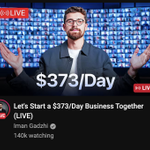
Iman's Side Hustle Summit went live this week. Over 200K people live and 1.3M leads generated for a free 5-day challenge.
Whatever you think of him, that's one of the largest info launches ever assembled. There's a lot that we at We Scale Creators and you can learn from how this challenge was marketed and how it's being run today.
Here's what's actually worth stealing...
1 - Brand stacks. It doesn't just build.
Iman spent a decade building his own brand. For this launch, he didn't rely on it.
Russell Brunson co-hosting. Rick Ross pulled in. Each name imports its own audience and its own authority into the room.
A skeptic who doesn't trust Iman might trust Russell. Every added name lowers the belief threshold for a different segment of the audience.
He could have filled this room alone. Stacking made the room bigger AND warmer. Watch how many "solo" gurus quietly copy this next year.
2 - Winning at scale is a volume game now
Before this challenge started, there were over 1,400 active ads in his ad library.
Not 1,400 tested all-time. 1,400 live.
The era of finding 3 winning creatives and riding them for a quarter is dead. At scale, creative is a supply chain: every angle, every awareness level, every format, refreshed constantly, because fatigue at this spend level is measured in days.
Most operators think they have a media buying problem. They have a volume problem. We produce 40+ new ads a week per offer and I still looked at 1,400 and took notes.
3 - Go wide first. Then go deep.
Look at the architecture, not the event.
The front end is the widest possible promise: a side hustle, $373/day, no experience, no face, no audience. That's not an offer, that's a net over the entire market.
Behind it: the $1,995 core program.
Around it: he co-owns Whop, the platform the whole thing runs on, so he monetizes the students AND the infrastructure they'll sell on afterward.
Mass-market front end. Vertical integration behind it. He's not selling a course. He's populating an ecosystem he owns. That's the highest-level move in the entire launch and almost nobody is talking about it.
4 - Consumption is king
Here's the question worth asking: why is a guy with these resources running a 5-day live challenge instead of a VSL or a webinar?
Because nobody spends $2,000 after 20 minutes of consumption.
The old rule holds: to sell a high-ticket offer, you need an hour or more of real consumption. Belief isn't built by claims. It's built by time spent watching, doing, and getting small wins before the pitch ever arrives.
Five days of live sessions is 5+ hours of consumption, daily open loops, prizes engineering show-up rate, and a live "watch us build it" finale... all before anyone is asked to buy.
The funnel type IS the strategy. He needs maximum belief for the back end, so he chose the maximum-consumption format. Most people pick their funnel by what's trendy.
The great ones pick it by how much belief the price tag requires.

1
7
872
The First $1M vs. The Next $50M
Our first million came from one launch.
One creator. One challenge funnel. No data, no team, no system. Two founders doing everything and $400K of our own money on the table.
It worked. $1.6M in 10 days.
The next $50M looks nothing like that. Here's the difference, line by line...
Then: One bet
Now: A portfolio
The first million was a single launch that had to work. Now we run 8+ offers at once. Any single one can fail and the month still closes. That's not luck. It's the whole design.
Then: Gut
Now: Underwriting
We took the first deal because we believed in her. Now every partner passes a hard vetting gate before we score them. Proof of revenue, refund rates, audience depth, whether they still actively do what they teach. Belief is where diligence starts, not where it ends.
Then: Founders as the team
Now: Founders as the bottleneck
I built the products, found the contractors, bought the media, and ran the launch. That's how you get to $1M. It's also exactly why you stall there. The next $50M requires hiring people better than us at every one of those jobs and then getting out of their way.
Then: Spreadsheets
Now: Our own software
The first launch was tracked in a Google Sheet. Now we have a platform that sees every partner, every ad, every dollar of contribution profit, and tells us where the next dollar should go. Data is the moat. You can only build it by spending.
Then: Every dollar in
Now: A reserve you never touch
We went all in on launch one because we had to. We'll never do that again. Now there's a cash floor that no launch, no partner, and no "sure thing" gets to breach.
Then: Win the launch
Now: Win the year
Launch one had a 10-day scoreboard. Now we measure payback periods, capital efficiency per partner, and how much of net revenue any single offer represents. If one partner is 40% of the business, that's a risk to fix, not a win to celebrate.
Then: Hustle
Now: Rhythm
Weekly vision meeting. Weekly strategy sync. Monday kickoffs. Friday wrap. Every decision has a place to live and a person who owns it. Adrenaline got us the first million. Proper systems get us the rest.
Then: Us
Now: Them
The first million was proof we could do it. The next $50M is proof it works without us in every room. Leadership layer. Pod leads. Owners at every level with a piece of the upside.
Most people trying to get to $1M are copying what $50M companies do.
Most $1M companies trying to grow are still doing what got them to $1M.
Both are wrong. Different problems. Different machines.
Know which one you're building.

2
10
481
The 5 Core Values Behind An 8-Figure Performance Capital Firm
Most company values are wallpaper. Words picked in a meeting, framed in an office, and hardly thought about.
Ours get people hired, promoted, and fired. Here's each one and why we live and die by them at WSC.
1 - Radical Optimism
We expect success every single day. Not hope for it.
Expect it.
This sounds soft until you understand the model. We put our own capital into every partner. If the team's default state is doubt, it creates negative energy before the offer even goes live.
Optimism here isn't a mood. It's the operating requirement of a business that bets on itself daily.
The pessimist is right about any single launch. The optimist is right about the portfolio.
2 - Unparalleled Speed
A partner proposed pivoting his entire offer on a Wednesday call. The new course was committed by Monday.
We've fixed funnels live during meetings. Launched split-test in the same hour they were created. Signed two partners in two weeks while running eight others.
Speed is the one advantage that doesn't cost money.
Every day between idea and live is a day of data you don't have.
3 - Excellence Without Shortcuts
Here's the tension nobody puts on their values: speed and excellence fight each other. We demand both anyway.
Every funnel gets QA'd before a dollar of spend touches it. Every claim in every ad traces to a source. Every deliverable gets checked as if the partner's name is on it, because it is.
The rule internally: read it as the customer would. If it wouldn't survive their eyes, it doesn't ship.
Shortcuts are invisible in week one and expensive in month three. We've paid that bill enough times to stop it from happening again.
4 - Bleeding-Edge Marketing
Everything we do must be on the cutting edge. From the words we right, the ads we ship, and the software product we’ve built in-house.
Not because new is fun. Because in paid media, edges decay. Every winning strategy is being copied while it's winning.
The moment "what works" becomes common knowledge, it stops working. So the job is permanent: find the next edge while the current one still pays.
Comfortable operators run last year's playbook. We'd rather be early and wrong occasionally than late and certain always.
5 - Esprit De Corps
The shared spirit of a unit that makes individuals fight for the group instead of themselves.
We didn't pick it because it sounds good. We picked it because it is who we are at our core.
Launches fail.
Ad accounts get banned.
Offers that everyone poured a month into never see the light of day.
When that happens, there's no version where the copywriter won and the media buyer lost. The launch won or the launch lost. We win as a team and we take the hits as a team.
Nobody here says "not my department." The editor flags a copy error. The media buyer catches a broken funnel step. The sales manager calls us when pace slows, before we ever call him.
That's the tell of real esprit de corps: people protecting parts of the machine they don't own.
Culture isn't built with retreats and pizza. It's built in the losing weeks, when everyone shows up harder instead of pointing fingers.
Individuals leave when it gets hard. A team does not.

1
5
403
5 Roles That Actually Run An 8-Figure Performance Capital Firm
Everyone selling the publishing model online talks about it like it's a laptop business.
We run 18 people across two pods and still feel understaffed.
Here are the five seats that, if empty for a week, would cost us real money...
1 - Operations Manager
The single most underrated role in the company.
It sounds sexy but he fully runs the team's day-to-day operations to ensure we hit our output targets. You can't launch 100+ ads per week without being dialed in on the operation side.
If it's not in the system, it doesn't exist. He's the reason that rule holds.
Founders think they can hold the whole operation in their head. You can for maybe your first deal. Then things start quietly falling on the floor and nobody notices until it's a lost launch.
2 - Creative Director
Creative velocity is the real constraint in paid media. Not budget. Not targeting.
40+ new ads a week per partner. Multiple formats. Multiple awareness levels. Every week, forever.
When it comes to setting short and long-term creative strategy for our partners, you NEED someone to own that seat.
Otherwise you will fall behind creative trends and your ad account will die a slow, painful death.
3 - CTO
Not an IT guy. A true turbo-autist builder.
Our CTO at We Scale Creators built our entire internal intelligence platform (Omnia). Attribution, finance dashboards, partner portals, the task system, AI tooling on top of all of it.
He also Work directly to improve old systems with AI and has saved us tens of thousands of dollars a year in pointless SaaS subscriptions with custom tools.
Five years ago this seat cost a dev team. Today it's one person with the right stack. If you don't have one, find one.
4 - Head of Performance Marketing
The seat that frees the founders.
Runs the pod day to day. Kickoffs every Monday. Keep, kill, scale decisions on every offer. Owns the launch calendar and the QA before anything goes live.
The job is to absorb how the founders think about marketing, then run it without them in the room.
This was the hardest role for us to fill and the hardest to train. It's also the only path to a business that doesn't need us in every decision.
5 - An S-Tier Copywriter
Not a good one. An S-tier one.
The VSL, the sales page, the emails, the hooks. That's the asset the entire ad budget points at.
A B-tier writer costs you tens if not hundreds of thousands of dollars a year and you'll never see it in a report, because you'll blame the ads, the targeting, or the platform.
As someone with no background in copywriting, I didn't realize the true difference between a good copywriter and a GREAT one.
Notice what's not on this list.
Media buyers, editors, designers, funnel builders, sales guys. We have all of them. They're essential.
But these five are the ones the rest of the machine depends on.
You can't buy results in this model. You buy the people who produce them, then you give them a piece of the upside so they stay.

3
4
408
A few months ago we switched most of our high ticket payment processing over to @whop
Already a Top .46% business on the platform and #1 in the $100k/mo club.
What they're doing with WhopX and their new focus on community is very cool and honestly is better than a lot of the "masterminds" that people sell for $30k.
Had to take this screenshot a few days ago before we crossed the $1M number.
Run more ads
Sell more offers
Make more money.

August 2026 Portfolio Update | The Origin Of We Scale Creators
Our First Launch Did $1.6M In 10 Days
What nobody knows is we spent $400k on ads and had zero sales when it started.
Back in 2020 I had a massive YouTube creator as a client at my old agency. Tens of millions of followers. Real audience, real trust.
When we built the publishing model, she was the first call I made to see if she was interested.
The plan was simple. Run a challenge funnel. Let her organic reach drive massive amounts of free traffic, liquidate whatever ad spend we needed off the tripwire before the pitch. Cash the check at the end.
On paper it was the easiest money we'd ever make.
Then organic bombed.
Not "underperformed." Bombed. The audience that watched everything she posted didn't move when it came time to register.
So paid ads had to carry the entire launch. Every day, for weeks, we spent $20,000 on ads and brought back a few thousand dollars on tripwire sales.
By the time the challenge opened, we had spent over $400,000 on ads.
The offer hadn't gone live yet. Not one high-ticket sale.
That $400K was basically everything my partner and I had in our personal accounts. No reserve. No fund. No investor. If the pitch didn't convert, we were done.
Ten days later the launch closed at $1.6 million.
We made it all back, paid the partner, and she's still with us today. Multiple launches later, one of the best relationships in the portfolio.
I tell this story for one reason.
The model works. But it doesn't work for people who want the upside without the exposure.
You fund the launch. You eat the misses. You watch your own bank account drain for weeks with nothing coming back. And you do it before you have the data to know if you're right.
Most people who talk about "publishing" have never had a launch where losing meant losing everything.
We have.
When your life is truly on the line, you will go to whatever lengths it takes to make your launch succeed.
If you're relying purely on organic followers like gurus on Twitter teach, good luck to you.

2
6
544
Spent $5k on dinner and drinks last night
Made $61,290 with our partners yesterday.
Back to work this morning.
Need another 0 on the end of these revenue numbers 😠

6
270
"Every Time It Takes This Long, It Never Works"
I said that sentence on a partner call this week.
And it's the most expensive lesson we've learned deploying our own capital across 20+ offers.
Here's the pattern, and why your instincts will fight it the whole way...
1 - Winners Announce Themselves Early
Every offer that scaled for us showed a pulse in the first 2 to 4 weeks.
Not major profitability, but a pulse.
Cheap clicks that turned into buyers. Booked calls that showed up. A front end that held when we doubled spend.
Our best offers were obvious inside 30 days. Every single one.
2 - Losers Die Slowly, And That's The Trap
Losing offers rarely fail loudly. They almost work.
The optimization is always right there. New hook. New sales page. New funnel type. New ad angles.
We ran one offer through three full funnel rebuilds over months. Each version tested slightly better than the last.
None of them ever broke out and became a true winner (at least by our standards).
"Almost working" is the most expensive place an offer can live.
3 - Sunk Cost Wears A Disguise
Nobody thinks they're falling for sunk cost. It always dresses up as logic.
"We've learned so much about this audience."
"The new creative angle is different this time."
"We're one fix away."
We've said all three and used to genuinely believe that.
Simple test: Would you fund this offer today, from scratch, knowing what you know now?
If the answer is no, the only thing keeping it alive is what you already spent.
4 - Time Is The Signal Everyone Ignores
We track every metric possible. CPA, ROAS, show rates, close rates, EPC, payback period and more.
But the most predictive variable across our whole portfolio isn't any of those.
It's time-to-signal.
How long from the first dollar to the first real pulse?
Short time-to-signal: nearly every winner we've ever had.
Long time-to-signal: a graveyard.
5 - The Partner Can't See It. That's Your Job.
The partner is inside their offer. They've taught it, sold it, lived it. Of course it should work.
We see it against everything else we're running.
So when we say "this pattern doesn't recover," it's not an opinion about them.
It's dozens of launches with evidence they don't have access to.
The hardest part of this business isn't advertising.
It's telling someone you believe in that the market voted no.
6 - Kill It Right And The Relationship Survives
This week's version: I said the model wasn't working.
The partner's own sales lead agreed on the spot.
The partner was hurt.
Understandably. Then within the hour, he proposed a new offer built on what his students are actually winning with right now... and committed to having it ready in days.
That's what aligned incentives buy you. When it's everyone's money, hard conversations take minutes, not months..
We'll test the new offer. Fresh clock. Fresh signal window.
7 - The Discipline Is The Edge
Our launch success rate this year is 29%. I've posted that before.
The reason that number works: the 71% die fast and cheap.
Most operators run it backwards. They starve their winners to resuscitate their losers.
The market tells you which is which in the first month. Every time.
You just have to be willing to listen.

2
6
393