





Steph Skipp retweeted

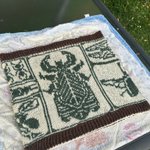
Lamprocyphus augustus artwork, drawn with ink & coloured pencil. Framed original available.
A beautiful jewel-like weevil from Brazil.
carimnahaboo.com/products/la…

Steph Skipp retweeted

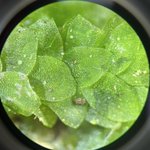
A return visit to the Llyn Peninsula for a ten day mossing sesh,a Saturday revisit to the site i discovered a new site for Cephaloziella dentata ,good to see it doing well and this strong patch a few meters away from last Octobers patch @BBSbryology


Steph Skipp retweeted
Marchesinia mackaii ,or rock treacle as I call it ,growing across the Carboniferous Limestone outcrops in the Wye valley last weekend @BBSbryology


Steph Skipp retweeted

Close-up on the third eye
What looks like a sparkling gemstone is the median ocellus of a wild bee – one of three simple light sensors on its head. Unlike the large compound eyes that deliver images, ocelli only detect brightness and the polarization of light. They help the bee instantly recognize the horizon, stabilize flight attitude, and even “see” the sun on cloudy days – perfect for daring maneuvers between flowers. In many insects, ocelli are also linked to the internal clock and support navigation according to the circadian rhythm.
Three tiny dots, massive superpower
Sources:
Rossel, S. (1989). Polarized Light in Insect Vision. In: Comprehensive Insect Physiology, Biochemistry and Pharmacology.
Warrant, E. J. (2017). The remarkable visual abilities of nocturnal insects. Journal of Experimental Biology.
Labhart, T. & Nilsson, D.-E. (1996). Ocelli in insects: Structure and function. Arthropod Structure & Development.

Steph Skipp retweeted
A grotty Saturday morning i went up to check up on the Cotswold stone wall top Grimmia Pulvinata Cushions at a site that holds all three Octospora species that are host specific to Grimmia pulvinata, here Octospora Grimmiae doing the best I have seen it .


Steph Skipp retweeted
Dung beetle, Geotrupes spiniger.
Fascinating hairs on the eye of this amazing beetle.


Steph Skipp retweeted
Bazzania trilobata (Greater Whipwort) in the hanging Woodland on Moel y Gest last Wednesday near Porthmadog, i remember seeing this beuty of western Atlantic Oak-woods for the first time at Ganllwyd NNR and my eyes widened,they still do when ever I see it 💚 @BBSbryology


Steph Skipp retweeted
Marchesinia mackaii (MacKay's Pouncewowort) on rocky outcrops amongst the hanging Woodland on Moel y Gest near Porthmadog last Wednesday @BBSbryology


Steph Skipp retweeted

The party has just started 🥳 Lemon disco fungus ( Bisporella citrina) always shows up 😊
#fungi #sundaymorning #nature #NaturePhotography #NatureBeauty #macro


Steph Skipp retweeted
Riccia subbifurca (Least Crystalwort) on bare earth patches amongst short Coastal turf at Gwaith Canol old granite quarry at the far end of quarry beach near Llanbedrog earlier this week @BBSbryology


Steph Skipp retweeted
Rossetti's Pouncewort (Cololejeunea rossettiana) growing over Marchesinia mackaii on a limestone rockface at Coldwell Rocks in the Wye valley last weekend @BBSbryology


Steph Skipp retweeted

Great day talking about #DungBeetles & the complexities of their conservation at the Entomological Opportunities @BritEntSoc Student & Early Career Group meeting - plenty of dung beetle adoration shared!


Steph Skipp retweeted
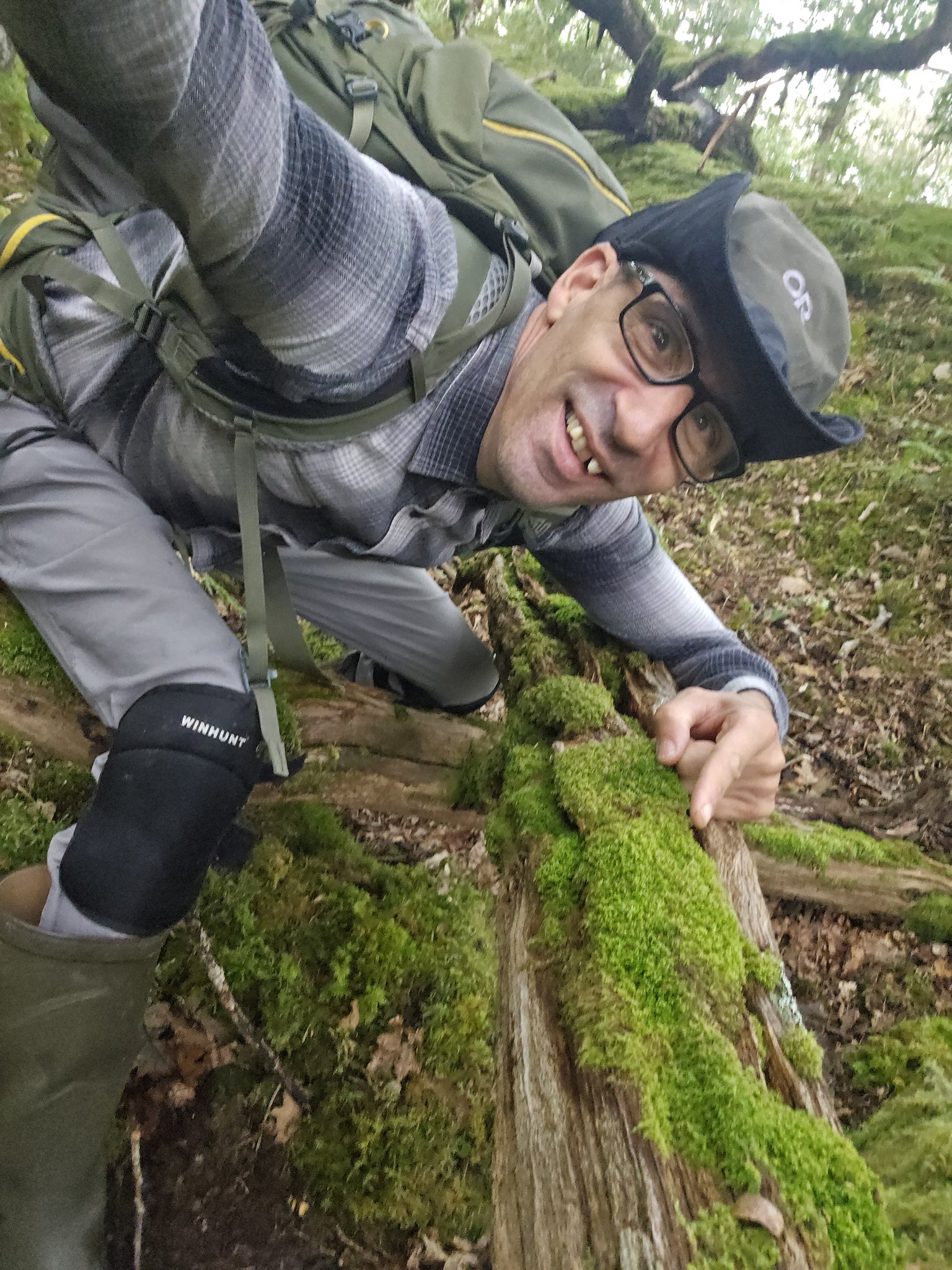
Rock Fingerwort (Lepidozia cupressina) in b8g amounts on old Oak logs and boulders at Coed Crafnant was great to see today "Everything counts in large amounts " @BBSbryology


Steph Skipp retweeted

Processing pselaphines from Yanayacu. Some beauties! The long-legged thing is a new Pselaphomorphus, which @lauravasvel revised for her M.S.. I don't think any flightless species have been previously known.


Steph Skipp retweeted
I've been particularly intrigued by a nearly unrecognized phenomenon (@Pselaphinae mentioned this briefly in 2014): members of Jubini produce lasso-like secretions from maxillary glands, likely a novel prey capture mechanism. I call these 'oral noodles'.


Steph Skipp retweeted

The first proofs for my next guide to spiders have arrived and I’m really pleased with them, which is unusual for me!


