

The official twitter account for The University of Strathclyde Physics Society. Please follow for updates of meetings, events and fun physics news!
Glasgow
Joined September 2013
- Tweets578
- Following117
- Followers262
- Likes69





Strathclyde Phys Soc retweeted

Ensuring that we ‘learn the lessons of history’ is somewhere between a universal aspiration and a cliché, but how many real examples can we actually think of? Read more Michael’s opinions following the recent @NIAUK event. buff.ly/3LPqLVQ

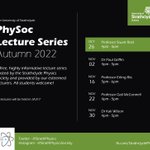
Updated schedule for this semester’s guest lecture series!
These guest lectures are very kindly provided for free by the speakers, so please come along if you can 💫

Strathclyde Phys Soc retweeted

I was lucky enough to help organise CUWiP2022 last year with the wonderful @muellenbroich and @SarahCroke1 and see for myself what a difference it can make. I thoroughly recommend applying to attend if you can! @PhysicsStrath @StrathPhysics

Thinking about your future in physics can be scary - so focus on the next 2 months.....Apply now to attend CUWiP 2023 at the end of March!
Careers and ideas with a pinch of physics!
@livunicareers @LJMUCareers @livuniphysics

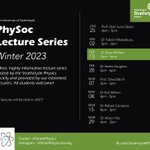
This semester’s guest lecture series kicks off next Wednesday (25th) at 4pm with Professor Oppo’s famous Maxwell talk 💫
Please come along if you can!
Link to register: eventbrite.co.uk/e/510852793…

Strathclyde Phys Soc retweeted

Here are the entries of our Physics jack-o’-lantern competition.
Visit our Instagram page to cast your vote for best pumpkin instagram.com/physicsstrath/

Strathclyde Phys Soc retweeted

We are back with an in-person SCOPE event!
Have you recently started your PhD and would like to hear practical tips from seasoned veterans (final year students and supervisors)? Make sure to join us for this casual seminar - there will be snacks as well! 🍕

Our lecture series for this semester kicks off next week, with Professor Stuart Reid
The lecture will be held at 4pm on Wednesday 26th, in room JA317. We highly recommend that you come along if you can!
More info and link to register: eventbrite.co.uk/e/strathphy…

Strathclyde Phys Soc retweeted

Join us on the 25th of October (next Tuesday) for our Welcome Event - featuring a talk by Professor Lyndsey Fletcher (Glasgow Uni), followed by drinks, pizza and snacks in the Common Room (JA 8th floor).
eventbrite.co.uk/e/wispa-wel…

Hi everyone!
Was nice to see some new (and old) faces at our welcome event today
For those who missed us, we’ll be at the freshers fair tomorrow from 10am-3pm! All students welcome

Hi all!
Come and meet some of our committee tomorrow at the department welcome event!
The welcome event will take place at 11:30am on the 5th floor of the John Anderson building
We will also be at the freshers fair this Tuesday - details will be posted tomorrow!!

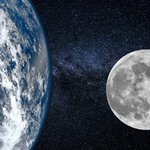
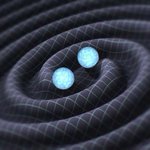
Image Description: Image 1 is of spirals coming from two spherical masses, showing gravitational waves. Image 2 shows an artistic style image of the moon near Earth. Image 3 shows four graphs which show how the moon's orbit is disturbed by gravitational waves. (10/10)
Related papers and articles:
1. phys.org/news/2022-03-moon-o…
2. innovationnewsnetwork.com/na…
3. ligo.caltech.edu/page/why-de… (9/n)

Since these are throughout the Universe, there could be hopes for finding information in the microhertz range, unveiling information from our Universe’s past. (8/n)

creating small disruptions in the moon’s orbit. This means that, potentially, small disturbances by ancient gravitational waves could be detected.
This research implies that the information from other binary systems could also be used, such as pulsar binary systems. (7/n)
which could have been produced at the dawn of the Cosmos.
Using lasers sent from observations to reflect upon the moon’s mirrors, the exact position of the moon (within a centimetre) is known. Gravitational waves constantly hit our Earth-Moon system (6/n)
2015. However, frequencies which current devices cannot cover could be covered by this new natural method. This could aid with the fundamental understanding of our Universe because an example of a signal currently undetectable is microhertz, (5/n)
Research from the IFAE, UAB and the University College London proposed this new method which has a measurement precision less than a centimeter. Current wave detectors do not have this preciseness.
Although predicted in 1916, the first detection of gravitational waves was (4/n)
“What is going on in Physics?” is about a new method of detecting gravitational waves using the varying distances between the Earth and the moon. (3/n)

predicted by Albert Einstein in 1916 (See Einstein 1916, “The foundations of the General Theory of Relativity”). Detecting gravitational waves, and analysing the information in which they carry, can allow scientists to observe the Universe in a whole new way. This month’s (2/n)
