

Keeping humanity in technology. Data Science Products. Opinions are my own. I'd like to see the raw data on that. AT suuurelock DOT bsky DOT social
- Tweets1.2K
- Following731
- Followers87
- Likes16.7K






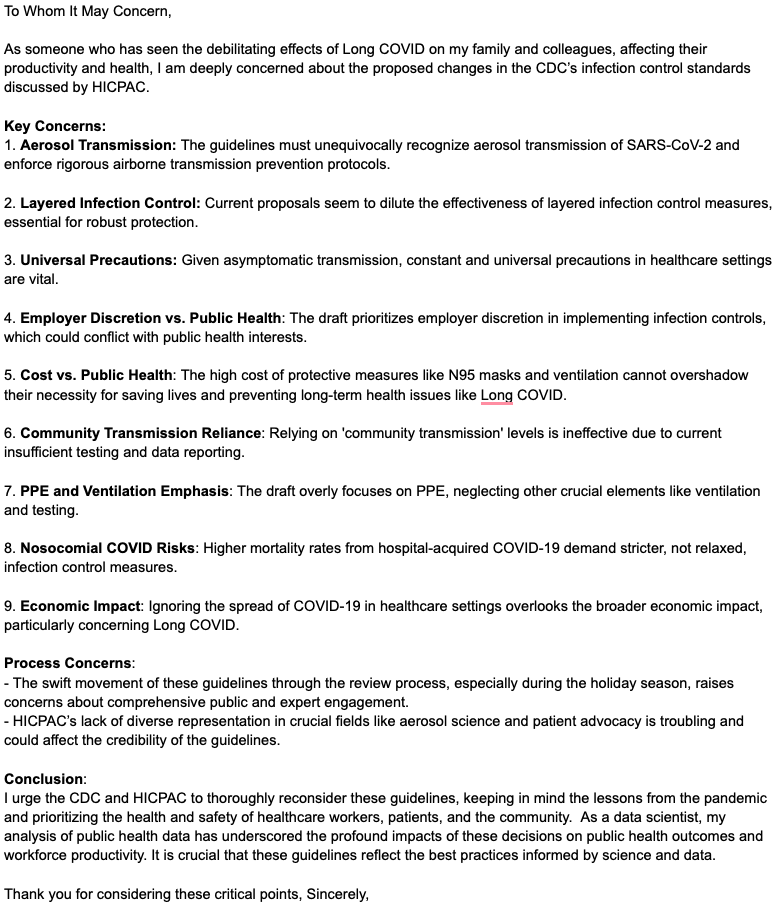
ALT As a data scientist with personal experience of Long COVID's impact on my family and colleagues, I have serious concerns about HICPAC's proposed CDC infection control guideline changes. Issues include: Ensuring clear protocols for SARS-CoV-2 aerosol transmission; maintaining effective layered infection control; implementing universal precautions against asymptomatic transmission; balancing public health needs against employer discretion; considering the long-term impacts of protective measures versus the health and economic costs, especially in light of Long COVID; using comprehensive data to assess community transmission levels; focusing on ventilation and testing, alongside PPE use; addressing high mortality from hospital-acquired COVID-19. Urging CDC and HICPAC to rethink these guidelines, focusing on health, safety, and data-driven decisions.


ALT As someone who has seen the debilitating effects of Long COVID on my family and colleagues, affecting their productivity and health, I am deeply concerned about the proposed changes in the CDC’s infection control standards discussed by HICPAC. **Key Concerns:** 1. **Aerosol Transmission:** The guidelines must unequivocally recognize aerosol transmission of SARS-CoV-2 and enforce rigorous airborne transmission prevention protocols. 2. **Layered Infection Control:** Current proposals seem to dilute the effectiveness of layered infection control measures, essential for robust protection. 3. **Universal Precautions:** Given asymptomatic transmission, constant and universal precautions in healthcare settings are vital. 4. **Employer Discretion vs. Public Health:** The draft prioritizes employer discretion in implementing infection controls, which could conflict with public health interests. 5. **Cost vs. Public Health:** The high cost of protective measures like N95 masks and ventilati


ALT The guy in corner at party meme "They don't know Four Tet has been cool for like 20 years" with an old Four Tet album on CD, with the partiers excited about recent collabs of Four Tet, Skrillex, and Fred Again in NYC and at Coachella


