

Scientist enjoying an ever weirder foray into a world of organisms overlooked by most
NYC
Joined January 2015
- Tweets173
- Following107
- Followers200
- Likes413



Pinned Tweet
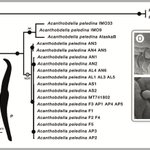
All Placozoa look like pancakes, despite being animals that are 500+ million years old and genetically distinct. In our new phylogenomics paper we described a new species, classes, orders, and families using molecular morphology. @AMNH @SFCNY @burnsajohn frontiersin.org/articles/10.…

Marine modelers check this out! Some assumptions, not shockingly, must be reconsidered for copepods - the tiny grazers, carnivores, and omnivores of the sea. Here is the awesome paper by @EmilyHerstoff esajournals.onlinelibrary.wi…

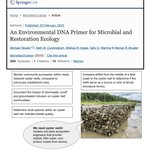
If you haven't tried eDNA, maybe our primer published in Microbial Ecology can help get you started :)
@BlackCoralLab @sethwcunningham @SallyWarring @bat_biomes @SFCNY @AMNH
link.springer.com/article/10…

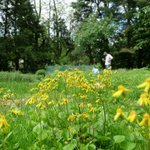
Finally published on backyard meadow diversity. Critters thrive in these spaces, and - based on our data - so do microbes! Maybe consider replacing some of your lawn with wildlife habitat?
@EmilyHerstoff @sethwcunningham + Felix David @SFCNY @AMNH
link.springer.com/article/10…

For a long time I have thought morphology and molecules are artificially divided among systematists. My colleagues and I finally got the words down on a page and published. Let's name the formerly unnameable! @AMNH @SFCNY @SpencerGalen
frontiersin.org/articles/10.…
Also check out this paper where we apply this idea, using molecular morphology (phylogenomics and gene content) to name morphologically invariant Placozoa animals. frontiersin.org/articles/10.…

@luminescentlabs et al. tomorrow have a gallery opening taking a fascinating dive into how humans have perceived and continue to interpret oceans and their inhabitants @CUNY

"Who Speaks for the Oceans?" opens tomorrow (9/1) at Mishkin Gallery! Join us from 6-8pm for the opening reception.🐋🎶
Image: Ant Farm, "The Dolphin Embassy viewed from Directly Astern," 1977. Courtesy Berkeley Art Musem and Pacific Film Archives.

Taxonomy is critical and having practitioners across the world is critical. How can we know what to save in conservation if we don't know animals and plants we even have? Way to go @Persian_spiders


1
1
@acer_aceae killing it with this study. Leaf microbiome linked with host genomics. Rad on so, so many levels.

Our study on ecological change in the leaf microbiome is out in @PLOSBiology! journals.plos.org/plosbiolog…
Plant leaves contain an ecosystem of microbes that can help or hurt their host. Fungi are essential, but it's tough to study their changes in the wild.
Image: Chelsea Mamott

ALT Cartoon of a switchgrass leaf with numerous fungi on and inside the leaf highlighted. A bison and grasshopper are feeding on the leaf to illustrate how fungi can deter herbivores by producing toxic chemicals or pathogenic spores.
1
1
Great microscopy work is always such a treat. Especially when its on overlooked yet complex critters like copepods.
This Post is from an account that no longer exists. Learn more
@MarionRenault and I wrote about sea lamprey - a vampiric fish - for @WIRED. They squirm, bite, and are simultaneously 1) a devastating invasive in the Great Lakes and 2) a native species (+ delicacy) in danger in Europe.
wired.com/story/the-double-l…

“Okay,” Miller thought, “we can see bioluminescence from space.”
Wonderful @nijhuism piece on milky seas, a rarely observed but massive case of bacterial bioluminescence — often covering thousands of square miles.
scientificamerican.com/artic… via @sciam

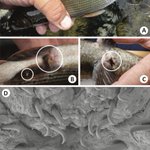
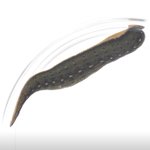
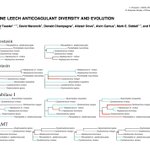
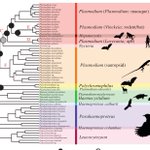
@danielledecarle, Łukasz Gajda, Serge Utevsky, Piotr Świątek, et al. nailed this study on hook-faced fish worms. Look at those hooks! These worms latch onto salmonid fish and suck their blood. So fun collaborating on this paper. academic.oup.com/zoolinnean/…

1
2
"But there it was: a solitary Q. tardifolia. In the instant Eason recognized it, it became the only known living specimen of the country’s rarest oak species."
Finally some happy plant conservation news from @MarionRenault @newrepublic
newrepublic.com/article/1670…
1
Like science and drinking? Should be a fun read.
This Post is from an account that no longer exists. Learn more
Amazing to think that wood-destroying shipworms are related to clams and mussels. Then again, Wikipedia informs me some might make tasty treats. And, to boot, @BlackCoralLab found their gene evolution can be highly divergent.
This Post is from an account that no longer exists. Learn more
Don't know about viruses? Certainly you appreciate their importance. Check out this @AMNH_SoS course on Coursera if want to get to really understand viruses. I'm glad to have contributed a little to this.

We are thrilled to introduce our latest addition to the Seminars on Science program: Virology & Epidemiology in the Time of COVID-19! Learn what a virus is, how our immune system defends against pathogens, & the social and economic disparities that influence pandemic conditions.

Lamprey are bloodsuckers, but they are also beloved food for many cultures and tons of wildlife. @ben_a_goldfarb details how indigenous peoples are saving Pacific lamprey. I hope their hard work is paying off!
hakaimagazine.com/features/d…
Canada geese (an abundant inhabitant of parks etc.) almost went extinct, but were saved by conservation efforts. This success has brought surprising conflicts with humans, and surprising solutions (like egg addling). @MarionRenault reports: theatlantic.com/science/arch…

Great deep dive by @bittelmethis debunks some myths about starlings - especially that there was a single introduction to the US and that it was inspired by Shakespeare nytimes.com/2022/04/11/scien…
@NYTScience article by @MarionRenault on paleometagenomic work by @robharbert lab! DNA from packrat middens, deposited thousands of years ago, can benefit paleoecology and climatology. Glad to have played a part. NYT: https://xitter.gq/t.co/so4Qbbeaqq Original sci: https://xitter.gq/t.co/8FRBcOqlbU

I wrote about ancient, pee-soaked rodent nests for @NYTScience :)
nytimes.com/2020/02/20/scien…