

Award winning producers of powerful, emotive and compelling social history documentaries. We're passionate about people's stories.
Bristol, UK
Joined July 2011
- Tweets1.3K
- Following673
- Followers886
- Likes297
1.#SurvivingHelmand 9pm tonight on @BBCWales or @BBCiPlayer. Four people deeply affected by the conflict in Afghanistan tell their extraordinary stories of anguish, despair and recovery, how they coped with the consequences and have strived to help others


1.After finishing work at veterans’ charity @woodys_Lodge today Steve Owen @Steveow2523 begins walking 457 laps of a 400m running track (113miles/ 182km) to commemorate the 457 British service personnel lost in Afghanistan. He will carry the name of 1 of those killed on each lap

17. Upon her return to the U.K., Sarah campaigned to improve conditions for soldiers, and advised the army on how they could improve their approach to bereaved families. She was awarded an MBE for services to the Armed Forces and their families @Soldierscharity #SurvivingHelmand

15. With the war still raging, she felt she had to go to Camp Bastion where James had died to try and find some resolution to her grief. “I wanted to be where he closed his eyes for the last time. It was so overwhelmingly important to me”.

14. In September 2009 the news that Sarah Adams feared most arrived one morning. There was the dreaded knock at the door, and uniformed men on her doorstep there to tell her that her son, James Prosser, had been killed in Afghanistan @TheRoyalWelsh @BBCWomansHour

11. Like many veterans it took years for Hugh to seek help for PTSD: “I was drinking and contemplated taking my own life twice”. Hugh started a podcast – ‘H-Hour’- and a rugby team, the Forces Barbarians RFC - or FUBARS - to help others @hhourpodcast @FubarsRfc @PoppyLegion

10. @HughKeir was a Sergeant and sniper with 3PARA @TheParachuteReg. During the siege of Musa Qala he found that the continual anticipation of a mortar round hitting his shelter took its toll: “It shook me, it was the first time I ever felt fear. It was helplessness”.

8. “When you’re in that black hole of depression, of Post Traumatic Stress Disorder, it doesn’t feel like there’s a way out. But there is. There’s loads of ways out of it”. He has forged a successful career as a podcaster and writer.

7. He thinks very differently now:“The moment we say, ‘I’m a soldier. I’m broken. The war did this to me’. The more you’re a victim you give up all your agency. The more you do that you’re out of the fight…life is a battle”.

6. Geraint Jones recalls that when he came home from Afghanistan he lost his sense of purpose: “When the war was over I felt like a failure. I started drinking. Then I started using drugs every day because I didn’t want to face reality".
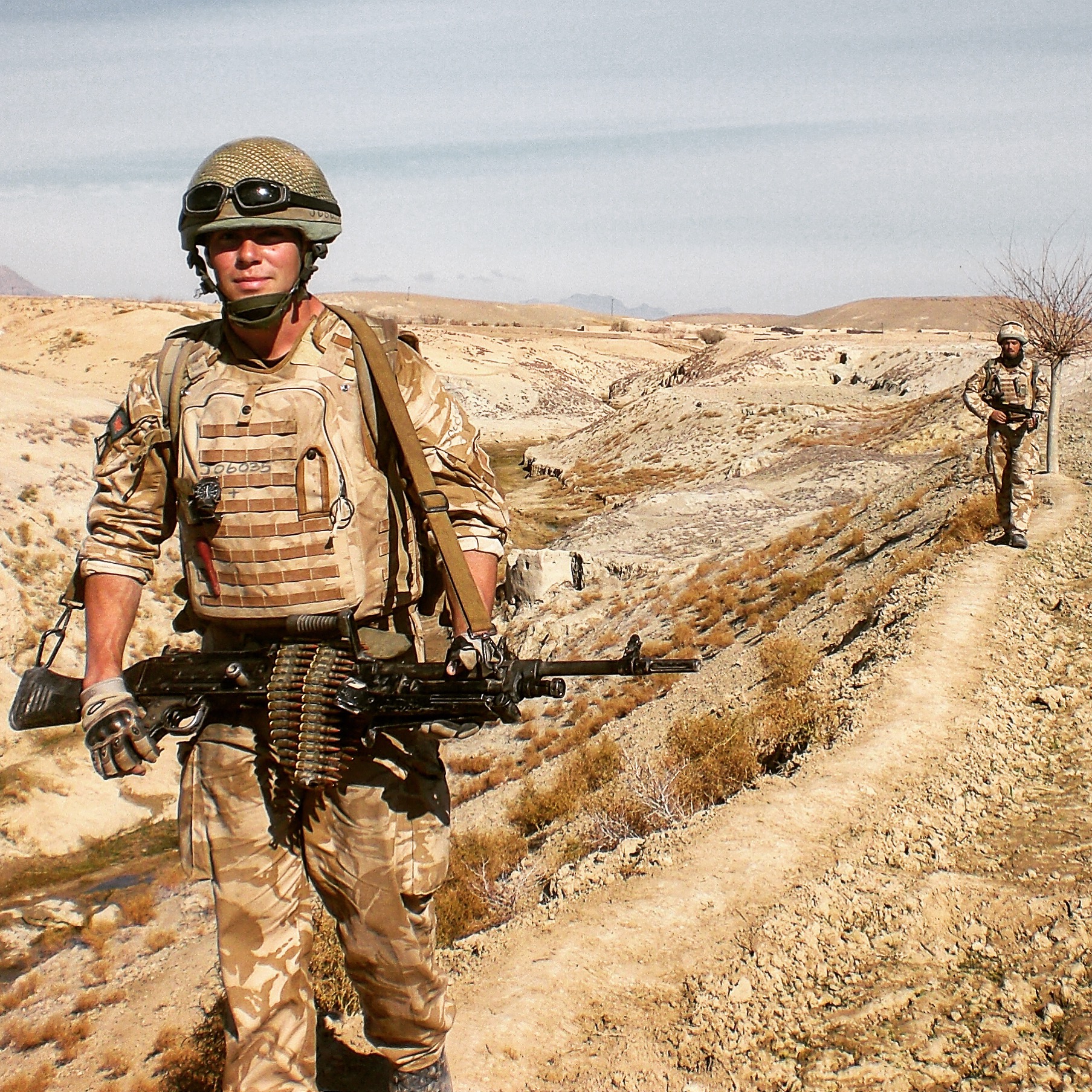
5. #SurvivingHelmand: “I won’t let my disability define me”. “It’s about giving something back to the guys that we lost. About saying it wasn’t for nothing”.

3. Steve Owen’s vehicle hit an IED. After multiple operations he opted to have his leg amputated due to excruciating pain. He is now a project manager with @woodys_Lodge, providing support to veterans, emergency services and their families


1.Don’t miss our #SurvivingHelmand Tuesday 9 November at 9pm @BBCWales or via BBC iPlayer. Two soldiers who overcame PTSD, another who lost a leg, and a bereaved, campaigning, mother tell their stories, reveal how they coped with the consequences and have strived to help others


This Sunday - to mark the #centenary of #WW1 our latest film We Will Remember Them with @huwbbc - 4th Nov @BBCFOUR , 9pm. Read Huw's moving experiences of filming the documentary in the current issue of #radiotimes p26-27.
#fww #Armistice100 #history
