

Advancing legislation and initiatives to increase healthy human lifespan.
Alexandria, VA
Joined July 2021
- Tweets1.3K
- Following100
- Followers3.1K
- Likes2.3K




Pinned Tweet
Longevity science and public demand are advancing rapidly, but real-world impact depends on policy that keeps pace with innovation. A4LI was founded as the first 501(c)(4) advocacy group to bridge this gap, championing policies that clear the path for researchers, founders, and investors alike.
Starting in 2027, A4LI will become a company membership organization, building a unified industry front on Capitol Hill. Membership empowers your organization to:
→ Influence National Policy: help shape the agenda on FDA pathway reform and research funding.
→ Join the Coalition: collaborate alongside fellow pioneers across biotech, clinical practice, and venture capital.
→ Accelerate the Timeline: drive policies that bring breakthrough therapies to the public faster.
Secure your seat at the table and help make healthy longevity a national priority: tinyurl.com/theA4LI

The biology of aging is increasingly recognized as an important factor in the development of many chronic diseases. Advances in geroscience and longevity research are creating new opportunities to address these underlying mechanisms and improve health across the lifespan.
Over the coming weeks, A4LI will be joining researchers, clinicians, biotech innovators, investors, and other leaders across the longevity ecosystem at two upcoming events focused on advancing the science of aging and translating discoveries into real-world impact.

Longevity Global Summit 2026
The sixth annual Longevity Global Summit will bring together leaders from across the longevity ecosystem to explore the future of medicine and the development of interventions targeting age-related diseases. Discussions will cover therapeutic development, regulatory pathways, aging biomarkers, clinical trials, regenerative medicine, and emerging technologies.
📍 Buck Institute for Research on Aging, Novato, CA (hybrid event)
🗓️ December 9–10, 2026
📖 Learn more and register here: longevitygl.org/longevity-gl…

Fifth NIH Geroscience Summit: Revisiting the Geroscience Hypothesis – Focus on Health
Hosted by the NIH Geroscience Interest Group and the National Institute on Aging (NIA), this two-day summit will bring together academic and industry researchers, clinicians, and other stakeholders to assess progress in geroscience and identify priorities for the next 3–5 years.
Discussions will explore emerging research areas, approaches to measuring healthspan, the development of gerotherapeutics, and opportunities to translate discoveries in aging biology into clinical applications.
📍 Building 35, NIH Main Campus, Bethesda, MD (virtual attendance also available)
🗓️ December 2–3, 2026
📖 Learn more and register here: nia.nih.gov/research/dab/wor…
We look forward to connecting with members of the longevity and geroscience communities at both events and helping advance the policies needed to translate scientific progress into better health outcomes.

2
41
This week on A4LI’s Scientist Spotlight, we speak with Joshua Berg, a Research Associate at @VincereBio.
In this episode, we explore preclinical models of aging and discuss Josh’s research background in metabolism and autophagy.
You can listen to the full episode here: open.spotify.com/episode/7zz…

Tomorrow, the Senate HELP Committee is scheduled to vote on two nominations with significant implications for the future of health and science.
🔬 Dr. Heidi Overton, MD, PhD, nominated to serve as Commissioner of the U.S. Food and Drug Administration (FDA)
🔬 Jim O’Neill, nominated to serve as Director of the National Science Foundation (NSF)
The FDA plays a critical role in determining how new therapies are evaluated and ultimately reach patients. The NSF supports the fundamental research that makes tomorrow's scientific breakthroughs possible.
Together, leadership at these agencies will help shape the research and regulatory landscape for the next generation of medical innovation, including longevity science.
📅 Wednesday, November 18 | 9:45 AM ET
📍 430 Dirksen Senate Office Building
🎥 Watch the livestream here: youtube.com/live/waARCoH5Gdo

The Alliance for Longevity Initiatives (A4LI) retweeted
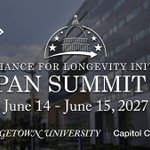
Save the Date: The fourth annual H-SPAN Summit D.C. is coming June 14-15, 2027!
We’re excited to return to the Georgetown University Capitol Campus, once again partnering with the Georgetown University Center for Healthy Aging!
Building on last year's momentum, we invite leaders at the forefront of aging biology to help advance longevity science policy with the shared mission of making healthy aging a national priority.
Registration, sponsorship opportunities, and the full program agenda are coming soon. Follow along for updates!
Read the full press release here: a4li.org/wp-content/uploads/…
We can’t wait to be there!

A sold-out Vision Weekend returns this week to San Francisco!
Expect our main 40th anniversary celebration in the US, expert talks across seven tracks, a $10K idea competition, sci-fi book swap, behind-the-scenes lab tours, and more.
This year also includes a Founder & Funder Mixer, this Sunday at Lighthaven: a curated evening for founders, researchers and investors working on secure AI, nanotech, neurotech, space and energy, and longevity biotech.
Still looking for a ticket? Sign up to our waiting list.
Links in replies.
Vision Weekend USA is powered by @protocollabs, @eigenlabs, @paradromics, @RetroBio_ , FUTO, @d_model_ai, and @Convergent_FROs.
Aging and Longevity Added to Focus Areas of FDA Regulatory Science
The @US_FDA’s Office of Regulatory and Emerging Science just released their Broad Agency Announcement for Fiscal Year 2027 and it includes aging and longevity as a focus area!
The agency is actively looking to fund external researchers, biotech innovators, and academic labs to solve the longevity field's biggest regulatory bottlenecks, including:
✅ Validating aging biomarkers with the goal of advancing candidates toward validated or reasonably likely surrogate endpoint status under the FDA-NIH BEST framework.
✅ Developing and modernizing clinical trial frameworks for aging related indications, including multimorbidity prevention frameworks and risk-enrichment strategies using validated aging biomarkers.
✅ Generating high-quality, longitudinal data-sets to assess the relationship between aging-related biomarkers (and its heterogeneity) and later clinical outcomes.
We want our longevity industry to succeed, so we must work together to build the tools, standards, and approaches needed for the FDA to evaluate the safety and efficacy of products that target the biology of aging.
Aging and longevity ARE public health initiatives and they perfectly align with the FDA’s 4 Public Health Pillars:
1️⃣ Innovation and Global Leadership
2️⃣ Advancing National Health Security
3️⃣ Increasing Access to Affordable Medicines & Medical Products
4️⃣ Preventing Chronic Disease and Promoting Wellness in America
So if you are building in this space, please apply! This is the regulatory and funding signal we have been waiting for. The deadline to submit for FY27 consideration is January 22, 2027.
🔗Explore the extramural R&D program and see how BAA funding works here: fda.gov/science-research/adv…

As populations age around the world, extending healthspan is becoming an increasingly important priority for governments and research institutions. Addressing age-related diseases and helping people remain healthier for longer will require advances in science, technology, and international collaboration.
In October, @ARPA_H sent a delegation to Japan for more than 20 engagements across seven cities, bringing together researchers, industry leaders, and government officials to explore opportunities for collaboration. Meetings with Japan's Cabinet Office, Ministry of Health, Labour and Welfare, Pharmaceuticals and Medical Devices Agency, and Japan Science and Technology Agency included discussions on regulatory science, biotechnology, and the growing need for longevity and healthspan interventions.
The visit builds on the U.S.-Japan Technology Prosperity Deal, advancing cooperation in health and biotechnology while opening new opportunities for research partnerships. ARPA-H is already pursuing international connections that could help programs like BoSS, which aims to make biologic medicines stable without refrigeration, benefit from Japanese expertise in biotechnology and distribution.
📖 Read the full recap here: arpa-h.gov/news-and-events/p…
At A4LI, we believe extending healthy human lifespan requires sustained investment in research and innovation. As aging becomes an increasingly important challenge for countries around the world, international collaboration can help accelerate scientific discoveries, advance new approaches to age-related diseases, and expand access to the breakthroughs that will allow more people to live longer, healthier lives.

Congratulations to the seven members of the Longevity Science Caucus who won re-election yesterday!
Rep. Gus Bilirakis (FL-12), Rep. Paul Tonko (NY-20), Rep. Ro Khanna (CA-17), Rep. Scott Peters (CA-50), Rep. Sam Liccardo (CA-16), Rep. Glenn Grothman (WI-6), and Rep. Lori Trahan (MA-3) will all return to Congress in January.
This bipartisan group has championed the idea that aging research is one of the best investments we can make in America's health and economy. We look forward to working with them in the 120th Congress to help more Americans live longer, healthier lives.

After more than three decades leading the National Institute on Aging, Dr. Richard Hodes will retire as NIA Director on December 7, 2026.
Since 1993, Dr. Hodes has guided NIA through remarkable growth, with its annual budget rising from $400 million to $4.6 billion. That growth reflects a case he made for years: aging research is public health research.
Much of today’s longevity field rests on the foundation he built. Thank you, Dr. Hodes, for a career devoted to longer, healthier lives.

🧬 The Faster Clinical Trials Act Has Officially Been Introduced!
In September, we shared that Rep. @JakeAuch (D-MA) was developing legislation to bring clinical trials into routine patient care. Now, he and Energy and Commerce Health Subcommittee Chairman Morgan Griffith (R-VA) have officially introduced the bipartisan Faster Clinical Trials Act.
The legislation would establish a new FDA Center for Clinical Trial Innovation and make it easier to conduct research in the places patients already receive care, including primary care offices, community clinics, virtual visits, and even their own homes.
For longevity science, this has important implications. Older adults experience a disproportionate burden of chronic disease, yet remain underrepresented in clinical research. In NIH-funded cancer studies, adults 65 and older accounted for just 26% of participants, despite representing 56% of new cancer cases.
By integrating research into routine care and allowing Medicare to cover routine clinical trial costs, the legislation could help address this gap, making it easier for older adults to participate in the research that may ultimately benefit them.
📖 Read the full press release here: auchincloss.house.gov/media/…
At A4LI, we believe advancing longevity science means not only developing new therapies, but ensuring the people who stand to benefit most are represented in the research that brings those therapies to patients. We're grateful to Rep. Auchincloss and Chairman Griffith for their bipartisan leadership.

🧠 Longevity Fact of the Week
How fast are you really aging? The answer may be hiding in your gut.
A new study from the University of Hawaiʻi at Mānoa compared gut bacteria with a blood-based measure of how quickly the body is aging. Differences in gut microbes accounted for about 15% of the variation in participants’ pace of biological aging.
Some species stood out. Bifidobacterium adolescentis was among those most strongly linked to slower aging, while Succinivibrio dextrinosolvens was linked to faster aging. The study also included Native Hawaiian and Pacific Islander participants, groups that have been underrepresented in aging research.
📖Learn more here: nature.com/articles/s41598-0…
At A4LI, we’re excited to see research like this expanding our understanding of what shapes healthy aging. Every new biomarker brings us closer to therapies that help people live longer, healthier lives.

The Alliance for Longevity Initiatives (A4LI) retweeted

1 in 8 women in the U.S. will face breast cancer.
Current options still fall short for many patients. ARPA-H is tackling the hardest gaps with tools that do not exist yet.
🔬 AB-MRI is building a breast MRI that costs far less and works in community settings.
🧬 ADAPT evolves treatment as tumors change and uses AI to better predict chemotherapy response.
🧪 ADAPT’s EVOLVE breast cancer trial is now enrolling patients.
💊 OmniTACs and a new γδ CAR-T approach are opening fresh ways to attack solid tumors.
💗 LIGHT and GLIDE aim to predict, prevent, and treat lymphedema for nearly 1 in 3 survivors.
This Breast Cancer Awareness Month, ARPA-H is building real advances in detection, treatment, and life after cancer.

Alzheimer’s disease can begin changing the brain years before symptoms appear. Understanding what drives those changes, and intervening earlier, could open new opportunities to prevent or delay cognitive decline. @ARPA_H is investing up to $48.8 million in new Alzheimer’s research focused on that early window.
Mass General Brigham is launching a national clinical trial platform to test multiple preventive therapies simultaneously, before symptoms emerge. Washington University in St. Louis is building an open, AI-enabled data platform to help uncover the biological drivers of the disease. Other teams will investigate the earliest stages of cognitive decline and study how interventions affect brain health in at-risk older adults.
These projects build on a broader ARPA-H Alzheimer’s research portfolio totaling up to $155.3 million. It includes BIOGAMI, which aims to detect and address early protein dysfunction, and NIGHT, which is studying ways to improve sleep and mitigate women’s elevated risk of Alzheimer’s.
📖 Read more here: arpa-h.gov/news-and-events/a…
At A4LI, we believe advancing human health means addressing age-related diseases before they take hold. Research that uncovers the earliest drivers of Alzheimer’s could help shift the focus from managing disease to preventing or delaying its onset, giving more people the opportunity to live longer, healthier lives.

Women live longer than men on average, but those additional years are not always spent in good health. Closing that gap requires research that better accounts for women's biology and addresses the health challenges they face throughout life.
The Women's Health Executive Order calls for more research into conditions ranging from cardiovascular disease and Alzheimer's to osteoporosis, menopause, and aging. It directs the NIH to establish a dedicated Women's Health Division within 90 days and creates a White House Women's Health Task Force to coordinate efforts across federal agencies, including @NIH, @FDA, @CMSGov, and @ARPA_H.
📖 Read the full Executive Order: whitehouse.gov/presidential-…
At A4LI, we believe everyone should have the opportunity to live a longer, healthier life. Recognizing aging as a women's health priority is an important part of that goal. Continued investment in research and innovation can help ensure that longer lives also mean more years lived in good health.

Osteoarthritis affects tens of millions of Americans, and advanced cases can leave patients with few options beyond joint replacement. Current treatments can help manage pain and improve function, but regenerating lost cartilage and bone remains a major challenge.
@ARPA_H's Novel Innovations for Tissue Regeneration in Osteoarthritis (NITRO) program is working to change that. Research teams at Duke University, the University of Colorado Boulder, Columbia University, and other institutions are developing experimental approaches ranging from targeted drug delivery to 3D-printed, living joint scaffolds. In animal studies, some approaches have shown promising signs of cartilage regeneration. The goal is to move these innovations toward human trials while developing treatments that could cost substantially less than current standards of care.
📖 Read more here: washingtonpost.com/wellness/…
At A4LI, we're encouraged to see ARPA-H invest in research that could change how we treat age-related conditions. Maintaining joint health is essential to mobility and independence, and regenerative approaches could one day offer patients options beyond managing symptoms or replacing damaged joints. We'll be following NITRO as these experimental treatments advance toward clinical test.
