

Space news, explained daily 🚀
Joined November 2026
- Tweets31
- Following20
- Followers27
- Likes5
Pinned Tweet
Welcome to The Space Review 👋
Your daily source for the latest space news.
We cover major launches, emerging technologies and the companies driving the next era of space exploration.
The final frontier is closer than ever. Follow it here.


1
161
Elon Musk says the ablative material that Starship's tower arms scraped off Ship 42 during its catch will be replaced with stainless steel wool on future flights
Onboard footage shows the chopstick rail sliding along the ship's catch pin as it settled onto the tower, throwing off a flash of orange and knocking loose pieces of dark material
The catch pins are where the ship's full weight comes to rest on the tower, so that contact point takes a beating on every landing
A tougher contact surface means less repair work after each catch, one of the many small fixes SpaceX needs before a caught Starship can fly again without refurbishment
SpaceX, ULA and Blue Origin just received NSSL Phase 3 Lane 2 contract modifications worth up to $985M combined
The Space Force announced the awards today for national security launches from Cape Canaveral, Kennedy and Vandenberg, with work extending through April 2033. No funds have been obligated or allocation is clear yet
The announcement comes just 24 hours after ULA's Vulcan rocket failed, destroying 40 Amazon Leo satellites and raising new questions about its ability to deliver the Pentagon's most sensitive payloads
The Pentagon is spending billions to avoid dependence on a single launch provider, yet every Vulcan setback makes SpaceX more indispensable


4
232
SpaceX has launched an estimated 1,730 tonnes to orbit in 2026 alone, more than Europe has managed in the past 61 years combined
Since 1965, European-built rockets and Soyuz launches from French Guiana have delivered roughly 1,500 tonnes to orbit
The figures are based on Jonathan McDowell's GCAT spacecraft catalog through November 15, including Starship Flights 14 and 15
Europe still relies on expendable Ariane 6 and Vega C rockets, while SpaceX routinely reuses boosters and continues scaling Starship
The implications extend far beyond launch costs. The ability to deploy infrastructure at this scale will increasingly determine who dominates satellite communications and the emerging space economy
SpaceX is compressing decades of launch capacity into a single year xitter.gq/zebulgar/status/212242…
1
179
NEW: SpaceNukes has opened a new facility in Los Alamos, New Mexico, where J. Robert Oppenheimer developed the world's first atomic bomb over 80 years ago
The company is developing next-generation nuclear reactors for space, led by engineers behind NASA's Kilopower reactor, which successfully demonstrated nuclear fission power in 2018
SpaceNukes also recently secured a DARPA agreement to develop and test an autonomously controlled nuclear reactor
Unlike solar panels, these reactors could provide continuous electricity for years, even through the Moon's roughly 14-day-long nights
This could be critical for powering permanent lunar bases, extracting resources, and eventually supporting human settlements on Mars
The same place that helped usher in the atomic age could now help make humanity a multiplanetary civilization


2
110
NASA's Voyager 1 will become the first spacecraft ever to reach one light-day from Earth this Wednesday at 5:16 AM ET
At that moment it will be 16,094,799,096 miles away, after more than 49 years in flight
A command sent from Earth will take a full 24 hours to reach it, and its reply will take another 24 hours to come back
Its twin, Voyager 2, is 13.5 billion miles out and won't hit the same mark until 2035
Both probes lose about 4 watts of power every year from a starting 470 watts, and NASA has been shutting off instruments one by one to keep them alive into the 2030s
For perspective, nearly half a century of travel has carried humanity's most distant spacecraft less than 0.1% of the distance to the nearest star beyond our Sun
It's an extraordinary testament to human ingenuity, but also a reminder of just how vast the universe is and how little of it we've explored

2
293
NEW: The U.S. Space Force is targeting a 2029 launch of its first cislunar spacecraft system, extending American military operations toward the Moon as China accelerates its own lunar ambitions
The Pentagon is considering up to five spacecraft, each capable of carrying 2,000 kg of payload and operating as far as 1.5 million kilometers from Earth
Initial operational capability is targeted for 2031
Meanwhile, China is pursuing lunar communications networks, navigation infrastructure, and a permanent research station
These systems could eventually support commercial lunar operations, from transporting cargo to extracting resources, creating entirely new industries and opportunities for private companies
The Moon is emerging as the next strategic battleground between the U.S. and China, with control over infrastructure that could underpin a future multibillion-dollar lunar economy at stake

2
211
The FAA is requiring ULA to conduct a mishap investigation after yesterday's Vulcan failure, which destroyed 40 Amazon Leo satellites
During the failure, debris fell outside the planned hazard areas, forcing the FAA to activate two Debris Response Areas and slow or hold aircraft at their departure airports
Vulcan can't fly again until it is determined the failure poses no risk to public safety
Sierra Space's Dream Chaser is also scheduled to make its debut on Vulcan in spring 2027

1
253
Close-up photos show where Ship 42 lost a heat shield tile during reentry, leaving bare stainless steel exposed to extreme heat
The steel held, leaving only a scorched patch and a long rust streak below it
It was the only missing tile out of roughly 18,000 covering the spacecraft
A heat shield breach led to the destruction of Space Shuttle Columbia in 2003, while Starship’s steel hull appears to have survived the localized exposure
The significance goes beyond surviving a missing tile. A reusable spacecraft needs to tolerate minor damage without requiring extensive repairs after every flight
Elon Musk says Ship 42 could fly again after just a few weeks of refurbishment
That kind of resilience could be just as important to making spaceflight routine as the successful catch itself


NEW: Elon Musk says Starship's propellant cost per flight will drop below $500,000, while payload capacity to orbit will exceed 200 tons
That's half the roughly $1 million propellant bill and double the 100-ton payload in estimates following the Ship 42 catch
At those figures, propellant would cost less than $2.50 per kilogram delivered to orbit
For perspective, a hypothetical 200 kg payload allowance per passenger would translate to just $500 in propellant per person
That's roughly an order of magnitude cheaper than flying first-class from London to New York
The economics of access to space are beginning to look very different

2
156
NEW: Elon Musk just revealed that Starship V4 will be about 70 meters long, carrying over 60% more propellant than V3
That brings its total propellant capacity to roughly 2,650 tons, up from 1,600 tons on V3
The upgraded ship will also feature 3 additional higher-thrust Raptor Vacuum engines, bringing the total engine count to 9
The additional capacity and thrust will allow tanker variants to deliver significantly more propellant to orbit per flight, reducing the number of launches needed to refuel Starships heading to the Moon and Mars
This is especially important for Mars missions, where SpaceX and others will need to transport enormous quantities of equipment, infrastructure and supplies to establish a permanent human base


Ship 42 could fly again after just a few weeks of refurbishment, Elon Musk said after inspecting the spacecraft’s heat shield today
The engines are also in great condition
Achieving airline-like turnaround times will still require many small improvements, but the condition of Ship 42 suggests SpaceX is getting closer to rapid reusability
1
4
389
NEW: ULA's Vulcan rocket failed today on its Amazon Leo 1 mission, the first full mission failure in the company's history since its founding in 2006
ULA says an anomaly occurred about 10 minutes into flight, and the 40 Amazon Leo satellites did not reach orbit
The mission milestones on ULA's published timeline didn't match what tracking cameras and telemetry animation showed during the flight
"Today, we did not meet that standard," ULA said

NEW: ULA's Vulcan rocket has launched Amazon's Leo 1 mission on its third attempt, after a valve issue caused a hold at T-20 seconds
It's Vulcan's first flight since February, flying with two Blue Origin BE-4 engines and six solid rocket boosters in its most powerful configuration yet
The rocket must now successfully deploy Amazon's satellites into orbit, as the company works toward its goal of building a constellation to compete with SpaceX's Starlink
1
360
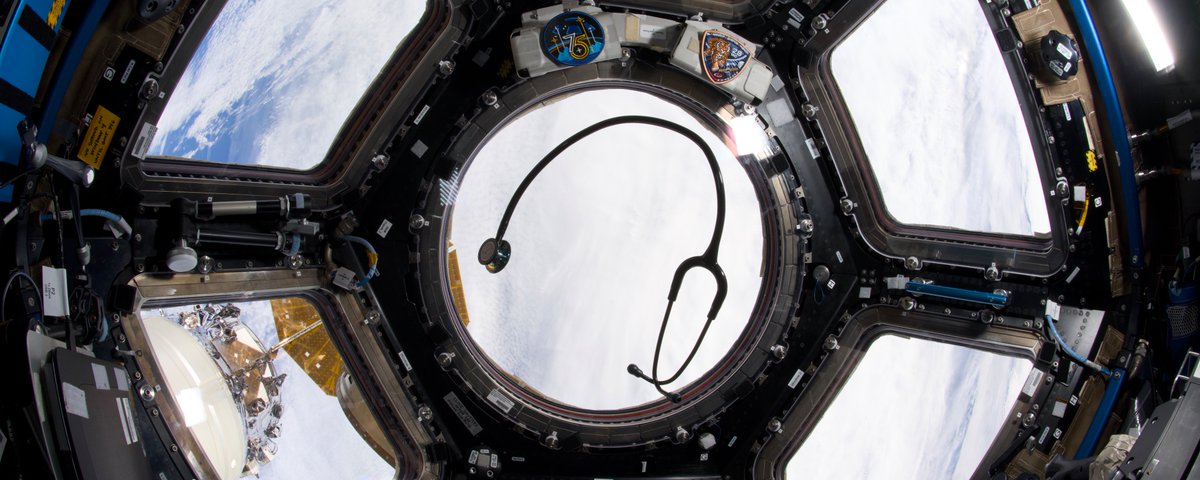
NASA astronaut Anil Menon says he had to drain an abscess on his own finger with a needle and syringe aboard the space station
Menon, a physician, wrote from orbit today that blood flow out of his head slowed to a near stop, and he’s now on a low-dose blood thinner because clots are a known risk in space
He watched the Starship catch from the station and says routine flights will mean more people living in space, and more work for doctors up there
Making spaceflight accessible to millions of people will require major advances in how we prevent and treat medical emergencies beyond Earth


5
213
BREAKING: SPACEX JUST MADE HISTORY
Starship has been CAUGHT by Mechazilla at Starbase
An absolutely insane moment for the future of humanity
SpaceX just pulled off something that once seemed impossible
2
126
NEW: Starship is reentering Earth's atmosphere at orbital velocity
Ship 42 entered the atmosphere at more than 26,000 km/h, with thousands of heat shield tiles protecting its windward side from extreme temperatures
Communications with the spacecraft are temporarily lost during reentry as extreme heat generated a plasma layer that blocked radio signals
As atmospheric drag slows the spacecraft, its four flaps control its orientation and guide its descent
Next, Starship must flip upright and fire its Raptor engines to reduce its speed for a safe, controlled catch
SpaceX is now approaching its first-ever attempt to catch a spacecraft returning from orbit
2
181
NEW: All systems green for Starship's deorbit burn.
SpaceX has given Ship 42 the GO to leave orbit and return to Starbase for the tower catch
Flight controllers have been monitoring the Raptor engines, navigation systems, communications and propellant tanks throughout the mission
The heat shield has also been inspected using cameras aboard Starlink satellites, with engineers confirming it is healthy enough for reentry
The return is streaming live on X.
3
358
Super Heavy ran short on propellant during Starship Flight 15 because its Raptor engines slightly underperformed, according to Musk
The green flame seen near the end of the booster's burn was copper from the engines' cooling channels burning as the propellant ran low
SpaceX will fix it with Raptor V3.2, an upgraded engine with better performance and consistency
Flight software will also cut the booster's engines about one second earlier, saving enough propellant for the boostback and landing burns
Musk said the issue does not change SpaceX's timeline for rapid, fully reusable Starship flights
Yes, the green flame is caused by burning copper from depleting fuel in the regenerative cooling circuit and going oxygen-rich (closer to stoichiometric temperature) in the main combustion chamber.
Slight underperformance of engines on this flight is the reason. The booster is meant to land with tiny residuals, so the solution is to improve engine performance and performance consistency (underway with Raptor V3.2), as well as adjust flight software to do MECO1 about one second earlier to ensure enough propellant for boostback and landing (tiny change).
These early ships and boosters are already outdated by improved designs in production or on the test stand, so this booster loss does not change our timeline to reach high volume, fully reusable Starship flights.
1
178