

We write a weekly newsletter of quality quotes from Earnings Calls | Editor: @Skrisiloff | Lead Author: @ekmokaya | Publisher: @Avondaleam |
Joined October 2017
- Tweets35.3K
- Following2.1K
- Followers104K
- Likes43.4K
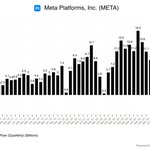



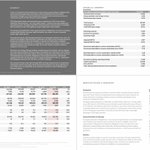
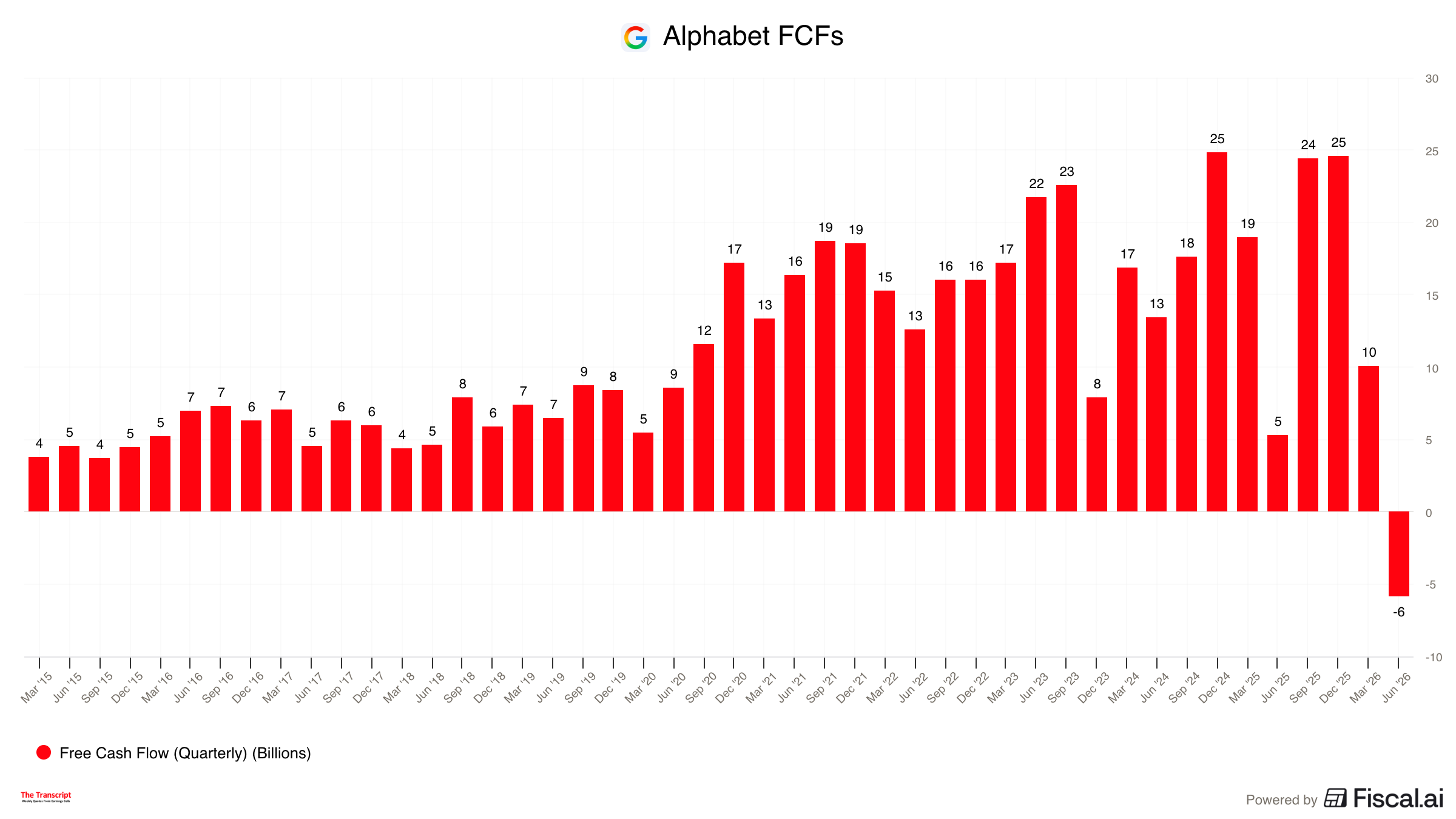
$META's FCF turned negative in Q3 2026:
"Capital expenditures, including principal payments on finance leases, were $34.9 billion, driven by investments in servers, data centers and network infrastructure. Free cash flow was negative $2.1 billion." - CFO


Enjoyed this?
Subscribe to our weekly newsletter here to get key quotes from earnings calls on Email:
thetranscript.substack.com/s…
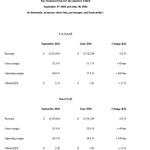
$META CFO: "We ended Q3 with over 66,000 employees, down 12% from Q2 following the May 2026 head count reduction."

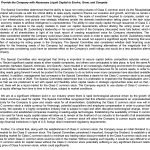
$META: "The Special Committee considered whether the Company could issue Class A common stock in order to raise capital, but Mr. Zuckerberg made it clear during the course of the negotiations with the Special Committee that he would not support a significant equity financing that would have the effect of reducing his voting power in the Company."
$META's Special Committee: "...timing is important to secure capital before competitors saturate various funding options. Recent significant capital raises at other notable companies....have resulted in an increasingly challenging environment for raising capital"

$META's Special Committee: "...timing is important to secure capital before competitors saturate various funding options. Recent significant capital raises at other notable companies....have resulted in an increasingly challenging environment for raising capital"
$META CFO: "Muse right now skews to our highest value users. I think over 20% of U.S. Muse users today are $1,000-plus annual ARPU users. So, it gives you a sense of kind of what the early adopters look like, and so they are not totally representative of the overall U.S. user base, which is not representative of the overall worldwide user base."
$META Q3 Earnings: Interesting numbers on Muse AI
— 10M+ users signed up in just six weeks, despite availability being limited to the U.S. and Canada.
— ~25% of users engage daily, more than 2x the initial engagement of Threads.
— 25%+ of users engage in shopping, with an average purchase size exceeding $200.
— Personal productivity (email, calendar management and task automation) and creativity rank as Muse’s second and third most common use cases, respectively.
— Targets a 10x+ improvement in inference cost efficiency over the next 12 months.
— Meta is building compute capacity to serve 1B+ Muse users over the next few years.
— Muse monetization will begin earlier than Meta's traditional playbook, reflecting high inference costs and significant commerce opportunities.
— Meta expects Muse to eventually generate more revenue per U.S. user than its existing Family of Apps
The Transcript retweeted
$META CEO: "Threads has now overtaken X in monthly actives and continues to grow quickly. "
Who is using Threads?
Enjoyed this?
Subscribe to our weekly newsletter here to get key quotes from earnings calls on Email:
thetranscript.substack.com/s…
Enjoyed this?
Subscribe to our weekly newsletter here to get key quotes from earnings calls on Email:
thetranscript.substack.com/s…
Enjoyed this?
Subscribe to our weekly newsletter here to get key quotes from earnings calls on Email:
thetranscript.substack.com/s…
Enjoyed this?
Subscribe to our weekly newsletter here to get key quotes from earnings calls on Email:
thetranscript.substack.com/s…
$META CEO on Muse use cases: "The most common use case for Muse is shopping. With more than a quarter of people who are using Muse engaging in this with an average purchase size of over $200, Plaid told us that they hadn't seen activity like they're seeing with their connector on any other service before. And in the first week, we had to work with Stripe to raise credit limits since the volumes were above what any of us expected. Beyond shopping, the most common connectors are for personal productivity and connecting Muse to your other services like email and calendar."
$META CEO on Muse: "Engagement and retention are also off to a strong start. About 25% of people who have set up Muse use it on any given day. For our earliest adopters, the longer that they use Muse, the better that retention seems to get. So to put this in perspective, this is more than twice the level that Threads started at, or where we believe that other AI apps started at as well. "
$META CEO: "Threads has now overtaken X in monthly actives and continues to grow quickly. "
Who is using Threads?
$META CEO: "From a business perspective, the average revenue per American user for our existing....Family of Apps users—is several hundreds of dollars annually, and we expect that Muse will reach an even higher level over time due to the amount of commerce that we already see taking place.
This will take some time, but we're starting to work on this now."
$META CFO on Muse: "We don't have sort of specific numbers to share around the cost structure of Muse today, but of course it is, as Mark said, pretty compute expensive. And making sure that we are focused on compute efficiency is going to be one of the key vectors towards being able to both scale Muse and grow it into the business that we want"
$META CFO: "We're also building several new AI businesses, and we expect that those can begin contributing incremental revenue in 2027. But more importantly, they can scale meaningfully over time.
And those will include monetizing our AI products through subscriptions, transactions, advertising, developing, enterprise offerings, as we talked about in one of the earlier questions"
$META CEO on Muse:
"....we have more than 10 million people in the US and Canada who have set it up. But I think one of the biggest constraints so far is that, because this is a compute-intensive service to run, we have not launched it globally yet"

$META Meta CFO: Q3 CapEx reached $34.9B, contributing to negative $2.1B FCF
"Capital expenditures, including principal payments on financed leases, were $34.9 billion, driven by investments in servers, data centers, and network infrastructure. Free cash flow was negative $2.1 billion. We ended the quarter with $82.4 billion in cash and marketable securities and $83.7 billion in debt."