

The Connecticut River Stormwater Committee is a coalition working to share information and collaborate on fulfilling obligations under the EPA stormwater permit
- Tweets2.5K
- Following22
- Followers26
- Likes92
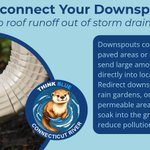





ALT MS4 educational graphic featuring the headline “Disconnect Your Downspout” and subheader “Keep roof runoff out of storm drains.” A photograph on the left shows rainwater flowing from a white downspout onto the ground. Text on the right explains how redirecting downspouts away from paved surfaces and toward lawns, rain gardens, or permeable areas helps reduce runoff and water pollution. The Think Blue Connecticut River otter logo appears near the bottom center.

ALT MS4 educational graphic featuring the headline “Bag It Every Time” and subheader “Pet waste is water pollution.” A photograph shows a small tan Chihuahua standing on grass while a person crouches beside it, using a turquoise waste bag to pick up pet waste. A blue overlay covers the upper portion of the image, with the Think Blue Connecticut River otter logo in the upper-right corner. The graphic encourages responsible pet waste disposal to protect local waterways.

ALT MS4 educational graphic featuring the headline “Store It. Don’t Pour It.” and subheader “Household chemicals can pollute waterways.” Against a light blue background are several rusty paint cans and two old aerosol spray cans. Text along the bottom encourages residents to never pour chemicals into drains or onto pavement and to use local hazardous waste disposal programs. The Think Blue Connecticut River otter logo appears in the lower-left corner.

ALT MS4 educational graphic featuring the headline “Leaves Belong in Bags, Not Drains” and subheader “Yard waste can clog storm systems.” A photograph shows fallen brown autumn leaves collected in large clear yard waste bags. Text explains how leaves, grass clippings, and yard debris left in streets can block storm drains and contribute to polluted runoff. The Think Blue Connecticut River otter logo appears in the upper-right corner.

ALT MS4 educational graphic featuring the headline “Wash Smart Outdoors” and subheader “Soapy water shouldn’t reach storm drains.” A photograph shows a person washing a vehicle's wheel with a soapy sponge, with soap suds covering the car and pavement. Text along the bottom reads, “Wash where water can soak in — not flow to storm drains.” The Think Blue Connecticut River otter logo appears on the left side, emphasizing responsible car washing to prevent stormwater pollution.

ALT MS4 educational graphic featuring the headline “Feed Your Lawn — Not the Water” and subheader “Too much fertilizer becomes pollution.” A photograph shows a blue-gloved hand holding granular fertilizer beside an open bag over garden soil. Text explains how excess fertilizer can wash into storm drains, causing nutrient pollution that harms water quality and aquatic life. The Think Blue Connecticut River otter logo appears in the upper-right corner.

ALT MS4 educational graphic featuring the headline “Nothing But Rain” and subheader “Storm drains are not trash cans.” A photograph shows a roadside storm drain partially covered with fallen leaves, litter, and debris beneath a blue overlay. The Think Blue Connecticut River otter logo appears in the bottom-left corner. The graphic emphasizes keeping trash and debris out of storm drains to protect local waterways.

ALT MS4 educational graphic titled “Septic Care Starts at Home” with the subheader “Proper system maintenance protects water quality.” A cross-section illustration shows an underground two-compartment septic tank with labeled inspection pipes, inlet and outlet baffles, a filter, wastewater, scum, and sludge. Red arrows illustrate wastewater flowing from the house through the tank and toward the drain field. The Think Blue Connecticut River otter logo appears in the upper-right corner.

ALT MS4 educational graphic titled “Small Litter. Big Pollution.” with the subheader “Cigarette butts don’t disappear.” A large discarded cigarette butt appears on the right against a light blue background. Orange text boxes explain that cigarette filters contain plastic and harmful chemicals that rainwater can carry into storm drains and local waterways, threatening wildlife and water quality. The Think Blue Connecticut River otter logo appears near the bottom center.

ALT MS4 educational graphic titled “Turn Waste Into Soil — Not Runoff” with the subheader “Composting keeps nutrients out of storm drains.” A blue text box explains how food scraps, leaves, and grass clippings can contribute to stormwater pollution when left on pavement. On the right, an illustrated compost life cycle shows growing vegetables, food, scraps, compost, and natural fertilizer connected by green arrows. The Think Blue Connecticut River otter logo appears in the upper-right corner.

ALT MS4 educational graphic titled “Protect Your Septic. Protect Our Water.” with the subheader “Proper maintenance prevents pollution.” The image shows a worker wearing blue gloves guiding a large hose into an underground septic tank opening surrounded by grass. Text explains how failing septic systems can contaminate groundwater and waterways and emphasizes regular inspections, pumping, and responsible water use. The Think Blue Connecticut River otter logo appears in the lower-left corner.

ALT MS4 educational graphic titled “See Something Unusual?” with the subheader “Report illicit discharge.” The background features a large metal storm drain along a roadside curb. Text explains that sudden discoloration, unusual odors, or unexpected flows in storm drains may indicate pollution and encourages residents to report concerns. The Think Blue Connecticut River otter logo appears on the right side of the graphic.

ALT MS4 educational graphic titled “Closed Lids Matter” with the subheader “Rain mixes with exposed waste.” Two side-by-side photos show green dumpsters against a white fence. The left dumpster is overflowing with trash and marked with a red prohibition symbol. The right dumpster has its lid securely closed and is marked with a green checkmark. The Think Blue Connecticut River otter logo appears in the upper-right corner.

ALT MS4 educational graphic titled “Spills Start Problems” with the subheader “Small leaks can become water pollution.” The background shows a rainbow-colored oil sheen spreading across wet pavement near a storm drain. Text explains how automotive fluids can wash into storm drains during rainstorms and encourages prompt spill cleanup and proper disposal. The Think Blue Connecticut River otter logo appears in the lower-right corner.

ALT MS4 educational graphic titled “Compost It. Don’t Throw It Away.” with the subheader “Food scraps and yard waste belong in compost, not the street.” A circular illustration shows food scraps, a compost bin, decomposing organic matter with worms, and a growing plant connected by red arrows. The graphic features a light blue background with the Think Blue Connecticut River otter logo in the lower-left corner, encouraging composting to reduce stormwater pollution.


ALT MS4 educational graphic titled “Rain Finds What's Left Open” with the subheader “Open lids lead to polluted runoff.” A photograph shows an overflowing green dumpster filled with trash bags and loose waste in an outdoor area. A large red prohibition symbol covers the dumpster, emphasizing improper waste storage. The Think Blue Connecticut River otter logo appears on the left. The graphic encourages keeping dumpster lids closed to prevent stormwater pollution.

ALT MS4 educational graphic titled “Keep Soil in Its Place” with the subheader “Erosion pollutes local waterways.” A photograph shows a black silt fence installed along the edge of a construction site, separating exposed reddish-brown soil from a grassy area. Text along the bottom reads, “Loose soil can wash into storm drains. Use erosion controls to protect water.” The Think Blue Connecticut River otter logo appears in the upper-right corner.

ALT MS4 educational graphic titled “Wash Smart” with the subheader “Soapy water shouldn’t enter storm drains.” A navy blue illustration of a clean car is surrounded by light blue soap bubbles and sparkling accents against a pale yellow background. The Think Blue Connecticut River otter logo appears in the upper-right corner. The graphic encourages environmentally responsible car washing to help prevent polluted runoff from reaching local waterways.

ALT MS4 educational graphic titled “Feed Your Lawn – Not Our Water” with the subheader “Excess fertilizer becomes water pollution.” A circular photo on the right shows white fertilizer granules spilling from a green scoop onto dark soil. Text explains how overapplying fertilizer or leaving it on pavement allows rain to carry nutrients into storm drains, contributing to algae growth and reduced water quality. The Think Blue Connecticut River otter logo appears in the upper-right corner.