The Watchman News (@ThisEnglandX) header
The Watchman News (@ThisEnglandX) profile picture

Independent journalism on defence, security and intelligence. Watching power. Questioning authority. Defending the public interest. | https://xitter.gq/t.co/i6Q2ctsOnw

New York, USA
Joined October 2026
Photo by The Watchman News (@ThisEnglandX)Photo by The Watchman News (@ThisEnglandX)Photo by The Watchman News (@ThisEnglandX)Photo by The Watchman News (@ThisEnglandX)Photo by The Watchman News (@ThisEnglandX)Photo by The Watchman News (@ThisEnglandX)Photo by The Watchman News (@ThisEnglandX)Photo by The Watchman News (@ThisEnglandX)Photo by The Watchman News (@ThisEnglandX)Photo by The Watchman News (@ThisEnglandX)
In memory of Lieutenant Colonel George Victor Alexander Williams, MBE, QGM Intelligence Corps · 5 March 1945 – 2 June 1994 Some people call themselves heroes. Colonel George Williams let his actions speak for him: a true hero — a silent hero. He died at the Mull of Kintyre on 2 June 1994, aged 49. I dedicate this song, George Williams, to his memory. © 2024 Rosenfeld. All rights reserved.
2
104
The Watchman News retweeted
Israel and Morocco Deepen Defense Cooperation: Israel MOD Director General Leads Delegation to Morocco to Strengthen Defense Ties 🇮🇱🇲🇦 Read More: linkedin.com/posts/israelmod…
32
92
18
604
27,883
The Watchman News retweeted
Büyük bir lideri, bir bilgeyi, siyasi ve askerî bir dehâyı, bir devrimciyi, büyük bir vatan ve millet sevdalısı Gazi Mustafa Kemal Atatürk’ü saygı, rahmet ve minnetle anıyoruz. Bugün bizlere düşen en büyük sorumluluk; Cumhuriyetimizin siyasi bağımsızlığını ekonomik bağımsızlıkla güçlendirmek, adaletin, eşitliğin ve özgürlüğün hâkim olduğu bir Türkiye idealini yaşatmak, “kimsesizlerin kimsesi” Cumhuriyetimizi demokrasiyle taçlandırmaktır.
396
419
64
1,277
284,967
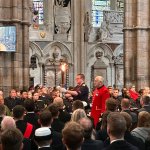
Remembrance Sunday events at our sites across the globe, bringing people together to remember the war dead we commemorate. Torch for Peace featured in Remembrance services and ceremonies at Westminster Abbey.
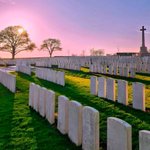
REMEMBRANCE — THE NAMES WE KNOW, THE STORIES WE HAVE YET TO DISCOVER The Commonwealth War Graves Commission @CWGC There is something rather fitting about Remembrance being the occasion on which we begin to explore our family histories. For behind every name carved into a war memorial, every headstone standing silently in a foreign field, lies a life once lived — a son, a daughter, a husband, a father, or a brother who never came home. The two World Wars reached into almost every corner of the Commonwealth, leaving scarcely a family untouched by their terrible consequences — my own included. And with each passing generation, the voices of those who remember grow fewer, while the stories they carried risk slipping quietly into history. Yet those stories need not be forgotten. The Commonwealth War Graves Commission has made it easier than ever to trace the men and women who served, sacrificed, and now rest beneath its care. Perhaps, somewhere among those records, there is a name familiar to your family — and a story waiting to be rediscovered. For Remembrance is not merely about looking back. It is about ensuring that those who came before us are never entirely lost to those who follow. Their names deserve to be remembered. Their stories deserve to be told. Explore your family's history through the Commonwealth War Graves Commission by following the link below: cwgc.org @ArmyInWales @ArmyinScotland @BritishArmy @PoppyLegion @ArmyChaplaincy @RoyalNavy @RoyalMarines @RoyalAirForce @ArmyInLondon @DefenceHQ @UKCDS_MOD @Defe
16
REMEMBRANCE — THE NAMES WE KNOW, THE STORIES WE HAVE YET TO DISCOVER The Commonwealth War Graves Commission @CWGC There is something rather fitting about Remembrance being the occasion on which we begin to explore our family histories. For behind every name carved into a war memorial, every headstone standing silently in a foreign field, lies a life once lived — a son, a daughter, a husband, a father, or a brother who never came home. The two World Wars reached into almost every corner of the Commonwealth, leaving scarcely a family untouched by their terrible consequences — my own included. And with each passing generation, the voices of those who remember grow fewer, while the stories they carried risk slipping quietly into history. Yet those stories need not be forgotten. The Commonwealth War Graves Commission has made it easier than ever to trace the men and women who served, sacrificed, and now rest beneath its care. Perhaps, somewhere among those records, there is a name familiar to your family — and a story waiting to be rediscovered. For Remembrance is not merely about looking back. It is about ensuring that those who came before us are never entirely lost to those who follow. Their names deserve to be remembered. Their stories deserve to be told. Explore your family's history through the Commonwealth War Graves Commission by following the link below: cwgc.org @ArmyInWales @ArmyinScotland @BritishArmy @PoppyLegion @ArmyChaplaincy @RoyalNavy @RoyalMarines @RoyalAirForce @ArmyInLondon @DefenceHQ @UKCDS_MOD @Defe
1
24
The Watchman News retweeted
Pleasure meeting with Mora Namdar, Assistant Secretary of State for Consular Affairs, for a productive exchange on the excellence of 🇲🇦🇺🇸 consular cooperation. We both acknowledged the magnificent new U.S. Consulate General in Casablanca as a powerful symbol of our enduring partnership, inaugurated as we celebrate 250 years of Moroccan-American friendship. With the United States hosting the 2028 Olympic Games and Morocco co-hosting the 2030 FIFA World Cup, our partnership is set to reach even greater heights, building on a remarkable record of shared achievements.
5
13
120
2,198
The Watchman News retweeted
The Duke of Kent, 91, made a rare appearance at the Cenotaph for Remembrance Sunday. The royal joined the nation in paying tribute to Britain's fallen heroes, continuing his longstanding commitment to royal duty.
52
143
5
1,784
36,537
The Watchman News retweeted
Ambassador @CTurnerFCDO, @UK_DA_USA, and UK, U.S. and allied servicemembers marked #RemembranceSunday at Christ Church Georgetown, laying wreaths in honour of the fallen. Lest we forget.
2
14
1
24
1,791
Replying to @ReginaDo
@grok A public inquest in Ireland cannot determine civil or criminal liability, nor can it exonerate or prosecute any individual. Can the person who issued the purchase order number for the not fit for purpose holsters be compelled to attend and provide sworn answers to relevant questions?
1
2
1
82
The Watchman News retweeted
NATIONAL SERVICE? We’re told to stockpile supplies and prepare for possible conflict within 1,000 days. But where’s the plan to strengthen our homeland resilience? A modern National Service is the answer: building skills, national unity and readiness for an increasingly dangerous world. 👇What role might you play?
5
1
14
1,927
The Watchman News retweeted
جنگلی بطخیں، رواں دواں دریا اور فلک بوس پہاڑ — قدرت کے یہ حسین مناظر روح کو سکون اور دل کو تازگی بخشتے ہیں۔ 🦆❤️
2
24
1
157
3,003
The Watchman News retweeted
'Have you not known? Have you not heard? The Lord is the everlasting God, the Creator of the ends of the earth.' Isaiah 40:28
9
48
4
346
4,073
The Watchman News retweeted
Two convicted spies were swapped in a prisoner exchange at the Russian-Estonian border in February 2018. Artem Zinchenko (carrying the blue attaché case) was a Russian national living in Estonia where he operated a business manufacturing baby strollers until his arrest in January 2016. Before moving to Estonia, he’d been recruited by the GRU. His great-grandfather joined the Soviet NKVD in 1938 and later served in the counterintelligence unit Smersh. According to Estonian prosecutors, Zinchenko was recruited in 2009 and began his espionage work in 2013, providing information on the Estonian military and NATO activities in country. He was subsequently sentenced to five years in prison. However, just one month after Zinchenko’s arrest, Estonian businessman Raivo Susi was arrested at an airport in Moscow while on his way to Tajikistan and charged with espionage in a Russian court stemming from his activities from 2004 - 2007. Susi was sentenced to 12 years in prison in 2018. Few details were publicly divulged in either trial. Shortly after Susi’s conviction, an exchange was negotiated to take place at a bridge over the Piusa River near Koidula. Alexander Toots, deputy director of the Estonian KAPO conferred with his Russian FSB counterpart in the middle of the bridge before both prisoners were exchanged. As part of the agreement, both men received official pardons for their previous convictions. Zinchenko was the 10th Russian spy caught by KAPO in the space of nine years. In a shocking turn of events, Zinchenko fled his home in St. Petersburg and defected to Estonia four years after the exchange on the bridge. He later claimed during an interview that he was motivated by his support of Russian dissident Alex Navalny and his own personal opposition to the invasion of Ukraine. Whether he was turned by the KAPO security service during his year in captivity remains an open question. #border #checkpoint #kapo #fsb #defector
3
35
2
347
49,949
The Watchman News retweeted
رشيد فالجبل يعادل: وزيرالفلاحة في طابويستان😂🇩🇿 #الجزائر_اضحوكة_العالم
21
22
3
205
4,312
There was one further moment of reflection at the @OmaghBombingInq, when Sir Ronnie Flanagan, the former Chief Constable of the Royal Ulster Constabulary, returned to a remark he made many years ago in the aftermath of the Police Ombudsman's report into the Omagh bombing. At the time, he had spoken of committing "public suicide" if the report's conclusions were correct. Now, with the passage of years, and perhaps the wisdom that hindsight occasionally brings, Sir Ronnie acknowledged that his words had been ill-judged. He apologised, saying he was ashamed of having made the remark. It was a rare admission from a man who once occupied one of the most difficult offices in British policing. But for the families of the twenty-nine people murdered at Omagh, the greater question remains not what Sir Ronnie said all those years ago, but what HMG knew, what they failed to do - and why, after more than twenty-eight years, justice remains so painfully elusive.
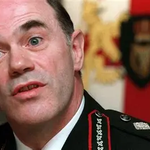
THE STONES LEFT UNTURNED - SIR RONNIE FLANAGAN AND THE PROMISE THAT STILL HAUNTS THE PSNI The Omagh Bombing Inquiry: There are promises made in the aftermath of tragedy which have a habit of returning to haunt those who made them. And few have echoed quite so persistently through Northern Ireland's troubled history as Sir Ronnie Flanagan's assurance, following the Omagh bombing of 15 August 1998, that no stone would be left unturned in the pursuit of those responsible. Twenty-eight years later, the former Chief Constable of the Royal Ulster Constabulary appeared before the @OmaghBombingInq in Belfast, apparently satisfied that his promise had been honoured. It was a rather remarkable assertion, considering that the murderers of 29 innocent people, including a mother expecting twins, have never been brought to criminal justice. Sir Ronnie spoke of his "such" that those responsible had escaped prosecution. One does not doubt the sincerity of that regret. But regret, however deeply felt, is a poor substitute for accountability. And then came a rather awkward revelation. Just six weeks and two days into what ought to have been one of the most important murder investigations in British criminal history, the RUC's incident room had its staffing and operating hours reduced. Further reductions followed. Sir Ronnie told the Inquiry that he had not known about these decisions. One might reasonably wonder how the Chief Constable could remain confident that every stone had been over turned when he was apparently unaware that the very machinery intended to turn them was being scaled back. It is not necessarily evidence of deliberate neglect. But it raises an uncomfortable question about leadership, oversight and the distance that sometimes separates the promises of senior officers from the realities confronting investigators. Meanwhile, another troubling matter has emerged concerning an anonymous telephone call received at Finner Army Camp in County Donegal on 14 August 1998 - the day before the atrocity. The call referred to a route towards Omagh, yet the information was not passed upwards before the bombing. Paul Greaney KC, counsel to the Inquiry, has expressed confidence that the Irish Government will answer questions about that call and the intelligence surrounding it. Those answers cannot come soon enough. Tomorrow, the Inquiry moves towards the evidence concerning key suspects. On Wednesday and Thursday, former RUC and PSNI officer Norman Baxter is scheduled to give evidence. For the families who have lived with the consequences of that dreadful August afternoon, these proceedings are not simply an exercise in revisiting history. They are an attempt to discover whether opportunities were missed, warnings misunderstood, and assurances given which the evidence may no longer comfortably sustain. Sir Ronnie Flanagan may sincerely believe that no stone was left unturned. But after twenty-eight years, with no criminal convictions for the murders, one is entitled to ask whether some of those stones were ever lifted in the first place. I can think of one such stone that appears, to all intents and purposes, to be a protected species - an individual who claims to be able to kill with impunity! No investigation, no arrest, and no conviction! And perhaps more importantly - who decided which stones should remain where they were? The Irish News / Press Association: uk.irishnews.com/news/northe… Official Inquiry witness timetable: omagh.independent-inquiry.uk…
22
The Watchman News retweeted
This is the pink silk waistcoat worn by the funeral effigy of Edmund, 2nd Duke of Sheffield, which is on display in our museum. It's richly decorated with patterns of foliage, grapes and flowers, and the embroidery technique shows a French method of shading coloured silks which was only introduced in 1735, the year he died. The duke had seen military service in Germany, but was forced to retire to Rome on account of ill health and died there of tuberculosis aged only 19. The effigy is unique in being displayed in its original eighteenth-century case, which is an important survival in its own right. #Museum30 #Pattern
2
28
239
5,193
THE STONES LEFT UNTURNED - SIR RONNIE FLANAGAN AND THE PROMISE THAT STILL HAUNTS THE PSNI The Omagh Bombing Inquiry: There are promises made in the aftermath of tragedy which have a habit of returning to haunt those who made them. And few have echoed quite so persistently through Northern Ireland's troubled history as Sir Ronnie Flanagan's assurance, following the Omagh bombing of 15 August 1998, that no stone would be left unturned in the pursuit of those responsible. Twenty-eight years later, the former Chief Constable of the Royal Ulster Constabulary appeared before the @OmaghBombingInq in Belfast, apparently satisfied that his promise had been honoured. It was a rather remarkable assertion, considering that the murderers of 29 innocent people, including a mother expecting twins, have never been brought to criminal justice. Sir Ronnie spoke of his "such" that those responsible had escaped prosecution. One does not doubt the sincerity of that regret. But regret, however deeply felt, is a poor substitute for accountability. And then came a rather awkward revelation. Just six weeks and two days into what ought to have been one of the most important murder investigations in British criminal history, the RUC's incident room had its staffing and operating hours reduced. Further reductions followed. Sir Ronnie told the Inquiry that he had not known about these decisions. One might reasonably wonder how the Chief Constable could remain confident that every stone had been over turned when he was apparently unaware that the very machinery intended to turn them was being scaled back. It is not necessarily evidence of deliberate neglect. But it raises an uncomfortable question about leadership, oversight and the distance that sometimes separates the promises of senior officers from the realities confronting investigators. Meanwhile, another troubling matter has emerged concerning an anonymous telephone call received at Finner Army Camp in County Donegal on 14 August 1998 - the day before the atrocity. The call referred to a route towards Omagh, yet the information was not passed upwards before the bombing. Paul Greaney KC, counsel to the Inquiry, has expressed confidence that the Irish Government will answer questions about that call and the intelligence surrounding it. Those answers cannot come soon enough. Tomorrow, the Inquiry moves towards the evidence concerning key suspects. On Wednesday and Thursday, former RUC and PSNI officer Norman Baxter is scheduled to give evidence. For the families who have lived with the consequences of that dreadful August afternoon, these proceedings are not simply an exercise in revisiting history. They are an attempt to discover whether opportunities were missed, warnings misunderstood, and assurances given which the evidence may no longer comfortably sustain. Sir Ronnie Flanagan may sincerely believe that no stone was left unturned. But after twenty-eight years, with no criminal convictions for the murders, one is entitled to ask whether some of those stones were ever lifted in the first place. I can think of one such stone that appears, to all intents and purposes, to be a protected species - an individual who claims to be able to kill with impunity! No investigation, no arrest, and no conviction! And perhaps more importantly - who decided which stones should remain where they were? The Irish News / Press Association: uk.irishnews.com/news/northe… Official Inquiry witness timetable: omagh.independent-inquiry.uk…
1
63
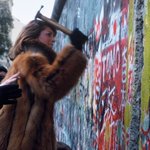
The Berlin Wall Fell 37 Years Ago - But Is Europe Building Another? Thirty-seven years ago today, the people of Berlin took hammers to a wall that had divided not merely a city, but a continent and, in many respects, the conscience of Europe itself. As @Europarl_EN reminds us, 9 November 1989 was a day when ordinary men and women achieved what politicians, diplomats and armies had failed to accomplish for nearly three decades. Yet history has an inconvenient habit of returning to remind us that walls need not always be built of concrete. In 2026, following Russia's invasion of Ukraine, Europe finds itself divided once again - economically, politically and strategically. The European Union and its member states have mobilised more than €235 billion in assistance for Ukraine, while European households and industries have endured the consequences of an increasingly uncertain energy landscape. Brussels regards this expenditure as an investment in European security and Ukraine's right to defend itself. Critics, however, question its long-term economic consequences and whether Europe risks constructing a new continental divide in place of the old one. And then there is the extraordinary affair of Nord Stream. In Germany, a former Ukrainian military officer faces proceedings over the September 2022 explosions that destroyed sections of the pipelines supplying Russian gas to Europe. His lawyers have challenged the prosecution, maintaining that the pipelines were a legitimate wartime target rather than ordinary civilian infrastructure. The allegations remain contested, and Ukraine denies involvement. There is something profoundly troubling about the possibility that infrastructure vital to European energy security could have been attacked by individuals claiming to have acted in the interests of a country Europe has spent billions defending. Which brings us to a question that deserves an answer - not merely from Brussels, but from President @ZelenskyyUa himself. Who, precisely, is the friend, and who is the foe? For the lesson of Berlin in November 1989 was not simply that walls could be demolished. It was that the future of Europe might, at last, be determined by something other than fear, confrontation and perpetual division. One wonders whether, thirty-seven years later, we have remembered the photographs but forgotten the lesson. European Commission: enlargement.ec.europa.eu/new… Associated Press: apnews.com/article/fdbddfa8c…
28
The Ghostly Beauty of a London Fog.... A Muswell Hill Remembered There are mornings in London when the fog rolls in like an old acquaintance, quietly reclaiming the streets, swallowing the rooftops and wrapping the great city in a grey, ghostly silence. The familiar becomes mysterious, the ordinary becomes beautiful, and somewhere beyond the mist one half expects to hear the distant footsteps of a Victorian gentleman making his way through the pages of a Dickens novel. And nowhere, perhaps, is this more charmingly illustrated than in Muswell Hill, that delightful corner of North London where the city seems, for a moment, to forget that it is a metropolis at all. Through the lens of Zoe Norfolk @Muswellhill15, the mist settles gently over Muswell Hill, lending its streets and buildings an almost theatrical quality — a London of quiet pavements, half-hidden rooftops and the lingering romance of an English morning. Muswell Hill, incidentally, is also home to @W_Martyn. But for me, it is something rather more personal. It is a place I have loved since childhood, a place where the passing years have done little to diminish the memories of my now-departed mother, my sisters, and those wonderfully ordinary Saturday mornings when we went shopping together. I can still remember that almost hypnotic aroma of freshly roasting coffee, drifting through the streets, a fragrance that has somehow managed to follow me through the better part of fifty-odd years. It is extraordinary how a smell can do what time itself cannot — carry a man back, in an instant, to a childhood he thought had long since disappeared. And then there was the Odeon Cinema, one of those familiar landmarks of our Saturday outings. In those days, a visit to the pictures was something of an occasion, and the world beyond the cinema doors seemed, for a little while, considerably larger and more exciting than the one we had left outside. And yes, we had fog. Plenty of fog. The real London fog of those distant years, when the streets seemed to dissolve into the mist and the lamps glowed like small golden islands in a sea of grey. How I miss those days. Ms. Norfolk, a professional photographer who lives in Muswell Hill, has made something of an art of capturing the character of this remarkable corner of London. She is also the author of Muswell Hill in Photos, a photographic celebration of a neighbourhood whose beauty is sometimes best appreciated when the weather has conspired to conceal half of it. But looking at her photographs, I find myself wondering whether Zoe has captured something rather more precious than the London fog. Perhaps, without quite intending to, she has captured our memories too. For there are places we leave behind, and places that never quite leave us. Muswell Hill, for me, will always belong to the latter. And somewhere in that London mist, I fancy I can still see my mother, my sisters and a small boy making their way along the familiar streets on a Saturday morning, with the scent of roasting coffee in the air and a whole lifetime still waiting to unfold. You can purchase Zoe Norfolk's book, Muswell Hill in Photos, here: zoe-norfolk.sumupstore.com/p…
1
36
🚨🇲🇦 Le Maroc explore une nouvelle génération de drones ! 🤌🏼À l’UM6P de Benguerir, des chercheurs développent des ailes capables de changer de forme en plein vol, inspirées des oiseaux et des chauves-souris. Objectif : optimiser l’aérodynamisme, réduire la consommation d’énergie et accroître l’autonomie.
14
1
142
4,168