

Thuli Madonsela Foundation Aka ThuMa Foundation Deepening and Defending Democracy
South Africa
Joined January 2017
- Tweets6.3K
- Following1.4K
- Followers11.1K
- Likes3.7K
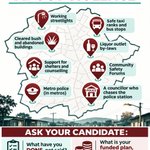


Helen Joseph arrived in South Africa from England in 1931 with no politics at all. She became one of the leaders of the 1956 women's march, and later the first person in the country placed under house arrest. Bullets were fired through her bedroom window. A bomb was wired to her front gate. She had every exit available to her, and she took none of them. Safety, for Helen Joseph, was never something she waited for the state to deliver. It was something she built, with others, under threat.
Beside her at the Union Buildings stood Lilian Ngoyi, who led the 20,000 and called the silence that followed. The women of 1956 did not wait for permission to be safe. They organised.
Seventy years on, safety is still the question under every other question. On 21 November 2025, the government declared gender-based violence and femicide a national disaster. Between April and June this year, 9,201 rapes were reported to police, about a hundred every day. National murders came to 23,096 in 2025/26, lower than the year before, and still a number that should stop a country.
Today the fifth term of local government formally ends. The sixth begins in days. What can a council actually do about violence?
More than most people think. Municipalities cannot rewrite the Domestic Violence Act. They do, however, control the ordinary conditions in which violence happens or is prevented. Streetlights that work in the places residents fear after dark. Safe taxi ranks and bus stops. Maintained public spaces, cleared of the overgrown bush and abandoned buildings that offer cover. By-laws on liquor outlets near homes and schools. Support, in land, buildings or small grants, for shelters and counselling services. Community Safety Forums, which bring municipalities, police and residents to the same table. Metropolitan police in the bigger cities. Add a ward councillor who treats a slow police response as their own problem.
Ask your candidates plain questions, and ask the men first. Has this candidate attended, supported or helped set up a Community Safety Forum? Which areas of your ward are unsafe after dark, and what have they done about the lighting? Do they know the name of the nearest shelter, and have they visited it? What exact, funded plan do they propose, with a figure attached? How do they speak about women who challenge them? A candidate who treats GBV as a Women's Month topic has told you something, and so has one who jokes past it.
Then do your part, because the women of 1956 were clear that no government alone could do it. Government can arrest, prosecute and fund. It cannot sit in a family kitchen, a taxi queue or a men's WhatsApp group. Neighbours can. If you know a man who is violent, you are the one who can say so. If you are a man, interrupt another man.
Know where to turn tonight. Call the GBV Command Centre on 0800 428 428, which runs around the clock, or the SAPS emergency line on 10111. If you are in danger, go to a neighbour, a clinic or a police station.
Joseph and Ngoyi could not guarantee that anyone would listen. They organised anyway. Between now and Wednesday, talk to your family about leaders who will be in the ward on a Tuesday afternoon, not only on a Saturday with a loudspeaker.
Before you vote, ask your candidate what they have done about violence in your ward, not what they will say about it.
Character first. Then the Ballot.


Ruth First was a journalist who believed that the best way to defend people was to find out what was actually happening to them. In the 1940s she went to the farms around Bethal and helped expose the conditions under which farm labourers were being worked. She did not rely on a statement from the owners or a speech from officials. She went, looked, counted, wrote it down and published it. In 1982 she was killed by a parcel bomb in Maputo, where she lived in exile.
Yvonne Mokgoro took a different road to a similar principle. She became one of the first judges of the Constitutional Court in 1994, and she is remembered for bringing the idea of ubuntu into South African law, the principle that a person is a person through other people. Her judgments asked what a rule means for the real human being it touches, not only what it says on paper.
Both women refused to take claims at face value. That is the skill we need this weekend.
Every party and many independents have now handed you a manifesto, a pamphlet or a promise. Some are thoughtful. Many were written by people who want your cross more than your understanding. Here are seven checks you can do over a cup of tea.
First, ask whether the promise belongs to a municipality at all. Municipalities deliver water, sanitation, electricity distribution, refuse removal, local roads, street lighting, parks and land-use planning. They do not run schools, hospitals or the national police service. A candidate who promises to hire more police officers, lower the price of bread or build a hospital is either misinformed or hoping you are. Ask which level of government the promise sits with.
Second, ask what it costs and who pays. A promise with no figure and no funding source is a wish. Compare it to the municipal budget at municipalmoney.gov.za. If the cost dwarfs what the municipality collects, ask how.
Third, ask about timing. By when? A real plan has a date, a place and a number. Promise language like "we will prioritise" or "we are committed to" is the political equivalent of "I will try."
Fourth, compare words with record. If the party has governed in your municipality or another, look at its audit outcomes and service delivery there. Records are public. Promises that contradict a party's own history deserve a hard question.
Fifth, watch what is said about opponents. A manifesto that is mostly an attack on others tells you what a party opposes, not what it will build.
Sixth, ask about coalitions. If no party wins outright, who will they govern with, and on what terms? A party that will not say is asking you to guess.
Seventh, check rumours before sharing them. In the last week of a campaign, false claims travel faster than corrections. Africa Check checks claims, and Real411 accepts complaints about online disinformation. Before you forward a WhatsApp message about a candidate, ask who wrote it and where they got it.
One more warning. Offers of food parcels, cash, lifts or gifts in exchange for a vote are a trap and a crime. The Electoral Act prohibits bribery and undue influence, and your ballot is secret. Do not let it buy your vote, and report it to the Electoral Commission.
Ruth First would say go and look. Mokgoro would ask what the promise means for the person who is promised. Together they give you the method.
Before you vote, choose one promise from your preferred candidate and test it against these seven checks.
Character first. Then the Ballot.


At eighteen, Sophia Williams-de Bruyn was a textile worker who joined the march of 20,000 women to the Union Buildings on 9 August 1956. She stood among women who knew the law was against them and walked anyway. She could not vote then.
Frene Ginwala spent the apartheid years in exile as a journalist and ANC organiser. In 1994 she became the first Speaker of the democratic Parliament, and her task was to design how a brand-new legislature would work. Rules of debate. Committees. Public access. Procedure is dull until you realise it is the machinery that decides whose voice is heard.
Ballots are machinery too. Today, five days before the election, here is how yours works.
Most voters will receive two or three ballot papers. In a metropolitan municipality, two. Outside a metro, three.
The first is the ward ballot. You choose one person from the candidates in your ward, whether they belong to a party or stand as an independent. The candidate with the most votes becomes your ward councillor. There are 4,488 wards in the country.
The second is the proportional representation ballot, often called the PR ballot. You vote for a party, not a person. Seats on the council are shared out so that each party's overall share roughly matches the share of votes it received. Parties fill those seats from lists they drew up before the election. This is the vote that decides which party, or which coalition of parties, runs the municipality. Many voters do not realise it can matter as much as the ward ballot.
The third, if you live outside a metro, is the district ballot. District councils coordinate services across several local municipalities. Voters directly elect part of the district council, and the rest is made up of members sent by the local councils underneath it.
You may vote differently on each paper. You could choose an independent ward candidate you trust and a party whose policies you support on the PR paper.
Here is the detail that should shape your thinking. If no party wins an outright majority, and in many municipalities none does, councils are run by coalitions. A bill to give coalitions a clearer legal framework was introduced in Parliament in August. Either way, your PR ballot is also a vote about who your preferred party might govern alongside. Ask the parties on your ballot which others they would work with, and which they would never touch. A party that cannot answer is asking for a blank cheque.
The mechanics matter too. Voting stations open at 07:00 and close at 21:00 on Wednesday 4 November, which is a public holiday. Take your green barcoded ID book, smart ID card or temporary ID certificate. You vote only at the station for the ward where you are registered. Your vote is secret. Nobody is allowed to see your mark, and you may ask for assistance if you have a disability, from a person of your choice who is at least eighteen and is not a candidate or party agent. Mark each paper once, then place it in the correct box.
Rules are not decoration. They are the difference between a crowd and a government. The women of 1956 asked to be counted. You are about to be counted, for the name, the party and the district.
Before you vote, decide in advance which candidate you will choose for your ward, which party you will choose for PR and, if you are outside a metro, which for your district.
Character first. Then the Ballot.

1
134

Thuli Madonsela Foundation retweeted

🇿🇦 WEEKEND PLANS? ADD ONE MORE THING TO YOUR LIST!
✅ Confirm your voter registration status
✅ Find your voting station
✅ Check your ward details
✅ Get your voters’ roll sequence number
📱 SMS your ID number to 32810
🔗 Voting Station Finder: elections.org.za/pw/Voter/Vo…

Ellen Kuzwayo was a social worker in Soweto long before she was a writer, and long before she was an MP. She ran programmes, chaired organisations and showed up for families who had no one else, year after year. In 1977, after the Soweto uprising, she was detained. In 1985 she published Call Me Woman, a memoir that told the country what it looked like from inside the lives of black women. In 1994, nearly eighty years old, she took her seat in Parliament. Service had been her work for decades. The seat arrived last, and she treated it as one more place to serve.
Lydia Kompe never waited for a seat at all. She organised rural women in villages where no big organisation came, among families whose land and wages were uncertain. The Rural Women's Movement grew from patient, local work, village by village, meeting by meeting. Nobody offered her a salary for it.
In Cape Town and across the country, women of the Black Sash, led for years by Sheena Duncan, ran advice offices that helped ordinary people fight pass-law and permit problems through a hostile bureaucracy. They stood in silent protest with black sashes, and they also sat patiently at desks, filling in forms with people who could not read them. Black Sash advice offices still operate today.
This is the fourth EPIC pillar, Committed to Serve. Here is the idea to keep. Service is measured in time, and time cannot be faked. Anyone can give a speech in October. Only a person who has been serving for years, in small and unwatched ways, has a record that cannot be assembled in a fortnight.
How long has your candidate been serving? Ask it plainly. Ask what they were doing, in practice, without a seat, a salary or a guarantee that anyone would notice. A person committed to serve will have a long answer. A school governing body, a funeral committee, a street patrol, a church feeding scheme, an advice desk, a sports team. Small things, together the best evidence available.
Next, look at how they treat the people they say they want to serve. When you ask a difficult question, do they listen or lecture? Do they come back with an answer? A councillor's job is mostly unglamorous: returning calls, attending ward committee meetings, following up on a burst pipe until it is fixed. Ask what a typical Tuesday looks like for them.
Then ask about the structures in your ward. Every ward has a ward committee, a group of residents who bring community concerns to the councillor. Does your candidate know who sits on it? Have they attended its meetings? Do they plan to keep it alive or let it lapse? A person committed to serve treats a ward committee as a lifeline, not a formality.
Finally, ask whether they are serving or being served. Listen for the difference. A servant describes what the community needs. A seeker describes what the position offers: the salary, the car, the status, the connections. Both can speak well. The tell is where their attention goes when the conversation is not about them.
Service is not reserved for politicians. Kuzwayo, Kompe and Duncan never needed a candidate's badge to do the work. After 4 November, find out when your ward committee meets and go to one meeting. Take a friend.
If your candidate has no history of service you can find, you are being asked to give your vote as a first payment on trust. Give it where the record already exists.
Before you vote, ask your candidate how long they have been serving, and who can tell you so.
Character first. Then the Ballot.


Thuli Madonsela Foundation retweeted
🇿🇦 SPECIAL VOTES REMINDER!
On 2 and 3 November 2026, voters with approved special vote applications will have the opportunity to make their mark ahead of Election Day.
🏠 Voting at home or at your voting station? Make sure you’re ready!
⏰ Special voting hours: 08:00 to 17:00

In 1975, Emma Mashinini helped found the Commercial, Catering and Allied Workers Union of South Africa. Its members were shop assistants, cleaners and packers, mostly women, paid almost nothing and organised by no one. A speech could not fix that. Members, subscriptions and meetings could, and the numbers began to rise. In 1981 she was detained without trial. The union survived her absence.
Ray Alexander Simons had walked a similar road. She arrived from Latvia as a teenager and began organising workers in the Cape. She helped build the Food and Canning Workers' Union, at a time when black workers had few legal rights to organise. She co-founded the Federation of South African Women in 1954 and helped draft its Women's Charter. She was banished from Cape Town, spent years in exile, and returned. In 1994 she took her seat in the first democratic Parliament.
What links them is not courage, though they had plenty. It is that they built things that outlived them. A union with members, rules and a headquarters does not disappear when its founder is silenced. That is the third EPIC pillar, Impact Conscious: leadership measured by what it actually changes, in terms others can count.
This is the pillar where election season is at its most slippery. Every candidate promises change. Almost none say how much, by when, and how you will know. A promise without a number is a mood. A speech of adjectives, better, stronger, safer, is a fog machine. Bring a number to every conversation. Ask the candidate three things.
First, what did you change, and how much? A sitting councillor should know how many households got water or how many streetlights were fixed in their ward. A new candidate should point to something countable from community work, even small, like a homework club with forty children.
Second, what will you change, by when, and how will we know? Insist on a figure and a date. If they promise a road, ask which road, how many kilometres and when.
Third, where does the money come from? Municipal budgets are public. A promise that costs more than the municipality collects is not a plan.
Look up how your municipality spent its money and whether its budget was funded at municipalmoney.gov.za.
Then check the five numbers that tell you how well a municipality is run. Was the latest budget funded or unfunded? What was the audit outcome? Does the oversight committee, the Municipal Public Accounts Committee, actually meet and investigate? Are more households receiving free basic services than before? Does the Integrated Development Plan reflect priorities this candidate can discuss in detail?
A candidate who knows these answers has done the reading. One who does not is asking you to guess.
Mashinini and Simons did not trust good intentions. They trusted structures: members, subscriptions, meetings, minutes. Ask the structural question as well. What would still be running in your ward if this candidate left tomorrow? Impact that depends on one person is a favour. Impact built into systems is a legacy.
Be fair about it. A first-time candidate has no record in office, so ask what they have built outside it. The point is not to demand miracles. It is to separate those who count from those who talk.
Before you vote, ask your candidate for one number they changed and one number they will change.
Character first. Then the Ballot.


Thuli Madonsela Foundation retweeted
⏳🇿🇦 8 DAYS TO GO SOUTH AFRICA!
The future of local governance is calling, and 04 November is your day to make your mark!
✅ Check your voter details.
📍 Confirm your voting station.
🔗 Visit: elections.org.za/pw/Voter/Vo…
GET UP. SHOW UP. VOTE!
#WozaLGE2026 #LocalGovElections
Albertina Sisulu was a nurse long before she was a symbol. She trained in Johannesburg, worked in clinics and wards, and joined the African National Congress Women's League in the 1940s. Over the decades that followed she was banned, detained and watched, while her husband Walter sat in prison, and she raised a family and kept a movement alive. In 1983 she became one of the co-presidents of the United Democratic Front.
Here is the detail worth holding on to. By the time the cameras found Albertina Sisulu, she had spent decades doing the work. The title was the last thing to arrive, not the first.
Today is the second EPIC day, and the pillar is Purpose Driven. Purpose, in the EPIC framework, is the answer to a simple question: why do you do what you do? Real purpose is older than the campaign. It shows up in how a person spent their time before anybody was counting.
Compare that with this season. Posters appear on every lamp post. Candidates arrive in streets they have not visited in five years, shake hands at taxi ranks and promise a clinic, a tarred road, a park. Some of that is sincere. Much of it is scheduling. Purpose that appears only when votes are on the line is not purpose. It is a diary entry.
Charlotte Maxeke is the clearest counter-example in our history. She built the Bantu Women's League and organised in Bloemfontein and beyond, decades before anyone offered her a platform. She never held a vote or a seat in government. She held a reason, and the reason was enough to carry her across a lifetime.
What can an ordinary voter do with this?
Ask the purpose question in a form you can check.
Ask what this candidate was doing in your community five years ago. Not in the province, not in the party, but in your ward. Were they at the community meeting when the water went off? Did they sit on a school governing body, a street committee, a community policing forum, a burial society? Ask people who live near them, not their campaign team.
Ask why this candidate wants the job. Listen for the difference between a reason and a ranking. A reason sounds like a specific problem in a specific place that the person cannot stop thinking about. A ranking sounds like ambition: leadership, position, a salary, a seat.
Ask whether the candidate has read the municipality's Integrated Development Plan, the five-year plan that sets out what the council is meant to deliver. Every municipality must have one, and it should be available from the council or on its website. If a candidate asks for your vote to run a municipality whose plan they have never read, they are asking you to trust a stranger with a document they cannot discuss.
None of this requires a degree. Ask three people who know the candidate what they have actually done for the community. Their answers beat any poster.
Sisulu and Maxeke did not wait to be invited. They saw a need and started where they stood. That is the standard for those who ask to lead us. The ward you live in has a hundred small problems that nobody has put on a poster. The person who can name them, and who was working on them before the campaign began, has already shown you something that no manifesto can.
Before you vote, ask what your candidate was doing in your community before the election was called.
Character first. Then the Ballot.

Thuli Madonsela Foundation retweeted
🇿🇦 SPECIAL VOTES REMINDER!
On 2 and 3 November 2026, voters with approved special vote applications will have the opportunity to make their mark ahead of Election Day.
🏠 Voting from home or heading to your voting station? Make sure you’re prepared!
#WozaLGE2026


Thuli Madonsela Foundation retweeted
⏳ 9 DAYS TO GO SOUTH AFRICA, ARE YOU READY?
Don’t wait until Election Day to get ready.
✅ Check your voter details.
📍 Confirm your voting station.
🔗 Visit: elections.org.za/pw/Voter/Vo…
The choice is yours. The moment is almost here!
#WozaLGE2026 #GetUpShowUpVote #LGE2026
Thuli Madonsela Foundation retweeted
🇿🇦 ARE YOU ELECTION READY ?
Behind the scenes, election officials are making sure that voting materials, equipment and other arrangements are in place, while officials prepare for their responsibilities on Election Day.
#LGE2026 #GetUpShowUpVote #YourVoteYourVoice
Ask your candidate three things today.
Who funds your campaign?
Has your family or business won municipal contracts?
When did you last say no to your own side?
An ethical candidate welcomes the questions. A defensive answer is also an answer.
Character first. Then the Ballot.
#EPICLeadership