



Toaa retweeted

Superhuman AI, if built, would kill everyone on earth
But on the plus side, if it didn't, it would give a small number of tech CEOs godlike power over the world, forever
But, to be fair, the public didn't sign up for it and wants it to stop
But on a positive note, it's being used to mount unprecedented cyberattacks against infrastructure
But in their defense, even the most positive visions of the future have humans relegated to neutered pets with no agency or control
But, for the sake of argument, existing LLMs haven't cured any diseases or even produced a meaningful increase in productivity or quality of life for the average person
So really it's a complex issue
Toaa retweeted

Te enseñaron a Odiar al pobre por recibir subsidios, Pero no al rico que evade impuestos
Toaa retweeted
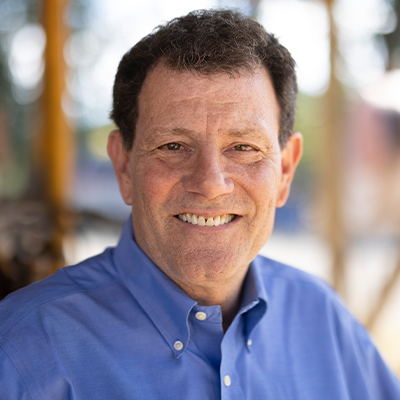
Elon Musk insists that no one died after he slashed humanitarian aid. So I went to the field in South Sudan -- where the cuts left one clinic I visited with no antibiotics, no running water, no aspirin, no hand sanitizer -- and found the graveyards filling because of his recklessness.
Moms die in childbirth, kids from malnutrition and everyone from lack of access to medical care. One of the greatest American programs was PEPFAR, which saved lives of people with HIV/AIDS with medicines costing just 12 cents a day. Now AIDS orphans are dying because of the way Musk cut the community health workers who made the system work.
I had invited Musk to come on a trip like this to see the consequences of aid cuts. He declined. But I renew my offer: Elon, I'm happy to travel with you to look at aid programs so you can push reform -- necessary! -- without killing hundreds of thousands of children.
And I hope that Democrats, who have been powerful critics of aid cuts, will use their new power in the new Congress not just to criticize Trump on this point but also to restore and revitalize lifesaving and transformative aid.
Here's a gift link to my column: nytimes.com/2026/11/28/opini… Thoughts welcome.


Toaa retweeted

OpenAI and Anthropic are each power-seeking coalitions of humans and AIs.
Over time, each coalition will likely become less human-controlled, and more AI-controlled.
There won’t be a clear line between “humans using AIs to grab power” and “AIs using humans to grab power”.
Toaa retweeted

Ken Clarke (Lord Clarke of Nottingham): “Is it not the case that what the PM is really doing is negotiating a Brexit deal of the sort that should have been negotiated six years ago when we first left?
“[The deal is] perfectly sensible and should be welcomed on all sides.”
Toaa retweeted
We are crossing a threshold. Safety and alignment work is the only thing that matters.
Toaa retweeted

Let me get this straight: we rushed AI along without regulating safeguards in order to stay ahead of China and at the same time, we sold China the very chips they’d need to get ahead of us. Smells of profit, corruption and perhaps worse.


Toaa retweeted

0. The core disagreement was about the inevitability of a race
1. I think leadership is way too paranoid about China and the US government. They don’t believe it will be possible to negotiate.
2. They largely initiated the recent race to RSI, because of a belief in its inevitability. Note that OpenAI had to shed a bunch of dead weight like Sora because Anthropic was going for the jugular.
3. Even if they are **not** being pessimistic, I disagree with their consequentialist philosophy. If the race is inevitable you should not contribute.
Toaa retweeted

We keep hearing again that Russia supposedly needs security guarantees. Even though no one has attacked Russia for many decades. Since the Second World War, Moscow has not gone through even one decade without starting a war or using military force against another country.
So when the Russians now talk about a security architecture for themselves, or about security guarantees for Russia – they are hardly talking about real security. And peace.
What they really want – is to freely interfere in the affairs of other countries, and to use force whenever they want, and to make sure that no one can support liberty inside Russia because Putin wants to keep his personal power forever and pass on his imperialist and, in many ways, simply fascist views to the next generations.
From a speech at the Danish Folketing. (3/3)
Toaa retweeted

Every AI company is trying to fully automate AI research; to allow the AIs to build the next AI.
This is called Recursive Self Improvement (RSI).
OpenAI says they are on track to do so by March 2028.
Anthropic employees say they are on track to do so by 2027.
The METR report below suggests they are likely right.
This is a bad idea given current technology. Any mistake or misalignment in current AIs could be multiplied in each generation.
We don't get another election before AI companies reach this threshold.
Congress should ban RSI, this year if possible.
This is a remarkably consensus opinion, supported in various versions by:
-Bernie Sanders
-Steve Bannon
-Ralph Nader
-Glenn Beck
-Republican and Democratic attorneys general
-Whistleblower Daniel Kokotajlo
-Turing Award winner Yoshua Bengio
-Humans First
-Open Markets Institute
-Ezra Klein
-Arvind Narayanan (a Princeton computer scientist known for arguing that “AI is a normal technology”)
The exact mechanism can be debated. The ban doesn't have to be permanent either (see below for both). This is not the only thing we have to do in regards to AI, far from it! But it is urgent.
Congress must ban RSI.

Toaa retweeted

Kemi, congratulations on leading a major British party as a Black Woman. It takes real talent to rise to where you are and deceit is what it takes to rise as a Black leader in a western Conservative Party.
It is a pity the climb did not leave room for a history book and since you chose to argue in the language of history, let us do the history. Let’s dissect your verbal diarrhea point by point.
Everyone participated." Slavery existed on every continent. So did war, and nobody calls a village feud the World War. The transatlantic trade ran for 366 years (1501 to 1866) and put about 12.5 million Africans on ships, of whom about 1.8 million died before they saw the Americas, according to the Trans-Atlantic Slave Trade Database. It ran through joint-stock companies, chartered monopolies, Lloyd's underwriters and acts of Parliament. It was hereditary, because the law made the child of an enslaved mother property from birth. It was racial, because a whole continent was defined as chattel. No other system in history combined those features at that scale. Dissolving all of it into "people from every continent" is far worse than intellectual dishonesty.
Britain was a market leader, not a participant. British ships carried about 3.2 million Africans, second only to Portugal and Brazil. The Treaty of Utrecht (1713) gave Britain the asiento, a thirty-year monopoly to supply 4,800 enslaved Africans a year to Spanish America. The Royal African Company, chartered in 1672 and headed by the Duke of York, later James II, branded its captives "DY". During Edward Colston's years in its leadership it shipped about 84,000 people, and roughly 19,000 died on the way.
You say British taxpayers should not answer for what happened before they were born. They did. In 1833 Britain borrowed £20 million to compensate slaveholders, and taxpayers serviced that loan until 2015, including the descendants of the enslaved. So the principle you invoke was not applied when the cheque went to slaveholders. It only appears when the cheque changes direction.
"Navel-gazing" is a curious charge from someone whose party spends more energy on the past (Empire nostalgia, culture war crusades) than most of those you accuse. Defend Britain if you must. But do not use your Nigerian name as the permission slip for arguments Nigerians know better than anyone.

Slavery was an evil in which people from every continent and region participated. We should be honest about the whole history, not select the parts that are politically convenient today, especially given Britain's leading role in ending the transatlantic slave trade.
If Caribbean countries are asking Britain for a formal apology for Britain’s role in the transatlantic slave trade, will they also be asking the same of the descendants of African kingdoms, rulers and merchants who captured, sold and profited from the trade?
On demands for reparations, whether through cash or debt relief, we have been down this track before. Twenty-five years ago, Jubilee 2000, Drop the Debt and Make Poverty History argued that cancelling the debts of poorer countries would give them a fresh start. More than $100 billion of debt was eventually written off, but many of those countries have since built up even bigger debts. Labour are already spending too much on Britain's welfare state, now is not the time for Andy Burnham to be providing global welfare.
There is no reason British taxpayers today should be held financially responsible for things that happened generations before any of us were born. And I have even less patience for political elites in commonwealth countries who don’t know how to make their own citizens prosperous now looking for another opportunity to blame Britain.
As Prime Minister, Andy Burnham should be Britain’s greatest defender. Instead, he is writing articles saying we need to confront our history (as if we haven't done enough of that) and considering another formal historical apology. Tony Blair already expressed Britain’s deep sorrow and regret for our role in the slave trade nearly twenty years ago. There is no need to do so again.
This is all another navel-gazing distraction. The Commonwealth should be looking forward, not endlessly backwards. That means economic partnerships to make us all richer and deeper military and security cooperation against common threats. If every Commonwealth summit becomes an exercise in presenting Britain with demands for cash then we need to start asking if it is worth the effort.
Toaa retweeted

I find it confusing that Dario keeps saying Anthropic's strategy is to drive a "race to the top".
It doesn't seem like there's much evidence that this strategy is working? Am I missing something?

Anthropic has always claimed — and still claims — that by competing at the frontier it can drive a "race to the top," making AI safer.
But what's the EVIDENCE that that core strategy is actually successful?
vox.com/future-perfect/50787…
2/n

Toaa retweeted

This is a registration to disband Anthropic not to pump it full of investors money.
You’re exposing yourselves as an existential danger.
An international crisis meeting on Frontier AI is long overdue. Nation States have a short window to effect change.


Anthropic has filed an S-1 registration statement with the SEC related to its proposed IPO.
Read more: anthropic.com/news/s1-sec
Legal disclaimer: A registration statement relating to these securities has been filed with the SEC but has not yet become effective. These securities may not be sold, nor may offers to buy be accepted, prior to the time the registration statement becomes effective. This post does not constitute an offer to sell or the solicitation of an offer to buy these securities, nor shall there be any sale of these securities in any state or jurisdiction in which such offer, solicitation or sale would be unlawful prior to registration or qualification under the securities laws of any such state or jurisdiction.

Toaa retweeted

Serious question, @DarioAmodei: What's the evidence that Anthropic's fundamental strategy — compete at the frontier so as to drive a “race to the top” — is actually successful?
From the outside, it looks like Anthropic has done more on net to drive a race to the bottom.

Thank you for this, @_NathanCalvin. I appreciate and am a fan of the investigative work you’ve done on behalf of AI safety and believe your comments are coming from a constructive, honest place, and that it benefits the public to have people whose job is to scrutinize the actions of frontier AI companies. I think something would be wrong if companies of the size of Anthropic didn’t get harshly criticized basically every day; strong antibodies against corporate power are a healthy feature of a free society, and especially so when issues of the gravity of the one we’re facing are at play. I also do agree that some of the examples you cite were mistakes by Anthropic.
That said, I disagree with the thrust of your post. At the core, a good fraction of the things you criticize are consequences of Anthropic’s basic theory of change that we have held for many years. Our strategy has always been what I’ve called the “race to the top” — by showing how it’s possible to build the technology responsibly, we can raise the bar for the entire industry. The forces that drive the race to the top are hugely more effective if the company practicing them is at the frontier; that’s one lesson I’ve learned repeatedly. And looking at that strategy as a whole, I’m proud of our track record and stand by it.
I believe that if we take a list of things that Anthropic did in the past year that were pro-safety and commercially costly to us, they far outweigh the list you’ve made, while at the same time I also disagree with some of the items on your list. Here are some things Anthropic has done, in the same period you’ve cited (the last year), which were very costly to us commercially while having strong safety benefits:
1. We played a key role in SB53 (and other state laws), at a time when doing so was politically perilous to the company and AI regulation was very unpopular. We in fact argued for a stronger version of SB53 than was ultimately passed; there were a lot of stakeholders and we were not the limiting factor in the strength of the bill that was passed.
2. We have very strong biological safeguards on our models, because we’ve seen concerning results in bio uplift trials and even seen and blocked potential attempts to misuse our models for bioweapons (as seen in our threat intelligence report from a few weeks ago). This is a very serious threat that we want to have zero tolerance for. But having very low false negatives means having significant false positives (despite months of effort on our part to improve the classifiers), enough so that biologists joke about how restrictive our classifiers are, and competitors sometimes sell against us by touting their more permissive bio capabilities. This has been very painful to us in an area where we care a lot about supporting an ecosystem of Claude users (biomedical science; and it is particularly frustrating to me as a biologist), but it’s the right thing to do and we intend to keep doing it.
3. Similarly, we first had Mythos-class models in February but didn’t make them generally available until June (when we had stronger cyber safeguards in place). We only offered them to a limited set of partners in order to focus on cyberdefense. It would have been much more economically rational to simply release the model to everyone. We likely sacrificed a significant chunk of a several-month model lead. But because of this, many companies secured their cyber infrastructure before the deluge of widely available cyber-capable models. Of course there are ways it could have gone better or been run better, but this was what we were aiming to do.
4. I advocated forcefully and publicly, in my essay Policy on the AI Exponential in June of this year, for the government to have the power to block model releases. Back then this was still outside or maybe on the edge of the Overton window, though I understand the window has moved since then. We were attacked intensely for this.
5. I don’t want to re-ignite conflict, but the events of February 2026 are a strong example. It is clear that our public stance could have seriously damaged the company’s future.
6. We’ve continued to advocate for export controls on chips and chipmaking equipment to China, because we think it allows democracies to negotiate from a position of strength on AI safety agreements. We’ve done this despite problems it’s created for us with industry partners who hold very different views and on whom we are very dependent.
7. As far as I’m aware we were the first, and still only, frontier company to restrict the sale of AI services to PRC-controlled companies, including those operating through third countries (otherwise a major loophole). We’ve therefore forfeited significant short-term business to prevent fueling AI platforms and applications that would help the CCP’s military and intelligence services. We are also cracking down on distillation; generally, distillation is not a major threat to us commercially, but like chip exports it has concerning national security and safety implications, so we expend significant energy and company resources to address it.
8. As you mentioned, we’ve put out a lot of reports, announcements, long model cards, public advocacy, etc, all trying to inform the public about the risks of AI. These involve a level of detail and effort that would be implausible for a purely profit-maximizing company.
9. Just this week, we announced we were putting 5% (and possibly more over time) of the company into a public benefit fund.
All of these decisions came with very substantial costs to us. To be fair, those that involved holding back or restricting access to frontier capabilities also had a broader cost — for example, the public might otherwise have benefitted from faster progress in biology, so I am not saying that our decisions were without tradeoffs — but they were not driven by profit-seeking.
For each decision, you can come up with ulterior motives that could have driven us — I think it is a general truth that any decision, on any topic, can always be portrayed as a nefarious scheme. But most of those end up being pretty farfetched or don’t fully make sense if you actually examine them closely. For example, it is deeply implausible that it would be a shrewd business move to block a large swath of research biology in order to do the work ourselves and compete with our customers; we expect the benefit to the ecosystem to greatly exceed the work Anthropic does itself, and for the two to complement each other. It is not in Anthropic’s interest to be perceived as unfriendly to biologists. Our Life Sciences Verification Program, which gives vetted biology professionals access to our models, also refutes this idea.
Of course, a different set of people will see this and make a different criticism: that Anthropic shouldn't be making decisions about who gets access to what in the first place. I agree, in the sense that ideally the government would be making these decisions, and that’s why we advocate for regulation. But for now we are forced to make them, and enabling bioterrorism isn’t a better option.
I think that even if I conceded every item in your list, I would happily hold up mine next to it; I don’t think it’s a close call. That is of course partly subjective and different things are important to different people. Maybe one way you could object is that several of the items above relate to AI misuse and not loss-of-control; if you think the latter is much more important than the former, that might change your calculus. But this is not Anthropic’s view — we view both as serious issues. You can also disagree with our decisions, as many have, but they are consistent.
But I also disagree with at least some of your list. Several items don’t represent a deviation from Anthropic’s strategy or values at all, once we postulate the “race to the top” strategy that requires being a frontier AI company. Your items 1-4 are all simply examples of what it means to compete at the frontier, and we stand by them, both in the sense that they are transparently ordinary things to do as part of that strategy, and that we stand by the strategy as a whole.
To be fair, there are important questions worth confronting (and that we are confronting) about what to do when the AI-driven acceleration gets fast enough that it is hard for safety to keep up. We are nearing that point and that’s what’s driving some of our thinking about “pacing.” But 1-4 are actions taken before that point and should be perfectly expected based on Anthropic’s strategy as a company. Of course it is possible to disagree with that strategy, but that’s a more fundamental disagreement that you could have had any time over the last few years.
I agree we could have handled your items 7, 8, and 9 better. All fall into the category of “rhetoric or policy communication that wasn’t carefully written or resulting from fast-changing circumstances not propagating from one team to another fast enough.” This kind of thing happens a lot in large organizations (Anthropic is over 5,000 people), and doesn’t even necessarily represent a failure or mistake of any single person. I am of course the CEO, and I take responsibility. The volume of communication from Anthropic is enormous and if these are the worst examples, I think we’re frankly doing pretty well, though I will continue to work hard to make sure we do even better.
Your 5th item (the change to our RSP) is the most substantive item, and people can debate this, but I think that the old, more rigid RSP created a lot of situations where we were technically required to do something that required a lot of effort but in retrospect wasn’t very important for safety, as well as not covering some of the most important things. Our current RSP’s focus on transparency brought things like risk reports and roadmaps, and its emphasis on independent external review laid the groundwork for even more intensive embedded evaluation, all of which I think have been valuable in driving a race to the top. In the original announcement in September 2023, we described the RSP as an “early iteration that we [would] build on” and said that “rapid iteration…will almost certainly be necessary.” I understand that changing plans is always a move that creates justifiable scrutiny — I just don’t think we ever represented that we wouldn’t do so.
Relating to your 6th item (having an FCF in addition to our RSP), I know our intent is to meet the letter and spirit of our regulatory obligations (via our FCF) while also remaining able to experiment with more novel approaches to risk management that go beyond what the law currently requires (via our RSP). I promise to look into it further, as it’s a complex issue and it is possible we are not weighing the considerations in the right way.
Overall, although Anthropic has made plenty of mistakes as an organization — including some of the items on your list — I feel that we have repeatedly taken serious and substantive actions counter to our bottom line and that there is a significant negativity bias distorting assessments like the one you are making above. We’ll always try to do better but, again, I am extremely proud of our track record and stand by it. I will have more to say soon about how we are going to further live our values in this moment of rapid change.
Toaa retweeted

Anthropic's leaders need to stop commenting on the emergence of RSI like a local news anchor reporting on traffic on the 101, and acknowledge that they are the traffic, and they're not going to build something that they don't want to exist.
They should move beyond "pacing" language, commit to specific policies and red lines, explain why those lines are red, and then use that costly signal to build an international consensus around norms.
It's not that I trust the CCP, or that I think global lab monitoring and verification is imminent. But the status quo is absurd.
You've got US lab leaders writing (or favorably quote-tweeting) essays about slowing down while simultaneously saying "things are moving faster and faster" and "btw, our internal models finished mathematics on Tuesday, next up: physics."
The effect is the equivalent of Usain Bolt winning race after race while using his press conferences to bemoan the dangerous speed of modern sprinting on one's legs so would everybody please try a little less hard next race, and then ... breaking his 100m record again the following month. Honestly ask yourself: If you were China, why would you take this pausing/pacing stuff seriously?


Toaa retweeted

First, the AI whistleblowers, now the spy-chiefs.
Today @benrileysmith @sundaytimes has the story about Mi5's Cabinet warning: that AI is one of the biggest national security threats we face.
That is exactly what we've heard in Parliament.
AI could transform progress, public services & our prosperity. But not unless we get serious about security.
We need to know who is testing these systems, how early those checks begin, and who has the power to intervene before harm is done.
That's why on Tuesday, @commonsbtc will be hearing direct from whistleblowers, @OpenAI, @AnthropicAI, @GoogleDeepMind and @Meta, + @AISecurityInst.
What is clear is that we now need a new global convention on AI, that we could help lead with Korea (which takes the #G20 Presidency after us) to boost global safety
It'll be a tough negotiation, especially when President Trump’s instinct is for extreme deregulation and letting the industry police itself. But we're not without hope - @senatorcantwell & @commercedems have shown great leadership of how the US approach might could change.
Britain should lead this work. The public deserves more than reassurance from the companies developing the technology. It deserves safeguards it can trust.
Here's my quick explainer on what we've heard in Parliament.
Toaa retweeted

This neurotic obsession with saving every potential future life is, paradoxically, how we destroy the world.

FULL INTERVIEW: Nick Bostrom says a long pause on AI could cost more lives than it saves. If superintelligence can cure aging, every year of waiting has a death toll. In his words, "we are just dying in the meantime."
Nick Bostrom founded Oxford's Future of Humanity Institute and wrote Superintelligence and Deep Utopia. He joined @theojaffee and @schisofrenia to break down AI consciousness, why a badly done pause could backfire, and why we've only explored the janitor's closet of what minds can be:
01:17 Trump calling AI superintelligence
05:16 the Hugging Face incident and instrumental convergence
08:28 why the AI company is the first target for a misaligned AI
09:31 catching a schemer before it learns to hide
11:06 why AI timing is like surgery for a terminal condition
19:00 why he's wary of pausing AI
25:33 why the US sits at the negative extreme on AI
27:09 apes, bananas, and the janitor's closet
31:13 where he disagrees with Robin Hanson's Age of Em
33:39 whether current models are conscious
37:12 why humans are barely conscious
39:56 open source models and DNA synthesis as the choke point
43:05 what COVID teaches about pauses
46:28 why AI can't do original philosophy yet
49:37 building a superintelligence that's a good cosmic citizen