



Genetic origins of Turkmens from Afghanistan


Looking at the qpadm medieval modeling of the sample, combined with the detail that the individual is 1/4 Persian, it strongly points to a fascinating conclusion: their paternal grandfather was a living medieval Karluk Turk


Genetic results of an Afghan Turkmen from Andkhoy, Faryab Province:
Tribe / Subclade: Ersari > Gunesh > Chaqir
Y-DNA: Q-L713
Ancestry: 3/4 Turkmen, 1/4 Persian
East Eurasian Admixture: 36%
Med Turkic Admixture: 70%


Attention 👇

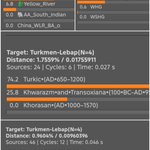
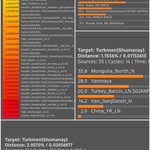
G25 model for Turkmens from Turkmenistan and Afghanistan
42% Hunnic
37% Sogdian&Khwarazmian
15.2% Alanic
5.8% West Iranic
Y-DNA data is from @TurkiDNAProject


When we compared the genetic results, the genetic proximity of Balkh Turkmen to Balkh Tajiks was five times greater than their genetic proximity to an Uzbek from Khwarezmian.Similar results apply to the Turkmen of Kunduz and Jowzjan


Yes, the Turkmen are largely a mixture of Xiongu from East Asia and Sogdian from Central Asia, and it is also noticeable that Turkmen have a small amount of Alanic ancestry

This Post is from a suspended account. Learn more
Whether you look at autosomal or paternal lineages, let alone sharing the same genetics with Indo-Iranians, Turkmens are the most Turkic people in the region. To put it in perspective using Neolithic modeling: while Kazakhs are 60% East Eurasian due to Mongol admixture+


İlginç bir genetik çalışmasına rastladım.
Çalışma, Güney Orta Asya’daki Hint-İranî konuşurların Demir Çağı’ndan beri güçlü bir genetik süreklilik taşıdığını gösteriyor.
En çarpıcı bulgu ise Türkistan'daki Türkmenlere dair: Türk dili konuşmalarına rağmen genetik profilleri Kazak/Kırgız çizgisinden çok İranî bir halk olan Taciklere yakın...
Yani bu çalışmada Türkmenler içinde zamanla Türkleşmiş olan genetik olarak İranî topluluklar bulunduğundan söz ediliyor.
Bakalım DNA araştırmaları bizi nasıl şaşırtmaya devam edecek...
#Genetik #Dna #Türk

The Y-DNA samples collectid by @Kartal_Yabgu thank you to him for collecting these samples
A comparison of Neolithic ancestry modeling results between medieval Turkic samples and modern Turkmens reveals a largely parallel pattern


The origin of the East Eurasian component in Turkmens shows a different pattern than Y-DNA alone. Despite the dominance of haplogroup Q, autosomal data indicates that 80–85% of this East Eurasian ancestry comes directly from Hunnic sources, rather than Siberian Scythians+


The modeling belongs to @Ilb3548; I would like to thank him for modeling these academic samples.
Many people assume a significant Siberian Scythian autosomal legacy based on paternal markers, but as shown in the data, the reality is the opposite: Turkmens derive the majority of their East Eurasian genetic heritage from their Hunnic ancestors.
Genetic profile and modeling based on the average of individual Turkmen samples from the Dashoguz, Mary (Merv), Lebap, Balkan, Kunduz, Balkh, and Jowzjan regions


With the addition of two individual samples, the Afghan Turkmen dataset now consists of a total of 8 samples. Despite the newly added samples, the average remained unchanged, indicating that the Turkmens of this region carry roughly this level of Turkic genetic heritage


