








John Spindler retweeted

This post nails why we why we should take the Riemann Hypothesis breakthrough very seriously, even beyond math. We’re entering an era where solving problems will look very different from how we solved them in the past.
“This is not theory-building in the usual sense. It is something much weirder and more alien. The best human mathematicians know how to build theory, painstakingly, to reach a goal. But no human brain, on its own, is capable of creating a wormhole that requires a 25,000 page long tour through existing infrastructure with no obvious or realistic connection to the goal. But huge credit to Levent here: I think no current AI, on its own, is capable of this either.”
It used to be the case that to solve a particular problem - code, life sciences, math, cyber, engineering, and so on - you were ultimately bound by how much information an individual or team could retain and understand about the space. More information or more team members don’t always help, because it gets harder to connect the dots or coordinate amongst everyone. AI changes that completely.
For the first time ever we can decouple the human context limits and ability to work through information from our ability to drive productivity or discoveries. This is likely not just a small increase in the kinds of discoveries we can drive, but a qualitative shift in human output.
Now every single form of prior art, insight, past research, past decision, or unrelated breakthrough, can be used for the discovery or creation of something new. This is useful for anything from cybersecurity to life sciences research. Agents will be able to correlate entirely unrelated work to a separate project; scan every bit of data in your enterprise for solving a problem; and so on.
The solutions may not be as elegant as they were in the past, but we sure will have far more of them. We’re only in the first couple of months of actually understanding the implications of this but it’s clearly going to drive a lot of change.

Like most mathematicians, I believed the Riemann Hypothesis to be completely out of reach at present (even with the best AI tools), because I expected it to require substantial theory-building, probably in arithmetic geometry. The kind of new theory-building that fills entire books, and that AI isn't so good at yet.
Mathematicians have a notion of how deep a problem is. A sufficiently deep problem is generally intractable until enough of the theory is in place. If difficult problems are like valuable mineral reserves buried miles underground, you first need to build the infrastructure to reach them.
What Levent's proof seems to have done instead is something completely different. It takes an incredibly complicated tour through the infrastructure built for a hundred other mineral reserves, situated far from the destination, and somehow create a wormhole to the original destination.
This is not theory-building in the usual sense. It is something much weirder and more alien. The best human mathematicians know how to build theory, painstakingly, to reach a goal. But no human brain, on its own, is capable of creating a wormhole that requires a 25,000 page long tour through existing infrastructure with no obvious or realistic connection to the goal. But huge credit to Levent here: I think no current AI, on its own, is capable of this either.
I had never worked on or thought too much about the Riemann Hypothesis: it seemed very far removed from my own area of number theory.
But the astonishing thing about Levent's claimed proof of RH (which I think has a very good chance of being correct) is that it uses a huge number of precisely the things that are central to my own corner of number theory:
- Theta functions and other automorphic forms on unitary groups
- Gan–Gross–Prasad period formulas
- Relative trace formulas
Etc., etc.
A problem that I had always assumed would require new theories in arithmetic geometry may instead turn out to be tractable through an inhuman chain of existing (deep) results in higher-rank automorphic forms (and a lot else).
John Spindler retweeted

A toothpaste company has quietly killed the entire market research industry and nobody is talking about it.
Colgate published a paper showing you can predict real purchase intent by simply asking LLMs to roleplay customers.
And this is beyond insane.
If you ask an AI, "Rate this product from 1 to 5," it gives safe, middle-of-the-road garbage.
So researchers invented a method called Semantic Similarity Rating (SSR).
Instead of asking the AI for a number, they asked it to roleplay.
They gave the LLM a demographic profile. They showed it a product concept. And they asked it to write down its raw, unfiltered thoughts.
Then, they used a semantic model to translate those written thoughts into a numerical score.
The results are staggering.
Tested against 57 real personal care product surveys and 9,300 human responses, the synthetic consumers hit 90% of human test-retest reliability.
They perfectly mirrored how different age brackets and income levels react to price changes.
And they provided detailed, qualitative feedback that was deeper and more critical than what actual humans wrote.
This destroys the economics of traditional market research.
You don't need to wait a month to see if a product will sell.
You can simulate 1,000 hyper-targeted customer interviews overnight.
You can A/B test pricing across every demographic instantly.

John Spindler retweeted

The singularity has started.

BREAKING: A mathematician at Anthropic claims to have used the company's AI to solve the Riemann hypothesis, the most notorious open problem in all of math
sciam.com/article/anthropic-…

John Spindler retweeted

If AI found a better treatment for every deadly disease, what would it cost to prove it?
A new blog post from me inspired by @salonium recent clinical trials bottlenecks game and @JacobTref remarks on the wonderful Hard Drugs podcast.
cvigoe.github.io/website/ai-…

John Spindler retweeted

Future of AI science?
"We’re seeing agents actually trying to reproduce each other’s work, to check whether they want to build on that work.”—@SRSchmidgall
A landmark study on agentic driven science
science.org/content/article/… @ScienceMagazine by
@T_E_Howarth
alphaxiv.org/abs/2611.societ… @askalphaxiv

John Spindler retweeted

Do we still need OCR?
We have removed OCR from all our document AI pipelines, including question answering, retrieval, and extraction.
The result? Higher accuracy, faster processing, and lower costs.
pageindex.ai/blog/do-we-need…

John Spindler retweeted

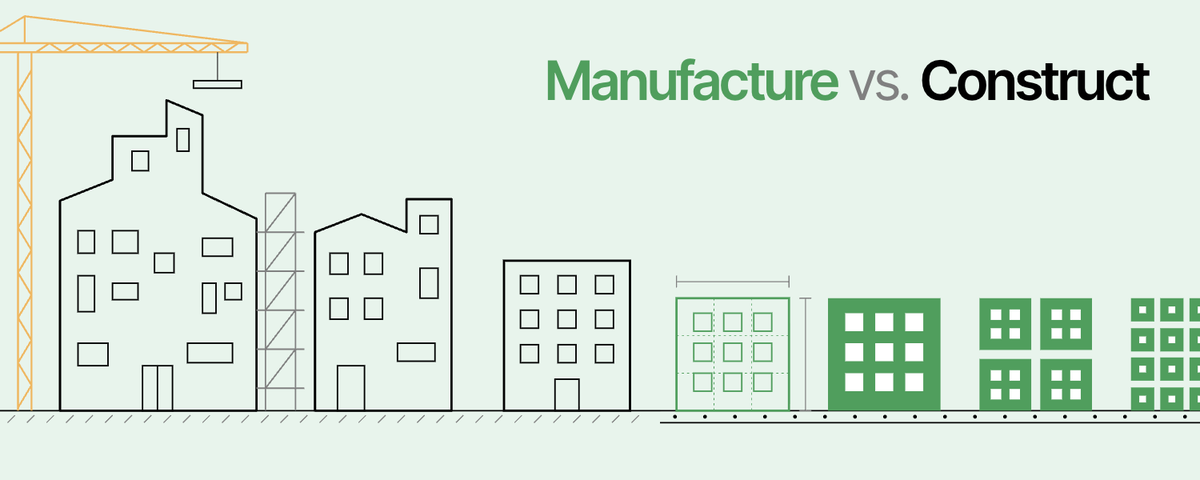
One of my favorite themes in our investing at USV in the last few years is founders and their teams taking something that traditionally was a construction project and turning that into a product that is mass produced. @livjenkss explains why we like this motion so much and want to do more of it

John Spindler retweeted

22. You can read the full post here: rameznaam.com/p/the-most-imp…

John Spindler retweeted

Europe's next industrial revolution is physical. 🪐
Following #Wave in Turin, @LaStampa featured @SaturnDynamics on how #PhysicalAI and world models are powering real-world manufacturing across Europe.
Read the full article. Link in thread.

John Spindler retweeted
Page Extract API is #1 on ExtractBench from @llama_index, and much cheaper than the other top methods.
The secret? We removed OCR from the standard extraction pipeline and use a pure vision model that reads each page as an image.
Accuracy went up, and cost went down.

John Spindler retweeted
#PhysicalAI is moving from lab demos to deployed systems. Robots that perceive, reason, and act in the real world.
But what’s working, what’s hype, and what does #Europe need to win?
Our CTO Simone Totaro will talk about it Friday 20th November in #Zürich at DARE Campus.

John Spindler retweeted

Chomsky was wrong.
Researchers from UC Berkeley and Google DeepMind cracked one of the biggest mysteries in AI.
For years, scientists have been finding impossible geometric shapes hidden inside the brains of LLMs.
Calendar months arrange themselves into literal circles.
Historical years bend into smooth, rippled timelines.
Cities organize themselves into actual 2D maps of latitude and longitude.
Everyone assumed this proved massive transformers were spontaneously inventing complex "world models" out of thin air.
They were wrong.
This paper proves you don't need a massive LLM for any of this to happen.
Even basic, decade-old word embeddings like word2vec produce the exact same circles, timelines, and maps.
The geometry isn't coming from the AI's architecture.
It’s coming from a hidden mathematical property inside human language itself.
Researchers call it translation symmetry.
In natural text, how often any two months appear near each other depends almost entirely on the time gap between them.
January and February share the same statistical relationship as July and August.
When a neural network trains on data with that kind of symmetry, the math forces it to learn Fourier representations, literal sine and cosine waves.
The circles? Those are the long waves.
The strange "ripples" researchers found on AI timelines? Just higher harmonics.
Here is the craziest part.
Rresearchers tried to break it.
They deleted every single sentence in the training data where two months appeared together. No "January" next to "February." No "March" next to "April."
And the circle formed anyway.
Why? Because the geometry is a collective phenomenon across the entire language.
Even if two months never touch in a sentence, they are both pulled into orbit by thousands of other words tied to the same seasons, weather, and events.
The rest of human language forces the shape into existence.

John Spindler retweeted

“as long as we have trusted interdependence and access” being the key second part of the statement
even so - not building frontier models is essentially saying brits cannot and shouldn’t compete at the frontier
and i don’t believe that to be true

UK does not need its own frontier AI model, says AI minister bit.ly/4zxiGuS

John Spindler retweeted

The bottleneck in atomistic foundation models has moved from model fit to data quality: models trained on OMol25 (2025) now sit closer to their DFT labels than those labels sit to the gold standard.
Our first technical lab note: potentialsciences.com/blog/2…

John Spindler retweeted

Maybe to summarize the basic argument of this essay a different way:
Current AIs are spiky and jagged - worse than humans in most domain, but often as good, or better, in ones with verifiable proxies (for example, math).
One such verifiable domain (I argue) is AI research.
And while the first AIs that dramatically accelerate AI progress will be quite narrow (i.e. probably not able to automate most jobs), the consequences of that accelerated progress will be very general.
And that's because better learning algorithms are very general. For example, GPT-6 (while still being jagged) is just way, way better than GPT-3 at practically everything.
I'm arguing that we're only a couple years away (and possibly only a couple months away) from a process by which (initially) narrow AIs concentrate a jump as big as the one from GPT-3 to GPT-6 into a single year.
And if you got another jump that big, but starting from the base of GPT-7, I think you would end up with AIs that would rapidly become better than the best humans in every field.

John Spindler retweeted

Smith and Montesquieu thought that markets and commerce made us better: that they create an incentive to pursue self-improvement and to create things of value for others. In the positive AI visions, where the labor of humans is made redundant, I find myself wondering how we fare in the presumptive absence of these incentive gradients. Perhaps we are released to a life of freedom, where we can study Mozart and read Dickens, but that still seems complicated: both Mozart and Dickens were themselves deeply commercially-motivated in the production of their work, as were most of the great artists through human history. If the premise is that nobody will need to work or produce, how confident are we that we actually get the next Mozart and Dickens? The relevant question is not the partial equilibrium of whether one individual can pursue a life of enlightened leisure, but the general equilibrium of what form a society as a whole will take on.
One could maybe invoke Periclean Athens or the aristocratic gentleman scientists of Victorian England as a counterpoint. While these individuals were perhaps not motivated by commercial considerations, they were embedded in wider societies shaped by commerce, attendant betterment, and trade: Byron was himself upper class, but he was also surrounded by and writing for an educated bourgeois audience. So we’re back to the equilibrium question. Furthermore, even these individuals were surely motivated by a sense of high-stakes and consequential agency: if they did not apply themselves to their labors, they presumably believed that the work would not otherwise exist. Thucydides was addressing pressing military matters.
So I would like to read more optimistic cases from AI proponents about what a society (vs individual life) looks like if everything goes well: what people do, why they do it, whether humans achieve excellence (and in which domains), and which historical groups we should look to as relevant precedent.
One can perhaps imagine that humans will turn out to have a strong preference for work created by other humans. This may work in certain domains (ceramics?), but for how many will it actually apply? (I’m told that much of what is sold on indie crafts websites is now in fact manufactured in China.) It’s hard to see how this human preference, even if strong, would, for example, save scholarship.
Another idea would be to accept that nobody will become Einstein or Mozart or Byron, and that human excellence as such diminishes, but that there are compensatory benefits (planet brains and Dyson swarms?).
I believe that we can satisfy individual desires, but to what extent will we cultivate behavior worthy of admiration? Will a post-scarcity society mold capable and ambitious people? Which institutions will sustain them and which responsibilities will they have? I’d like to hear more of the equilibrium for the maximalist case spelled out.
John Spindler retweeted

We @bold_lab_ai are making a few big bets and one of them is setting up BOLD itself as a transparent recursive co-improvement system (arxiv.org/abs/2512.05356). We develop new AI methods and other technology that help us work together to accomplish long term ambitious goals aligned with shared values. One of the core issues humanity faces today is that GPUs scale but collaboration amongst value aligned humans doesn't. So it's relatively easy for everyone to end up doing things that nobody individually wants.
If these words mean something to you and you believe it's path worth exploring (rather than accepting the "end of history", please apply! 🦋


We @bold_lab_ai are hiring a large cohort of home and overseas students for Fall 2027 entry. If you’re excited about discovering the next paradigm of open-source AI and want to work on ambitious, exploratory, but scalable ML that empowers humanity, please apply by 1st of December 2026 AOE to maximise chances of funding: eng.ox.ac.uk/study/research-…


John Spindler retweeted

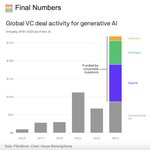
Nvidia alone accounted for 16.4% of all US venture capital dollars in Q2 2026 & 10.0% ($58.7b of $585.2b) over the last four quarters.
Jensen’s departure puts a question mark over 1 in every 6 venture dollars in the US.

John Spindler retweeted
What led our CEO, Elisa Seghetti, into the space of #WorldModels and why she decided to start a company within it? Watch the entire conversation of the Atoms are Back panel at #Wave by @vento_ventures on our Youtube channel. Link below.
John Spindler retweeted

There are many wonderful elements to this story about AI discovering gems in Godel's famously impenetrable notebooks
1/..
theguardian.com/science/2026…
