

クリエイティブディレクター/編集者。近年は、ダイバーシティ&インクルージョン、ユニバーサルデザインが主要テーマ。「エディトリアルUD」をベースにした「でんたつクリニック®」開発。共著『増補版 人間工学とユニバーサルデザイン新潮流』(日本工業出版)「第11章 ユニバーサルデザイン温故知新」ほか、記事執筆・研修講師なども
Joined November 2022
- Tweets7K
- Following180
- Followers99
- Likes6.4K




Pinned Tweet
ちなみに「いま考えていること」はこんな感じ...
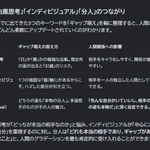
ピタゴラスイッチの「ぼくのおとうさん」を導入に、平野啓一郎さんの「分人論」につなげ、キンバリー・クレンショーの「インターセクショナリティ」を引き合いに出し、出口真紀子先生の「無自覚なマジョリティ性」と対置させ、
daigo@UDc_lab retweeted

En "Dune", los gusanos del desierto eran maquetas. En "Conan", las montañas eran de cartón. En "2001: Una odisea del espacio" la Luna se construyó en un taller de Madrid. Fueron obra de un genio español que convirtió la mentira en arte: Emilio Ruiz del Río. Tira del hilo 🧵👇🏽👇🏽👇🏽

daigo@UDc_lab retweeted

おはようございます🌞
本日もDAWNは元気にオープン致します!
ご予約無しでもご利用いただけますが、混雑時はお待ちいただくこともございますので予めご了承くださいませ🙇
本日もみなさまを笑顔でお迎えいたします😄
それでは、皆さま良い一日をお過ごしくださいね🩷
#分身ロボットカフェ
#BunshinRobotCafe
#OryCafe

ALT こちらに向かって両手を広げるオリヒメ。本日もみなさまのご来店をお待ちしております。


批判吹き荒れるVIVANT考察をあえて...w
シーズン1は、乃木父子の物語(アナキン/ルーク)
シーズン2は、野崎と劉銘軒ほか仲間の物語(ソロ/ランド)
ということで、「柚木薫はノゴーン・ベキの娘(レイア)」説を推しておく。
daigo@UDc_lab retweeted
情報に関するユニバーサルデザインとして「わかりやすさ」を重視してはいるけれど、絶対視はしていない。元同僚のTOMCATこと 黒猫亭(@chronekotei /霧山月世)氏との議論の賜物だ。「わかりやすさ」の効力が限定的であることに意識的できたつもりだが、また改めて考える必要を感じている。
daigo@UDc_lab retweeted

2000年代初頭までの黒猫亭(@chronekotei /霧山月世/TOMCAT)は、特撮を中心とした文芸・エンタメ系論客で、政治にはまったくの無関心だった。そのことについて、わしが「それは自慢にならん」とツッコんだ数年後、ついったらんどで見つけた彼は政治も語る論客となっていて驚いたのであった。

daigo@UDc_lab retweeted
#霧山月世( #黒猫亭 とむざう @chronekotei/NIFTY-Serve 特撮フォーラム~ホラー映画フォーラム界隈における伝説の伝説のガンマンTOMCAT)が2013年12月16日から2025年10月30日現在もなおFacebookで使い続けてる「プロフ写真カッコよすぎ問題」について、ツッコミ募集中(火暴!!)

ALT 霧山月世のFacebookプロフ写真。青い照明の下、顎のあたりでコンパクトカメラを持っていることから、鏡に映した自撮りと思われる。

2000年代初頭までの黒猫亭(@chronekotei /霧山月世/TOMCAT)は、特撮を中心とした文芸・エンタメ系論客で、政治にはまったくの無関心だった。そのことについて、わしが「それは自慢にならん」とツッコんだ数年後、ついったらんどで見つけた彼は政治も語る論客となっていて驚いたのであった。
daigo@UDc_lab retweeted
【尋ね人】この猫は、黒猫亭こと、霧山月世こと、TOMCATこと、私の元同僚のシマカツさんの愛猫で、ご本人は昨年11月に緊急搬送されて以降、消息不明とのこと。フォロワーさんたちも心配しており、状況にお心当たりの方がいらっしゃいましたら、お知らせいただけますと幸いです。よろしくお願いします。


daigo@UDc_lab retweeted

上智大学の出した声明。
思慮の行き届いた抽象的表現の中に、
いまの日本社会の問題と、
「人として、空気や、空気を支配する大きな声に流されずに、守るべき大切なこと」とが、詰まっていると感じました。
敬意を表してシェアします。
dept.sophia.ac.jp/is/igc/det…
daigo@UDc_lab retweeted

BREASTMILK
She thought she was studying milk.
What she uncovered was a conversation.
In 2008, evolutionary anthropologist Katie Hinde was working in a primate research lab in California, analyzing breast milk from rhesus macaque mothers. She had hundreds of samples and thousands of data points. Everything looked ordinary—until one pattern refused to go away.
Mothers raising sons produced milk richer in fat and protein.
Mothers raising daughters produced a larger volume with different nutrient balances.
It was consistent. Repeatable. And deeply uncomfortable for the scientific consensus.
Colleagues suggested error. Noise. Statistical coincidence.
But Katie trusted the data.
And the data pointed to a radical idea.
Milk is not just nutrition.
It is information.
For decades, biology treated breast milk as simple fuel. Calories in. Growth out. But if milk were only calories, why would it change depending on the sex of the baby?
Katie kept digging.
Across more than 250 mothers and over 700 sampling events, the story grew more complex. Younger, first-time mothers produced milk with fewer calories but significantly higher levels of cortisol—the stress hormone.
The babies who drank it grew faster.
They were also more alert, more cautious, more anxious.
Milk wasn’t just building bodies.
It was shaping behavior.
Then came the discovery that changed everything.
When a baby nurses, microscopic amounts of saliva flow back into the breast. That saliva carries biological signals about the infant’s immune system. If the baby is getting sick, the mother’s body detects it.
Within hours, the milk changes.
White blood cells surge.
Macrophages multiply.
Targeted antibodies appear.
When the baby recovers, the milk returns to baseline.
This was not coincidence.
It was call and response.
A biological dialogue refined over millions of years. Invisible—until someone thought to listen.
As Katie reviewed existing research, she noticed something unsettling. There were twice as many scientific studies on erectile dysfunction as on breast milk composition.
The first food every human consumes.
The substance that shaped our species.
Largely ignored.
So she did something bold.
She launched a blog with a deliberately provocative name: Mammals Suck Milk.
It exploded. Over a million readers in its first year. Parents. Doctors. Scientists. People asking questions research had skipped.
The discoveries kept coming.
Milk changes by time of day.
Foremilk differs from hindmilk.
Human milk contains over 200 oligosaccharides babies can’t digest—because they exist to feed beneficial gut bacteria.
Every mother’s milk is biologically unique.
In 2017, Katie brought this work to a TED stage. In 2020, it reached a global audience through Netflix’s Babies. Today, at Arizona State University’s Comparative Lactation Lab, she continues reshaping how medicine understands infant development, neonatal care, formula design, and public health.
The implications are staggering.
Milk has been evolving for more than 200 million years—longer than dinosaurs walked the Earth. What we once dismissed as simple nourishment is one of the most sophisticated communication systems biology has ever produced.
Katie Hinde didn’t just study milk.
She revealed that nourishment is intelligence.
A living, responsive system shaping who we become before we ever speak.
All because one scientist refused to accept that half the story was “measurement error.”
Sometimes the biggest revolutions begin by listening to what everyone else ignores.

daigo@UDc_lab retweeted

Ma fille m’a demandé à changer d’école.
Comme ça. Sans larmes. Sans colère. Sans révolte.
Elle s’est simplement approchée pendant que je préparais mon sac pour le travail et m’a dit doucement :
— « Est-ce que je peux étudier ailleurs ? »
Je lui ai demandé s’il s’était passé quelque chose.
Elle m’a dit que non.
Je lui ai demandé si elle n’avait pas d’amies.
Elle m’a répondu qu’elle ne savait pas.
Alors je lui ai demandé si quelqu’un la traitait mal.
Et elle est restée silencieuse.
Cette nuit-là, je n’ai pas fermé l’œil.
Le lendemain, j’ai inventé que je devais parler à la directrice.
Mais en réalité, j’y suis allé pour observer.
Je suis resté dans un couloir et j’ai attendu la récréation.
Et je l’ai vue.
Debout près de la grille, son thermos à la main, le regard baissé.
Un groupe de filles est passé, se bousculant en riant.
Un garçon lui a jeté du jus sur la chemise et s’est enfui.
Une autre a pris une photo en cachette et l’a montrée aux autres, éclatant de rire.
Elle n’a rien dit.
Elle a simplement serré les lèvres.
Comme si elle y était déjà habituée.
Mais ce qui m’a le plus blessé, ce n’est pas cela.
C’est d’avoir vu une professeure passer à ce moment-là.
Elle l’a regardée.
A regardé les autres.
Et a continué son chemin, comme si de rien n’était.
Comme si ma fille était invisible.
Plus tard, j’ai écrit à l’école.
Je leur ai raconté ce qu’elle m’avait laissé entendre.
Qu’en classe, on lui cachait ses cahiers.
Que dans les couloirs, on lui donnait des surnoms.
Que dans le groupe WhatsApp, on se moquait de ses photos.
Ils m’ont répondu avec la phrase habituelle :
— « Ne vous inquiétez pas, ce sont des histoires d’enfants. Nous gérons la situation. »
Mais ils n’ont rien fait.
Rien du tout.
Ce soir-là, en rentrant à la maison, elle m’a demandé tout bas :
— « Tu y as pensé ? »
Je lui ai répondu que oui.
Et qu’elle n’avait plus à retourner dans cette école.
Elle n’a pas demandé pourquoi.
Elle a juste posé son sac dans un coin et respiré profondément.
Comme quelqu’un qui, enfin, se libère d’un fardeau qu’il portait seul.
Aujourd’hui, elle étudie ailleurs.
Pas dans un endroit plus grand.
Ni plus moderne.
Juste plus humain.
Là où on la regarde dans les yeux.
Où on l’appelle par son prénom.
Et où elle n’a plus besoin de se faire petite pour ne pas être blessée.
Parce qu’un enfant — une fille ou un garçon — ne demande pas à changer d’école par caprice.
Il le fait quand il n’en peut plus.
Et le plus déchirant, ce n’est pas ce que font ses camarades…
mais ce que ne font pas les adultes censés le protéger.
Et j’aimerais que cela soit rare.
J’aimerais ne pas faire partie de ces parents qui l’ont compris trop tard.
Car il y a quelque chose qu’on n’oublie jamais :
le jour où ta fille te demande, presque en chuchotant,
de la sortir du seul endroit où elle aurait dû se sentir en sécurité.


daigo@UDc_lab retweeted
咄嗟の指摘は初めからできたわけじゃなくて、やってるうちに少しずつできるようになっていったものだ。つまるところ訓練、経験の蓄積。何も特別なことではなく、勇気とかの問題でもなく、やっていけばかなりの人が習得できる「技術」に近いものな気がする。
中年になって身体は日々衰えてきてるけど、
daigo@UDc_lab retweeted
「外国人が夜どんちゃん騒ぎしてるってなった時に『日本から出ていけ』みたいな気持ちになるのはわかるんだけど」って言った人がいたので「それなら言うべきは『静かにして』であって『日本から出ていけ』はド直球の差別ですよ」って言ったら周りの人たちも「ああ、確かに…」みたいになった。こういう
