

Unfolding the story of the cosmos across the past, present, and future. Bringing insight into space exploration, scientific discovery, and the great unknown. 🌌
cosmos
Joined December 2022
- Tweets84
- Following24
- Followers32
- Likes121





Pinned Tweet
You're about to embark on an awe-inspiring journey through astronomy, space exploration, and the cosmos. 🌌
#UnfoldTheCosmos
Unfold The Cosmos retweeted

On his birth anniversary today, we remember Meghnad Saha (1893–1956), the prominent Indian astrophysicist whose work helped us understand the temperatures and physical conditions of stars through the study of stellar spectra.
Born on this day in 1893 at Seoratali, near Dhaka (now in Bangladesh), Saha rose from a poor family to become a pioneer of modern astrophysics. His work spanned stellar spectroscopy, thermal ionization, nuclear physics, ionospheric physics and several other areas of physics.
His greatest contribution was the 𝙎𝙖𝙝𝙖 𝙞𝙤𝙣𝙞𝙯𝙖𝙩𝙞𝙤𝙣 𝙚𝙦𝙪𝙖𝙩𝙞𝙤𝙣, developed in 1920. It relates the ionization state of a gas to temperature, electron pressure and atomic properties. The equation was first given in his paper “𝘖𝘯 𝘐𝘰𝘯𝘪𝘻𝘢𝘵𝘪𝘰𝘯 𝘪𝘯 𝘵𝘩𝘦 𝘚𝘰𝘭𝘢𝘳 𝘊𝘩𝘳𝘰𝘮𝘰𝘴𝘱𝘩𝘦𝘳𝘦”, published in the 𝘗𝘩𝘪𝘭𝘰𝘴𝘰𝘱𝘩𝘪𝘤𝘢𝘭 𝘔𝘢𝘨𝘢𝘻𝘪𝘯𝘦 in October 1920.
Astronomers had long observed that stars showed different spectral patterns, but the physical origin of these differences was not yet understood. Saha showed that they could largely be understood through differences in temperature and ionization conditions: as temperature rises, atoms become increasingly ionized, changing which spectral lines are prominent. Stellar spectra could therefore be interpreted as indicators of stellar temperature and atmospheric conditions.
A few years later, Cecilia Payne used Saha's equation in her 1925 thesis to show that hydrogen and helium were overwhelmingly abundant in stars—a conclusion that was initially met with skepticism but was later confirmed.
The theory was later applied to problems involving the ionosphere, flames, electric arcs and other ionized gases.
Saha played a leading role in building India's scientific infrastructure and institutions. He was Professor and Head of Physics at the University of Allahabad from 1923 to 1938. While at Allahabad, he helped found the Academy of Sciences of the United Provinces of Agra and Oudh in 1930, the institution that later became the National Academy of Sciences, India; Saha was its founder-president.
In 1938 he returned to Calcutta (now Kolkata) as Palit Professor of Physics at the University of Calcutta. He helped establish the Indian Science News Association in 1935, which began publishing the journal 𝘚𝘤𝘪𝘦𝘯𝘤𝘦 𝘢𝘯𝘥 𝘊𝘶𝘭𝘵𝘶𝘳𝘦; Saha served as its editor for many years.
In the late 1940s he helped establish the Institute of Nuclear Physics in Calcutta, formally opened in 1950. His efforts also initiated the development of India's first cyclotron, a 38-inch machine at Calcutta; it was eventually completed and brought into operation in 1960. After his death, the Institute was renamed the Saha Institute of Nuclear Physics (SINP) in his honour. He was closely associated with the Council of Scientific and Industrial Research (CSIR) from its establishment in 1942, serving on its Governing Body and several research and planning committees.
He was elected a Fellow of the Royal Society in 1927. He co-authored 𝘈 𝘛𝘦𝘹𝘵𝘣𝘰𝘰𝘬 𝘰𝘧 𝘏𝘦𝘢𝘵 (1931) and 𝘈 𝘛𝘳𝘦𝘢𝘵𝘪𝘴𝘦 𝘰𝘯 𝘔𝘰𝘥𝘦𝘳𝘯 𝘗𝘩𝘺𝘴𝘪𝘤𝘴 (1934), among other important scientific works.
Beyond science, Saha was elected to the Indian Parliament in 1951 as an independent candidate and served in the first Lok Sabha from 1952. He took a keen interest in national planning, particularly in science, industry and technology. In November 1952, he became chairman of the Calendar Reform Committee established under the Council of Scientific and Industrial Research. Its recommendations contributed to the adoption of India's national calendar for official purposes from 22 March 1957, a year after his death. Saha also strongly advocated the peaceful use of atomic energy and the application of science and technology to India's national development.
According to the #NobelPrize nomination archive, Saha received seven nominations for the Physics Nobel Prize between 1930 and 1955, across six different years. Nobel laureate Arthur Compton nominated him in 1937 and 1940. Saha was never awarded the @NobelPrize.
Today, when we infer the temperature and physical conditions of a star light-years away from its light and spectrum, we are using ideas that Saha helped make possible more than a century ago.

Unfold The Cosmos retweeted
We are living in a remarkable era of cosmic history — one in which the evidence for the Big Bang is still observable, but may eventually become inaccessible to far-future astronomers.
In a 2007 paper, 𝘛𝘩𝘦 𝘙𝘦𝘵𝘶𝘳𝘯 𝘰𝘧 𝘢 𝘚𝘵𝘢𝘵𝘪𝘤 𝘜𝘯𝘪𝘷𝘦𝘳𝘴𝘦 𝘢𝘯𝘥 𝘵𝘩𝘦 𝘌𝘯𝘥 𝘰𝘧 𝘊𝘰𝘴𝘮𝘰𝘭𝘰𝘨𝘺, published in 𝘎𝘦𝘯𝘦𝘳𝘢𝘭 𝘙𝘦𝘭𝘢𝘵𝘪𝘷𝘪𝘵𝘺 𝘢𝘯𝘥 𝘎𝘳𝘢𝘷𝘪𝘵𝘢𝘵𝘪𝘰𝘯, physicists Lawrence M. Krauss and Robert J. Scherrer explored what could happen if the universe continues expanding under the influence of a cosmological constant, as assumed in the standard ΛCDM model.
In this scenario, galaxies outside our gravitationally bound Local Group will eventually pass beyond our cosmic event horizon, becoming permanently inaccessible to observation. The distant galaxies that currently reveal the universe's expansion will disappear from view, leaving future astronomers without the large-scale galaxy distribution used to measure the Hubble expansion.
The other major observational pillars of Big Bang cosmology would also become inaccessible. The cosmic microwave background would be stretched to ever longer wavelengths and, in the authors' scenario, would eventually fall below the plasma frequency of the interstellar medium, preventing it from reaching observers within the future galaxy. Meanwhile, stellar evolution and nucleosynthesis would alter the galaxy's chemical composition, obscuring the primordial abundance pattern of light elements that provides evidence for Big Bang nucleosynthesis.
Krauss and Scherrer argued that far-future observers could inhabit a merged galaxy, with no other galaxies visible beyond their gravitationally bound island universe. Without the evidence available to us today, they might infer that they lived in a static island universe — a picture resembling cosmological ideas that preceded the establishment of the observational case for cosmic expansion.
Their argument is not that the universe would actually become static, but that its continued expansion could erase the evidence needed to recognize it.
We may therefore be living during a comparatively brief era in which the principal observational evidence for the Big Bang remains accessible.
[Source: L. M. Krauss & R. J. Scherrer, “The Return of a Static Universe and the End of Cosmology,” General Relativity and Gravitation 39, no. 10, 1545–1550 (2007), doi.org/10.1007/s10714-007-0…; arXiv:0704.0221.]
(Photo: Laurence Krauss, October 2013, via Wikimedia Commons — CC BY-SA 3.0.
commons.wikimedia.org/wiki/F…)

Unfold The Cosmos retweeted
In 1939, J. Robert Oppenheimer and Hartland Snyder showed that the gravitational collapse of a sufficiently massive, idealized star could continue without reaching a stable final state, with their model leading to a singularity. Their calculation, however, assumed spherical symmetry and highly idealized matter.
In 1965, Roger Penrose made a decisive breakthrough: using the concept of a trapped surface and the global causal and topological structure of spacetime, he showed that gravitational collapse could lead to spacetime singularity formation without requiring spherical symmetry or a particular detailed shape of the collapsing matter. More precisely, under the theorem’s assumptions, the spacetime is necessarily geodesically incomplete. Penrose’s result transformed singularity formation from a feature of highly symmetric models into a robust prediction of general relativity.
[Photo credit: Biswarup Ganguly / Wikimedia Commons (CC BY 3.0)]

Unfold The Cosmos retweeted

Today, NASA announced PRIMA, a new space telescope that will explore long-standing mysteries around the formation of planets, stars, black holes, and even how water on Earth came to be. go.nasa.gov/3TgGh3W

ALT An illustration of a telescope spacecraft with a parabolic mirror floating in deep space.

Neptune became the first planet successfully located through mathematical prediction before its recognition as a planet, making its discovery a landmark achievement in celestial mechanics and a striking demonstration of Newtonian gravitational theory.
5/n
1
2
11
Unfold The Cosmos retweeted
Somewhere out there, a spinning black hole may be doing the work of a particle detector — no wires, no photomultipliers, just gravity and patience. The particle in question is an ultralight boson, something like an axion, and the method astrophysicists use to hunt for it is called black hole superradiance. It's one of the stranger ideas in general relativity, and its history runs deeper than the usual one-line explanation suggests.
It starts with Roger Penrose in 1969, who showed that a spinning black hole carries genuinely extractable rotational energy. Drop an object into the ergosphere and let it split in two: if the infalling half carries negative energy as reckoned from far away, conservation of energy means the half that escapes leaves with more than the whole object started with. Two years later, Yakov Zel'dovich translated that idea into a wave picture: send a wave carrying angular momentum toward a spinning, absorbing cylinder, and under the right condition — when the wave's frequency and angular momentum satisfy the superradiant condition — the cylinder can transfer some of its rotational energy to the wave, so the outgoing wave comes back stronger than it went in. In 1972, C. W. Misner proposed that rotating Kerr black holes should behave in the same basic way; Press and Teukolsky developed the black-hole-bomb idea that same year, while Alexei Starobinsky and others carried out detailed calculations of wave amplification by rotating black holes in the early 1970s. Zel'dovich's cylinder, meanwhile, remained a pure thought experiment for decades, since satisfying the required rotation-to-wave-frequency condition was difficult to engineer — it wasn't demonstrated with sound waves until a Glasgow-led team managed it in 2020, and with real electromagnetic fields, using a spinning aluminium cylinder in a toroidal LC circuit, until amplification was finally demonstrated in 2024.
Here's the part worth being precise about. A single scattering event at a black hole is not an exponential process — it is a one-time amplification, and the amplified wave sails off to infinity afterward. Press and Teukolsky's real insight in 1972 was that if you could trap that amplified wave and send it back in for another pass, the gain compounds on every round trip. They called the runaway result a "black hole bomb," complete with an imagined mirror around the hole — and remarkably, the electromagnetic analogue is no longer just a thought experiment. In 2025, the same Glasgow-Southampton research team, with collaborators, coupled a rotating electromagnetic amplifier to a low-loss resonant cavity and watched the system become unstable, generating a growing signal seeded only by electrical noise. The experiment demonstrated the electromagnetic analogue of the Press-Teukolsky black hole bomb. While Press and Teukolsky relied on an artificial mirror, theorists Thibault Damour, Nathalie Deruelle, and Remo Ruffini realized in 1976 that nature can provide a natural trapping mechanism around a real black hole when the field is a sufficiently light massive boson, such as an axion or another ultralight scalar or vector boson. The black hole's gravity can bind such a field into long-lived, quantized quasi-bound states, producing a system often compared with a "gravitational atom." If one of those states satisfies the superradiant condition, its occupation can grow exponentially, drawing energy and angular momentum out of the black hole and building an increasingly large boson cloud. That repeated, compounding amplification, not a single scattering event, is what makes the process genuinely exponential.
It's also self-limiting, which is what makes it useful as a measurement. Growth switches off once the black hole's spin drops low enough that the superradiant condition is no longer met, leaving the hole spinning more slowly than it otherwise might have. Which boson mass can be amplified depends on the black hole's size: the effect is strongest when the particle's Compton wavelength is comparable to the hole's characteristic gravitational length scale. For stellar-mass black holes, this points roughly to the 10⁻¹³–10⁻¹¹ eV range for scalar bosons, while supermassive black holes can probe bosons many orders of magnitude lighter, with characteristic ranges depending on the black-hole mass, spin and whether the field is scalar or vector.
That gives astronomers two live handles on a particle nobody has ever directly seen. First, they can measure black-hole spins and look for ones spinning unusually fast for the mass range in which a particular boson would have caused efficient superradiant spin-down. Two mergers detected in October and November 2024, GW241011 and GW241110, turned out to be especially useful for this. GW241011 was detected on October 11, 2024, and GW241110 on November 10, 2024. Both contained rapidly spinning, unequal-mass black holes, with spin-orbit misalignment that the LVK collaboration says is suggestive of the larger black holes having formed through earlier mergers in dense stellar environments. When the detailed analysis was published about a year later, on October 28, 2025, GW241011's precisely measured primary spin was used to constrain ultralight bosons. The LVK analysis found that the observed rapid spin excludes ultralight bosons with masses of approximately 10⁻¹³ to 3 × 10⁻¹² eV, with the precise excluded regions depending on the boson type and assumptions about the black hole's age. Under a conservative assumption that the primary black hole had existed for at least 10⁵ years, the analysis excludes scalar bosons between 0.3 and 2.6 × 10⁻¹² eV and vector bosons between 0.1 and 5.3 × 10⁻¹² eV at 90% credibility. A separate 2025 analysis, using another fast-spinning merger called GW231123 together with the earlier event GW190517, disfavored scalar boson masses between roughly 0.55 and 11 × 10⁻¹³ eV, and vector boson masses between about 0.11 and 18 × 10⁻¹³ eV, under the conservative assumption that the relevant black holes had lifetimes greater than 10⁵ years.
The second approach is more direct: listen for the cloud itself, which can radiate a faint, nearly monochromatic gravitational-wave signal as it loses energy. The LIGO-Virgo-KAGRA collaboration has run dedicated searches for exactly that signal, targeting the remnants of GW231123 and GW230814 and the well-known Galactic black hole in Cygnus X-1. No evidence for a vector-boson cloud signal was found. For the merger remnants, the searches disfavored vector boson masses of roughly 0.94–1.08 × 10⁻¹³ eV for GW231123 and 2.75–3.28 × 10⁻¹³ eV for GW230814 at 30% confidence under the analysis assumptions. The Cygnus X-1 search, using a different method suited to a Galactic black hole whose properties are comparatively well constrained, excluded 0.85–1.59 × 10⁻¹³ eV at 95% confidence, assuming its initial spin was greater than 0.5. These null results do not detect the particle, but they can rule out or disfavor specific regions of parameter space where a detectable signal should have appeared.
No axion or any other ultralight boson has been caught this way, at least not yet. But that's rather the point of the method: it turns some of the most extreme objects in the universe into a particle-physics experiment that requires no particle beam on Earth, only patient observation of nature's own black holes. The idea began with Penrose, was transformed into a wave phenomenon by Zel'dovich, developed through the work of Misner, Press, Teukolsky, Alexei Starobinsky and others more than fifty years ago — and, as of 2025, the black-hole-bomb mechanism has even been recreated as an electromagnetic analogue on a laboratory bench.
[References: R. Penrose, Riv. Nuovo Cimento 1, 252 (1969); Ya. Zel'dovich, JETP Lett. 14, 180 (1971); C. W. Misner, Phys. Rev. Lett. 28, 994 (1972); W. H. Press & S. A. Teukolsky, Nature 238, 211 (1972); A. A. Starobinsky, Sov. Phys. JETP 37, 28 (1973); M. C. Cromb et al., Nature Physics 16, 1069 (2020); M. C. Braidotti et al., Nature Communications 15, 5453 (2024); M. C. Cromb et al., Science Advances 11, eadz4595 (2025); Aswathi, East, Siemonsen, Sun & Jones, Phys. Rev. D 112, 123048 (2025); LIGO-Virgo-KAGRA directed boson-cloud search, arXiv:2509.07352 (2025); LIGO-Virgo-KAGRA, GW241011 and GW241110, Astrophys. J. Lett. 993, L21 (2025).]
(Illustration: Scientific schematic of a rotating black hole surrounded by a dipolar scalar boson cloud. Created by @PhysicsArchives)

Unfold The Cosmos retweeted
Henri Poincaré is often remembered as “the last universalist,” but his physics alone would secure his place among the greats of the field.
Years before Einstein's 1905 paper, Poincaré was already probing the foundations of space and time. In his 1898 essay "La Mesure du Temps" ("The Measure of Time"), he argued that we have no direct intuition of simultaneity between distant events and that simultaneity must instead be established through conventions and operational procedures involving clocks and signal propagation.
In 1900, Poincaré went further. In discussing Lorentz's theory, he gave Lorentz's "local time" a physical interpretation: observers moving with the Earth could synchronize clocks using optical signals, and the time indicated by those clocks would correspond to Lorentz's local time. This transformed what had been essentially a mathematical device into a quantity with an operational interpretation—although Poincaré still interpreted it within an ether-based theory and, at this stage, the treatment was first-order in v/c.
By 1904, in his famous lecture at the International Congress of Arts and Science in St. Louis, Poincaré explicitly formulated the principle of relativity and argued that uniform motion relative to an absolute state of rest could not be detected experimentally. He increasingly regarded the invariance of physical laws under uniform motion as a fundamental principle of nature.
Then, on 5 June 1905, Poincaré communicated "Sur la dynamique de l'électron" to the French Academy of Sciences. Einstein's own paper, "On the Electrodynamics of Moving Bodies," was received by 𝘈𝘯𝘯𝘢𝘭𝘦𝘯 𝘥𝘦𝘳 𝘗𝘩𝘺𝘴𝘪𝘬 on 30 June.
In his 1905 paper, Poincaré explicitly named the Lorentz transformations, showed that they form a group together with spatial rotations, and developed a relativistic dynamics of the electron. The later extension of this symmetry to include spacetime translations became known as the Poincaré group.
The crucial difference between Poincaré's 1905 approach and Einstein's was conceptual. Poincaré remained within Lorentz's ether-based framework, interpreting local time and length contraction as physical effects within that theory. Einstein, by contrast, formulated special relativity without assigning any physical role to a preferred ether frame. Starting from the relativity principle and the constancy of the speed of light, he reconstructed the Lorentz transformation and made the relativity of simultaneity central to the theory.
This distinction helps explain why Poincaré is widely credited with anticipating and developing much of the mathematical and physical structure that became special relativity, while Einstein is credited with the decisive conceptual reformulation of space and time. The precise question of priority, however, remains a subject of historical debate.
Poincaré's physics ranged much further still. He wrote extensively on electromagnetic theory, Maxwell's equations and optics. And following the 1911 Solvay Congress, he turned to the quantum problem. On 4 December 1911 he presented a short note titled "Sur la théorie des quanta" to the Académie des Sciences, followed by an expanded memoir of the same title in the Journal de Physique the following January, showing that Planck's radiation law could not be reconciled with a completely continuous exchange of energy—a powerful mathematical argument for the necessity of energy discontinuities.
The work had a significant influence on the subsequent development and acceptance of quantum theory, including on James Jeans, whose later work on radiation was strongly influenced by Poincaré's argument. His contributions across mathematics and physics also helped shape the development of modern mathematical physics.
Poincaré died in July 1912, only months after his groundbreaking work on the quantum theory of radiation.

Unfold The Cosmos retweeted
In 1925, 24-year-old graduate student Cecilia Payne reached a revolutionary conclusion: stars are composed overwhelmingly of hydrogen and helium — a result so far outside the prevailing astronomical view that she was urged to qualify her own conclusion.
Payne was working at the Harvard College Observatory under Harlow Shapley, completing a doctorate that Radcliffe College awarded because Harvard did not yet grant its degrees to women. Her thesis, 𝘚𝘵𝘦𝘭𝘭𝘢𝘳 𝘈𝘵𝘮𝘰𝘴𝘱𝘩𝘦𝘳𝘦𝘴, applied the recently developed theory of ionization to absorption lines in stellar spectra and showed that the differences between stellar spectral types were largely a matter of temperature and ionization, rather than radically different chemical compositions.
Once she accounted for these effects, one result stood out starkly: hydrogen appeared to be enormously more abundant in stars than the heavier elements such as iron, calcium, and silicon. Her calculations indicated that hydrogen could be about a million times more abundant than some of the metals — implying that stars were fundamentally unlike the rocky, metal-rich material of Earth, contrary to the prevailing view among many astronomers at the time.
Shapley arranged for Henry Norris Russell of Princeton, one of the leading astronomers of the era, to review Payne's thesis. In a letter dated 14 January 1925, Russell told her that it was “clearly impossible” for hydrogen to be a million times more abundant than the metals.
Payne did not simply delete her finding. She retained the underlying abundance calculations and tables in her thesis, but added a crucial qualification, writing that the enormous abundance derived for hydrogen and helium was “almost certainly not real.” In effect, she backed away from the quantitative interpretation while preserving the evidence that led to it.
Four years later, in 1929, Russell published his own analysis of the composition of the Sun's atmosphere, using a different quantitative approach. His results confirmed the fundamental picture Payne had reached earlier, and he explicitly acknowledged her 1925 work. Russell's paper helped establish the high abundance of hydrogen and helium, but subsequent astronomical accounts often gave disproportionate credit to Russell while failing to adequately recognize Payne's priority.
Later historical research, including examination of the Payne-Russell correspondence and other archival evidence, has helped reconstruct the episode and restore Payne's place in the history of astrophysics. Astronomer Otto Struve later described Payne's thesis as “undoubtedly the most brilliant Ph.D. thesis ever written in astronomy.”
Payne's 1925 quantitative abundance estimates were not all correct by modern standards, particularly her relative hydrogen-to-helium ratio. But her fundamental insight was extraordinary and correct: stars are composed overwhelmingly of hydrogen and helium, while the heavier elements make up only a small fraction of their matter.
Today, the hydrogen- and helium-dominated composition of stars is one of the foundations of modern astrophysics.
[Sources: C. H. Payne, 𝘚𝘵𝘦𝘭𝘭𝘢𝘳 𝘈𝘵𝘮𝘰𝘴𝘱𝘩𝘦𝘳𝘦𝘴 (PhD thesis, Radcliffe College, 1925); H. N. Russell, “𝘖𝘯 𝘵𝘩𝘦 𝘊𝘰𝘮𝘱𝘰𝘴𝘪𝘵𝘪𝘰𝘯 𝘰𝘧 𝘵𝘩𝘦 𝘚𝘶𝘯’𝘴 𝘈𝘵𝘮𝘰𝘴𝘱𝘩𝘦𝘳𝘦,” 𝘛𝘩𝘦 𝘈𝘴𝘵𝘳𝘰𝘱𝘩𝘺𝘴𝘪𝘤𝘢𝘭 𝘑𝘰𝘶𝘳𝘯𝘢𝘭 70 (1929): 11–82; O. Struve & V. Zebergs, 𝘈𝘴𝘵𝘳𝘰𝘯𝘰𝘮𝘺 𝘰𝘧 𝘵𝘩𝘦 𝘛𝘸𝘦𝘯𝘵𝘪𝘦𝘵𝘩 𝘊𝘦𝘯𝘵𝘶𝘳𝘺 (Macmillan, 1962); David H. DeVorkin, David H. DeVorkin, “Extraordinary claims require extraordinary evidence: C.H. Payne, H.N. Russell and standards of evidence in early quantitative stellar spectroscopy,” 𝘑𝘰𝘶𝘳𝘯𝘢𝘭 𝘰𝘧 𝘈𝘴𝘵𝘳𝘰𝘯𝘰𝘮𝘪𝘤𝘢𝘭 𝘏𝘪𝘴𝘵𝘰𝘳𝘺 𝘢𝘯𝘥 𝘏𝘦𝘳𝘪𝘵𝘢𝘨𝘦 13 (2010): 139–144.]

Unfold The Cosmos retweeted
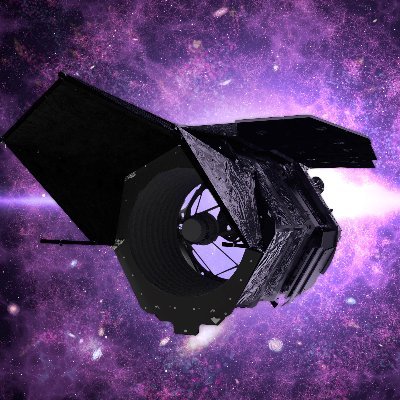
Success! Roman’s planned mid-course correction burn went as expected, ensuring that we are on track for our orbit around the second Lagrange point, a million miles from Earth.
go.nasa.gov/4A3zDi2

Unfold The Cosmos retweeted
On this day in 1939, J. Robert Oppenheimer and his student Hartland Snyder published their groundbreaking paper “𝘖𝘯 𝘊𝘰𝘯𝘵𝘪𝘯𝘶𝘦𝘥 𝘎𝘳𝘢𝘷𝘪𝘵𝘢𝘵𝘪𝘰𝘯𝘢𝘭 𝘊𝘰𝘯𝘵𝘳𝘢𝘤𝘵𝘪𝘰𝘯” in 𝘗𝘩𝘺𝘴𝘪𝘤𝘢𝘭 𝘙𝘦𝘷𝘪𝘦𝘸 (𝘗𝘩𝘺𝘴. 𝘙𝘦𝘷. 56, 455–459).
1/n

Unfold The Cosmos retweeted


Liftoff! @NASARoman begins its flight to space. The Roman telescope’s wide field of view will generate never-before-seen images, revolutionizing our understanding of the universe.
It’s launch day! “Let’s light this candle.” 🚀🌌
#NASARoman #UnfoldTheCosmos

ALT Photo credit: NASA/Kennedy Space Center
NASA’s Nancy Grace Roman Space Telescope (@NASARoman) is set to launch today, Sunday, Aug. 30, at 7:26 a.m. EDT.
.@NASA’s Nancy Grace Roman Space Telescope will study dark energy, dark matter, exoplanets, and the evolution of galaxies. By surveying huge areas of the sky, Roman will help scientists better understand how the universe has changed over cosmic time.
3
37