

David A. Dunlap Department of Astronomy and Astrophysics at the University of Toronto
50 St George, Toronto Canada
Joined August 2010
- Tweets320
- Following273
- Followers932
- Likes379





UofT D. A. Dunlap Dept of Astronomy & Astrophysics retweeted

Congratulations to Professor @reneehlozek, who has been elected to the prestigious College of New Scholars of the Royal Society of Canada - one of Canada's highest academic honours!
You can read the full story, here: bit.ly/Hlozek_RSC

UofT D. A. Dunlap Dept of Astronomy & Astrophysics retweeted
Astronomers at @UofT, @MIT and elsewhere have detected a persistent radio signal from a far-off galaxy that appears to be flashing with surprising regularity.
Read more on this fascinating discovery from the CHIME/FRB Collaboration, here: dunlap.utoronto.ca/astronome… #UofT

ALT CHIME telescope.
UofT D. A. Dunlap Dept of Astronomy & Astrophysics retweeted

Listen to @DunlapInstitute's Lamiya Mowla discuss the James Webb Space Telescope on @AJStream.
Now live here: bit.ly/3P8MkQJ
UofT D. A. Dunlap Dept of Astronomy & Astrophysics retweeted
It's Moon Monday!
There are full moons, blood moons, wolf moons... but what's the difference?
@AstroIlana breaks it all down, on our latest edition of Cosmos From Your Couch.
You can watch it now - youtube.com/watch?v=9RDLDiOR…
@UofT @UofTAstro #uoft
UofT D. A. Dunlap Dept of Astronomy & Astrophysics retweeted
"Time travel is possible - maybe..."
Our latest "Cosmos From Your Couch" video is out! Learn all about time travel from Astronomer Adiv Paradise.
Watch it here: youtube.com/watch?v=Xjl1Bu09…
@UofTAstro @UofT @UofTArtSci
UofT D. A. Dunlap Dept of Astronomy & Astrophysics retweeted
BREAKING NEWS: the new, improved Dragonfly is now also a galactic gas detector.
“The upgrade will reveal ionized gas clouds surrounding galaxies on a scale never been done before”- @DeborahLokhorst.
Read more about the telescope's metamorphosis, here: dunlap.utoronto.ca/new-drago…

UofT D. A. Dunlap Dept of Astronomy & Astrophysics retweeted

.@GwenEadie of @UofTArtSci's @UofTAstro & @UofTStatSci has won a 2021 Polanyi Prize in Physics for her work in the emerging field of astrostatistics, which is providing new insights into dark matter and its impact on galaxies. 🌌 uoft.me/7sV

UofT D. A. Dunlap Dept of Astronomy & Astrophysics retweeted

#BlackESTEEM is thrilled to be hosting @ikape_margaret (Astronomer,Astrophysicist and Mathematician) for our Chill N’ Chat with Black Girls in STEM. Margaret is a PhD Candidate at the Dunlap institute for astronomy and astrophysics @UofTAstro @UofT. #BlackwomeninSTEM

UofT D. A. Dunlap Dept of Astronomy & Astrophysics retweeted

An international team detects a type Ia supernova at birth. This is the earliest detection of this type of supernova to date.
The results have been published in the scientific journal @NatureAstronomy.
More info 👉 ieec.cat/content/media/news/…
📸 @NASA/@chandraxray

UofT D. A. Dunlap Dept of Astronomy & Astrophysics retweeted
Very early detections of SN 2018aoz reveal a blue supernova that very quickly becomes red due to a blanketing effect caused by Fe-peak elements. This hints at unusual processes in some normal type Ia SN explosions. Ni, Moon et al.: nature.com/articles/s41550-0…
@yuanqini @mrdrout

UofT D. A. Dunlap Dept of Astronomy & Astrophysics retweeted
Meet Astronomer Taylor Kutra and learn all about her research into protoplanetary disks - the gas and dust surrounding a young star.
You can catch Taylor on our new video series, Cosmos From Your Couch - the link is here: youtu.be/taCCziVgllsMeet #UofT #Research #WomenInSTEM

ALT Quote board with Taylor Kutra picture that reads: "I study the way that starlight shines on gas."
UofT D. A. Dunlap Dept of Astronomy & Astrophysics retweeted

Learn about ethical considerations in astronomy with PhD student Steffani Grondin at the Stellar Spectacles Symposium! She is moderating a panel with guest speakers to discuss ethics in astronomy. Book tickets ($5 general admission, free for students) at asxsociety.com.

UofT D. A. Dunlap Dept of Astronomy & Astrophysics retweeted
Research shows starlight may shape Protoplanetary disks - which are the birthplace of planets. We asked U of T astronomer Taylor Kutra how a little starlight can go such a long way.
The latest Cosmos From Your Couch is here: youtu.be/taCCziVglls
@UofT @UofTAstro @UofTArtSci
UofT D. A. Dunlap Dept of Astronomy & Astrophysics retweeted

Looking for something to do this week? Come to the next AstroTour this Thursday at 8 PM ET on YouTube (youtu.be/n3oIthFkBNk). Taylor Kutra will be sharing about discoveries by women in astronomy!. We will have demos after the talk on Zoom (bit.ly/3thTkCC)!
UofT D. A. Dunlap Dept of Astronomy & Astrophysics retweeted
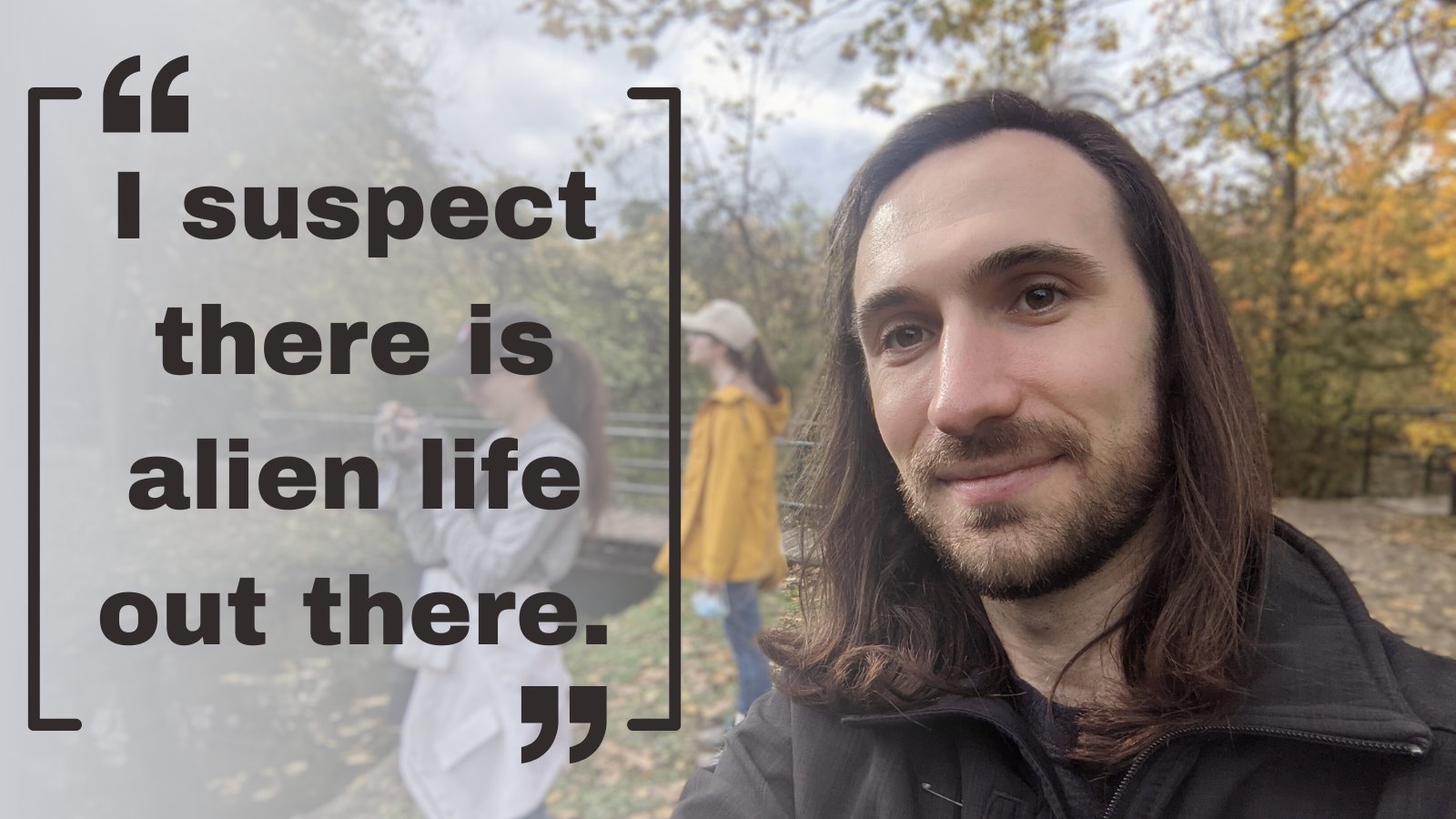
"I suspect there is alien life out there."
Astronomer Adiv Paradise explains how this may be the case, on our intro edition of "Cosmos From Your Couch!
Watch the first in this video series - the direct link is here: youtube.com/watch?v=tVfwv8GC…
#Astro #Astronomy #Astroposts #Aliens
UofT D. A. Dunlap Dept of Astronomy & Astrophysics retweeted
Astronomers from #UofT's @DunlapInstitute focus robotic eyes on the Milky Way, our cosmic home 🌌 uoft.me/7tH

UofT D. A. Dunlap Dept of Astronomy & Astrophysics retweeted
Our new video series is live!
Join Dr. Adiv Paradise on Cosmos From Your Couch starting now - he'll explain whether astronomers believe in aliens!
Watch it here: youtube.com/watch?v=tVfwv8GC…
UofT D. A. Dunlap Dept of Astronomy & Astrophysics retweeted
What happened at #JWST this week:
"JWST finished the main part of its unfolding process and officially became a fully fledged telescope, with its full mirrors and heat-shield deployed -this is a huge milestone!" -Postdoc @ted_mackereth
(More at: instagram.com/p/CYuAzeeFfGY) #Webb

UofT D. A. Dunlap Dept of Astronomy & Astrophysics retweeted

Astronomers are one step closer to understanding the properties of dark matter enveloping our Milky Way, thanks to #UofT @DunlapInstitute researcher Ting Li and her team. bit.ly/3nqOqzo #UofTalumni
UofT D. A. Dunlap Dept of Astronomy & Astrophysics retweeted
Congratulations to the research team that published this exciting work - and a special shout out to Dunlap/@UofT Astro Grad Student, Hannah Dykaar, who was the second author on the work and quoted in the @Caltech story, below.
@UofTAstro @UofTArtSci

Every galaxy has at its center a massive black hole encircled by stars. Every now and again, a star strays too close and is devoured.
Researchers recently uncovered one such "tidal disruption event" in archival radio telescope observation data.
caltech.edu/about/news/black…
