


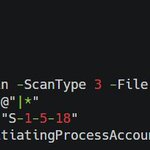



DotNetToJScript is becoming a go-to technique for bypassing application whitelisting - it converts C# assemblies into JScript that can execute through trusted Windows scripting engines like wscript.exe. (T1059.007)
#ThreatHunting #Crowdstrike


1
153
ublic-facing applications such as web servers should rarely spawn command-line utilities or administrative tools. When they do, it can be a strong indicator of post-exploitation activity, such as web shells or command injection.

155
Email attachments remain one of the most common initial access vectors. Monitoring how files are executed directly from email clients can help uncover suspicious activity, especially when users open potentially dangerous attachment types.

112
While reviewing suspicious command-line patterns in Microsoft Defender telemetry, I came across an interesting technique involving MpCmdRun.exe, the Microsoft Defender command-line utility.

80
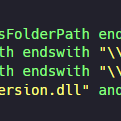
APT37 used trojanized Sysinternals tools to side-load a malicious version.dll from the Temp folder.
mhelp.exe, vhelp.exe, Volumeid1.exe loading version.dll from AppData\Local\Temp. That's the IOC.
One KQL line, DeviceImageLoadEvents.
#APT37 #DLLSideloading #ThreatHunting

winword.exe spawning powershell.exe is not normal.
excel.exe spawning cmd.exe is not normal.
Hunt that parent-child relationship. Clean environments return zero results.
#MacroMalware #ThreatHunting #BlueTeam #KQL

83
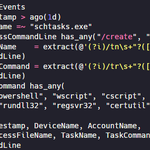
Scheduled Tasks are still one of the most used persistence methods and one of the most overlooked.
Hunt schtasks.exe creating tasks that run powershell, cmd or mshta.
Events 4698 and 4702 in Splunk, ProcessRollup2 in CrowdStrike.
#Persistence #T1053 #ThreatHunting #BlueTeam

66
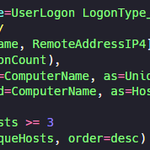
Pass-the-Hash: you don't crack the password, you just reuse the hash.
Same account, same source IP, 3+ machines via NTLM in 24h. That's your hunt.
Queries for Advanced Hunting, Splunk and CrowdStrike.
#PassTheHash #NTLM #ThreatHunting #BlueTeam

65

This rule identifies the creation of local user accounts via command-line tools (net.exe, net1.exe) that use naming conventions frequently impersonated by threat actors. Instead of looking for exact matches, it uses a broader keyword-based approach to catch variations.

38
This rule identifies the use of the esxcli utility to modify or query critical network configurations on ESXi hosts. Specifically, to gather host MAC/IP information and disable the host firewall. Monitoring these actions is critical as they often precede mass encryption.

41
This rule detects unauthorized modifications to the Windows User Account Control (UAC) settings. Specifically, it monitors for changes to the ConsentPromptBehaviorAdmin registry key where the value is set to 0.

30
WMI persistence allows malware to survive reboots without a file on disk.
It binds a trigger (Filter) to an action (Consumer).
This KQL query detects the creation of these WMI bindings.
#BlueTeam #KQL #ThreatHunting

64
Persistence via AdminSDHolder is sneaky.
Permissions added here propagate to Domain Admins every hour.
This Splunk query alerts on ACL changes (Event 5136) to the AdminSDHolder object.
#BlueTeam #Splunk #ActiveDirectory

35


Rulehound is a very interesting repository full of detection rules and links, very useful if you are learning and want to see or test detection rules.

21
