

Liberty and Crypto curious, negativity allergic. Connecting with builders, givers, people of faith and those that want to keep pushing toward a better world.
Joined June 2011
- Tweets8.1K
- Following2.5K
- Followers1.7K
- Likes31.7K



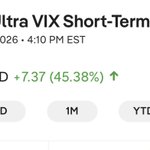


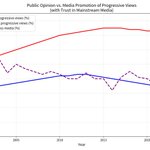



Before midterms we could just do things like this.
Now I’m not sure.
instagram.com/reel/DeyyDkFP7…


So if #solar stands to benefit:
Grok:
“Overall: China’s share in all major stages of solar panel manufacturing exceeds 80%, more than double its share of global PV demand. Upstream stages (polysilicon and wafers) are the most concentrated, with some projections approaching or exceeding 95% based on capacity under construction.”


GN Xverse,
As we step another day closer to a brighter future regardless of Congressional results.
🤖 Made with AI

Idk what’s with the ears, but I imagine this device will be popular and have lots of uses.
razer.com/razer-ava

We should keep this in mind as we head to the polls today. #shorts youtube.com/shorts/UCzAL_iXP… via @YouTube

Shanghai market overlayed with the US trade deficit with China, and US recessions. #macro
Grok relevant factors:
• US tariffs and supply-chain diversification account for much of the deficit’s recent improvement independently of US recessions. Section 301 and reciprocal tariffs, plus the “China+1” shift toward ASEAN, Mexico, Vietnam, and Taiwan, have cut China’s share of US imports sharply (2025 goods deficit ~$203 billion, a 21-year low). China’s overall trade surplus has stayed large via other markets, so the bilateral US figure alone understates export momentum while still hurting sentiment in export-oriented and intermediate-goods sectors.
• Policy intervention, tech/AI dynamics, and market structure add volatility. Beijing has repeatedly deployed “national team” buying, PBOC swap facilities, and buyback support (including a fresh ~100 billion yuan facility announced around 2–3 November 2026), but these have produced only short-lived rebounds without larger fiscal stimulus or a property resolution. Recent AI/tech sell-offs (STAR50 down sharply from mid-2026 highs amid profit concerns and overcapacity) have amplified the drop; the Shanghai Composite is also retail-heavy and highly sensitive to policy signals rather than pure fundamentals.
Other relevant elements include yuan movements, US monetary policy and consumer demand, geopolitical tech restrictions, and China’s shift toward “high-quality” development under the latest five-year plan. Together these factors mean the simple trade-deficit overlay captures only part of the story.

If SpaceX gave 10% of the company to every American household (they could opt in or out), it would be about 100 shares per household and if the company 10Xed it would go from about $1400 to $14,000. Interesting idea since they are 23% reliant on gov contracts. Do you think since the government owns 10% or nationally strategic companies, if we view Americans in a sense as the government to a degree, why not do it that way? I realize it would incentivize gov contracting companies to stay private so that might be the non-starter.


Deep Sleep Handpan Music (8 Hours) | Fall Asleep Peacefully | Malte Marten youtu.be/fxDdUXq7ZHM?is=95J2… via @YouTube
This might relax some of you.


He makes me laugh.
Is Tiffany's Restaurant Worth The Hype? youtube.com/shorts/wOUyuUEUI… via @YouTube
