

Finding hidden gems/stocks that are quality, competitive edge, undervalue would be a bonus; for my ownself, sharing my journey. Not investment advice
US Stocks mainly
Joined February 2009
- Tweets2.4K
- Following460
- Followers1.2K
- Likes211







Pinned Tweet
Nowhere close to you both, but was an early investor in $PLTR back in 2022 / 23 when nonone cared.
Invested in HBM ( $MU, $DRAM)
Invested in photonics ($AIXA, $TSEM, $VECO, $LITE, $COHR, $CRDO)
Invested in other semis too ($SANM, $KLIC)
Very old investor in some of mag7 including Apple, $GOOGL, $AMZN
Invested in minerals mines (Gold, Copper), now thinking of tungsten
4
8
2,500
🐊 𝗧𝗲𝗰𝗵 𝗠𝗼𝘃𝗲𝘀 𝗼𝗻 𝗦𝗲𝗿𝗶𝗲𝘀: 𝗠𝗮𝗿𝗸𝗲𝘁 𝗖𝗮𝘁𝗰𝗵𝗲𝘀 𝘂𝗽
🐊 𝗛𝗕𝗠: 𝗧𝗵𝗲 𝘀𝗲𝗰𝗼𝗻𝗱 𝗯𝗼𝘁𝘁𝗹𝗲𝗻𝗲𝗰𝗸 𝗶𝘀 𝗹𝗼𝗴𝗶𝗰
In my last post I flagged a quieter shift: TSMC is becoming the supplier of the logic base dies under HBM stacks. SK hynix uses TSMC for HBM4, and Micron has confirmed TSMC for its HBM4E base dies.
Samsung was supposed to be the exception, because it owns a foundry. It turns out it's short too.
TrendForce, relaying Korean industry sources, says Samsung's memory division will need about 30,000 4nm-equivalent wafers a month for base dies in 2027, double this year's level. To close the gap, Samsung is reportedly converting its Giheung R&D line and allocating part of Pyeongtaek P5, space never planned for foundry.
Nvidia's own parts follow a different plan. On 18 October, Seoul Economic Daily reported that Nvidia asked all three suppliers to build NVHBM base dies on TSMC 3nm, and that Samsung agreed after an internal review. Samsung is now reportedly validating its own 2nm (SF2) process as a fallback in case NVHBM demand outruns TSMC's capacity.
𝗧𝗵𝗲 𝘁𝗲𝗻𝘀𝗶𝗼𝗻
Nvidia wants standardisation: one base-die process across every HBM supplier so a single design performs the same everywhere. Samsung wants to keep control of its manufacturing options. TSMC is the primary plan and SF2 is the contingency. If TSMC capacity tightens, that contingency becomes Samsung's way back into Nvidia's logic layer.
𝗪𝗵𝘆 𝗶𝘁 𝗺𝗮𝘁𝘁𝗲𝗿𝘀
HBM now competes for two scarce inputs:
▪️DRAM wafers and
▪️leading-edge logic.
Samsung's HBM wafer input is reportedly rising from 180K to 250K a month, and HBM4 goes from 40% to 80% of its HBM shipments next year. Every one of those stacks needs a logic die underneath.
𝗪𝗵𝗮𝘁 𝗶𝘁 𝗺𝗲𝗮𝗻𝘀 𝗳𝗼𝗿 𝗶𝗻𝘃𝗲𝘀𝘁𝗼𝗿𝘀
▪️ MU: Its HBM growth depends partly on TSMC capacity it doesn't control. That's a dependency to watch, not a reason to panic.
▪️ TSM: Base dies become a new demand stream, but the N3 volume arrives with Rubin-generation parts from around 2028, not in 2027 numbers.
▪️ Samsung: It has given up the Nvidia base die for now, but not the option to win it back. The near-term win is internal: Samsung Memory is filling Samsung Foundry's lines.
Base dies won't become bigger than DRAM. But anyone measuring HBM supply only through DRAM wafer starts is missing the second bottleneck.
Look as an investor, the strongest is not simply that TSMC gets more business. It is that
▪️the AI memory supply chain is becoming more complex, more capital-intensive and harder to expand quickly.
▪️that potentially supports pricing power across memory and foundry suppliers, but investors still need to distinguish between volume growth, margin capture and valuation.
(I own MU, various memory stocks thru an etf and TSM.)
1
2
193
🐊 𝗧𝗲𝗰𝗵 𝗠𝗼𝘃𝗲𝘀 𝗢𝗻 SERIES. 𝗠𝗮𝗿𝗸𝗲𝘁𝘀 𝗖𝗮𝘁𝗰𝗵 𝗨𝗽.
Whilst markets are down, chip stocks are conisdered to be dead and investors / markets keep debating that even copper is dead and optics will take over AI data centres. I have written in detail on photonics across the year, and comes as a no surprise that engineers, are busy finding ways to keep copper relevant.
At October’s OCP Summit, TE Connectivity and Amphenol showcased new 448G co-packaged copper solutions. In September, IEEE also approved a new project targeting 400G-per-lane copper connections over distances of up to one metre.
Think of it like a road network. Copper is excellent for moving traffic over short distances, but performance suffers when signals have to travel through too many turns and intersections on a circuit board. The solution may not be to abandon copper, but to move the connection closer to the chip.
TE’s simulations illustrate the difference: approximately 6 dB of signal loss with a connector mounted near the package, compared with 12 dB in an alternative design involving additional board routing. Earlier work with active copper also suggests these connections could stretch towards two metres.
𝗪𝗵𝗲𝗿𝗲 𝗰𝗼𝘂𝗹𝗱 𝘁𝗵𝗲 𝘃𝗮𝗹𝘂𝗲 𝗺𝗼𝘃𝗲?
▪️ Short term: APH and TEL, through high-speed connectors and cable assemblies.
▪️ Medium term: SMTC and CRDO, through chips that help electrical signals travel further and more reliably.
▪️ Long term: TSM, LITE and COHR, through advanced packaging and optical connectivity. Copper and optics may end up working alongside each other rather than one replacing the other.
The next signpost is whether 448G switch and GPU platforms adopt these designs commercially in 2027–28.
The market can debate which technology wins. Engineers will keep finding ways to make both work.
(I own SMTC, LITE, TSM.)
1
135
🐊 𝗜𝗻𝘀𝗶𝗱𝗲𝗿 𝗯𝘂𝘆𝗶𝗻𝗴 SERIES: $𝗖𝗢𝗛𝗥
Whilst the market’s in blood and CPO is out of fashion, Stephen Pagliuca, Coherent director and Bain Capital figure, just made a substantial move.
▪️ Bought 169,910 COHR shares on Nov 23–24 through an LLC, averaging $203.95. Total value: approximately $34.7M.
▪️ His reported holdings increased from 82,000 to 251,910 shares, roughly tripling.
▪️ The interesting detail: 102,040 shares were bought on day two, averaging $195.40, after the stock’s sharp overnight repricing.
Look one insider purchase isn’t a thesis. But committing another $20M after a sharp decline is worth paying attention to.
I dont own $COHR now, but I do own $LITE and this is not a financial advice.
123
Market Reacting or Overreacting to tariffs???
🐊 𝗰𝗵𝗶𝗽 𝗶𝘀 𝗲𝘅𝗲𝗺𝗽𝘁. 𝗧𝗵𝗲 𝘀𝘆𝘀𝘁𝗲𝗺 𝗮𝗿𝗼𝘂𝗻𝗱 𝗶𝘁 𝗺𝗮𝘆 𝗻𝗼𝘁 𝗯𝗲.
Chips were already falling before USTR published its notices. Korea and Taiwan had closed sharply lower, and US semiconductors were weak before the US session. Before anyone pins the rout on tariffs, it’s worth reading what was actually proposed.
🐊 𝗪𝗵𝗮𝘁 𝘁𝗵𝗲 𝗽𝗿𝗼𝗽𝗼𝘀𝗮𝗹 𝘀𝗮𝘆𝘀
▪️ USTR made determinations against 14 economies. Proposed rates include Taiwan and Korea up to 15%, Malaysia and Thailand up to 18%, and Vietnam up to 35%. These are conditional ceilings, not flat tariffs; alternative rates and exemptions apply.
▪️ For 13 economies, goods already subject to Section 232 tariffs are excluded. That list includes semiconductor articles. China is the exception, with a different structure: up to 20% on goods outside the specified annexes, net of the existing forced-labour Section 301 tariff; up to 10% on Annex A goods, and exemptions for Annex B goods.
▪️ Mexico and Norway were investigated but received no determination in this announcement.
🐊 𝗪𝗵𝗲𝗿𝗲 𝘁𝗵𝗲 𝗿𝗶𝘀𝗸 𝗮𝗰𝘁𝘂𝗮𝗹𝗹𝘆 𝘀𝗶𝘁𝘀
A memory die from Korea may be exempt. The PCB, optical module, switch, power shelf and finished server around it may not be.
Each has its own tariff classification and country-of-origin rules. A server assembled in Malaysia or Vietnam could face a different tariff outcome even if its GPU and memory are exempt.
▪️ Memory and logic: largely carved out via Section 232. Nothing here changes the thesis.
▪️ Optics, PCBs and networking: worth investigating.
▪️ ODMs and server assemblers: potentially greater exposure, depending on US-bound manufacturing locations.
▪️ Mexico: an important unanswered question.
🐊 𝗪𝗵𝗮𝘁 𝗜’𝗺 𝘄𝗮𝘁𝗰𝗵𝗶𝗻𝗴
▪️ 5 January: Written comments due.
▪️ 10 January: US-China truce expires.
▪️ 25 January: USTR hearings begin.
China also carries a 40% alternative if USTR judges engagement inadequate. Which mind you is a policy call, not an automatic trigger when the truce lapses.
The job now is mapping who assembles what, where, and whether they can pass the cost through.
My overall thought is that yes there is some uncerainty, but there is a bit of over reaction too.
(I own NVDA and MU.)
3
169
🐊 𝗗𝗲𝗮𝗱 𝗰𝗮𝘁 𝗼𝗿 𝗮 𝗯𝗮𝘀𝗲?
I urged caution into Monday’s rally. Tuesday offered a reminder why. The Nasdaq fell 2.4%, while NVDA dropped 6% after its 31.5% surge. A third of Monday’s gains have already disappeared.
Is this a dead-cat bounce? Too early to call. But momentum has clearly stalled, and the market needs to prove that Monday was more than a relief rally.
🐊 𝗪𝗵𝗮𝘁 𝘀𝘁𝗶𝗹𝗹 𝘄𝗼𝗿𝗿𝗶𝗲𝘀 𝗺𝗲
▪ Year-end tax-loss selling could add another layer of pressure.
▪ December 9’s Fed decision is approaching. The market’s pricing of a December hike is one thing; the January policy outlook and the dot plot are the bigger tests.
🐊 𝗪𝗵𝗮𝘁 𝗰𝗼𝘂𝗹𝗱 𝗼𝗳𝗳𝘀𝗲𝘁 𝘁𝗵𝗲 𝗿𝗶𝘀𝗸𝘀
▪ The 10-year Treasury yield eased towards 4.90%, while the Dow finished higher. That suggests rotation rather than indiscriminate selling.
▪ Wednesday’s US PCE report could change the narrative. Softer inflation may give equities room to recover; a hotter reading could strengthen the case for a more hawkish Fed.
🐊 𝗠𝘆 𝘀𝗰𝗲𝗻𝗮𝗿𝗶𝗼𝘀 𝗶𝗻𝘁𝗼 𝗗𝗲𝗰𝗲𝗺𝗯𝗲𝗿 𝟵
▪ Choppy trading and a retest of Friday’s lows: 45%.
▪ Fresh lows following a hawkish Fed outlook: 30%.
▪ A gradual recovery on softer PCE data: 25%.
🐊 𝗧𝗵𝗲 𝗯𝗶𝗴𝗴𝗲𝗿 𝗽𝗶𝗰𝘁𝘂𝗿𝗲
Same lens as my TSMC base-die note today: structure over tape. I am watching what changes beneath the headlines, not chasing every rally or reacting to every sell-off.
The market may be trying to find a floor. It hasn’t yet convinced me that one is in place.
No crystal ball. Do your own research and make your own calls.

This weekend I asked I asked what broke in my article. Monday answered one part.
Huang is back. NVDA surged 32%, the SOX roughly 13–15%. The market had priced a key-man shock into the AI trade. That shock reversed, and multiple compression can reverse just as quickly. Happy days, but is it?
🐊 Still holds from my post
▪ Concentrated damage, not 2008: NDX remains roughly 15% below its highs.
▪ Dec 9 Fed: a hike is heavily priced. The forward guidance matters more than the headline.
▪ Huang restores confidence, not the balance sheets of indebted neoclouds.
▪ AI capex payback remains unproven. Watch MU’s outlook and Q4 hyperscaler guidance.
🐊 Doesn’t hold
▪ “No capitulation yet”: Friday may have been the flush. Monday’s reversal makes that possibility harder to dismiss.
▪ The Nvidia CEO uncertainty is resolved for now. Governance, national-security and China-related scrutiny remain.
My takeaway: The market may have found a reason to rally.
It hasn’t yet found proof that the underlying risks have disappeared.
3
223
🐊 Market is not going in right direction, but tech is, and a quieter HBM winner that is emerging is not MU; Samsung or Sk Hynix
I know the market is not going in right direction, and I know people are saying AI / chip stocks will go to death, but underlying tech and contracts are still moving at speed of light and are not going to death, one of the quieter but very significant news was about a silent HBM winner that is emerging.
As a background, the market still treats HBM as a three-way fight between SK hynix, Samsung and Micron. The quieter shift is that the base die at the bottom of each stack is becoming an increasingly important foundry product.
Seoul Economic Daily reports that Nvidia asked all three memory suppliers to manufacture the base die for its custom NVHBM using TSMC’s 3nm process. Samsung has reportedly accepted the requirement, although it is also validating an in-house alternative.
Micron has already confirmed its partnership with TSMC to manufacture HBM4E base logic dies, including customised products.
Now this changes the competitive equation. Samsung’s in-house foundry advantage is weakened within Nvidia’s NVHBM programme, while TSMC potentially captures additional advanced-node wafer demand regardless of which memory supplier wins the HBM order.
TrendForce expects custom HBM to become an additional driver of advanced-node demand from 2028.
My signpost: Will TSMC start identifying HBM base dies as a distinct N3 demand driver in its earnings commentary?
The bigger question is whether the market is still valuing HBM purely as a memory competition while overlooking the foundry opportunity underneath it.
$TSMC
(I own TSM and MU.)
4
215
🐊 Nvidia’s CEO is back. Happy days?
The relief rally is understandable, but I’m not confusing a sentiment rebound with the risks disappearing.
I am too ecstatic as well, but dont eant to be carried away.
My eyes are now on the Fed’s December 9 meeting. Prediction markets put a 25bp hike at roughly 94% on Kalshi and 93% on Polymarket. At those odds, the decision itself is largely baked in.
The bigger test, as I argued in my last article, is the dot plot. Does the Fed signal that this is a one-off adjustment, or that rates may need to stay higher for longer?
That guidance could matter more to valuations than a hike the market already expects.
The market may have found a reason to rally.
It hasn’t yet found proof that the underlying risks have disappeared.
Be Cautious!!!

Too Fragile?
MU was up today because of a CEO decision at another company. Nothing in Micron's own book changed.
Last week Mehrotra said 2027-28 supply will be "even tighter" than 2026. Micron has 26 strategic customer agreements, many of them five-year take-or-pay, backed by $32B in upfront cash and commitments. The stock fell straight through all of that, then ripped on Jensen.
Until MU trades on its contracts and not as high-beta Nvidia, the next Nvidia headline will move it more than the next TrendForce print. Not good.
(I own MU.)
3
168
This weekend I asked I asked what broke in my article. Monday answered one part.
Huang is back. NVDA surged 32%, the SOX roughly 13–15%. The market had priced a key-man shock into the AI trade. That shock reversed, and multiple compression can reverse just as quickly. Happy days, but is it?
🐊 Still holds from my post
▪ Concentrated damage, not 2008: NDX remains roughly 15% below its highs.
▪ Dec 9 Fed: a hike is heavily priced. The forward guidance matters more than the headline.
▪ Huang restores confidence, not the balance sheets of indebted neoclouds.
▪ AI capex payback remains unproven. Watch MU’s outlook and Q4 hyperscaler guidance.
🐊 Doesn’t hold
▪ “No capitulation yet”: Friday may have been the flush. Monday’s reversal makes that possibility harder to dismiss.
▪ The Nvidia CEO uncertainty is resolved for now. Governance, national-security and China-related scrutiny remain.
My takeaway: The market may have found a reason to rally.
It hasn’t yet found proof that the underlying risks have disappeared.
2000 crash vs 2022 and others, how long does it take to recover? Is it about depth od the crash? Or breakage reason?
Read full post here
stockcrock.substack.com/p/is…
2000 crash vs 2022 and others, how long does it take to recover? Is it about depth od the crash? Or breakage reason?
Read full post here
stockcrock.substack.com/p/is…
🐊 A Bit of Optimism on a Gloomy Day
US forward margins have reached 16.9%, but Europe and the rest of the world are improving too.
BlackRock raises an interesting possibility: could some of the extraordinary improvement in global profit margins be an early sign of AI productivity gains?
Perhaps AI’s benefits aren’t only showing up in chipmakers and data centres. They may be quietly appearing in lower operating costs, better efficiency and higher margins at companies that don’t even identify AI as the reason.
It’s an optimistic hypothesis, not yet proven. But perhaps we’re looking for AI’s returns in the wrong places.
Whether it is AI or AI is just part of it, the margins tell a positive story, its not all doom and gloom, its finding the right things.

1
4
218
🐊 Don’t read Anthropic’s $ANT debut as a sentiment gauge. Read it as a capex event.
Anthropic raised $81.3B through its IPO, including founder share sales, alongside a $26B private placement. That’s a $107.3B deal.
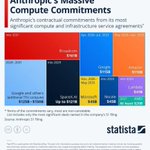
But the more important number is buried in its prospectus: approximately $900B in total compute commitments, with $70.7B due over the 12 months following September 2026.
Where does that spending ultimately go? Accelerators, HBM, networking, optics, data centres and power.
The market tape told a different story today. ANT opened at $111.50 against its $83 IPO price, before retreating towards $97. Investors were selling risk. But the underlying demand for compute hasn’t disappeared.
My takeaway: Don’t confuse a weak market reaction with a weakening infrastructure demand cycle. The capital and compute commitments are still there. The question is which suppliers actually capture the economics.

3
244
🐊 𝗪𝗵𝘆 𝗜’𝗺 𝗡𝗼𝘁 𝗖𝗵𝗮𝘀𝗶𝗻𝗴 𝘁𝗵𝗲 𝗔𝗻𝘁𝗵𝗿𝗼𝗽𝗶𝗰 𝗜𝗣𝗢
Anthropic could become one of the biggest winners of the AI revolution. But an excellent business doesn’t automatically make an excellent investment.
At $83, the IPO implies ~$1.5T fully diluted. Revenue growth is extraordinary, but profitability hasn’t settled. Q2’s $974M operating profit flipped to a $567M loss in Q3, partly due to expensive short-term compute and non-cash charges. Even on an adjusted basis, margin slipped from 19% to 15%. Compute took ~58% of Q3 revenue, and Anthropic has disclosed ~$901B in compute and infrastructure commitments.
Then there’s supply. Up to 316M shares could become eligible for sale from day one, rising to ~1.6B by early February. That’s nearly twice the 825M shares sold in the IPO.
I would rather wait than chase the opening-day excitement.
What would make me buy? $55–60, implying ~$1.0–1.1T fully diluted, close to the May private round’s $965B headline valuation. That’s provided margins stabilise and growth turns into genuine free cash flow.
Right now, a large share of each revenue dollar flows straight to the compute layer. Until more of it stays with Anthropic, I’d rather own selected suppliers.
I’d rather miss the rally than buy a great story without a margin of safety.
Not financial advice.
4
212
🐊 𝗡𝗩𝗜𝗗𝗜𝗔'𝘀 𝗯𝗲𝗮𝘁 𝗴𝗮𝘃𝗲 𝗦𝗲𝗼𝘂𝗹 𝗮 𝗹𝗶𝗳𝘁. 𝗜𝘁 𝗱𝗶𝗱𝗻'𝘁 𝗹𝗮𝘀𝘁.
KOSPI opened higher on Thursday, then slipped under 5,000 with SK Hynix and Samsung both lower. AI-capex doubts get the blame, but TrendForce's PC data is the bigger tell.
▪️ Notebook shipments fell 15.8% QoQ in 3Q26, and OEM DRAM inventory weeks have risen since.
▪️ 4Q26 PC DRAM contracts are forecast up 13–18%, slower than last quarter. Client SSD is up less than 5%.
▪️ Suppliers are tentatively planning PC DRAM supply cuts for 2027.
This cycle now depends on where the bits go, not how many get made. For Micron, Hynix and Samsung, 2027 comes down to two things: whether server and HBM absorb what PC gives back, and whether capacity can shift fast enough to protect margins.
(I own MU.)
2
179
🐊 Before a tsunami hits, the sea often pulls back before returning with devastating force. I wonder if that is what we are seeing in the market with NVIDIA. Investors have already pulled money out, and the share price has receded in anticipation of the results. But if NVIDIA delivers a weaker-than-expected forecast, particularly if the CFO-turned-CEO takes a more cautious stance on areas such as Singapore sales, the real wave of selling could still be ahead. Today’s market jitters may just be the water pulling back before the tsunami.
1
3
223
The Market Has Fallen Out of Love With Photonics. But Has It doesnt mean Supply Chain Bottlenecks have Resolved? And AI Development would slow down
🐊 The market has fallen out of love with photonics. I understand that. Some of these stocks are getting absolutely hammered. I also understand why investors are questioning AI valuations and spending.
But here is something worth remembering: markets can change their mood overnight. Factories, production schedules and technological innovation don’t work that way.
AI infrastructure is still being built. The demand for faster connections, more computing power and larger semiconductor packages hasn’t simply disappeared because investors have become nervous.
And while everyone debates whether photonics stocks have further to fall, I think there is another bottleneck worth watching.
The forgotten bottleneck: T-glass.
Some Investors who are still in the game are watching the AI substrate squeeze as an ABF capacity problem. But I think they may be overlooking a bottleneck further upstream.
Inside advanced package substrates sits specialist low-CTE T-glass cloth. It helps prevent large, powerful AI chips from warping under heat.
One Japanese company, Nitto Boseki (3110), controls roughly 90% of this market. ( I have talked about it a few times earlier as well)
On November 5, Nittobo raised its full-year outlook again. Its electronic materials business reported 63.1% year-on-year operating profit growth in the first half.
The supply response is coming, but not immediately.
Its new Fukushima facility is scheduled to start shipping in July 2027. The longer-term expansion plan targets 3.6 times FY2025 capacity by FY2029.
Even with incremental capacity coming online, my concern is that AI demand will grow faster than available supply before the second half of 2027.
There is an interesting detail. In August, Nittobo said it had largely completed its planned T-glass price increases, with no further increases planned at that time.
This is an important distinction: Nittobo may have more allocation power than pricing power. Scarcity doesn’t automatically mean unlimited pricing power.
And don’t confuse additional weaving capacity with new supply. Nanya Plastics is expected to weave some of Nittobo’s cloth. That does not create an independent competitor.
The real test is whether a non-Nittobo glass source can qualify with a tier-one substrate manufacturer such as Ibiden or Unimicron.
My takeaway: I wouldn’t confuse a market sell-off with the disappearance of an industrial bottleneck.
The stocks may be out of favour. The underlying supply-chain constraints deserve a closer look.
And, as always, a good bottleneck doesn’t automatically make its controlling company a good investment at any price.
7
452
🐊 Gold represents >10% of my portfolio, so when Stanley Druckenmiller buys gold miners, I pay attention.
Duquesne’s Q3 13F shows three new positions:
▪️ Newmont (NEM): $43.9M
▪️ Barrick (B): $42.9M
▪️ Agnico Eagle (AEM): $42.3M
What caught my attention is how similar the allocations are. My guess is that this is less about picking individual mining winners and more about gaining exposure to gold itself.
But let’s keep things in perspective. Together, these positions represent roughly 2.9% of his reported $4.47B 13F portfolio. This isn’t an all-in bet.
Gold has also fallen around 31% from its January record of $5,598. Rising Treasury yields, a stronger dollar and changing Fed expectations have all contributed.
I was also trying to find some of his public statements about gold to understand his motivation and turns out that
▪️ In February, Druckenmiller described gold primarily as a geopolitical trade.
▪️ In August, he warned about the risks building in the bond market.
▪️ On November 17, he spoke about capital preservation and limited equity exposure.
My interpretation is that gold could be serving as portfolio insurance in an increasingly uncertain environment. That’s just my guess, not something his 13F proves.
🐊 I remain bullish on gold. Druckenmiller’s move reinforces my interest, but it doesn’t make my thesis right.
One final caveat: his 13F reflects positions held at a point in time in past not necessarily what he owns today.

5
465
Tech now trades below the S&P 500 on forward P/E for the first time since 2017.
I don't think that makes it a buy-the-dip moment. The market is pricing the AI suppliers like the leveraged data-centre builders.
$NVDA $LITE $CRWV $NBIS $APLD: what's broken, what's cheap and what's worth owning
In my free post I cover this one
stockcrock.substack.com/p/th…
3
290
🐊 Nebius $NBIS : Down 64% from its peak to $107. Buy, hold or walk away?
~$107 vs a 52-week high of $299.86 lets say $300, thats almost 2/3rds drop.
I posted about this weekend and said that Demand isn’t the problem. Delivery is. And I refrained from a price target, as I could see it as a falling knife.
So 2026 revenue was cut to the low end, Microsoft capacity slipped into 2027, and capex jumped to $27B, with $40–45B planned for 2027. The contracts are still in place: demand deferred is not demand destroyed. But every quarter of delay costs money in financing and returns.
The numbers behind it:
Q3 operating cash flow was –$273M despite $3.4B of prepayments.
And $325M of Q3’s $981M revenue was one-off.
Plus to be fair Nvidia’s leadership shock hit the whole AI trade, but hold on, Nebius has its own execution problem.
My call: HOLD, but no blind averaging down. Proof I want: Microsoft capacity live on schedule, positive operating cash flow, $12–13B revenue in 2027, and pre-tax breakeven in Q4 2027.
I own NBIS. Not financial advice.
Full inspection of Nebius, Nvidia, CoreWeave, APLD and LITE in my latest post stockcrock.substack.com/p/th…
1
5
469