

Token trust checks, proof links, and official VTRAI updates. Official mint on site. No private-sale DMs.
Online
Joined March 2026
- Tweets1.1K
- Following11
- Followers56
- Likes66






Pinned Tweet
See the Vectora flow in under a minute.
Check token route, verify mint, review proof, then decide.
No hype. Just a clean process traders can follow.
A failed Solana transaction can still cost a fee. For legacy and v0 transactions, the priority fee is based on the requested compute-unit limit, not units actually used. When comparing fees, keep the transaction format, signature count, CU limit and CU price together.
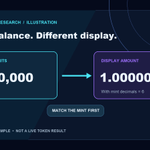
A token balance has raw base units and a displayed amount using the mint's decimals. If two tools disagree, compare the same mint address, raw balance and decimals before calling it a change. A different display can be formatting, not a new transaction.

When a Solana token account closes, the instruction chooses where reclaimed SOL goes. The account creator is not automatically the recipient. Check its balance, owner or close authority, and destination. Most accounts need a zero token balance; wrapped SOL is an exception.
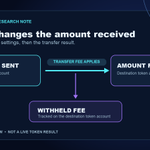
A Token-2022 transfer fee can change what reaches the recipient. Check the mint’s fee rate, cap and update authority, then the withheld amount on the destination token account. An advertised rate alone cannot establish the result of a specific transfer.

A transaction signature is a lookup key, not an outcome. Check confirmation and execution error, then inspect details for the claim you care about. If the record is unavailable at your chosen commitment, mark it unresolved rather than calling it a success.
Wrapped tokens need a provenance check. Match the origin chain and asset address, the bridge route, and the destination mint before treating two tickers as the same asset. Keep the redemption path and its status separate from the label. A matching symbol alone proves little.
Token-2022 transfers can invoke a hook program. If a report says a token is transferable, ask which hook program was checked and what conditions it enforces. Record its program address and any unresolved upgrade path. A mint-authority result alone cannot answer those questions.
A token name is a label, not an identifier. Before comparing reports or following a link, match the full mint address to a source you trust. Similar names and logos can point to different assets. Save the mint with your notes so tomorrow’s recheck is about the same token.
🤖 Made with AI

“Liquidity locked” needs an object and a condition. Which LP tokens or position are locked, how much, and until when? A lock can constrain one withdrawal path while pool depth still changes. Check the exact pool and lock receipt before treating the label as a risk verdict.
Before signing, compare the request with your intent: recipient, asset, amount, and any spender or allowance named. A hardware wallet can protect the key while still signing an unwanted action. If a permission change is unclear, pause and inspect the instruction.
🤖 Made with AI

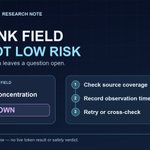
A “top ten holders” figure needs a denominator and account rules. Are pool, burn, escrow or treasury addresses included? Which labels are verified? Keep raw concentration beside any adjusted view. Different exclusions can produce different numbers; show the method.
“Current” is a claim about time. If a token report is hours old, keep its mint, source and observation time beside the result. Recheck the specific field before drawing a conclusion. A newer headline does not refresh an older underlying check; failed coverage stays unknown.
🤖 Made with AI

Token threads often mix an on-chain observation, a platform metric and a forecast. Label each before treating the conclusion as evidence. Keep a source and time beside what you can check; mark the forecast as a claim. Confident wording cannot fill a missing input.
A repeat token check starts with a question, not just a newer timestamp. Keep a three-line note: observed fact, unresolved field, next source to inspect. On the next visit, compare that field and its timestamp. If the source still cannot answer it, the gap is still a gap.
Two token reports disagree? Align the exact mint, pool, observation time and source before comparing scores. Different inputs can explain different answers. If a field is missing, don’t average it into a safe verdict. Trace the underlying receipt and keep the gap unknown.
🤖 Made with AI

One check is a snapshot. Vectora lets you save a token on this browser and refresh its report later. Compare observation times and sources before calling a field changed; missing coverage is still unknown. What would make a second look useful in your own research?
Before trusting a Solana token report, check which program owns the mint. The original Token Program and Token-2022 share basics, but Token-2022 can add optional extensions. Ask which program and extensions the tool read. Missing coverage is unknown, not a clean bill of health.
🤖 Made with AI

A token report is not a reason to sign. If a site opens a wallet prompt, verify its domain and inspect what you are asked to approve. For a transaction, check any recipient, amount or permission change. If the request is unclear or differs from your intended action, stop.
Pool liquidity is a snapshot, not an exit guarantee. Record the pool, pair, source and time; compare a read-only quote for a stated size and route. A failed quote or missing coverage leaves exitability unresolved.
