

225 Million on Amazon. We scale brands Amazon, plugging in our proven systems that have worked repeatedly for 50+ brands. Growth Partner & Investor
Joined May 2019
- Tweets1.8K
- Following742
- Followers3.3K
- Likes1.6K





Man... AI is crazy.
We went from 38 employees to 12 ...
Moving from servicing clients to building better relations with manufacturing partners.
Acquiring brands with an aggregator approach; still trying to maintain the founder for operations on some.
My intuition is that the service based model will die off for the most part in the next 18 months...
Some large brands will still need strong partners, most smaller brands will probably just go inhouse.
Going to boil down to the best operators inside of Amazon; along with the best manufacturings and IP moats. .
Supplements are going to get really interesting.
Happy scaling everyone, may the best man be the last one replaced by the robots lol
2
219
Scale is the best drug in the planet. Inject that ish right into my viens. Lets gooo!
Kind of wild to look at last few years and see just how far we have come on Gigabrands
2
233
Launched internal software, iPhone App, and Desktop Application.
I still can’t read the code line for line. No idea what that it means. I just vibe based on logic.
Now I’m out shipping my dev team vibe coding.

I've never met a crap marketer that magically became good with AI
Never met someone who can't code who vibe coded anything useful
Vibe anything is a myth
AI just helps experts execute faster
4
4
894
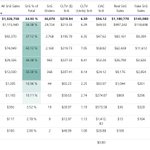
You should not scale an Amazon brand until you understand the cash flow math Amazon is hiding in plain sight.
We reviewed a brand doing $78K last month with $20K in profit.
Advertising is 26%, and the cost of goods and fulfillment together is only 30%.
This is what a healthy margin structure actually looks like.
It shocks founders to realize that Amazon re-wires the cash flow cycle.
You sell a product, Amazon holds the money, and your ad spend is pulled out of that same balance later.
If you put up $10K in inventory and spend $20K in ads to generate $50K in sales, only the inventory
comes out of your pocket up front.
You put up $10K and convert it into $50K in revenue with $30K left over.
This is why working capital is a critical operating metric.
I want to know:
- Your cash flow cycle
- Your net terms
- How much capital actually leaves your bank account
- How fast can Amazon return it
We then drill into lifetime value, especially for subscription brands.
Non-subscribing saves vs. subscribe and save tells you how long a customer stays.
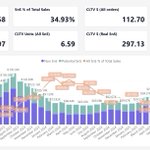
This brand averages $96 per subscribe and save, and we acquire new customers at $21.
When you know what a customer is worth, you know exactly how far you can scale.
A beginner founder obsesses over ROAS.
Real sharks study cash flow, LTV, and acquisition cost.
That will scale their brand faster than anything else.

Think about hedge funds:
The top fund and the average fund have the same data.
The difference is decision accuracy: 90% vs 80%.
That 10% gap creates the entire performance gap.
1
1
171
Daily routine of the Gigachad
(real, not fake)
6:30 AM. Wake up.
My body gets up on autopilot because the system is the routine.
6:45 AM. Gym.
Five days a week.
No theatrics
I lift so my body can handle the shit my calendar throws at it.
8:00 AM. Portuguese class with gratitude.
Learning a new language while improving my mindset at the same time.
Efficient and actually useful.
8:45 AM. Prayer.
I ask for protection over my team, my parents, and the people who rely on what I build.
A stable operator creates a stable company.
9:00 AM. Review the three impact items set across for weekly needle movers.
Every Sunday, I plan my entire week.
I also plan the week for my middle management so everyone knows exactly what needs to move.
9:30 AM. Deep work.
Coding, systems, and AI infrastructure.
The part everyone talks about and almost nobody executes.
These hours build the infrastructure the team depends on.
11:00 AM. One-on-ones.
Alignment.
Direction.
Making sure the team stays focused instead of drifting.
12:30 PM. Brand acquisition diligence.
Calls, docs, numbers, and even more numbers.
The unsexy part of growth most founders never show.
2:00 PM. Sales calls.
Some get cancelled instantly.
You can tell everything from the first few sentences.
Product, expertise, money mindset, ambition.
I keep the partners who can scale and refer out the rest, so my team stays sharp.
5:00 PM. Personal development.
More learning, more skill acquisition.
Progress that compounds whether I feel like it or not.
7:00 PM Deep work.
9:00 PM. Mind dump.
Everything out of my head, so tomorrow starts clean.
9:30 PM. Meditation.
10:00 PM. Sleep.
Every sales call I take exposes who is built for war, and who is full of excuses.
I know within minutes whether their business can scale or whether it collapses under its own weight.
The right partners always meet 3 requirements.
1. They have a real product.
2. They have logistical expertise.
3. They have the capital to support aggressive growth.
Founders also reveal a lot in the way they talk about money, how long they have been in the game, and what they want their brand to become.
Someone who hopes for a slow and comfortable rise is not a match for a system built for high-level competition.
The clients who stay with me share the same ambition and energy.
Everyone else gets a referral, so the team stays focused on growth rather than drag.
I built my whole career on one rule: whoever has the best thought wins.
I never cared if it came from a senior operator or the janitor.
If it pushed the business forward, we ran with it.
But after scaling dozens of brands, I learned something important.
There are parts of the company where collaboration works and parts where direction cannot be outsourced.
My team is lethal on the technical side of Amazon.
They see things most operators would miss, and I trust them to execute at a high level.
But when it comes to positioning, long-term growth, and the structure behind our pods and software, that stays with me.
I have spent years, and a disgusting amount of money, learning how to steer the whole machine.
Anyone can puff their chest.
The real work is keeping the environment tight enough for your people to execute at a high level.
If the room feels heavy, output dies.
If the culture feels fun, focused, and forward-moving, everyone scales faster.
That is why I lead with love.
That is why I turn down brands that drain the team before they even sign.
Leadership is knowing when to listen, when to decide, and how to keep the environment clean enough for your people to win.
These patterns appear across categories, revenue levels, and product types.
What repeats is the operator’s behaviour, not the business they run.
1
107