

225 Million on Amazon. We scale brands Amazon, plugging in our proven systems that have worked repeatedly for 50+ brands. Growth Partner & Investor
Joined May 2019
- Tweets1.8K
- Following742
- Followers3.3K
- Likes1.6K






Man... AI is crazy.
We went from 38 employees to 12 ...
Moving from servicing clients to building better relations with manufacturing partners.
Acquiring brands with an aggregator approach; still trying to maintain the founder for operations on some.
My intuition is that the service based model will die off for the most part in the next 18 months...
Some large brands will still need strong partners, most smaller brands will probably just go inhouse.
Going to boil down to the best operators inside of Amazon; along with the best manufacturings and IP moats. .
Supplements are going to get really interesting.
Happy scaling everyone, may the best man be the last one replaced by the robots lol
2
219
Scale is the best drug in the planet. Inject that ish right into my viens. Lets gooo!
Kind of wild to look at last few years and see just how far we have come on Gigabrands
2
233
Launched internal software, iPhone App, and Desktop Application.
I still can’t read the code line for line. No idea what that it means. I just vibe based on logic.
Now I’m out shipping my dev team vibe coding.

I've never met a crap marketer that magically became good with AI
Never met someone who can't code who vibe coded anything useful
Vibe anything is a myth
AI just helps experts execute faster
4
4
894
You should not scale an Amazon brand until you understand the cash flow math Amazon is hiding in plain sight.
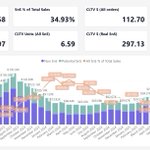
We reviewed a brand doing $78K last month with $20K in profit.
Advertising is 26%, and the cost of goods and fulfillment together is only 30%.
This is what a healthy margin structure actually looks like.
It shocks founders to realize that Amazon re-wires the cash flow cycle.
You sell a product, Amazon holds the money, and your ad spend is pulled out of that same balance later.
If you put up $10K in inventory and spend $20K in ads to generate $50K in sales, only the inventory
comes out of your pocket up front.
You put up $10K and convert it into $50K in revenue with $30K left over.
This is why working capital is a critical operating metric.
I want to know:
- Your cash flow cycle
- Your net terms
- How much capital actually leaves your bank account
- How fast can Amazon return it
We then drill into lifetime value, especially for subscription brands.
Non-subscribing saves vs. subscribe and save tells you how long a customer stays.
This brand averages $96 per subscribe and save, and we acquire new customers at $21.
When you know what a customer is worth, you know exactly how far you can scale.
A beginner founder obsesses over ROAS.
Real sharks study cash flow, LTV, and acquisition cost.
That will scale their brand faster than anything else.


Daily routine of the Gigachad
(real, not fake)
6:30 AM. Wake up.
My body gets up on autopilot because the system is the routine.
6:45 AM. Gym.
Five days a week.
No theatrics
I lift so my body can handle the shit my calendar throws at it.
8:00 AM. Portuguese class with gratitude.
Learning a new language while improving my mindset at the same time.
Efficient and actually useful.
8:45 AM. Prayer.
I ask for protection over my team, my parents, and the people who rely on what I build.
A stable operator creates a stable company.
9:00 AM. Review the three impact items set across for weekly needle movers.
Every Sunday, I plan my entire week.
I also plan the week for my middle management so everyone knows exactly what needs to move.
9:30 AM. Deep work.
Coding, systems, and AI infrastructure.
The part everyone talks about and almost nobody executes.
These hours build the infrastructure the team depends on.
11:00 AM. One-on-ones.
Alignment.
Direction.
Making sure the team stays focused instead of drifting.
12:30 PM. Brand acquisition diligence.
Calls, docs, numbers, and even more numbers.
The unsexy part of growth most founders never show.
2:00 PM. Sales calls.
Some get cancelled instantly.
You can tell everything from the first few sentences.
Product, expertise, money mindset, ambition.
I keep the partners who can scale and refer out the rest, so my team stays sharp.
5:00 PM. Personal development.
More learning, more skill acquisition.
Progress that compounds whether I feel like it or not.
7:00 PM Deep work.
9:00 PM. Mind dump.
Everything out of my head, so tomorrow starts clean.
9:30 PM. Meditation.
10:00 PM. Sleep.
Every sales call I take exposes who is built for war, and who is full of excuses.
I know within minutes whether their business can scale or whether it collapses under its own weight.
The right partners always meet 3 requirements.
1. They have a real product.
2. They have logistical expertise.
3. They have the capital to support aggressive growth.
Founders also reveal a lot in the way they talk about money, how long they have been in the game, and what they want their brand to become.
Someone who hopes for a slow and comfortable rise is not a match for a system built for high-level competition.
The clients who stay with me share the same ambition and energy.
Everyone else gets a referral, so the team stays focused on growth rather than drag.
I built my whole career on one rule: whoever has the best thought wins.
I never cared if it came from a senior operator or the janitor.
If it pushed the business forward, we ran with it.
But after scaling dozens of brands, I learned something important.
There are parts of the company where collaboration works and parts where direction cannot be outsourced.
My team is lethal on the technical side of Amazon.
They see things most operators would miss, and I trust them to execute at a high level.
But when it comes to positioning, long-term growth, and the structure behind our pods and software, that stays with me.
I have spent years, and a disgusting amount of money, learning how to steer the whole machine.
Anyone can puff their chest.
The real work is keeping the environment tight enough for your people to execute at a high level.
If the room feels heavy, output dies.
If the culture feels fun, focused, and forward-moving, everyone scales faster.
That is why I lead with love.
That is why I turn down brands that drain the team before they even sign.
Leadership is knowing when to listen, when to decide, and how to keep the environment clean enough for your people to win.
#1. THEY LISTEN AND EXECUTE
When I tell them to fix inventory, adjust planning, or prepare for a cash cycle shift, they act instead of resisting the process.
1
29
ACoS is overrated AF on Amazon in 2025.
It only tells you how your ads performed in a tiny vacuum.
It tells you nothing about what is happening to your organic lift, your indexation, or your real profitability.
I see brands panic when ACoS rises by a few points, even when the move fuels organic revenue that covers the spend ten times over.
They shut down campaigns that are driving long-term gains because the short-term number scares them.
The killers in this space care about one thing: how the entire machine performs, not one tiny number.
That number distracts more founders than it helps.
Growth comes from understanding how paid and organic feed each other.
Scaling speed in 2025 is a rigged game if you don’t know the patterns.
If you’re a founder choosing a niche, these 3 categories break out faster every single time.

The market is not waiting for anyone.
The operators who adapt will eat, and the ones who hesitate will get eaten.
I have been deep in this world for years, and the thing nobody wants to admit is that the gap between operators is getting wider.
Some people evolve fast, while some people freeze.
The founders who freeze wait for clarity that never arrives.
They keep telling themselves their niche is stable and hope the disruption lands somewhere else first.
Waiting becomes a habit, and that habit costs them momentum.
The founders who move are playing a different game.
They remove work that slows them down.
They build systems that make heavy decisions feel lighter.
They look deeper into their performance and make adjustments before the market forces them to.
When founders ask what they should worry about, I tell them straight:
The real danger is falling behind people who are already adapting.
The next few years will reward the operators who stay in motion.
Everyone else will spend that time watching the ground disappear under their feet.
Brands in 2025 keep hiring noobs instead of people who can drive revenue.
If I had to start from scratch, these are the first 3 people I’d hire. 🧵
At this point, I’ve realized half my job is therapy.
So many Amazon founders come to the call beaten down, burned by budget agencies, stuck in cycles of fear, convinced growth always ends in pain.
I listen, I diagnose, and I tell them the truth no one else will.
The problem isn’t Amazon, it’s the trauma from working with people who never knew what they were doing.
And yeah, sometimes that means playing therapist first.
But if the brand isn’t aligned, if I can tell they still want comfort over clarity, I hang up.
Not out of ego.
Out of respect for time, standards, and what a real partnership requires.
I’ve lived through 3 versions of myself and each one led me to the man I am today
Here’s how I unf*cked myself and became aligned.🧵
Most agencies couldn't pass a basic driving test and you’re giving them hundreds of thousands a month to spend.
If this industry had a licensing requirement, 90% would fail on the first question.
I’ve audited hundreds of accounts that looked professional on the surface (polished decks, fancy dashboards, good sales talk), but underneath, they don’t even understand how the system works.
Things like wrong pricing logic, disorganized catalogs, campaigns bleeding money into irrelevant search terms, and creatives that haven’t been updated in a year are telltale signs.
No one trusts agencies because most founders are f*cking retarded
There’s no certification process, no baseline competency check. Anyone can slap “Amazon growth” on a website and start selling strategy.
That’s why most brands bounce from one agency to another, thinking they’re cursed, when in reality they’ve just never worked with someone who knows what the hell they’re doing.
If there were a real license to operate, half the industry would be off the road.
Maybe then, the brands that actually deserve to win could finally get there faster.
I don’t work with everyone.
If your brand’s doing under $100K a month, we’re not having a conversation.
I see founders brag about $15K months but won’t spend $5K on the right team.
That’s why they stay stuck.
I have brands paying $19K/month retainers because they value precision over price.
Cheap partners always cost more in the long run.
When you scale 50 brands at once, you start seeing how customer psychology drives the entire Amazon funnel.
Here’s how we built the system to do it.

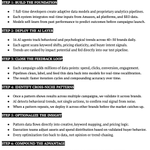
If you're not running 10+ instances of AI Workers coding custom systems, you're going to get cooked.
My prediction: In 6 months most agencies and small brands are going to start being wiped out...
The future is here and ppl are sleeping at the wheel.
Brand owners will need to partner with the best teams in order to survive.
This whole "agencies are too expensive" narrative will shift to "I'm going to get cooked without them".
Though what an agency looks like will be very different.
Why would we take on your brand and not simply replace you with a few prompts and take your market.
For the new world...
Infrastructure will be king. Manufacturing advantages. Cashflow terms with factories. IP protection. Operational excellence. Capital access.
The more brands you have, the more data you can collect, the better you can leverage patterns. The more resources you have to deploy tech.
With 100 AI workers working on each part of the funnel, the skill set of the best thinkers can be multiplied.
Isolate the biggest bottlenecks in the business at scale...
Point all resources at it...
Destroy it...
Identify the next.
Now that is all done systematically, with precision, at scale, with AI Workers.

One of the smartest agency owners I've come across is @velcro
Had a call with him a couple weeks back
The amount of tech & AI this man leverages to understand his clients accounts is nothing but inspiring
Haven't seen any agency owner running their business the same way he does
1
5
1,512
Language says a lot about culture.
I was explaining the word “wife beater” to my Portuguese tutor, you know, the slang for a white tank top.
Halfway through, I realized how insane it is that we normalized that phrase.
That’s the problem with comfort: you hear something long enough, it stops feeling wrong.
The same thing happens in business: bad habits, weak partners, toxic mindsets.
You stop questioning what you’ve gotten used to, and before you know it, you’re fluent in dysfunction.