

#1 french SEO according to charming people I put all my brain in → https://xitter.cf/t.co/9U2dx8MTNJ (grows your revenue through Google & AI) EN / FR
Budapest
Joined January 2021
- Tweets16.3K
- Following402
- Followers11K
- Likes11.3K




Watched 58 minutes of HARO's CEO on where 64% of AI citations come from so you don't have to
1/ About 64% of AI citations come from earned media, out of 22,000+ citations across 405 GEO audits
-> Being written about by others beats anything you publish about yourself: he says carve out 15 minutes a day for it
2/ 34% of AI citations come from sites with a domain authority under 40
-> The small blogs your PR agency never puts on its media list are wide open, a mom and pop blog on your topic counts
3/ 86% of brands aren't mentioned for the prompts they want to show up on
-> Most of your competitors are invisible too, the race has barely started
4/ Step one this week: a GEO audit
-> List the sites AI cites for your prompts, then reverse engineer how to get into each one
5/ The listicle that forgot you is the easiest win
-> Find the small blog post that lists your category without your brand, email its editor and give them a reason to add you
6/ 21% of the pitches sent through HARO are 100% AI generated
-> And 35% of journalists opt out of AI generated pitches in one click: a human reads every pitch before it goes
7/ AI assisted beats AI generated
-> Voice your own insight and experience (he does it on the treadmill at 5:45 am), let the AI polish it, send it as yours
8/ A winning pitch is H, A, R, O: helpful, authentic, relevant, on time
-> Relevance is the one most people miss: no exact qualification the journalist asked for, no reply
9/ There are about 6 PR people for every journalist, and 30 full time creators
-> That's 5 creators for every PR person: pitch the podcasts and YouTubers of your niche, they need new episodes every week
10/ An AI referral walks in with trust
-> The AI names one to three brands, not ten, and the buyer has already vetted you in the chat before the call
11/ Consistency is what survives the next model update
-> ChatGPT may cite you while Claude doesn't: keep earning mentions every month to show up in all four engines
Parasite SEO: 8 ways to get your brand on page 1 of Google this month, on sites it already trusts
Parasite SEO means getting your name onto pages Google and ChatGPT already trust, so they show and cite you
1/ Get into the "best X" lists that already rank
-> For "best seo tools for small business", the AI Overview quotes 2 lists, Zapier's and the US Chamber of Commerce's: email their editors and offer an honest exchange
2/ Write about next year before anyone else
-> Nobody has a good "best X 2027" page yet, and a year in the title is a cheat code the day the year turns
3/ Write short LinkedIn articles on the exact search
-> LinkedIn is a site Google already trusts: one article per search, the answer in the first lines
4/ Answer the Reddit threads that rank for your search
-> One honest answer in the right thread can outweigh dozens of weak backlinks
5/ Answer the Quora questions Google shows with almost no answers
-> Thousands of readers, one or two answers to beat
6/ Film a YouTube video for the search
-> A real person on camera is a format AI can't fake, and YouTube is a site Google already trusts
7/ Publish a free mini tool
-> A Chrome extension gets its own page in Google's Chrome store, with a link to your site
8/ Never put yourself #1 in a list you publish
-> Rank the others honestly and show your brand in a separate, disclosed block
Prepared by SEO experts at ChatSEO, the AI agent for SEO and GEO

Paul Vengeons retweeted
A free page of ours sits 4th in the US for a tool's own name
One pattern, one template, a few pages a week, built exactly like this guide
Give it to your Claude and pick your first pattern tonight 🏖️ xitter.cf/VengeonsP/status/21146…



We built Jarvis, but for SEO
It scans your site, finds what your competitors rank for and you don't, then fixes it the moment you say go
Honestly the most powerful thing we've shipped



Paul Vengeons retweeted
Bing now shows which AI answers cite your pages, and for which intent
Open your AI Performance report and sort the citations by Commercial
And write more of the pages Copilot already cites 🏖️
xitter.cf/alexgroberman/status/2…

Microsoft is now literally telling businesses exactly how to get traffic from AI Search.
Yes, directly inside webmaster tools.
This is probably one of the more important marketing updates of 2026.
Let’s go through it.
By the way, you can see whether your business is appearing across Google AI, ChatGPT, Claude, Perplexity and Grok here (it's free):
seo-stuff.com/free-audit
Earlier this year, Microsoft launched its AI Performance report so businesses could see how often their content was cited across Microsoft Copilot and partner AI experiences.
Now they are expanding it with four new AI Insights: Intents, Topics, Citation Share and Compare.
Let’s go through what changed.
Microsoft’s AI Performance report already showed: Total AI citations, Which pages were cited, Citation trends over time, the Average number of cited, Grounding queries associated with those citations, and now they' adding even more context.
The first update is Intents, thanks to which grounding queries are now classified into categories like: Informational, Commercial, Research, Learn & Solve and Local.
This goes without saying, but every AI citation is not equally valuable - a core principle that every SEO Stuff (seo-stuff.com) package starts with.
A citation from an informational query may mean your content is being used to answer broad education-stage questions.
A citation from a commercial query may mean your business is being considered closer to the buying decision.
This is something that every SEO Stuff done-for-you package takes into account:
seo-stuff.com/ai-seo
Imagine a payroll company sees Microsoft associating its site with:
Payroll software for contractors
Multi-state payroll compliance
Construction payroll pricing
ADP alternatives for small businesses
Now the business can see whether those queries are informational, commercial, research-driven or local.
That changes the content strategy.
If the site is getting cited mostly for informational queries, the company may need stronger pricing pages, comparison pages, industry pages and bottom-of-funnel content.
If it is getting cited for commercial queries but not winning much citation share, the issue may be authority, specificity or third-party validation.
The second update is Topics.
Microsoft is now grouping related queries into broader thematic clusters, and this is important because modern AI search organizes information around subjects, entities, intent, relationships and coverage depth.
That means a business should ask: “Does Microsoft understand us as a strong source for this topic?”
A payroll company may discover that Microsoft connects it strongly to: Contractor payroll, Small-business payroll, Payroll compliance, and Payroll pricing, as opposed to: Enterprise payroll, Global payroll, Healthcare payroll and Construction workforce management.
That tells the company where its topical authority is strong and where it is thin.
The third update is Citation Share.
Microsoft says businesses can now see how much of the citation space their site holds for a given grounding query.
Basically, you can start to see whether your site is one of many sources being cited, or whether you are earning a meaningful share of the AI answer ecosystem around a subject.
That is a very different metric from raw citations, because a site may get 100 citations for a topic, but if competitors are getting 5,000, the business may still be underrepresented.
Another site may only get 40 citations for a niche commercial query, but own a large share of the citation space.
This starts to move AI search reporting closer to share-of-voice analysis.
So less “Did we appear?” and more “How much of the available visibility did we capture?”
The fourth update is Compare.
Businesses can now overlay one time period against another.
For example:
Last 30 days vs. previous 30 days
Before a content update vs. after a content update
Before a backlink campaign vs. after a backlink campaign
Current season vs. prior season
This makes AI search optimization much easier to evaluate, because if a business publishes a new comparison page, strengthens an existing pricing guide and earns a few relevant authority placements, it can now look for citation movement afterward.
You don't have full attribution here yet, but even directionally this is still a big improvement.
This is where SEO Stuff’s done-for-you package becomes relevant:
seo-stuff.com/gold-plan-pack…
The package combines 10 AI-search-optimized articles with three DR50+ authority placements.
The content helps build deeper coverage around topics AI systems already associate with your business.
The authority placements help reinforce your company’s identity, category and expertise across the wider web.
That combination matters because AI visibility usually comes from two things working together:
Useful, specific content on your own site.
Trusted external signals confirming who you are and what you should be recommended for.
Microsoft says these new features are still in early preview, so occasional inaccuracies are possible, but the direction is obvious.
AI search is beginning to provide its own version of keyword, topic, intent and share-of-voice data.
This is the system SEO Stuff was built around:
seo-stuff.com
And if you want to see whether your business is already being cited, understood and recommended across Google AI, ChatGPT, Claude, Perplexity and Grok, check here:
seo-stuff.com/free-audit


Paul Vengeons retweeted
This founder tripled his revenue with SEO and GEO
Copy paste his playbook into Claude tonight
Thank me in 3 months
xitter.cf/NicholasDulait/status/…


I created a guide containing ALL our Reddit moves that rank on Google and get cited by ChatGPT
This knowledge will help you:
• Find the Reddit threads Google already ranks for your buyers
• Understand why ChatGPT quotes one comment and skips another
• Avoid the posts that get you banned
• EASILY get cited for free, without a new page
Want the full guide?
Comment "Reddit" and I'll send it over to you 🤝
If you use it well, Claude can run your entire SEO
Give your traffic, bring you $$
But you need to start with the start
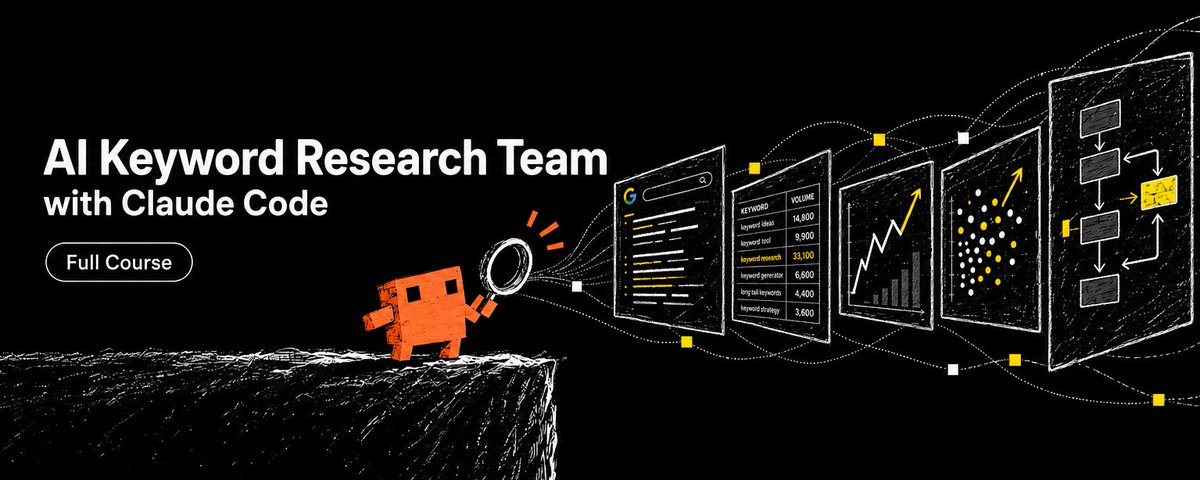
Finding relevant keywords to target
It sounds easy
"just have to plug Claude to data SEO bro"
Yes, but no
If you wanna target keywords that will bring your cash, read this
(or give it to Claude)
Paul Vengeons retweeted
chatseo.app
its internal linking playbook starts from your Search Console
xitter.cf/asaio87/status/2114404…


Internal linking will greatly help your SEO.
Here is how I do it with Claude (or manually):
1/ either download GSC export or use an MCP for it
2/ put that into claude
3/ make sure your website has an mcp (i use wordpress and i have a custom mcp plugin which lets claude make changes to the website)
there are mcp connectors for all sorts of blogging frameworks
4/ ask claude to automatically do the internal linking based on the queries that rank best (have great positions for each article)
this is a prompt I use:
I've attached my Google Search Console export (or: pull it from the GSC connector) for the last 3 months. My website is connected through the [site name] MCP.
1. For each article, find the queries where it ranks best (position 1–10, decent impressions). Those are its target anchors.
2. Go through every published post. Wherever the text naturally mentions another article's top query (or a close variant), turn that phrase into a link to that article.
3. Rules:
- Max 3–5 new internal links per post, spread through the body (no headings, intro sentence, or existing links)
- Never link a post to itself, and only link each target once per post
- Anchor text must read naturally. Don't rewrite sentences just to force a keyword in
- Prioritize sending links to pages ranking 4–15 (they gain the most)
4. Before changing anything, show me a table: source post → anchor text → target URL → target's query and position. Wait for my OK.
5. After I approve, make the edits through the MCP, then give me a changelog so I can revert if needed.
5/ leave the website alone for a few days
6/ repeat this every week and see your rankings go up
7/ do not forget to build backlinks and explore new content opportunities
thats pretty much it
this process can be done manually too
i am doing the same process on my websites and my customer websites

Paul Vengeons retweeted
Léo just found why your AI agent API eats ~1 Go of RAM
If you stream sub-agents with the Vercel AI SDK, send this to your Claude now
One clone per batch instead of one per token
Thank me later

L'erreur qui bouffe la RAM de ton API si tu streames des sous-agents avec le Vercel AI SDK
readUIMessageStream clone tout le message accumulé à chaque chunk, sorties d'outils comprises
Un sous-agent qui scrape 500 Ko puis rédige 2 000 tokens, ça fait vite ~1 Go de clones
Le fix : fusionner les deltas par lots de 500 ms avec un pipeThrough avant le reducer
Et ne renvoyer au parent qu'une version légère du message tant que le run tourne
Un clone par lot au lieu d'un par token

Paul Vengeons retweeted
If you're not making SEO pages with this template, what are you even doing? 9 steps to rank on Google and get Black Friday buyers' clicks this November
The template is "Black Friday [your category] deals", a search typed by people who already have their card out
1/ Fill the template with your category
-> "black friday software deals": 2,400 US searches last November, 90 in September
2/ Check the curve before you build
-> Google Trends, US, past 5 years: the spike comes back every November, and 2025's was the biggest
3/ Go one notch narrower than the big lists
-> "Black Friday [category] deals for [who]". On "black friday software deals", only 3 of the top 10 US titles hold the exact phrase
4/ Put the exact phrase in 4 places
-> Page title, URL, H1 and first sentence, so the buyer lands and thinks "I'm in the right place"
5/ Keep ONE url, forever
-> /black-friday, never /black-friday-2026. 4 of today's top 10 have no year in the URL and put it in the title
6/ Publish it this week, not on November 20
-> Google needs time to find and test a new page, and the peak only lasts a few days
7/ Link to it from your homepage and best pages
-> Internal links are how Google finds it fast and how much weight it gets
8/ Show the deal before the first scroll
-> Price, what's included, end date. People searching "deals" leave a page that hides the offer
9/ Never delete it after Cyber Monday
-> Swap the deal for a "notify me next year" signup. The URL keeps its links for next November
Prepared by SEO experts at ChatSEO, the AI agent for SEO and GEO

Paul Vengeons retweeted
Watched 56 minutes of Yahoo's CEO on its $5B search comeback so you don't have to
1/ Yahoo's "original sin" was giving search away to Google in June 2000
-> Search was treated as a cost center with no business model yet, while 92% of internet sessions started with a search. They outsourced the one door their users walked through
2/ Yahoo had no search engine of its own for 17 years, so they built Yahoo Scout
-> Outsourcing search to Microsoft left them "in a really vulnerable position" on one of their biggest revenue streams. Owning that asset again was "life-changing"
3/ Scout is not a large language model, it is their own data on top of a small one
-> 30 years of search history, publisher data, their knowledge graph and user data ground every answer, then a lightweight model writes it. At launch it was Anthropic's Haiku
4/ Real-time content is what the LLMs could not copy
-> Evergreen content got "photocopied" by the models. Yahoo's is mostly real-time, so in those categories their AI answers are unique. Fresh data and numbers only you own are the part no model has
5/ Their job is still to send publishers traffic
-> They stopped competing with publishers and partner with them instead. That partnership is also one of the data sources behind Scout
6/ They quit breaking news and went back to aggregation
-> Out went the White House correspondents and TechCrunch. In came content that helps people decide: fantasy analysts, stock market analysts. Now a top 3 news aggregator
7/ 75% of their 700M monthly users come straight to Yahoo
-> "We get SEO traffic", but direct visits are one of the highest shares on the internet, and about 75% of daily users are logged in. Search brings the first visit, the brand brings them back
8/ A new brand joins the internet's top tier once every 3 to 5 years
-> ChatGPT was the latest, TikTok and Snap before it. A big audience lets you improve a product and see it work, instead of "trying to light the wet log from scratch"
9/ New products bring new users, not just old ones
-> 40% of the people on their new college fantasy game were brand new to Yahoo, and brand love with Gen Z rose 31 points
10/ The deal is one of the fastest paybacks in Apollo's history
-> Ad tech losing hundreds of millions a year was shut down or sold, the native ads business went to Taboola for 25% of it, AOL and TechCrunch were sold. They are "playing with house money" now
The full conversation with @MollySOShea is in the post below
xitter.cf/MollySOShea/status/211…

NEW: In 2021, Apollo acquired a massive internet business for ~$5B.
Just 5 years later, it's become *one of the fastest-returning deals in the firm's history.*
700M monthly users. Billions in revenue. And an enormous distribution advantage that would be nearly impossible to replicate today.
Apollo's Reed Rayman recruited Jim Lanzone (@jlanzone) to lead the turnaround.
The company? @Yahoo.
I sat down with CEO Jim Lanzone, one of the internet industry's most accomplished turnaround executives, to go inside @apolloglobal's PE M&A playbook for Yahoo, the economics of the acquisition, & why this may be one of the most underrated assets in tech.
The numbers:
› ~$5B acquisition
› 700M monthly users, including 100M+ each across Yahoo Finance & Sports
› 75% direct traffic, with ~75% of daily users logged in
› Hundreds of millions in annual ad-tech losses addressed through restructuring
› Major divestitures including AOL, TechCrunch & Edgecast
› One of Apollo's fastest-returning deals, with Jim saying they're now "playing with house money"
› Newer search companies valued at 6X Yahoo despite having a fraction of its users, revenue & profitability
But the most interesting part of this deal is the operator.
Before Yahoo, Jim helped drive a 50X stock increase at Ask Jeeves, grew CBS Interactive from 70M to 220M users, and led Tinder.
And unlike the traditional PE playbook of aggressive cost extraction, PE micromanagement, Apollo backed an experienced product executive to restructure the business, rebuild its leadership, & reinvest in growth.
Now Yahoo is moving from turnaround to comeback, with an entirely rebuilt product ecosystem, its own AI search engine through Yahoo Scout, and a potential path back to the public markets.
We get into what it's really like operating under Apollo, the leadership decisions behind the turnaround, the value of internet distribution at scale, and why some startups with less than 0.1% of Yahoo's users command higher valuations.
𝐓𝐈𝐌𝐄𝐒𝐓𝐀𝐌𝐏𝐒
(00:00) Jim Lanzone, CEO of Yahoo
(01:33) How Apollo bought Yahoo for $4.8B
(04:16) Taking over a company in the middle of COVID
(07:22) Is private equity really the villain?
(12:42) The mistake that handed Google the internet
(16:09) Where Yahoo's 700M monthly users come from
(17:07) Why Yahoo sold AOL & TechCrunch
(21:21) "You can't skip levels of the video game"
(27:58) Why people still trust Yahoo in the AI era
(30:26) How Yahoo Scout competes with ChatGPT & Perplexity
(33:48) Saying no to the AI gold rush?
(37:31) From turnaround to comeback
(39:42) One of the fastest paybacks in Apollo history
(42:50) The biggest mistake companies make at scale
(44:21) Silicon Valley startups are now worth more than Yahoo with 0.1% of its users
(46:25) Why Yahoo is ready for the next crash
(48:57) Barry Diller, Tinder & the tweet that predicted Yahoo
(54:36) Is Yahoo finally back?
Paul Vengeons retweeted
or just use chatseo.app
it checks where ChatGPT, Gemini and Perplexity cite you
xitter.cf/hridoyreh/status/21143…

📂 AI SEO
┃
┣ 📂 Search Visibility
┃ ┣ 📂 ChatGPT
┃ ┣ 📂 Google AI Mode / Overviews
┃ ┣ 📂 Claude
┃ ┣ 📂 Gemini
┃ ┗ 📂 Perplexity
┃
┣ 📂 Brand Visibility
┃ ┣ 📂 Brand Mentions
┃ ┣ 📂 3rd Party Mentions
┃ ┣ 📂 Reddit Mentions
┃ ┣ 📂 Community Mentions
┃ ┗ 📂 Brand Sentiment
┃
┣ 📂 Content Optimization
┃ ┣ 📂 Direct Answers
┃ ┣ 📂 Topical Authority
┃ ┣ 📂 Semantic SEO
┃ ┣ 📂 Content Structure
┃ ┣ 📂 Content Freshness
┃ ┗ 📂 Information Gain
┃
┣ 📂 Technical AI SEO
┃ ┣ 📂 Crawlability
┃ ┣ 📂 Indexability
┃ ┣ 📂 Structured Data
┃ ┣ 📂 Schema Markup
┃ ┗ 📂 Machine Readability
┃
┣ 📂 Authority / Trust
┃ ┣ 📂 EEAT
┃ ┣ 📂 Expert Contributions
┃ ┣ 📂 Original Research
┃ ┣ 📂 Data Studies
┃ ┣ 📂 Trusted Sources
┃ ┗ 📂 Digital PR
┃
┣ 📂 Off-page AI SEO
┃ ┣ 📂 Link Building
┃ ┣ 📂 Community Building
┃ ┣ 📂 Review Platforms
┃ ┣ 📂 Directory Listings
┃ ┣ 📂 Unlinked Mentions
┃ ┗ 📂 Brand Building
┃
┣ 📂 Keyword Research
┃ ┣ 📂 Conversational Queries
┃ ┣ 📂 Prompt Research
┃ ┣ 📂 Long Tail Questions
┃ ┣ 📂 Query Fan Out
┃ ┗ 📂 Entity Research
┃
┣ 📂 Content Strategy
┃ ┣ 📂 Content Hubs
┃ ┣ 📂 Comparison Pages
┃ ┣ 📂 Alternative Pages
┃ ┣ 📂 Statistics Pages
┃ ┗ 📂 Best Tools Pages
┃
┣ 📂 Analytics
┃ ┣ 📂 AI Visibility Tracking
┃ ┣ 📂 Brand Mention Tracking
┃ ┣ 📂 Citation Tracking
┃ ┗ 📂 Referral Traffic
┃
┣ 📂 SaaS AI SEO
┃ ┣ 📂 Brand Visibility
┃ ┣ 📂 Comparison Pages
┃ ┣ 📂 Alternative Pages
┃ ┣ 📂 Integration Pages
┃ ┣ 📂 Free Tools
┃ ┗ 📂 Customer Proof
┃
┗ 📂 Growth
┣ 📂 Brand Discovery
┣ 📂 Organic Traffic
┣ 📂 AI Referral Traffic
┣ 📂 Lead Generation
┣ 📂 Customer Acquisition
┣ 📂 Revenue Attribution
┗ 📂 Scaling
Paul Vengeons retweeted
Want Google and ChatGPT to name your business when someone asks for "the best X near me"?
I wrote up a free guide that takes your Google Business Profile from ignored to cited by AI.
(It's the 5 checks I'd run on any local business before touching anything else.)
What's inside:
• See why Google now answers local searches without your site
• Copy one name, address and hours block everywhere
• Fix the old listings that make AI skip you
• Take the category the top 3 on the map use
• List every service in your customers' words
• Dodge the name mistake that gets profiles suspended
• Get reviews that name the service, the city and the result
• Stop one bad phrase from becoming your AI summary
• Report fake reviews instead of answering them
• Answer the questions Google already shows under your search
• Load your page in 2 seconds, not 10
• Switch on the contact buttons almost nobody turns on
• Fill the forgotten field that proves your seniority
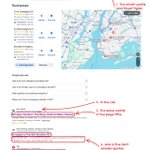
• Check the red pin a competitor may have moved
• Drop the 6 habits that waste your time
• Check the 13 suspension triggers first
• Copy a ready prompt for each check
1. Follow
2. RT + bookmark
3. Comment "MAPS"
Paul Vengeons retweeted
This article packs more than most paid SEO courses
Give it to your Claude and let it do the work
Thank me later
xitter.cf/ChadSE0/status/2114661…

Paul Vengeons retweeted
30 clicks a day in April, 200+ a day in September
Nicho got this e-com founder to share his exact playbook
Give it to your Claude and steal it 🏖️
xitter.cf/NicholasDulait/status/…