

Clean air, everywhere, for everyone. That’s what drives me to explore innovative ventilation & air quality solutions.
Joined September 2022
- Tweets8.1K
- Following189
- Followers1.4K
- Likes10K




Pinned Tweet
CO2 sensor in a public place. An airplane, a library, a restaurant, a supermarket, a medical waiting room or other. `
No possibility of placing it 1 m from you or another person.
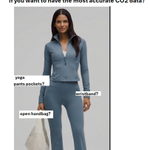
Where would you place it if you have the choice between your yoga pants, on a wristband, or in an open handbag, if you want to have the most accurate CO2 data?
Which of these 3 possibilities in your opinion overestimates or underestimates the CO2, according to you?
I have finished tests with CO2 sensors, 8 models that are compared to Aranet 4 used as a reference value. Humble open science, nothing very elaborate.
I would like to read your thought before I share the results
I don't want to say any more so as not to influence your answers

ALT ia generated image
1/ Hey, community interested in air purifiers and open source DIY.
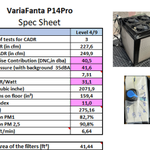
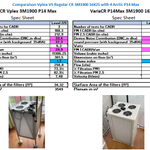
Air filter filtration % (efficiency): it’s better to measure than to guess.
A thread 🧵that I think is important, and that I invite you to read in full, about filters and % efficiency.
I’d like a serious discussion to start. For you to start questioning accepted ideas.
We need to revisit two commonly accepted ideas.
That the filtration % (% efficiency) of an air purifier’s filters is the same at all settings, and that we can just use the certified % efficiency to convince ourselves that it’s the same no matter which machine it will be used in.
That at a lower velocity, the filter’s % efficiency increases.
(note: Velocity = Flow rate / Filter Media Surface Area )
👇
8/ Note. Are my measurements 100% reliable? Absolutely not. I’m the first to want different testers to test the same things, compare our data and try to explain the differences.
But these measurements have the merit of being about the machines and settings actually tested. As I sometimes say: “it’s better to measure than to guess”.
A measurement isn’t automatically better than an estimate: that also depends on the method and its uncertainty. But a measurement made using an appropriate method, under the conditions we’re interested in, gives us more direct information than an estimate based on tests done under different conditions.
A filter’s spec sheet may report perfectly valid measurements. But using its filtration % to assign a filtration % to a machine, without testing it, is still an estimate. The conditions change. We haven’t measured that machine’s performance at that setting.👇
9/ Moral of the story. The devil is in the details.
Filter spec sheets aren’t bad in themselves. Some report real, properly measured % efficiencies. But those results apply to the conditions tested. We need to be careful about generalizing them to other conditions.
This is particularly important for 3 reasons.
1. Air purifier or filter manufacturers should back up filtration % claims with tests under the conditions they’re claiming those percentages for, including the machine’s settings. Or leave out % efficiency altogether and simply report the CADR measured in a lab.
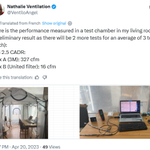
Some people (including me a few years ago) estimate CADR from airflow and an assumed filtration %, using CADR = Flow × efficiency. Yet the same filter’s efficiency can vary from one machine to another and from one setting to another. In my tests, CADR has more often been lower than expected than higher. It’s better to measure CADR with a properly conducted decay test in a test chamber than to calculate it using airflow and an assumed filtration %. If you can only estimate, know the limits of your estimate and, above all, recognize that it is an estimate, not a measurement.
Some people use air purifiers with HEPA filters close to themselves for infection prevention, assuming that a HEPA filter will protect them better than a MERV13. But the filter label alone doesn’t tell us how the whole machine performs. In my tests, some machines using MERV13 filters had higher measured PM1 filtration efficiencies at certain settings than other machines using HEPA filters. Assuming that a machine removes over 95% of PM1 or PM2.5 just because it uses a HEPA filter can give a false sense of security if its actual performance hasn’t been verified.
I am going to state what I would have answered before testing. And later we'll see if my tests make me change my mind. I hadn't thought about the question very much, but I instinctively thought that a bracelet would have been the best choice, an open handbag the 2nd choice, and pants pockets the 3rd choice. I figured that pants pockets would underestimate CO2 way too much. That the open bag would also underestimate CO2, but not as badly as pants pockets. And that the bracelet would overestimate CO2, but the gap with the measurement taken at 1 meter would be more favorable than the other two options. That's why I bought the Airspot Health, based on this idea I had formed
"C'est la vie, quand l'été, tourne à l'automne"
I made this music and autumn color photo video montage back in 2018 while staying at a motel, as my love was at the hospital by her father's bedside. It uses photos taken during cabin getaways, around my place, on walks to visit my mother, or on my way to the clinic where I worked near my house (I used to walk through a park to get there) vimeo.com/295945933

j'adore les couleurs d'automne. Toute cette beauté éphémère que je ne veux surtout pas rater. ça me fait un effet physique, un baume au coeur et j'ai les yeux mouillés, rien qu'en regardant les arbres. Ils ont tous leur charme. Et j'aime regarder, à ce temps-ci de l'année , cette vidéo de musique avec un décor coloré. je vous souhaite de faire le plein du beau, pour ensuite mieux vivre le temps gris qui vient. youtube.com/watch?v=6u0DGIh3…

Masks in the hospital: when a patient has to justify wearing one, and a healthcare worker is so wary of a masked person that she asks for reassurance that they aren’t contagious.
A personal anecdote: Yesterday, I had a long, five-hour appointment at the hospital for imaging prescribed by Dr. Piché, a physician and long-COVID researcher, to investigate a potential diagnosis of gastroparesis.
They took images every hour after I ate a radioactive meal.
I was wearing an N95 mask. The technician asked me why I was wearing one.
Feeling a bit uncomfortable having to justify myself, I replied, "I’m susceptible to infections."
She said, "Oh, okay I just wanted to make sure you weren't sick."
I answered, "I’m not sick precisely because I’m wearing a mask."
It was a way to end the conversation and perhaps prompt her to reflect on the fact that she might want to be more concerned about the patients who aren'twearing masks at all…
Because that’s exactly what’s happening, it’s completely backwards. In a hospital, a place where infectious agents circulate, it’s the person taking steps to protect themselves who has to explain why.
And yet, my N95 protects her, too. If I wear a mask, I’m less likely to transmit anything to her, and she’s less likely to transmit anything to me. It works both ways.
Her response: "Look, I just want to make sure you aren't sick, you know?" As if I hadn't understood. I had understood perfectly well.
It’s this reflex that bothers me: the assumption that a mask equals being sick. One should be able to protect oneself in a hospital without having to reassure anyone else.
Well, that’s just one example, one specific person.
But I know many of you go through this.
Take my partner, for instance: at an event months ago, she ran into an old acquaintance by chance who, pointing a finger at her, rudely asked, "Why are you wearing a mask?" She replied that she wanted to protect me because of long covid, as well as herself so she doesn’t have to cancel her groups in her business. It was an unpleasant experience for her.
After receiving a private message, I realize I may not have expressed myself clearly, so I’d like to clarify what I meant.
When I wrote, “AHAM cannot provide this, given that they only measured the 5Pro at maximum speed,” I simply meant that, as far as I know (and please correct me if I’m mistaken), the CADR currently reported for the AirFanta 5 Pro, as with all AHAM-certified air purifiers, is measured only at the highest speed setting.
Because of this, if we want to give the public more complete information, we need to draw on data from independent reviewers such as HouseFresh and people conducting open-source testing. The more information people have, the better equipped they are to make informed decisions when buying an air purifier.
The good news is that AHAM is currently having constructive discussions about providing more complete noise data and is also considering encouraging manufacturers to have their units tested at lower, quieter settings.
If this becomes standard practice, it will be a real benefit to the public.
To improve air quality, we need competition and more air purifier options, along with more data. There is still a lot of work to do. Maximum-speed CADR is often of limited practical use because that setting is generally too loud for everyday use.
I think things are moving in the right direction. I wonder what the landscape will look like in 5, 10, or 20 years. I certainly hope the public will benefit and be better informed.

I am officially announcing that I will soon be purchasing the AirFanta 5Pro for a series of tests in December. Someone responded to my offer. A true win-win situation!
This will be my 6th testing series since spring 2023 (the last time I set up the chamber was in September 2025).
Here is what I plan to do with the machine:
Since it was officially AHAM-certified as of yesterday, I will start, as I always do, by validating my protocol using reference machines certified (AHAM, Intertek, or Energy Star). If necessary, I will apply a weighting factor. My target is to keep the gap between the reference data and my measurements ideally within 5%. Once validation is complete, I can move forward with testing.
For the 5Pro, I plan to:
-Record the sound at different levels using a Zoom H1 device and analyze the noise spectrum with Audacity.
-Find a speed setting between 35 and 40 dBA max, and measure the CADR (PM 2,5 and PM1 CADR) at that level(s). If time and energy available, I’ll measure CADR at 2 different levels.
Why 35-40 dBA? Because I am particularly interested in multi-unit setups operating under 45 dBA max. This requires installing individual machines that run well below 45 dBA. The lower the noise, the more units can be installed. An approach inspired by the leaders at Clean Air Stars.
The AirFanta 3Pro is one of the best machines on the market in terms of price and CADR-to-dBA ratio at low noise levels. I can't wait to compare the 3Pro with the 5Pro. I'm also looking forward to Housefresh's review. The two tests will be complementary.
Note: Even though AHAM is inherently more reliable than other testers, when comparing the 3Pro and the 5Pro, it is better if both are evaluated by the same tester using the same method. Even if that method is less reliable, it has the advantage of remaining consistent across both machines.
Housefresh will be able to do this since they have already tested the 3Pro. I will be able to do so as well, having already tested the 3Pro, which will allow me to compare my test results side by side. AHAM cannot provide this, given that they only measured the 5Pro at maximum speed. Furthermore, unlike AHAM, both Housefresh and I conduct measurements at quiet speed settings.
P.S. I hope to be able to do this in December. However, due to my health (Long COVID), things can be more challenging at times, and it requires careful planning to stay within my energy envelope. I value reliability, which is why I want to clarify that a December timeline isn't 100% guaranteed.

I’m heading into the woods today for a few days to recharge with the love of my life. Just as we do every year.
I’ll be less present, or away altogether, for the next two weeks.
Next week, I have a medical test at the hospital that will take some time (4–5 hours) and energy. It was ordered more than 18 months ago by Dr. Alain Piché, a physician and long COVID researcher.
There’s no shortage of ventilation projects! This is just a break so I can come back refreshed!
Testing air quality monitors. If the weather cooperates (not too cold) and there’s smog, heading to the international AirNow monitoring station to measure PM2.5 and compare my readings with the station’s as a reference, to estimate the accuracy of the PM sensors.
Measuring the filtration efficiency of my DIY window HRVs during their upcoming maintenance. Recording the sound of my DIY HRVs. And after all that, setting up the test chamber for a sixth round of testing since spring 2023, to test a list of air purifiers at quiet settings.
Bye for now, see you very soon. Take care of yourselves. And above all, breathe good air!
And for those lucky enough to enjoy fall colours like we do here in Quebec, soak them up while they last! It’s magnificent. Every year, I’m still moved by all this beauty.

I am officially announcing that I will soon be purchasing the AirFanta 5Pro for a series of tests in December. Someone responded to my offer. A true win-win situation!
This will be my 6th testing series since spring 2023 (the last time I set up the chamber was in September 2025).
Here is what I plan to do with the machine:
Since it was officially AHAM-certified as of yesterday, I will start, as I always do, by validating my protocol using reference machines certified (AHAM, Intertek, or Energy Star). If necessary, I will apply a weighting factor. My target is to keep the gap between the reference data and my measurements ideally within 5%. Once validation is complete, I can move forward with testing.
For the 5Pro, I plan to:
-Record the sound at different levels using a Zoom H1 device and analyze the noise spectrum with Audacity.
-Find a speed setting between 35 and 40 dBA max, and measure the CADR (PM 2,5 and PM1 CADR) at that level(s). If time and energy available, I’ll measure CADR at 2 different levels.
Why 35-40 dBA? Because I am particularly interested in multi-unit setups operating under 45 dBA max. This requires installing individual machines that run well below 45 dBA. The lower the noise, the more units can be installed. An approach inspired by the leaders at Clean Air Stars.
The AirFanta 3Pro is one of the best machines on the market in terms of price and CADR-to-dBA ratio at low noise levels. I can't wait to compare the 3Pro with the 5Pro. I'm also looking forward to Housefresh's review. The two tests will be complementary.
Note: Even though AHAM is inherently more reliable than other testers, when comparing the 3Pro and the 5Pro, it is better if both are evaluated by the same tester using the same method. Even if that method is less reliable, it has the advantage of remaining consistent across both machines.
Housefresh will be able to do this since they have already tested the 3Pro. I will be able to do so as well, having already tested the 3Pro, which will allow me to compare my test results side by side. AHAM cannot provide this, given that they only measured the 5Pro at maximum speed. Furthermore, unlike AHAM, both Housefresh and I conduct measurements at quiet speed settings.
P.S. I hope to be able to do this in December. However, due to my health (Long COVID), things can be more challenging at times, and it requires careful planning to stay within my energy envelope. I value reliability, which is why I want to clarify that a December timeline isn't 100% guaranteed.
Would you like to buy an AirFanta 5Pro at a discounted price? Special offer for anyone living in the Montreal area.
I am thinking of buying the AirFanta 5Pro to test it in early December, but only if someone commits to buying it after my tests. I can even drop it off at your place by car if you are located within 20 km of me.
It's a great opportunity for you to get this air purifier at a lower cost, and for me to test it at a lower cost. A win-win situation for both of us! Plus, right now there is an additional $75 discount when buying with the promo code AIRFANTA5PRO.
The total price if I order now is 276$CAD before taxes.
I offer you at 175$, no taxes.
If you are interested, send me a DM or an email at [email protected]

AirFanta 3Pro's CADR
@CleanAirStars @DavidElfstrom @robwiss @ThisHouseFresh @Engineer_Wong
I propose clarifying the facts, if you agree that doing so would be helpful.
413 CFM is a figure reported in 3 places to indicate the AirFanta 3Pro's CADR: Housefresh, Clean Air Stars, and the AirFanta 3Pro sales spec sheet.
Housefresh reports an independent test result from Elfstrom and Wissman, who measured a CADR of 413 CFM at 12V (particle size is not specified). We don't know which method was used.
On the Clean Air Stars Excel database, a CADR of 413 CFM is reported. Clean Air Stars states "CADR estimated using air velocity measurements relative to max CADR", but it doesn't specify who performed the test and who estimated the filtration efficiency % to calculate CADR from the measured airflow (CADR=FlowX%efficiency). Was it the same person, or did one person measure airflow while a second person estimated filtration efficiency?
On their website, Clean Air Stars indicates that the particle size for CADR defaults to Smoke CADR.
David Elfstrom mention “I only measured flow (not CADR). Flow was 421 CFM with voltage held at 12.00 by a voltage regulator power supply.”


Nathalie Ventilation retweeted
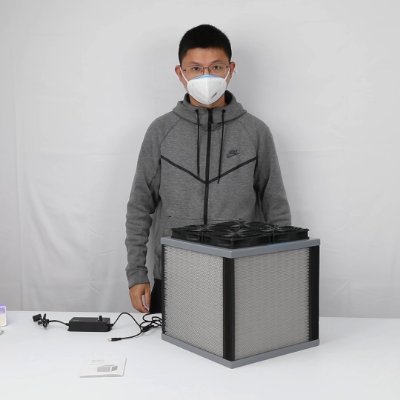
We just got AHAM certified for it.
Search "AirFanta" on this website to see it.
ahamdir.com/directory
This means its CADR is verified through authoritative third-party testing, with random spot checks conducted annually to ensure that production units continue to meet the certified CADR ratings.


AirFanta 5Pro Officially Launched: Two Years in the Making, Fully Evolved
We are excited to announce the launch of our new air purifier, the AirFanta 5Pro, following two years of design and manufacturing.
The 5Pro has been redesigned based on the structure of the 3Pro, with improvements across the board: it looks better and is easier to install.
In terms of performance, the CADR remains outstanding. Measured in an AHAM-certified laboratory, the results are as follows:
PM2.5: 393 CFM
SMOKE: 379 CFM
DUST: 408 CFM
Pollen: >450 CFM
We are also applying for AHAM and ENERGY STAR certification.
In addition, the 5Pro now features a PM2.5 sensor and display, as well as an Auto mode. When disassembled, it can still fit into a 20-inch suitcase, making it easy to carry and store.
For purchase links and more information, please click the link below:
air-fanta.com/products/airfa…
It is currently available for purchase in the United States, Canada, Europe, the United Kingdom, Australia, and countries across East Asia and Southeast Asia.
Would you like to buy an AirFanta 5Pro at a discounted price? Special offer for anyone living in the Montreal area.
I am thinking of buying the AirFanta 5Pro to test it in early December, but only if someone commits to buying it after my tests. I can even drop it off at your place by car if you are located within 20 km of me.
It's a great opportunity for you to get this air purifier at a lower cost, and for me to test it at a lower cost. A win-win situation for both of us! Plus, right now there is an additional $75 discount when buying with the promo code AIRFANTA5PRO.
The total price if I order now is 276$CAD before taxes.
I offer you at 175$, no taxes.
If you are interested, send me a DM or an email at [email protected]
AirFanta 5Pro Officially Launched: Two Years in the Making, Fully Evolved
We are excited to announce the launch of our new air purifier, the AirFanta 5Pro, following two years of design and manufacturing.
The 5Pro has been redesigned based on the structure of the 3Pro, with improvements across the board: it looks better and is easier to install.
In terms of performance, the CADR remains outstanding. Measured in an AHAM-certified laboratory, the results are as follows:
PM2.5: 393 CFM
SMOKE: 379 CFM
DUST: 408 CFM
Pollen: >450 CFM
We are also applying for AHAM and ENERGY STAR certification.
In addition, the 5Pro now features a PM2.5 sensor and display, as well as an Auto mode. When disassembled, it can still fit into a 20-inch suitcase, making it easy to carry and store.
For purchase links and more information, please click the link below:
air-fanta.com/products/airfa…
It is currently available for purchase in the United States, Canada, Europe, the United Kingdom, Australia, and countries across East Asia and Southeast Asia.