

Associate Prof @RutgersCancer @rwjurology | Previously at @UIowa_Urology | Alum @MayoClinic @Uro_Onc, @UChicagoUro, @PittMedAlum, @UWBadgers| Views my own
New Jersey
Joined November 2013
- Tweets1.8K
- Following1.4K
- Followers1.7K
- Likes5.9K





Vignesh Packiam, MD retweeted

For medoncs trying to understand why urologists remain unexcited...issue is the endpoint. Recurrence does not equate progression. Progression does not equate CSS or OS. So we want to at least understand if large/sometime permanent grade 3+ toxicity is worth it. #ESMO26
Still not worth it IMO
Difference in recurrence is low and those can be salvaged with regimens providing much less toxicity

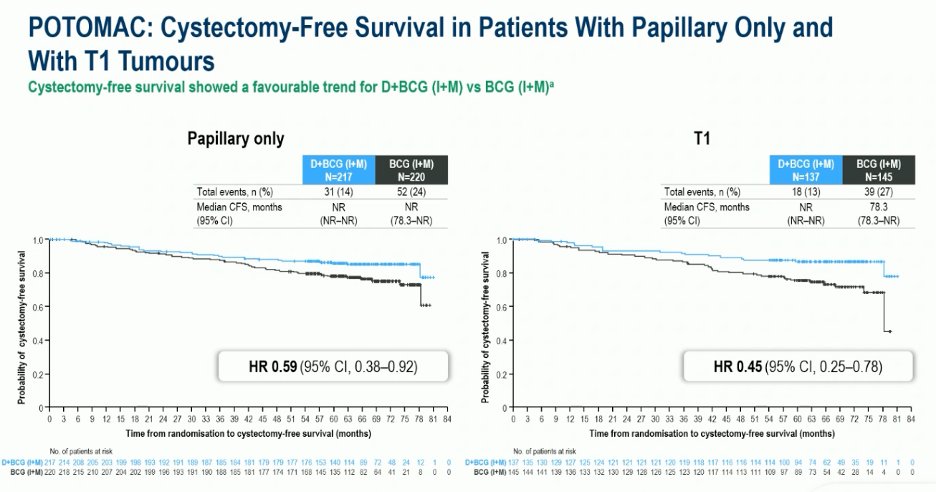
#ESMO26 A subgroup analysis of the phase III POTOMAC trial in papillary-only high-risk NMIBC:
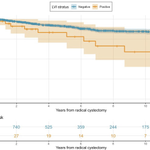
📌Papillary-only: DFS HR 0.56; 48-month DFS 84% vs 74%
📌T1 subgroup: DFS HR 0.48; 48-month DFS 85% vs 73%
📌High-risk recurrence: 13% vs 20% in papillary-only disease
📌 Fewer early high-risk events, BCG-unresponsive recurrences and cystectomies
📌The trade-off: Grade 3–4 AEs were 34% vs 16%.
@UroToday @myESMO


Yes sometimes this is nice!
@RyanWerntzMD

🤖 I love robotic surgery—but not every case needs a robot🔪
Modified Makuuchi incision can be a safe, efficient option for complex urologic oncology cases.
✅ Massive tumors (>18 cm)
✅ Complex IVC thrombus (Levels I–IV)
✅ T4 disease
✅ Adrenocortical carcinoma
✅ Complex anatomy
👉 Haven’t tried a Makuuchi incision? Consider it for better upper intrabdominal exposure.
📖 doi.org/10.7759/cureus.10844…


Vignesh Packiam, MD retweeted

📣 Latest Article Online!
🩺 Clinical Outcomes of Bladder-sparing Management Versus Early Radical Cystectomy in cT1 Micropapillary Bladder Cancer: A Systematic Review and Meta-analysis by Sagar R. Patel et al
🔎 Link to Article: buff.ly/wK5emk0
✨ We thank all the authors for your valuable contribution!
@SagarRPatelMD
@UroDocAsh
@AmandaMyersMD
@UrogerliMD
@JoshMeeks
@UroDhino
@SWilliams_MD
@AndreaNecchi
@nnavai
@LAUrology_NL
@paolo_gontero
@Agarwal_CaB
@uroweb
@mroupret
@GPloussard
@jteoh_hk
@Ric_Campi
@CaPsurvivorship
@LauraMarandino
@DaveDandrea
@RenuEapen
@Ecastromarcos
@OncoAlert
@Sciencedirect

Nice thread @eugene_pietzak! Totally agree we need more granularity.. unfortunate that these prospective trials do not assess/show. So many unknown details which make a difference. Same w the BCG unresponsive trials & others..


It has been nearly 5 months since the FDA approved durvalumab + BCG for “BCG-naïve” high-risk #NMIBC based on the POTOMAC trial.
There has been considerable discussion about the discordant results of the recent phase III trials evaluating BCG + immune checkpoint blockade.
But I think we're overlooking a potentially important difference between these trials, one that could have major implications for how we interpret the results and counsel our patients.
POTOMAC and CREST were positive trials, but unlike the negative ALBAN trial, both permitted enrollment of patients previously treated with BCG.
To my knowledge, neither has reported how many patients had prior BCG exposure or whether the benefit of adding checkpoint blockade differs between previously treated and truly BCG-naïve patients.
Given the additional toxicity, treatment burden, and cost of systemic checkpoint blockade, how can we adequately counsel patients receiving BCG for the first time without knowing the magnitude of benefit specifically in patients like them?
I think we need to see these subgroup data from @AstraZeneca and @pfizer .
1/n
@BladderCancerUS ; @BCAN_Research ; @SUO_YUO ; @UroOnc ; @FDA ; @chana_weinstock ; @AmerUrological

Vignesh Packiam, MD retweeted

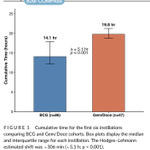
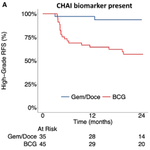
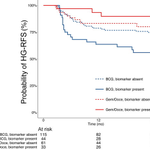
First prospective multicentre cohort study on Gem doce for strictly BCG unresponsive NMIBC. 3m and 12mHGRFS at 89% and 68%. QOL measured comprehensively. Thank you to all authors. sciencedirect.com/science/ar…
@UroDocAsh @michaelabern @alirezaghoreifi @EurUrolFocus @IBCG_BladderCA
Cool idea though for Gem/Doce reformulation I would want to make sure it improves already high efficacy without adding toxicity. Standard Gem is already the tough part so need to be careful for that here
urotoday.com/recent-abstract…

Systemic therapy de escalation is an important consideration too

How do we treat the very elderly with advanced bladder cancer in the era of EV + pembrolizumab, erdafitinib, and avelumab?
With so many new agents available, patient selection and individualized sequencing matter more than ever — especially in frail or very old patients often excluded from trials.
ascopubs.org/doi/10.1200/OP-…
#BladderCancer @JCO_ASCO

Vignesh Packiam, MD retweeted

An essay worth reading, for every clinician and patient (with a PrCa paragraph)
The Quiet Half of Good Medicine jamanetwork.com/journals/jam…

Vignesh Packiam, MD retweeted

Opportunity to join our dynamic urologic oncology team at NJ's only NCI-designated Comprehensive Cancer Center @RutgersCancer @rwjurology #UroSoMe @UroOnc @UroAcademic @AmerUrological @SUO_YUO @NYSAUA @MidAtlanticAUA @NCSAUA @SES_AUA @auawest Learn more:
jobs.rutgers.edu/postings/28…
Vignesh Packiam, MD retweeted

The better you are, the harder the cases you are sent, and the worse your raw numbers look.
The better you become, the less satisfied you are with your own skill.
Both are true. They are linked.
#MedTwitter #Surgery #MedEd

ALT The Paradox: The better you become, the less satisfied you are with your own skill.
Prospective data for Gem/Doce essentially identical to what has been shown retrospectively

🚽 Is Gem/Doce the Future for Bladder Cancer Treatment?
Gem/Doce shows promise as a first-line treatment for BCG-naïve high-risk NMIBC, offering new hope during BCG shortages.
📈 Efficacy - 3-year high-grade recurrence-free survival is 80%
🔬 Tolerability - Only 8% stopped due to adverse reactions
📊 Future Potential - Phase 3 trials needed for standard care status
#BladderCancer #GemDoce #ClinicalTrials
tnyp.me/xRumFw21/x

Vignesh Packiam, MD retweeted

Oral boards prep hasn't appreciably changed in decades, so I built MockUro, an AI examiner that walks you through ~250 canonical urology cases in Socratic Q&A format, grades your free-form answers across key domains, and adapts your study plan to your weak spots
🧵
Vignesh Packiam, MD retweeted

Are toxicities & costs of ICIs + BCG worth the recurrence benefit in HR-NMIBC vs BCG alone?
Calculator:
geratcliff.shinyapps.io/blad…
💪 work led by @DDJoyce_BFA @SBoorjian
🙏 team:@DanBarocas @urogeek @UroCancerMD @VigneshPackiam @GSK_UofT @kevinwymer
@BladderCancerUS @SUO_YUO
Is Combo Therapy Worth It for Bladder Cancer? 🤔
A study examines combining ICIs with BCG for high-risk NMIBC treatment, revealing key insights on cost-effectiveness.
🩺 Slightly Effective - Only 0.12 extra QALYs with combo therapy
💰 Costly - 3x higher costs with combo: $222,770 vs. $67,630
❌ Not Cost-Effective - ICER at $1,236,860/QALY
📉 Needs Price Cut - Sasanlimab price must drop by >87% to be viable
tnyp.me/XM327HbV/x #BladderCancer #HealthcareCosts #CancerResearch

Vignesh Packiam, MD retweeted

As I approach the end of my second maternity leave, I put together a peripartum resource guide for women physicians with a goal of helping colleagues navigate this rewarding but tricky time. Please use and circulate! tinyurl.com/3knayf7b @SWIUorg @AMWADoctors

Some parallels to this concept for bladder cancer management
I would argue that NMIBC we see a widening gap in outcomes by experts vs low volume based on quality of turbt (relatively independent of intravesical therapy)
Conversely for cystectomy, robotic cystectomy probably narrowing the difference for volume

Staying inside urology to avoid the turf war: HoLEP vs Aquablation for BPH. HoLEP to my eyes looks like a better operation, but only in the hands of a few very high-volume experts. Aquablation is more reproducible and more accessible. Which makes the RCT almost unanswerable (there are two open right now). Expert vs expert possibly favors HoLEP. Novice vs novice likely favors Aquablation. The trial tells you more about the operators than the operation.
If I needed a procedure, I would want HoLEP by a world expert. But for mass adoption, perhaps Aquablation is better.
Vignesh Packiam, MD retweeted

Just released in @NatRevUrol : Integrating clinically actionable biomarkers into bladder cancer care : recommendations from the International Bladder Cancer Group @IBCG_BladderCA
During our deliberations, one theme was clear: biomarkers don't improve care simply because they're "novel or new" They improve care when they're validated, reproducible, and actually change clinical decisions 🧵
@pjhensley11 @jteoh_hk @UrogerliMD @shilpaonc @LauraBukavinaMD @mouwlab @AndreaNecchi @niyatilobo @Agarwal_CaB @LiangChengMD @karima_oualla @drtanws @MaxKates @BrigidaMaiorano @h_alahmadie @TomFlaigMD @AmirHorowitz @WesKassouf @djmcconkey @JanetKukreja @LAUrology_NL @carme_mir1 @UroMoschini @BogdanaSchmidt @VigneshPackiam
