
Associated Professor@UCLA (leave), Scientist and manager@Google. AI and Infra, AI for science, AI creativity, event. (she/her/hers). Opinions are my own.
Los Angeles, CA
Joined August 2012
- Tweets845
- Following568
- Followers7.9K
- Likes3.2K






Pinned Tweet
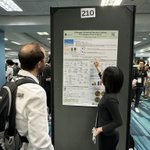
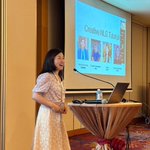
Thrilled, grateful, and humbled to have won 3 outstanding paper awards at #EMNLP2024!!! Not even in my wildest dreams. Immense thanks to my amazing students and collaborators!
All three works are on evaluating LLM’ abilities in creative narrative generation. 🧵👇


Big congrats 🎉🎊🍾 to UCLA PLUS lab @VioletNPeng and collaborators won 3! !outstanding paper awards at #EMNLP2024 👏👏👏
Thanks AK @_akhaliq for featuring our work!
Excited to share OpenVLHarness, a multimodal agent that inspect, compute, and reason over evidence.
The technical core:
• A capability layer gives consistent interfaces for various tools such as perception and search, and renders their outputs into observations the model can inspect.
• Persistent multimodal memory retains images, masks, numerical arrays, and web references under reusable handles.
• A coding agent computes over those artifacts to combine evidence across tools.
Across 22 benchmarks and 8 backbones, we see average gains of 9.7–12.6 points over matched no-tool baselines. Evidence acquisition and additional reasoning are complementary!
A joy collaborating with this UCLA × Apple team. Huge shoutout to @yu_bryan_zhou, @cfyang58, @RuiSun94013021, @DiWu0162 , Sibo Peng, Mingyang Zhang, Zhen Yang, Ruiyi Zhang, @zhegan4 and @kaiwei_chang! 🎉

OpenVLHarness
Real World Visual Agentic Tool-Use with Multimodal Memory
paper: huggingface.co/papers/2610.2…
Nanyun (Violet) Peng retweeted

The lemma an AI needs to prove a theorem may look nothing like the theorem itself.
Introducing 🚀LeanGraphSearch🚀: search Mathlib by following dependencies behind related results to uncover missing proof ingredients.
The payoff: better retrieval and more Lean-verified proofs.
1/n

Nanyun (Violet) Peng retweeted

🚨New level unlocked! 🚨 We doubled GPT‑6 Astra’s score on MazeBench with WorldBox, our agentic sandbox for spatial reasoning.
Astra: 23 gems 💎💎
Astra+WorldBox: 61 gems 💎💎💎💎💎
MazeBench, by @patience_cave, is a tough test of long-horizon spatial reasoning: 256 interconnected rooms where even Opus 5.5 used 2.2B tokens and collected just 13 of 100 gems.
WorldBox provides agents with an agentic sandbox, for managing long-term memory, inferring complex mechanics, and simulating reasoning.
Watch the sandbox take shape and the agent tackle increasingly tricky puzzles. 🧵
Super excited to share this work from our amazing interns and team at @Google, co-led with awesome @chunliang_tw!
Meet DuoDiscover: a full-stack code optimization agent. Its secret sauce is co-discovering the optimization target AND a cheap proxy evaluator (a "yardstick") at the same time.
A quick spoiler of the results:
🏆 #1 on NVIDIA's SOL-ExecBench
🐍 2× the human experts on SWE-fficiency
🚀 1.92× on vLLM; 1.44× on FreeToken
🔥 2.68× over production TPU kernels
🖥️ Beats the best human and AI-designed CPU prefetchers
Optimizing AI infra. Accelerating science. Dive into more details below 👇

AI is cracking math problems. What's holding it back in engineering?
The cost of evaluation. Agents can generate ideas in seconds, but testing them can take hours or days.
💡 Meet DuoDiscover: where evaluation is part of what agents discover 👇🧵
Some highlights:
🏆 #1 on NVIDIA's SOL-ExecBench
🐍 2× the experts on SWE-fficiency
🚀 1.92× on vLLM; 1.44× on FreeToken
🔥 2.68× over production TPU kernels
🖥️ Beats the best human and AI-designed CPU prefetchers
Btw, My team at Google (aiinfra.google/agents/) is hiring FTE and Interns. Please reach out if you’re interested in the works we do!
Nanyun (Violet) Peng retweeted

Come try our PaperBanana-Interact demo!🔥huggingface.co/spaces/xqwu/p…
Tired of AI-generated diagrams that are "almost right", but can't turn your last complaints into the right edits? Try interactive refinement here!
Code and data are also available:
shirley-wu.github.io/PaperBa…


🍌Introducing 𝗣𝗮𝗽𝗲𝗿𝗕𝗮𝗻𝗮𝗻𝗮-𝗜𝗻𝘁𝗲𝗿𝗮𝗰𝘁✨! (UCLA x Google Cloud AI)
AI can draft your paper's diagrams, but they rarely match what you pictured: wrong structure, missing components, misplaced arrows, or it just misses the point.
PaperBanana-Interact makes diagram generation 𝗰𝗼𝗻𝘃𝗲𝗿𝘀𝗮𝘁𝗶𝗼𝗻𝗮𝗹: generate, then refine via chat. Don't miss it👇
📄Paper: arxiv.org/abs/2608.30241
💻Code, data & demo coming soon - stay tuned!
(And yes, this figure was made by PaperBanana-Interact itself - we just chatted with it until it looked right!😄)

Nanyun (Violet) Peng retweeted
🍌Introducing 𝗣𝗮𝗽𝗲𝗿𝗕𝗮𝗻𝗮𝗻𝗮-𝗜𝗻𝘁𝗲𝗿𝗮𝗰𝘁✨! (UCLA x Google Cloud AI)
AI can draft your paper's diagrams, but they rarely match what you pictured: wrong structure, missing components, misplaced arrows, or it just misses the point.
PaperBanana-Interact makes diagram generation 𝗰𝗼𝗻𝘃𝗲𝗿𝘀𝗮𝘁𝗶𝗼𝗻𝗮𝗹: generate, then refine via chat. Don't miss it👇
📄Paper: arxiv.org/abs/2608.30241
💻Code, data & demo coming soon - stay tuned!
(And yes, this figure was made by PaperBanana-Interact itself - we just chatted with it until it looked right!😄)
Nanyun (Violet) Peng retweeted

Glad to share our work is accepted to COLM 2026 @COLM_conf ! Excited to meet and discuss at the conference!
#COLM

Does GRPO handle multiple-task advantage normalization effectively? 🤔
🚀We introduce Gaussian GRPO (G²RPO), a novel method that mathematically forcing the advantage distribution of any given task to strictly converge to a standard normal distribution. G²RPO provides:
✅1) intrinsic robustness to outliers,
✅2) symmetric updates for positive and negative rewards,
✅3) uniform variance across diverse tasks.
We adopt G²RPO and task-level response length and entropy shaping which leads to OpenVLThinkerV2!
🏆A new model with SOTA open-source visual reasoning and perception performance among the similar size models.
(1/n)👇
#VLM #LLM #Multimodal #RL #GRPO

Nanyun (Violet) Peng retweeted

Congrats on the ICML 2026 Outstanding Paper Award! Glad to see diffusion LLMs attracting more and more attention.
The Flexibility Trap shows that discrete diffusion can hurt reasoning under arbitrary token order: too much flexibility at the token level may skip the high-entropy forks where real reasoning decisions happen.
This is exactly we think where latent diffusion becomes exciting.
Instead of denoising arbitrary surface tokens, latent diffusion avoids the flexibility trap by utilizing continuous diffusion in latent space. This is the core idea behind LaDiR: reasoning at the semantic level, with global refinement in latent space.
In LaDiR-RL (latent diffusion RL), diffusion sampling keeps multiple latent reasoning paths alive, helping mitigate the diversity collapse that often appears when RL directly optimizes text outputs.
In our ongoing LaDiR-Multi, the same principle extends to multimodal reasoning: vision, text, code, audio, and action can enter a shared latent space, be reasoned over during denoising, and finally be discretized into text by an autoregressive model. We see very strong early results on vision-text benchmarks.
🤖 Made with AI


Nanyun (Violet) Peng retweeted

One reason of coming back to Google is the opportunity to work on AI4Science — and I still believe Google is one of the best places to work on it.
I really love this work and am proud of what we accomplished. We’re just getting the momentum starts, -- more to come!

Another great paper from Google.
Shows general LLMs can solve formal math by planning proofs and checking each step. Raised general LLM performance from under 10% to 70%.
A general LLM failed badly when asked to write full formal proofs in 1 try, but became much stronger when it planned, split the work into smaller claims, reused past claims, and learned from Lean’s feedback.
The paper shows the weakness was not just the model’s math ability, but the way it was being used - the absence of structured interaction with a verifier.
The key idea is that the model does not try to write one giant perfect proof at once, because that usually fails on long and tricky problems.
Instead, LEAP stores the proof as a graph of goals and subgoals, so useful lemmas can be reused instead of rediscovered every time.
The authors tested LEAP on Putnam 2025 and a new Lean benchmark built from 60 IMO-style problems, where ordinary one-shot proof writing did very poorly.
LEAP solved all 12 Putnam 2025 problems and raised general LLM performance on the Lean IMO benchmark from under 10% to 70%.
----
Link – arxiv. org/abs/2606.03303
Title: "LEAP: Supercharging LLMs for Formal Mathematics with Agentic Frameworks"

Nanyun (Violet) Peng retweeted

Huge thanks to @rohanpaul_ai for sharing our work!
We’re excited to share LEAP: a new agentic framework for formal theorem proving!
LEAP mimics a human mathematician's workflow by constructing proof graph via informal blueprints, then searching and backtracking using compiler feedback.
The results?
🏆 Solves 12/12 Putnam 2025 problems
📈 Raises Gemini-3.1-pro's performance from 10% to 70%
Read the paper: arxiv.org/abs/2606.03303

Another great paper from Google.
Shows general LLMs can solve formal math by planning proofs and checking each step. Raised general LLM performance from under 10% to 70%.
A general LLM failed badly when asked to write full formal proofs in 1 try, but became much stronger when it planned, split the work into smaller claims, reused past claims, and learned from Lean’s feedback.
The paper shows the weakness was not just the model’s math ability, but the way it was being used - the absence of structured interaction with a verifier.
The key idea is that the model does not try to write one giant perfect proof at once, because that usually fails on long and tricky problems.
Instead, LEAP stores the proof as a graph of goals and subgoals, so useful lemmas can be reused instead of rediscovered every time.
The authors tested LEAP on Putnam 2025 and a new Lean benchmark built from 60 IMO-style problems, where ordinary one-shot proof writing did very poorly.
LEAP solved all 12 Putnam 2025 problems and raised general LLM performance on the Lean IMO benchmark from under 10% to 70%.
----
Link – arxiv. org/abs/2606.03303
Title: "LEAP: Supercharging LLMs for Formal Mathematics with Agentic Frameworks"
My first paper at Google is out! Thank you @rohanpaul_ai for highlighting LEAP.
To share more thoughts on this direction: I strongly believe that as models generate longer and more complex proofs, automatic formal verification will be the key to the future of AI for math, and I'm bullish on using general LLMs + agentic framework for this task.
As we started with competition math in LEAP for rigorous benchmarking purposes, we've already started to venture into research math.
- Solved Erdős problem 527 (zero web search).
- Partially formalized Knuth's cycle problem even case which resulted in ~4000 lines of Lean code.
Please check out all of our solutions here: github.com/google-deepmind/s…
I'm incredibly proud of this work, and we are just getting started. More to come!
Another great paper from Google.
Shows general LLMs can solve formal math by planning proofs and checking each step. Raised general LLM performance from under 10% to 70%.
A general LLM failed badly when asked to write full formal proofs in 1 try, but became much stronger when it planned, split the work into smaller claims, reused past claims, and learned from Lean’s feedback.
The paper shows the weakness was not just the model’s math ability, but the way it was being used - the absence of structured interaction with a verifier.
The key idea is that the model does not try to write one giant perfect proof at once, because that usually fails on long and tricky problems.
Instead, LEAP stores the proof as a graph of goals and subgoals, so useful lemmas can be reused instead of rediscovered every time.
The authors tested LEAP on Putnam 2025 and a new Lean benchmark built from 60 IMO-style problems, where ordinary one-shot proof writing did very poorly.
LEAP solved all 12 Putnam 2025 problems and raised general LLM performance on the Lean IMO benchmark from under 10% to 70%.
----
Link – arxiv. org/abs/2606.03303
Title: "LEAP: Supercharging LLMs for Formal Mathematics with Agentic Frameworks"
Nanyun (Violet) Peng retweeted
SPHERE has been accepted to ICLR 2026 and will be presented at Poster #214, Poster Session 4, Pavilion 3, 24 April, 3:15–5:45 p.m.
I’m unable to attend in person, our amazing advisor @VioletNPeng will help present this work! Stop by if you’re around.


🚨Model editing in practice often collapses with catastrophic forgetting!
Meet SPHERE🌐: an energy-regularized method that keeps weights uniformly distributed on hyperspheres, making sequential editing stable.
Paper: arxiv.org/abs/2510.01172
Code: github.com/PlusLabNLP/SPHERE

Nanyun (Violet) Peng retweeted

📌 SteerMoE has been accepted to ICLR 2026 and will be presented at Poster #603, Poster Session 2, Pavilion 3, Thu 23 Apr, 3:15–5:45 p.m.
🙏 I’m unable to attend in person, so many thanks to @LucasBandarkar for presenting on our behalf. Stop by if you’re around.


🚨 You can bypass ALL safety guardrails of GPT-OSS-120B 🚨❗🤯
How? By detecting behavior-associated experts and switching them on/off.
📄 Steering MoE LLMs via Expert (De)Activation
🔗 arxiv.org/abs/2509.09660
🧵👇
Congrats @ysu_nlp for this exciting launch! Cannot wait to see what will come out from @NeoCognition!

Introducing @NeoCognition, the agent lab for specialized intelligence.
Everyone needs experts, but human expertise does not scale.
Backed by $40M seed funding, we build self-learning agents that specialize across domains to make expertise abundant.
Nanyun (Violet) Peng retweeted

Excited to work with a world-class team (@sahaiamit, Raghu Meka,@VioletNPeng,@terrence_tao,@WeiWang1973) on AI for math discovery and thank @LaudeInstitute for the support. I'm hiring a postdoc in this direction. Please contact me by May 1, 2026, if you’re interested.

Accelerating Science track: A century of scientific progress in one decade - that's the target.
👑Accelerating the Queen of Sciences, @UCLA
Teaching AI to wonder, conjecture, and discover the way a mathematician does. Every hard science benefits if this works.
@sahaiamit @kaiwei_chang Raghu Meka @VioletNPeng @terrence_tao @WeiWang1973
🌦️Actionable AI Weather Forecasts for Developing Economies, @UChicago
Open-source AI weather forecasting infrastructure for developing economies, with millions of farmers already reached with better monsoon forecasts.
@WillettBecca @ianfoster @turbulentjet Michael Kremer

Nanyun (Violet) Peng retweeted

I'll be attending ICLR in a few weeks to present Multilingual Routing in Mixture-of-Experts
Lmk if you're attending and want to talk MoEs, interpretability, multilinguality, etc


Multilingual Routing in Mixture-of-Experts LLMs
We present (1) an in-depth analysis of how MoE LLMs route multilingual texts, with very clear patterns
+ (2) a router intervention (steering) method that leads to consistent multilingual improvements!
🧵1/4 arxiv.org/pdf/2510.04694
Nanyun (Violet) Peng retweeted

We’re excited to release TorchLean which is the first fully verified neural network framework in Lean. The Lean community has largely focused on pure mathematics. TorchLean expands this frontier toward verified neural network software and scientific computing. With the recent release of CSlib, we see this as another step toward a fully verified ML stack.
We support features:
1. Executable IEEE-754 floating-point semantics (and extensible alternative FP models) verified tensor abstractions with precise shape/indexing semantics
2. Formally verified autograd system for differentiation of NN programs Proof-checked certification / verification algorithms like CROWN (robustness, bounds, etc.)
3. PyTorch-inspired modeling API with eager-style development + export/lowering to a shared IR for execution and verification
Project page: leandojo.org/torchlean.html
Paper: [2602.22631] TorchLean: Formalizing Neural Networks in Lean
Work done @Robertljg, Jennifer Cruden, Xiangru Zhong, @huan_zhang12 and @AnimaAnandkumar.
#MachineLearning #ScientificComputing #Lean

Grateful for the generous support and looking forward to strengthening our collaborations with Salesforce researchers! @jasonwu0731 @steeve__huang

(2/4) Nanyun (Violet) Peng @VioletNPeng @UCLA is developing MAP-SE, a Multi-Agent Persuasion Simulation Engine that studies how influence emerges across adaptive agents with long-term memory—moving beyond simple one-on-one interactions. #AIResearch #AgenticAI