

Dad. Lawyer. Writer. Amateur historian. Prior lives in sports journalism and politics. Love college football but pray at the Church of Baseball. #HookEm
Mount Thunder, Texas
Joined June 2010
- Tweets113K
- Following5.2K
- Followers3.4K
- Likes30.4K
W.W. McClyde retweeted

Just because the United States Navy reactivated the Iowa class does not mean they began producing new 16" (406mm) shells to arm them. The Navy had ceased the production of battleship shells for years by that point. Instead, the reactivated Iowa class battleships would utilize shells that were still sitting in storage.
The United States had produced tens of thousands of battleship shells, and many remained in storage by the 1980s. An inventory taken at the start of the 1980s showed that there were 21,088 16" shells sitting in storage. Out of those shells, 3,200 were of the Armor-Piercing type, 2,300 were practice shells, and 15,450 were High-Capacity (High-explosive).
However, at the time, about 62% of these shells were in good enough shape to be brought into service quickly. Of those shells, the Armor-Piercing and Practice Shells were in better shape, while the High-Capacity shells were the more likely to have degraded.
The remaining shells would take more serious work to repair so that they could be utilized. The Navy estimated that about 50% of these shells were repairable. This meant that there were roughly 17,000 shells available for the reactivated Iowa class or just over 4,200 shells per battleship.
Outside of already manufactured shells, the Navy also estimated that enough components were available in storage to assemble another 5,050 shells if needed. This would provide a theoretical total of 22,050 shells or just over 5,500 shells per battleship.
#History #USNavy #Battleship #ColdWar #UnitedStates Battleship IOWA, home of the National Museum of the Surface Navy Battleship Missouri Memorial Nauticus Battleship New Jersey

W.W. McClyde retweeted

Exclusive: SEC filings reveal Jared Kushner failed to disclose to the public his $32 million stake in a U.S. defense company that profits from the wars he is mediating, @arielsabar reports: theatlantic.com/politics/202…

W.W. McClyde retweeted

October, 1982.
One of the 16 inch/50 caliber Mark 7 guns fires for the first time since 1969. Battleship New Jersey had just undergone moderization and was to be recommissioned that December. Each barrel is about 66 feet long and capable of firing a shell over 20 miles.
When you visit, you can see the battleship’s guns on board, and you can get a close-up look at one of the barrels in the parking lot. It weighs about 106 tons.

W.W. McClyde retweeted

1956年5月,美军排水量四万五千吨的王牌战列舰威斯康星号,在弗吉尼亚外海浓雾中全速航行时,一头撞上了自家的伊顿号驱逐舰。
驱逐舰被撞得差点散架,威斯康星号自己长达二十多米的钢铁船头也被撞成了麻花。按正常修法,重新锻造龙骨和装甲至少要趴窝大半年,可冷战期间美军急等主力舰出海撑场面;
船厂总工程师盯着旁边船坞里停着的一艘半成品战列舰肯塔基号,想出了一个简单粗暴的换头手术。肯塔基号原本是威斯康星号的同款姊妹舰,修了一半因为军费削减停工吃灰了好几年。
一百多名焊工抡起氧炔割炬,直接把肯塔基号重达120吨、足有三层楼高的完好船头齐根锯了下来,用驳船拉过去严丝合缝焊在了威斯康星号脑门上,仅用16天就让这艘巨舰重新出海服役了。

W.W. McClyde retweeted

🚨🎙️🇩🇪🇺🇸🇺🇦🇷🇺 Boom. Il ministro della Difesa tedesco, Boris Pistorius, risponde all'americano Elbridge Colby, sottosegretario alla Difesa statunitense, che aveva criticato gli attacchi ucraini in profondità contro obiettivi russi:
"Voglio dire, bisogna essere chiari. Credo che sia piuttosto stupido criticare attacchi come questi, condotti in Russia per distruggere obiettivi militari strategici e infrastrutture utilizzate a fini militari.
Anziché criticare questi attacchi, dovremmo piuttosto denunciare e discutere dei bombardamenti terroristici che, ogni giorno e ogni notte, colpiscono le infrastrutture civili ucraine per la fornitura di energia elettrica, acqua e riscaldamento.
Questa è una forma di terrorismo. Ed è di questo che dovremmo parlare, anziché degli attacchi legali e legittimi condotti in Russia contro obiettivi non civili".
W.W. McClyde retweeted

xitter.gq/FORONAVAL/status/21227… "Naval Station Norfolk on December 30, 1986. In the foreground, we can see the bow of the aircraft carrier USS Coral Sea (CV-43), the battleship USS Iowa (BB-61), and, in the background, the aircraft carriers USS Theodore Roosevelt (CVN-71) and USS Nimitz (CVN-68)."
You will never see raw power like that in one place again.



W.W. McClyde retweeted

Fast battleship and lead ship of her class USS Iowa firing on a target with her 16-inch main battery during her shakedown cruise in the Atlantic circa February 1943
W.W. McClyde retweeted

Bow view of USS North Carolina, Pearl Harbor Navy Yard, US Territory of Hawaii, 16 November 1942

W.W. McClyde retweeted
On the night of Nov 12, 1942, a thin line of American cruisers and destroyers steamed into the dark waters off Guadalcanal to stop two Japanese battleships. Many of the men aboard believed they weren't coming back. A lot of them didn't.
By November 1942, the fight for Guadalcanal had been going on for three months. The Marines held Henderson Field, the airstrip at the center of the whole campaign. As long as American planes flew from it, Japanese ships couldn't safely come near the island in daylight.
Japan decided to fix that with one big push.
A convoy of 11 transports would bring thousands of fresh troops and their supplies. Ahead of it, Vice Admiral Hiroaki Abe would bring the battleships Hiei and Kirishima, along with a light cruiser and 11 destroyers. Their job was to steam into the waters off Henderson Field at night and blast it with hundreds of heavy shells, wrecking the planes on the ground so the convoy could land in safety.
A month earlier, two other Japanese battleships had done exactly that in a night the Marines called simply "The Bombardment." This time would be bigger.
The Americans knew it was coming. Codebreakers and scout planes had picked up the signs. They were also rushing reinforcements to the island, in transports commanded by Rear Admiral Kelly Turner.
On Nov 12, Turner's ships were off Guadalcanal unloading troops and supplies when Japanese torpedo bombers came in low over the water that afternoon.
The American gunners threw up a wall of fire, and most of the bombers were shot down. But one burning plane crashed into the heavy cruiser USS San Francisco, smashing into her after control station and setting it on fire. Men were killed and badly burned. Another American destroyer was hit by a stray shell from a friendly ship.
San Francisco was still fit to fight. But she had lost men, and her worst night was still ahead.
That afternoon, scout planes spotted the Japanese battleship force coming down from the north.
Turner had no battleships to send. The only two American battleships in the area were too far away to arrive in time. So he pulled his transports out of danger and left behind everything he had to stand in the way: two heavy cruisers, three light cruisers and eight destroyers.
He put Rear Admiral Daniel Callaghan in command.
Callaghan had been President Roosevelt's naval aide and was a well-liked officer, but he had little recent experience commanding ships in combat. Also there was Rear Admiral Norman Scott, who a month earlier had won the night battle at Cape Esperance. Callaghan was senior by a matter of days, so the command went to him.
Callaghan chose San Francisco as his flagship. It was a fateful decision. Some of the other ships in his force, like the light cruiser Helena, carried the Navy's newest and best surface-search radar. San Francisco did not.
He lined his ships up in a single long column. Destroyers in front. Then the cruisers, including San Francisco, Portland, Helena, Juneau, and Atlanta, with Scott aboard. More destroyers in the rear.
As night fell, they steamed back into the channel the sailors had already nicknamed Ironbottom Sound, because of all the ships lying on its floor.
The sailors knew they were heading toward battleships with guns far bigger than anything they had. Some said goodbye to their friends. Some wrote letters home.
Coming the other way, the Japanese had run through heavy rain squalls that scrambled their formation. Their battleships were loaded mostly with high-explosive shells meant for blowing up airplanes and fuel dumps, not for punching through armor. They didn't expect to meet American ships.
At 1:24 a.m. on Friday, Nov 13, Helena's radar picked up the Japanese ships, about 14 miles away and closing fast.
But the information had to be passed by radio to Callaghan, who couldn't see what Helena's radar was seeing. Orders came back slowly. Course changes threw the column into confusion. Minutes ticked away.
At 1:48 a.m., Japanese searchlights snapped on. The two fleets had sailed right into the middle of each other.
The American destroyers at the front nearly ran straight into the Japanese ships. The destroyer Laffey passed so close to the battleship Hiei that Hiei couldn't lower her big guns far enough to hit her. Laffey's crew raked Hiei's towering bridge with machine guns and 5-inch shells, wounding Admiral Abe.
Callaghan gave a strange order: odd-numbered ships fire to starboard, even-numbered ships fire to port. Then, alarmed that his ships were firing on each other, he briefly ordered a ceasefire in the middle of the fight.
It was chaos. Ships fired in every direction at targets only a few hundred yards away. Columns broke apart. Searchlights, star shells and burning ships lit the water. One American officer later described it as a barroom brawl after someone shot out the lights.
The light cruiser Atlanta was hit by a Japanese torpedo and dead in the water. Then shells smashed into her bridge, many of them almost certainly from San Francisco in the confusion. Admiral Scott and most of the men on Atlanta's bridge were killed.
San Francisco found herself steaming between Japanese ships, trading fire at point-blank range. Hiei's shells slammed into her. One salvo wrecked her bridge, killing Admiral Callaghan, her captain Cassin Young, and nearly every officer there. A young lieutenant commander named Bruce McCandless found himself the only officer left on the bridge and took the ship through the rest of the fight.
The heavy cruiser Portland was hit by a torpedo that jammed her rudder. She began steaming in circles. She kept firing anyway and helped sink the Japanese destroyer Yudachi.
The destroyers took the worst of it. Barton was torpedoed and broke in two, sinking in seconds. Laffey was hit by shells and a torpedo and blew up. Cushing and Monssen were shot to pieces and left burning.
Within about 40 minutes, it was over.
The waters off Guadalcanal were full of burning wrecks and men swimming in oil. Two American admirals were dead. Four American destroyers were sinking or sunk. Atlanta was dying and had to be scuttled later that day.
But something else had happened. Abe, wounded and shaken, his flagship badly damaged, turned his force around. Henderson Field was never shelled that night.
The cost kept rising after sunrise.
The damaged light cruiser Juneau was limping away with the survivors when, late that morning, a Japanese submarine fired torpedoes at the group. One hit Juneau. She blew up and sank in seconds.
Aboard were five brothers from Waterloo, Iowa: George, Francis, Joseph, Madison and Albert Sullivan. They had asked to serve together. All five were lost. Only about 10 of Juneau's crew of nearly 700 survived, after drifting for days in shark-infested water before they were found.
Hiei never made it home. Her steering was wrecked, and she circled helplessly north of the island. Planes from Henderson Field, the airfield she had come to destroy, and from the carrier Enterprise hit her again and again. By that night she had sunk. She was the first Japanese battleship lost in the war.
The battle wasn't over yet. Over the next two days, American planes caught the Japanese transport convoy and sank most of it. On the night of Nov 14, the American battleships Washington and South Dakota arrived and sank Kirishima.
Japan never again made a major attempt to retake Guadalcanal. Within three months, its troops had left the island.
Callaghan and Scott were both awarded the Medal of Honor after their deaths. So were McCandless and Herbert Schonland, the officers who saved San Francisco.
Many historians call it the most furious naval battle of the war. A small, outgunned American force had sailed into the dark knowing it was overmatched. It lost two admirals, more than 1,400 men, and a handful of ships. But it stopped two battleships, and it saved Guadalcanal.

W.W. McClyde retweeted
Nov 13, 1942. A single torpedo sinks an American cruiser in about 20 seconds. Five brothers from Iowa go down with her.
George, Francis, Joseph, Madison and Albert Sullivan grew up in Waterloo, Iowa. George and Francis had already served a hitch in the Navy. After Pearl Harbor, where a friend of theirs was killed aboard USS Arizona, all five brothers decided to enlist together.
They had one condition. They wanted to serve on the same ship. The Navy agreed, and in early 1942 all five were assigned to the brand-new light cruiser USS Juneau.
On the night of Nov 12 to 13, Juneau was part of the outgunned American force that sailed into Ironbottom Sound to stop two Japanese battleships. In the wild close-range brawl that followed, a Japanese torpedo hit her. She survived, but she was badly damaged, low in the water and limping.
The next morning, the battered survivors of the fight headed southeast for safety. Juneau steamed along with San Francisco, Helena and a few destroyers.
Just after 11 a.m., the Japanese submarine I-26 fired a spread of torpedoes at the group. One of them, probably meant for San Francisco, hit Juneau near the magazine that had been weakened the night before.
She exploded. Witnesses said she broke in half and disappeared in about 20 seconds.
The senior officer present, Captain Gilbert Hoover of Helena, believed nobody could have survived, and he was afraid the submarine would strike again. His ships were crippled and short of escorts. He kept going. He signaled a passing American bomber to report the sinking and the location. That report never got through to anyone who could act on it.
But around 100 men had survived the blast. They were in the water, many of them wounded, clinging to rafts and floating nets.
No one came.
Day after day they drifted under the tropical sun. Men died from their wounds, from thirst, and from exposure. Some lost their minds and swam off. Sharks circled the rafts and dragged men away.
By most accounts, at least one of the Sullivans, George, survived the sinking. He reportedly searched the rafts for his brothers until he couldn't go on.
Eight days later, planes finally spotted the last survivors. Only 10 men were rescued. Nearly 700 of Juneau's crew were dead.
Back in Waterloo, Thomas and Alleta Sullivan noticed the letters from their sons had stopped. In January 1943, three men in uniform came to their door.
According to the family, Thomas asked which one.
The officer answered: all five.
The Sullivans' loss stunned the country. The Navy named a destroyer USS The Sullivans in their honor, christened by their mother. It is preserved today as a museum ship in Buffalo, New York. A Hollywood film about the brothers came out in 1944.
The tragedy also changed how the military thought about families. In the years that followed, policies were put in place to protect the last surviving son of a family from being sent into combat.
In March 2018, a research ship found Juneau's wreck nearly three miles down at the bottom of the Solomon Sea.


W.W. McClyde retweeted
Leftists are claiming victory for their policies after the midterms—but Democrats’ most impressive victories came from mainstream or moderate candidates, @jonathanchait argues: theatlantic.com/ideas/2026/1…

W.W. McClyde retweeted

If you're not following how the rural drama over Texas' school voucher program impacted this year's blue tsunami, you're missing out because it's a wildly fascinating and multi-year policy and political saga:

W.W. McClyde retweeted
United States battleship USS Wisconsin at the Pearl Harbor Naval Base tying up alongside the hulk of the battleship Oklahoma, which had been decommissioned just two months earlier, 11 November 1944.
Note the difference in size between the battleships


W.W. McClyde retweeted

ON THIS DAY
November 11, 1970,
Elvis released his twelfth studio album ‘That’s the Way It Is’. The album reached number 21 on the Billboard 200 and is certified platinum.
#Elvis #ElvisPresley #ElvisHistory #Elvis1970 #Elvistheking #Elvis2026

W.W. McClyde retweeted
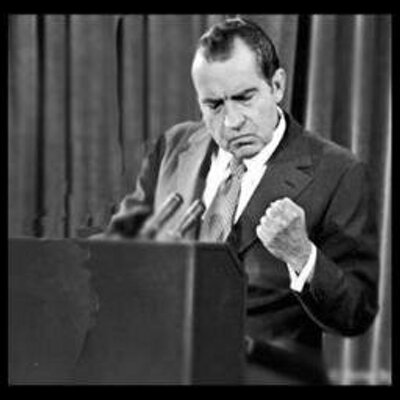
When Hegseth got in I called him a clown. I said it is possible to agree with him politically and still think he is an unsuitable clown. One or two of you geniuses said I call everyone I disagree with clowns. No, a clown is a clown. It is reasonably likely he'll be impeached.
W.W. McClyde retweeted

NEW: A woman known as the "conscience" of the Texas House is poised to become its first Black, first woman Speaker. Read more about the long, storied career of Senfronia Thompson, the legislative force tasked with helping the Democrats lead for the frist time in a generation.
nytimes.com/2026/11/09/us/se… #txlege

W.W. McClyde retweeted

Here’s the full transcript of the reverse edit of the CBS 60 Minute interview. There’s NO PAYWALL so anyone can read it. CBS completely rearranged the interview. I just went through and pointed out what was cut and what wasn’t. substack.com/@decodingfoxnew…