

Ex head of BD at @Bankless, @myBraavos, @influenceth | Currently fallmaxxing and outdoor mogging my employed friends.
Joined November 2021
- Tweets9.9K
- Following3.4K
- Followers2.8K
- Likes17.5K







Jean-Paul Faraj retweeted

LIVE NOW -- Markets Are Bullish Again? The Onchain Data Isn’t
Bitcoin is up 19% from the February lows, but @JustDeauIt argues this still looks more like a bear market bounce than a true bottom. He and @RyanSAdams break down why weak ETF flows, soft onchain activity, fading risk appetite, and rolling liquidity still do not look like the kind of setup that usually marks a durable low. They also map out the key BTC levels that would force a change in view, and what real capitulation tends to look like when the cycle finally turns.
[TIMESTAMPS]
0:00 Intro
1:50 Polling Investor Sentiment
4:22 The Four-Year Cycle Explained
13:02 Market Dynamics and Investor Psychology
17:17 Examining Current Liquidity Conditions
27:31 Fiscal Policy and Its Impact
29:07 On-Chain Analysis of Bitcoin
39:10 Understanding Market Trends and Patterns
44:04 Closing & Disclaimers
Jean-Paul Faraj retweeted

For JP, the most important announcement from EthCC wasn't Aave V4 or the Ethereum Economic Zone. It was Safenet — and the reason starts with $3.4 BILLION in crypto theft in 2025.
Bybit’s hack saw $1.5B gone because attackers compromised the UI and signers approved the fraud themselves. The industry built better warnings (simulation tools, banners, previews) but when the interface is compromised, warnings are worthless.
Because the main attack surface in 2026 isn't code. It's people.
Safenet moves the security check INTO the execution path:
> Before any Safe transaction executes, a decentralized network of validators checks it against a set of security rules. If it doesn't pass, it doesn't go through.
> At launch, there are five rules: each one designed to block the specific types of vulnerabilities that made the Bybit hack possible.
> Six founding validators (incl. Gnosis, Blockchain Capital, and Safe Labs) each stake a minimum of 3.5M SAFE to participate. The system is designed to function correctly even if some validators act dishonestly, and all activity is publicly auditable.
> Users keep full control of their funds. If a transaction gets flagged, the wallet owner can still override it manually after a waiting period.
> For an industry hemorrhaging billions to hackers, this is the upgrade we needed.
Worth a full read.





Jean-Paul Faraj retweeted

Saturn One is live!
Rocket Pool's biggest upgrade ever has been successfully deployed on mainnet.
RPL fee switch, 4 ETH validators, MEGAPOOLs, & more are now active.
In 2026, Rocket Pool is still the only fully permissionless staking protocol - no reliance on AWS or a select few trusted "professionals".
Rocket Pool has been built in alignment with Ethereum's core values since day one. If you support credible neutrality & freedom from censorship, there has never been a better time stake your ETH with Ethereum's decentralised liquid staking protocol.
Find out more about Saturn One at the links below.


Jean-Paul Faraj retweeted
Reya x Bankless - Pre-Recorded Twitter Broadcast
@reya_xyz Co-Founder & CEO @0xSimonJones joins us to explore his based-rollup perp & spot DEX aiming to become Ethereum’s main trading layer.
xitter.gq/i/broadcasts/1ypKdqmAb…
Jean-Paul Faraj retweeted
LIVE NOW -- Ethereum's DeFi Centric Strategy | Dankrad Feist
In the second talk of the Bankless Summit, Ethereum researcher (incoming @tempo exec) @dankrad Feist makes the case for a DeFi-centric Ethereum L1 as the path to long-term value and relevance.
He explains why DeFi remains Ethereum’s most powerful fee engine, why DA revenue cannot replace it, and how Ethereum can become the world’s liquidity layer by anchoring borrowing, lending, and real-world assets directly on L1.
Jean-Paul Faraj retweeted

Today at the @Bankless Summit, held in partnership with M0, @LucaProsperi, CEO & Co-Founder of M0, shared a network theory of money. Some of his points:
◼️Today’s money networks need 3 things: value extraction, high-fidelity signals, and real resilience.
◼️In a mesh network, nothing can simply be “cut out.” Designing for resilience is essential.
◼️The future of finance isn’t just new products. it’s a redesign of how value is created, distributed, and scaled.
◼️Single points of failure are a real risk - especially when only a few institutions capture all the upside. This deserves more attention.
◼️ We need to look at money networks the way we look at computing networks. Architecture matters.
Thanks to our partner @Bankless for making this all happen in Buenos Aires. Highly recommend watching once the videos drop.

Jean-Paul Faraj retweeted

Just spoke in a x402/8004 twitter space, some key points:
- agents transact by chaining paid APIs in real time, turning the web into billable microservices; SaaS billing is outdated.
- shift from SEO to AEO (agent engine optimization). Optimize response schemas, latency, price, and proof hooks, not landing pages, to attract agents.
- ERC-8004 prevents x402 spam with agent cards, showing machines you’re worth paying.
- facilitators could become the new discovery layer, perfect for reputation and AEO, by analyzing request outcomes.
- we expect a consolidation in 2 years: LLM UX is mainstream, exposing paid endpoints is easy with x402, and stablecoins reduce credit risk.
- rule of thumb: x402 lets you charge; ERC-8004 proves your value. Implement both, optimize for AEO.
Thanks @daydreamsagents for the invite and thanks for the great insights @kleffew94 @Web3zy @lordOfAFew @0xTraiano @LordSecretive


Jean-Paul Faraj retweeted
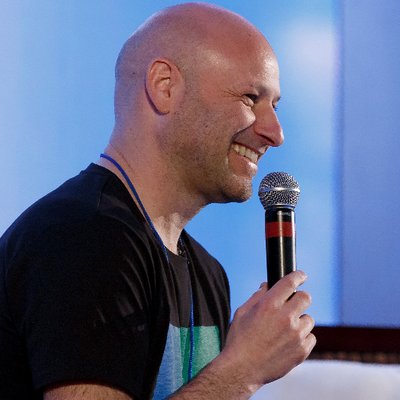
Yes, the goal of @paradigm and many other VCs is to suck as much value as possible from the Ethereum and broader ecosystem, while also adding value to the ecosystem in the service of maximizing their own gains. Paradigm is particular good at this. Subgoals include progressing the systems of the world towards rigorous decentralization, credibly neutrality, censorship resistance, and intrinsic privacy/confidentiality to the extent that such a world is more profitable -- and healthy in other ways -- for themselves and their investors.
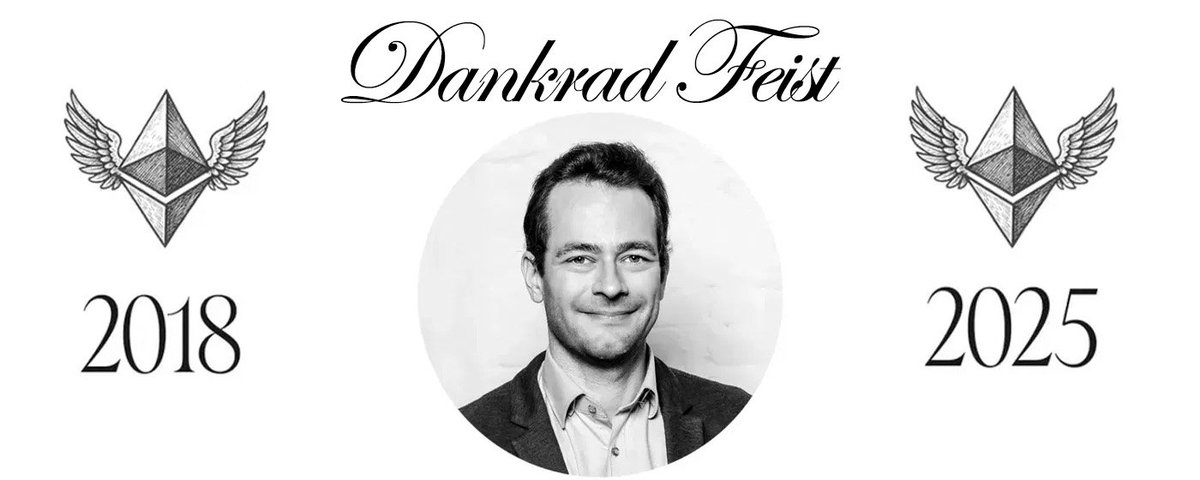
As @fede_intern indicated, it is not news that Paradigm has been working to "own" Ethereum for years. That said, I don't believe there is reason for concern, and consider this kind of behavior natural and inevitable. And the gold rush of corpo-chains is validating for the traditional economy and signals our mainstreaming. Yes, I would prefer that Mallesh and Dankrad would focus their talent and energies fully on Ethereum. But both probably do need a fresh context to energize them, and since both are pure researchers, I expect they will continue to write papers and contribute broadly, as they indicated they would.
We need VCs for now because they represent a comfortable bridge for the world's capital to flow into our ecosystem. Very soon better, fairer, more broadly accessible onchain investment platforms with healthy tokenomics will mature sufficiently so that VCs will have no choice but to set up shop on these platforms, if they want to stay in the game. In bringing progressive decentralization to everything -- even up through layers of identity, reputation and governance -- we are on the precipice of totally changing the way the world works.
Ethereum will win -- already has won -- its niche: rigorously decentralized, credibly neutral digital asset settlement ledger infrastructure. It will establish itself as the world ledger, and then ethos/philosophy and economics will enable it to expand "up the stack" to become the world computer, as more apps get built and protocolized and tokenized. Corpo-chains will be important infrastructure built on top of neutral permissionless chains, just as SQL, No SQL, graph and vector DBs and many other kinds of database connect commercial endeavors to the internet and web. Next generation databases will validate, be verifiable, will be tamper-proof, will maintain an inspectable log of their history and they will all speak token -- the language of the decentralized economy. When all of this matures, the world will finally have a secure global information infrastructure.
Best wishes to Dankrad and Mallesh. They will always be friends and teammates.

Jean-Paul Faraj retweeted
ETH Earnings Report Q3 2025 xitter.gq/i/broadcasts/1rmxPvDlE…
Jean-Paul Faraj retweeted

payments are not a crypto thing
they are an action supported by the trustless nature of settlement crypto enables
the important part isn’t that the money moves, it’s that it settles without middlemen, without clawbacks and without permission.
as chain payments scale, they become a trojan horse for trustware: programmable trust primitives that help the digital world inherit irrevocable fairness across all things from identity to money
we’re talking about identity that cannot be faked, commitments that cannot be retroactively denied and fairness that isn’t subject to boardroom whims or government office toggle switches that are susceptible to changing parties with changing incentives
this is trustware.
aka a substrate where digital interactions inherit finality, neutrality, and auditability by default!
but!
if this substrate is capture and built half-decentralized, half-corporate it mutates into a dystopia where surveillance is permanent and “programmable fairness” becomes programmable coercion.
to avoid that, the rails have to be credibly neutral, auditable, and decentralized from the start and we should hold everyone to those standards.
also!
note that people in power will also have neutral platforms be in their best interest such that their political opponents cannot capture them and use it against them!
neutral, uneditable trustware is the only way and the only way to get neutral trustware is to decentralize it.
Jean-Paul Faraj retweeted

People who haven't watched Vitalik don't know the insanely high bar it requires for him to be genuinely proud of crypto financial apps.
He's pretty much withheld his praise until now. This post was the first time he said DeFi is Ethereum's killer app.
Vitalik's bar for DeFi
To pass Vitalik's "killer app" bar Ethereum DeFi has to improve a broad set of people lives in a proven and scalable way - when i say broad, i mean global, everyone on the internet - and when i say improve, I mean it has to be an unambiguous societal good.
Vitalik is saying that as of this year Ethereum L1 has passed this bar for several key money verbs:
- Holding (storing value)
- Trading (exchanging assets)
- Lending (generating yield)
- Borrowing (collateral backed)
- Issuing (creating assets)
These he calls low-risk DeFi. (I call it "going bankless")
The incredible thing Ethereum has accomplished is to make these low-risk economic opportunities "globally and permissionlessly accessible" - whereas non-shitty banking used to be available only for elites who won the geographic lottery - now anyone with an internet connection can access low risk holding, trading, lending, and borrowing.
They have freedom to choose assets: crypto native (like ETH) or fiat assets (like dollars) as they prefer. Everything a swap away.
He compares DeFi to Google.
If Ethereum is the internet then DeFi is Google
Ethereum = internet of value
DeFi = Ethereum's Google
Low risk DeFi on Ethereum:
1) drives value to ETH (using ETH as a collateral assets and transaction fees)
2) avoids corruption pressures (low risk DeFi is slower - avoids push toward HFT centralization)
3) is scalable (everything is in place to scale this to many tens of trillions - network effect of liquidity and assets)
Lastly, he points out - these low risk money protocols are the foundation for building even more impactful DeFi primitives like Credit.
I read not only optimism for DeFi but also an optimism for ETH and the Ethereum L1 scaling roadmap.
ETH = SoV collateral (world reserve asset)
DeFi = killer app (world banking layer)
Ethereum L1 = ledger for slow DeFi (world ledger)
Ethereum L2s = ledgers for fast DeFi (e.g. exchanges)
He's saying it's all coming together now, our progress:
ETH = $540 billion (scaling to trillions)
DeFi assets = $500 billion (scaling to tens of trillions)
DeFi TVL = $100 billion (scaling to tens of trillions)
Ethereum L1 = 20 tps scaling to 10k tps
Ethereum L2s = 3k tps scaling to 1m tps
For those saying other chains prioritizing speed or BD are eating Ethereum - I think he'd disagree. Most of these are HFT chains competing with Ethereum L2s for fast DeFi.
It seem to me Vitalik has always operated under the assumption that the most credibly neutral chain would:
- win the liquidity
- win DeFi that matters most
- win the users & institutions
- win status as world reserve asset
And the data is showing he's been mostly right.
Ask yourself - on what chain are you most comfortable holding assets if you had to disappear for a decade?
There's probably only two that make the cut: bitcoin and ethereum. Of the two, only ethereum has low-risk DeFi.
Idk guys it's just a bullish post.
"Have we earned it"
"Yes. We're clearly in the process of earning it."
Vitalik thinks DeFi is the killer app and Ethereum should double down on it.
First time he's said it so explicitly.
In this moment i am euphoric.

Jean-Paul Faraj retweeted

Just in: We’ve raised $19M in a Series A co-led by @zksync, @further, @eigencloud & @500GlobalVC. This brings our total funding to $34M.
We’re full throttle to be the first privacy DEX to unify the fragmented trillion-dollar onchain market. And take it mainstream.
Get the news below 👇
Jean-Paul Faraj retweeted

🔗New Report Drop🔗
For the past 9 months we’ve been on the frontlines with institutions, making the case for onchain finance.
This report breaks down why blockchains are inevitable in traditional finance, and why Ethereum is the only real choice.
Featuring insights from @securitize ⚡️
etherealize.com/content

Jean-Paul Faraj retweeted
0/ Fixed yield will be DeFi’s Trojan horse for TradFi.
Predictable cashflows. Certainty in the face of uncertainties.
It’s a language institutions already understand and love - now enforced by code and settled on @Ethereum.
A guest thread by @tn_pendle.


