

Assistant Professor at Loyola University Chicago | gender/sex and sexual diversity | positive gendered experiences (they/them) #FreePalestine
Chicago, IL
Joined July 2017
- Tweets2.1K
- Following870
- Followers3.8K
- Likes8.5K




Pinned Tweet
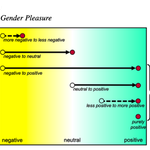
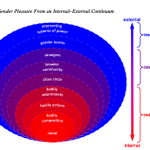
It's finally out!! In my dissertation work with @SarivanAnders, we develop the construct of "gender pleasure" via focus groups with LGBTQ+ people where we asked them about positive experiences related to their gender/sexes. Also with @jane_mao_ @jaybird82 psycnet.apa.org/record/2025-…


Will Beischel, Ph.D. retweeted

read this article that debunks practically every argument on how trans women are supposedly not biological women from a beauvoirian perspective, i think everyone should check it out even if they're transfem themselves it was really interesting
cambridge.org/core/journals/…

I am recruiting a PhD student for our Applied Social Psychology program! If you're interested in building creative ways of thinking about gender/sex and sexuality and/or psychedelics (burgeoning interest of mine) please apply! Also Chicago is awesome!! luc.edu/psychology/graduate/…
Will Beischel, Ph.D. retweeted

A growing body of legitimate science has been exploring the benefits of red light therapy for several conditions, from ADHD, to retinal degeneration, to dermatology
go.nature.com/3NoGcbx

Uh oh I'm wading into the "male socialization isn't real" discourse!
When trans people say this on social media I know what they mean. Trans women get accused of having "male energy" or something of the sort all the time and ppl say they were socialized as a boy so they can...
BUT, of course male socialization is *real* in a sociological sense. Scholars for decades have documented connections between how boys are normatively raised and societal patterns of violence, men's communication patterns, etc. Tho all of this also differs based on race, SES, etc
In my classes on gender and sexuality, I've noticed that the straight men are extremely hesitant to voice their thoughts/questions/opinions. Does anyone have good techniques for addressing this? Beyond just reiterating that I want to hear a diversity of voices.
Will Beischel, Ph.D. retweeted

We can now watch psilocybin grow new brain connections in real time.
Not metaphorically. Not "neuroplasticity" as a vague buzzword. Actual, physical structures — dendritic spines — sprouting from cortical neurons within 24 hours of a single dose.
A team at Yale used chronic two-photon microscopy to image individual dendritic spines on layer 5 pyramidal neurons in the medial frontal cortex of living mice.
Before psilocybin. After psilocybin. Same neurons. Same spines. Day after day.
And here's what they found:
A single dose of psilocybin produced a ~10% increase in spine density and spine size. New spines began forming within 24 hours. Most of these new connections were still there a month later.
That last part matters most.
Psilocybin has a half-life of about 3 hours. The molecule is gone by dinner. But the structural changes it triggers persist for at least 34 days (and likely far longer).
This is the biological explanation for something clinicians have observed for years: a single psilocybin session producing therapeutic benefits that last months. The drug disappears, but the architecture it built does not.
There's a critical mechanistic detail. When researchers pre-treated with ketanserin — a 5-HT2A receptor antagonist — the spine growth was completely blocked. This confirms that structural remodeling depends on activation of the serotonin 2A receptor. The same receptor responsible for the psychedelic experience itself.
A 2025 follow-up from the same lab went further. Using rabies tracing to map brain-wide inputs to these new spines, they discovered psilocybin's rewiring is network-specific. It selectively strengthens inputs from perceptual and default mode network regions, the same networks implicated in self-referential processing, rumination, and depression.
It doesn't just grow connections randomly. It grows the RIGHT ones.
Here's what this means for practitioners:
The window after a psychedelic experience isn't just psychological. It's structural. New dendritic spines form and stabilize in the days and weeks following a session.
Integration practices — therapy, journaling, somatic work, meditation, breathwork — aren't just processing insights. They may be reinforcing which of these new physical connections survive.
You're not just supporting someone's mental model. You're supporting their neural architecture.
Think about what that reframes. The integration period isn't a nice-to-have. It's a biological imperative. Those new spines either stabilize into lasting connections or get pruned. The environment, practices, and support during that window may determine which.
We're not just learning that psilocybin works. We're watching exactly how it works, at the level of individual synapses.
The implications for how we design protocols, structure integration, and time follow-up sessions are enormous.
What do you make of this research? Is psilocybin the miracle drug that science makes it out to be?

Will Beischel, Ph.D. retweeted

FIELD GUIDE TO FALLING ILL is out today! Honored that the book received a double star ⭐️ ⭐️ from both Publishers Weekly and Kirkus Review
“Arresting prose meets emotional and clinical intelligence in this lucid collection.”
—Kirkus Reviews
“A triumph.”
—Publishers Weekly

⭐️ Happy pub day to @J_A_Gleason! FIELD GUIDE TO FALLING ILL, the inaugural winner of the Yale Nonfiction Book Prize, is out today from @yalepress ⭐️

Does anyone have experience giving public lectures at their local library or something similar? I'm feeling called to do more free/public education work about the science of gender and sex but not quite sure how to go about it.
In my new paper I argue there are at least 130 genders! I show how Trump's executive order on "extremist gender ideology" relies on "common sense" understandings of gender/sex, not scientific ones. It's also just straight up prejudiced. researchgate.net/publication…

Our latest research was just reported on in US News & World Report! :) Basically, we found that LGBTQ+ teens who had experiences of victimization or less affirming environments reported more trouble falling asleep (which is v bad for health!)
usnews.com/news/health-news/…
