

Economics & data analysis Evidence over narratives | charts & comparisons Türkiye-focused account: @World_Data_A_TR
World
Joined June 2025
- Tweets18.9K
- Following2K
- Followers6.5K
- Likes228K





Pinned Tweet
.
Gas pipe on the sea floor from Oman to India: Does geography allow it?
For more than 20 years people have talked about a gas pipe on the sea floor from Oman to India. On a map it looks like a straight line. Under the water it is a mess.
Look at the first picture:
The left side is the wide view. Oman is on the far left, India on the right. Between them the sea gets very deep. The labels Owen Ridge and Murray Ridge mark a long scar on the sea floor. That is where two pieces of the Earth’s crust slowly slide past each other. A pipe laid across that scar has to live with the ground creeping a few millimetres every year, for decades.
The right side of the same picture is the second problem. Those root-like lines are not plants. They are old underwater river beds. The Indus River has been dumping mud into this sea for a very long time. The mud built a giant pile, and inside that pile the mud still flows in channels. Some channel walls are as high as a tall building. A heavy mudflow can shove a pipe sideways or leave it hanging in empty space. Any Oman–India route has to cross several of those channels. There is no clean path around all of them.

.
The ignored consulting sector in the U.S.
Everyone tends to overlook it, but the consulting sector may be generating more value for relevant individuals than some large technology sectors. This is because the people are working in consulting personally, and daily wages are relatively high.
Employment (latest BLS CES data)
- 1.56–1.58 million employees at the end of 2025
- 1.56–1.57 million at the end of 2024
Steady growth over the past 5–6 years (consistently above 1.4 million since 2021)
Establishments (Census County Business Patterns) 188,200 employer establishments in 2023
Wages (BLS)
Average hourly earnings for production/nonsupervisory employees in management consulting were approximately $43–45 in 2025 (roughly $1,600–1,650 per week)
Revenue / Market Size
Official Census revenue figures come from the Economic Census (most recent 2022). Commercial estimates vary widely depending on definition
- Broader estimates (Statista, IBISWorld, etc.): roughly $330–400 billion in 2024
- Narrower definitions (pure management/strategy consulting): often cited in the $100–150 billion range
- Definition differences are significant (IT consulting, Big Four advisory, vs. pure strategy). Cleanest official sources remain BLS CES and Census CBP.
Note - NAICS 54161 subsectors: Administrative and general management consulting (541611), Human resources consulting (541612), Marketing consulting (541613), Process, physical distribution and logistics consulting (541614), Other management consulting.

.
Euro Area fiscal balances are deteriorating, except for Ireland
Most Euro area countries are expected to run larger deficits in 2026–27 than during the 2012–19 period.
Ireland is the clear exception. It is projected to move from an average deficit of around 2.6% of GDP in 2012–19 to a surplus of roughly 1.3% of GDP in 2026–27.
While countries such as Belgium, France, Germany and Finland face a notable worsening in their fiscal positions, Ireland’s improvement stands out as a rare positive shift.
Source: Haver Analytics, European Commission, @GoldmanSachs

.
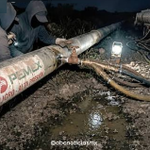
Mexico’s headache: Illegal fuel trade (Huachicol and Huachicol Fiscal)
Illegal sales points outnumber the legal ones!!!
Mexico faces a massive illegal fuel market made up of two main activities
- Pipeline theft (classic huachicol) – Tapping Pemex pipelines to steal gasoline and diesel.
- Fuel smuggling + tax evasion (huachicol fiscal) – Importing fuel while declaring it as a different product (lubricants, additives, etc.) to avoid the high IEPS tax, then selling it inside the country.
Estimated losses
Mexican Government (Sener, Oct 2026): 61.8 billion pesos ($3.3 billion USD) in 2025. Official figure for volumetric and fiscal discrepancies, mainly from under-declared sales and smuggling.
- Petrointelligence (energy think tank): Up to 177 billion pesos ($9.7 billion USD) in 2024. Includes theft + smuggling + tax evasion, roughly equal to Mexico’s entire federal security budget.
- InSight Crime: Hundreds of millions of liters per month via ports. Reports of up to 400 million liters/month entering through Altamira alone in some periods.
Scale of the market
- Estimated 22,000 illegal fuel sales points nationwide (roadside huachicol de barril), compared with roughly 14,000 legal gas stations.
- In 2025–2026, authorities reported 2,539 arrests, 5,572 vehicles seized, and 173.7 million liters of fuel seized.
Sources: SENER, Petrointelligence, EL PAIS

.
Member States’ contribution to ASEAN’s long-term development and progress
Singapore leads by a wide margin, accounting for 64.4% of the contribution, followed by Indonesia at 41.0%.
Thailand (26.1%) and Malaysia (26.0%) form the next tier, while Vietnam contributes 14.4%. The remaining members, Philippines, Brunei, Cambodia, Laos, and Myanmar, each account for less than 10%.
The figures highlight the outsized role of Singapore and Indonesia in driving ASEAN’s long-term economic development relative to the other member states.
Source: @ISEAS

An additional explanation was required because the chart title caused a misunderstanding. Please read the explanation in the image I added.
Since this is a perception graph based on people's opinions and allows respondents to make two choices, the total percentage naturally exceeds 100%, which I should have clarified from the beginning

.
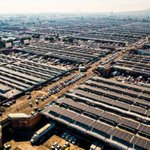
Central de Abasto (CEDA) Solar Plant, Mexico City
Located in the Iztapalapa borough, the Central de Abasto, one of the largest rooftop solar in the world.
The plant covers about 21 hectares of roof space with more than 32,000 solar panels and has a capacity of 18 MW. It generates roughly 25 GWh per year, enough to supply the equivalent of around 10,000 homes.
Handed over to CFE in 2024, it mainly powers the market’s common areas and is considered one of the largest rooftop solar installations on a public market anywhere.
Source: Revolve-renewablepower


.
Public education spending per young person varies dramatically across regions
In 2025, average public education expenditure per school-age individual (0–24) ranged from €220 in Sub-Saharan Africa to €9,025 in North America and Oceania (in 2025 PPP euros), a gap of almost 1 to 41.
Europe spent €7,433, East Asia €2,941, and Latin America €1,823. The world average stood at €1,642.
Using market exchange rates instead of purchasing power parity would make these gaps even larger.
Source: World Human Capital Expenditure Database and Bharti et al. (2025), @WIL_inequality

.
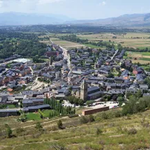
The town that stayed Spanish because it wasn’t a village
In the autumn of 1659, the long and exhausting war between France and Spain finally came to an end. The two kingdoms signed a peace treaty that would draw the border along the Pyrenees. France was represented by Cardinal Mazarin, while Spain was represented by Don Luis Méndez de Haro. The treaty was formally approved by King Louis XIV of France and King Philip IV of Spain.
Under the agreement, Spain was to cede 33 villages in the Cerdanya region to France. During the negotiations, however, the Spanish side raised a critical point: Llívia.
Unlike the surrounding villages, this settlement was not an ordinary pueblo (villa). It had earlier been granted the status of a villa by Emperor Charles V and was the historic capital of Cerdanya. The Spanish negotiators argued that the treaty only transferred villages to France, and that Llívia did not fall under that definition.
Although the French objected, Spain managed to uphold this technical distinction. Llívia remained Spanish, while all the surrounding villages passed to France. As a result, Llívia became a Spanish settlement completely surrounded by French territory. The following year, in 1660, the Treaty of Llívia confirmed this arrangement and recognized a neutral road connecting Llívia to the rest of Spain.
The situation remains the same today. Llívia is still a Spanish town in the province of Girona, yet geographically it lies entirely inside France. The border markers, the neutral road, and that single difference in wording from 1659 are still there.
Source: Britannica, CNN

.
Support for Ukraine in Central and Eastern Europe
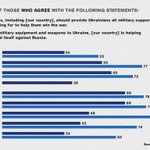
Public opinion across the region remains divided on military aid to Ukraine, according to the GLOBSEC Trends 2025 survey.
Strongest support for providing Ukraine with all the military assistance it requests comes from the Baltic states and Czechia (Estonia 60%, Latvia and Lithuania 68%, Czechia 55%).
Support is notably lower in Bulgaria, Slovakia (both 34%), Hungary (38%), Romania (43%), and Poland (48%).
However, a much larger share of respondents in most countries agree that supplying weapons helps Ukraine defend itself against Russia, especially in Poland (92%), the Baltics, and Czechia.
The data highlights a gap between general support for Ukraine’s right to self-defence and willingness to provide unrestricted military aid. This comes as populist governments have returned or strengthened their position across the Visegrad countries (Hungary, Slovakia, Czechia, and Poland), according to recent analysis.
Source: GLOBSEC Trends 2025, @BalkanInsight

.
HIV Developments in South Africa: The country with the world’s largest HIV population
South Africa has the highest number of people living with HIV globally. New modelling shows that scaling up the long-acting injectable lenacapavir could significantly accelerate progress toward HIV incidence targets.
Definitions
Oral PrEP: Daily oral pre-exposure prophylaxis (a pill taken every day) to prevent HIV infection.
Lenacapavir (12–24 months, or 6–12 months): It is a long-acting injectable medicine used for HIV prevention (PrEP) and treatment. It works by blocking the HIV virus’s capsid protein and is given by injection every 6 to 24 months, depending on the formulation
HIV Incidence: The rate of new HIV infections occurring in a population over a specific period.
HIV Prevalence: The proportion of people living with HIV in a given population or area

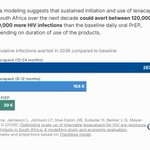
According to the projections, lenacapavir (used every 12–24 months) would allow South Africa to reach the 0.1% incidence target by 2039, earlier than under the current oral PrEP baseline.
Modelling estimates that sustained use of lenacapavir over the next decade could avert between 120,000 and 250,000 more HIV infections compared with daily oral PrEP, depending on the duration of protection. By 2036, the longer-acting version is projected to prevent 287,000 infections, far outperforming both shorter-acting lenacapavir and oral PrEP.

The maps also highlight that HIV prevalence remains highest in several districts, while early lenacapavir initiations are still concentrated in a limited number of areas.
Source: Jamieson et al. (2026), modelling based on the Thembisa model (@CSIS).

.
Profit margins in China’s wind sector have shrunk, but remain positive
Key indicators of involution in China’s wind sector
Prices: Onshore and offshore wind prices declined 55–56% on average from 2020 to 2024.
Revenue:
Revenue for China’s leading wind turbine firms stayed roughly flat between 2021 and 2023, then gradually rose in 2024 before jumping by about one-third in 2025.
Profits: Net profit margins fell on average from 6.4% to 2% between 2022 and 2025.
Source: @merics_eu

World Data Analysis retweeted

Singapore concerns about the nuclear power to secure energy in the future
@World_Data_A channelnewsasia.com/singapor…


.
There’s a fascinating debate among highly respected and brilliant economists: Should we leave economic analysis to AI?
We’re all facing a reality, AI and AI-adapted machines first wiped out some simple jobs, and now this storm is coming for everyone.
Furman says if he were running the CEA, he’d rely on AI… but tomorrow the president or vice president might simply say, Let an AI run the CEA.
We are living through historic moments.


I can see where @jasonfurman is coming from, but I also agree with Claudia, in the particular case of CEA.
From Furman’s probable perspective (my speculation)- a senior person’s day is usually chalked full with meetings and multi activities that require constant context switching, leaving little time for playing with data yourself and a dependence on support staff / economists to process the data.
The ability to now not depend on anyone, as a senior person, is very very empowering. Now, with just the idea, a senior person can go far.
On top of that, the dopamine hit from Claude is real. After years of needing research assistants, you suddenly realize you don’t need to ask people for things, or to wait for answers. Got questions? Got answers NOW, exactly answered in the way you want it.
How do I know? It so happens that recently my nightly activities have been spent on building tools (for myself) on how I like to visualize economics. I am probably just a month behind Furman.
But now to Claudia’s point — CEA is a very important institution in the White House. Among the many things it does, it fact checks important economic speeches of White House characters. It tells politicians they are wrong in a place where people tend to say yes.
AI requires fact checking — in the high stakes world of POTUS speeches, you can’t even allow a 0.05% chance of an AI hallucination on it.
Second, CEA briefs principals confidentially ahead of data releases due to market sensitivity. These releases are sent in via physical paper in manila folders. With the cyber security concerns around AI, it is inconceivable that AI can substitute for the human required to do the job.
Third, to Claudia, CEA spawned a lot of people who go on to do things. I am one of them. So is @tdurie95 in my team. Without that experience, I can 100% say would not have the kind of world view that I have now.
Which opens an interesting question about AI — in the productivity literature about GPT (general purpose technology), that type of innovation is supposed to spawn more innovation in a nonlinear way.
But whatif AI’s productivity impact is actually front loaded? (Ppl who follows my writings would know that I insist that labor productivity impact from AI is already showing up strong in earnings, though absent in national statistics, which i believe will be revised up years later).
AI allows people with extensive experience to scale their expertise. But AI also raised the entry barrier for any white collar jobs, slowing the supply pipeline of human experts. As the current generation of experts age, the size of the new generation of experts was not enough to replace the previous generation of experts. As a result the spawn rate of ideas slow.
Entering into sci fi speculation— as humans were not about to replace the aging experts due to low pipeline of young human experts, AI themselves, through the training over the years, became the one spawning the ideas.
That seems like a disaster waiting to happen that current social policy needs to address.
World Data Analysis retweeted

#Gabon #Africa
You still can't name one democracy. I don't think that terrorism can topple a major democracy. France and Europe have experienced it from the 1960s to the early 2000s. None of the groups succeeded. They were all tamed.

.
BofA analysis: High-Purity Quartz – the hidden starting point for AI chips
The main supplier is the United States!
One of the least talked-about but most critical bottlenecks in the entire semiconductor and AI supply chain is high-purity quartz (HPQ).
According to BofA Global Research
- HPQ is used to produce quartz crucibles that grow single-crystal silicon ingots.
- These ingots become silicon wafers, the foundation of virtually every advanced chip, including AI accelerators.
- 70–80% of the ultra-high-purity natural quartz suitable for semiconductor-grade crucibles comes from a single region: Spruce Pine, North Carolina (US).
- Main operators: Quartz Corp and Sibelco (Belgium).
This creates an extreme single-region geological dependence. In 2024, Hurricane Helene already disrupted mining and logistics in the area, exposing how quickly a localized event can ripple through global wafer production.
Key points from the analysis
- Synthetic and alternative quartz exist, but they remain more expensive and not yet fully scalable replacements.
- Inventory buffers exist but only cover limited periods.
- Diversification is slow due to long qualification timelines.
- New high-purity resources were identified in Tibet (Dinggye) in June 2026, though commercial viability and scale remain uncertain.
Bottom line: High-purity quartz is not a normal commodity. It is a geological bottleneck. Any disruption in Spruce Pine can affect crucible availability, wafer production, and ultimately the supply of advanced chips long before it shows up at the chip fab level.
Source: BofA Global Research


