




Miroslav retweeted

Прикольно что вестоидам абсолютно плевать на миллионы убитых русских, на убитых христиан, на политические репрессии
Но вот снижение детской смертности в тундре – это зло по их мнению. Как будто они хоть что-то знают о положении жителей тундры в СССР

Miroslav retweeted

Самый худший вид людей, это люди по типу этого: жирное, плешивое, старое говно, которое лижет жопу государству при любых обстоятельствах и не возражает когда его те же люди потом в жопу насилуют, при этом желают всего наихудшего поколениям моложе и лишает их надежды на будущее.

Miroslav retweeted

Sem os brasileiros autistas os movimentos monarquistas, separatistas e tradicionalistas europeus morreriam


Miroslav retweeted

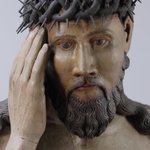
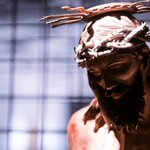
Catholic chick performatively crying over seeing gross art in museum.. wait till she goes to church and sees this abomination they’re parading around the novus ordo parishes.


Miroslav retweeted

Но в 1612 происходило же ровно наоборот, братец, ты как там вообще, дышишь, водичку пьешь?


Miroslav retweeted

Смотря на ленту твиттера, пришел к выводу, что наличие выходного дня 4 ноября у русских для поляков важнее, чем самим русским.
Ну оно и понятно, 1612-й был последним годом польской исторической релевантности.


Miroslav retweeted

This is a homosexual and reprobated post.

You are not obliged to recognise local canonisations of every Saint, as if it is an infallible act, btw.
There are many examples, but one that springs to mind is Paisius of Hilander, a largely obscure Orthodox monk from Bulgaria who wrote the first ever book from Bulgaria, in 1762, under the patronage of the modern Greek enlightenment.
There exists no information about his personal or ascetic life, his holiness, his veneration or anything about him outside of his one book, which is a secular book. He was not venerated after his death and it was not until 1962 that he was canonised and it was done for no other reason than "his cultural contribution to Bulgaria."
Zhorzheta Nazarska, a scholar of the Plovdiv university Theology Department, punlished a 2022 volume titled “Father Paisius of Hilendar and Bishop Sophronius of Vratsa in the State Atheist Policy”.
According to the conclusion, Paisius met not a single criteria of sainthood and his canonisation is a result of ethnic veneration. He exists on no other Church calendar in the Orthodox communion.
Another example would be Peter Mogila:
Andre Partykevich, in his study of Mogila and his Orthodox Confession, states plainly that the Church of Greece does not recognise him as a saint. He is not on any Hagiologion and there is a steady current of opposition or questioning of his sainthood from many streams of Orthodoxy today. There are of course other examples but these are some of the clearest, I think.


Miroslav retweeted

Kapetan... I will just cut to the chase here: the Russian Church wasn’t at Jerusalem 1672. When we accepted the council & its confession, it was when the Church was in dialogue with the Anglican non-Jurors in the early 1700s, in which the 4 patriarchates along with us sent a copy of the confession without the Q&A at the end. The version actually received by the Church universal does not dictate a biblical canon, hence why we maintain a 66 book canon to this day.
That’s not something that St. Philaret “edited out” of the confession.
Theophan Prokopovich, the prophet & poster boy of the Latinisers, condemns both the Council of Jerusalem (1672) and St Augustine by falsely pointing to one of the "errors" of Augustine being his view that Judith, Tobit, Wisdom, Sirach and Maccabees are not canonical. He also says that even if great authorities declared them canonical, they can never be.
"The Council of Carthage accepts the book of Judith, and so does Augustine, deferring, I think, to the council of his own homeland. But it is not mentioned in the Apostolic Canon or by the Council of Laodicea...
Even if those denying and those affirming were equal in number and authority, the book still could not be held canonical… For canonical Scripture must be certain. […] [On Sirach:] Only the Council of Carthage and Augustine list it among the canonical books, but this, as we have so often pointed out, is no obstacle. […] [On Maccabees:] None of the Fathers cited above count them in the canon, except the Council of Carthage and Augustine.”
It should also be noted that the section on the canon of scripture in the Council of Jerusalem that was translated by St Philaret was deliberately edited out and removed by him too.
I wonder how someone can dare edit, question or omit a single thing from a perfect and infallible pan-Orthodox council...oh wait lol
- Theophan Prokopovich, Christianae Orthodoxae Theologiae, 1773

You also don't have to listen to the opinions of random twt wiggers.
You are not obliged to recognise local canonisations of every Saint, as if it is an infallible act, btw.
There are many examples, but one that springs to mind is Paisius of Hilander, a largely obscure Orthodox monk from Bulgaria who wrote the first ever book from Bulgaria, in 1762, under the patronage of the modern Greek enlightenment.
There exists no information about his personal or ascetic life, his holiness, his veneration or anything about him outside of his one book, which is a secular book. He was not venerated after his death and it was not until 1962 that he was canonised and it was done for no other reason than "his cultural contribution to Bulgaria."
Zhorzheta Nazarska, a scholar of the Plovdiv university Theology Department, punlished a 2022 volume titled “Father Paisius of Hilendar and Bishop Sophronius of Vratsa in the State Atheist Policy”.
According to the conclusion, Paisius met not a single criteria of sainthood and his canonisation is a result of ethnic veneration. He exists on no other Church calendar in the Orthodox communion.
Another example would be Peter Mogila:
Andre Partykevich, in his study of Mogila and his Orthodox Confession, states plainly that the Church of Greece does not recognise him as a saint. He is not on any Hagiologion and there is a steady current of opposition or questioning of his sainthood from many streams of Orthodoxy today. There are of course other examples but these are some of the clearest, I think.
Miroslav retweeted

"We've been communing gays rampantly, have a massive gay clergy problem, and our Pope appoints feminists who pushes for gays in a teaching position but one guy in your church is gay so I win"
Miroslav retweeted

If this is what a "leading" theologian is, Orthodoxy is cooked.


Miroslav retweeted

коммунисты не хотят отдавать 10-20 процентов стоимости своей произведенной продукции умному организатору производства, зато с удовольствием отдают 50-70 процентов налогами просто так


