

Natives, mysteries of nature and remote antiquity
Joined July 2020
- Tweets5.9K
- Following614
- Followers5K
- Likes13.3K




Pinned Tweet
远古的中国和古代中美洲的绿松石马赛克镶嵌技术 There are only two places in the world where turquoise mosaic works have been prevalent, pre-Columbian Mesoamerica and pre-Qin period China.


凌家滩遗址的发现揭示出红山马蹄筒可能的用途 Hoof-shaped objects from the Hongshan culture were thought to be possibly a type of headpiece, however the find at Lingjiatan indicates that they may have had other roles.


ALT Lingjiatan jades


Therefore, bells emerged accompanied by shamanism. They have a very old history in China, spanning the stages of development from pottery to bronze.

ALT pottery bell from Miaodigou Culture, around 3900 BC

ALT pottery bell from Yangshao

ALT pottery bell from Shijiahe Culture

ALT a bronze bell and jade clapper from Erlitou (c. 1750-1520BC)


基本上可以把三星堆和夏商归类为同一种文化 Artifacts from Sanxingdui and those from Xia/Shang dynasties show no essential differences. One theory suggests that the ancient Shu of Sanxingdui was established by the Xia remnants, who brought central plains culture there.

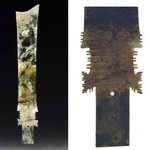
这件二里头的玉牙璋体现了秩序之美,是目前出土的最精美的牙璋之一 This jade Yazhang (toothed zhang) from Erlitou is one of the most exquisite Yazhang ever unearthed in China. Similarly exquisite ones have also been excavated at Sanxingdui, but much later in date.


二里头夏王宫复原 A 3D reconstruction of Xia dynasty palace at the Erlitou site, 1750-1520 BC. The palace area by the city’s main avenues was walled, with different functional zones. Remains no. 1, containing palace main hall, was a large courtyard enclosed by walls and corridors.


YellowRiver 478@folks retweeted

Were these head-shaped effigy vessels from prehistoric Arkansas utilized as incense burners during ritual ceremonies?
Szukalski’s interpretations propose that these vessels symbolized spirits, with smoke representing the ascent of the soul or the breath of departed ancestors. The perforations on these vessels may hold symbolic significance, potentially indicating a connection to the elements or even flood symbolism.


YellowRiver 478@folks retweeted
On the Loess Plateau on both sides of the Yellow River not far from Shimao, there are also several prominent settlement ruins. One example is Bicun site碧村遗址 in northern Shanxi, which was a copy of Shimao’s defensive works and possibly a fortress on the eastern frontier.
石城和黄土高原文明的形成 There were more than 200 of Shimao’s satellite settlements varying in size distributed in the valley of Tuwei River(秃尾河, a tributary of Yellow River), and some larger ones featuring stone structures and enclosing walls like Shimao.


Over time, as climate and societies changed, the population gradually gathered in valleys with more abundant natural resources. About 5,000 years ago, a large number of Ashan culture settlements distributed along the Tuwei River, and the larger ones constructed with stone.


