

Staff Scientist @emblebi | Statistical and Population Genetics | Previously @sangerinstitute, @OxfordStats, @UniOfOxford, @StEdmundHall
Joined August 2021
- Tweets97
- Following280
- Followers174
- Likes820
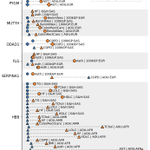


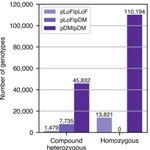





Pleased to announce that our paper, Meta-analysis across six global biobanks identifies recessive coding associations with complex traits and diseases, is now officially published by @AJHGNews.
A quick 🧵 below:
cell.com/ajhg/fulltext/S0002…
#recessive #GWAS #metaanalysis #genomics

Interestingly, we found that the signal in several of our associations was driven primarily by (Likely) Pathogenic variants (see ClinVar), despite the fact that most of our cohorts were not disease but population cohorts.

1
1
89
Please read our paper for more details! Huge thanks to all co-authors, particularly @flassen_ , @astheeggeggs and @hilsomartin.
👉Paper: cell.com/ajhg/fulltext/S0002…
👉Summary statistics: zenodo.org/records/16312670
2
61
Georgios (Yiorgos) Kalantzis retweeted

Exome sequencing and analysis of 44k South Asians from the Genes & Health cohort (G&H) now published in Nature Genetics.
Of all the South Asian centric cohorts, G&H is my favorite. They have been doing high quality work and sharing the results generously to everyone in the field.
G&H is dedicated exclusively for British South Asians of Pakistani and Bangaldeshi heritage. In the current work, the authors studied whole exome sequencing (WES) of 44,028 individuals.
The value of such cohorts become immediately evidenct when you contrast with existing large European-based cohorts/databases such as UK Biobank, gnomAD. Some interesting stats reported in this paper:
- 26% of G&H coding variants are completely absent in gnomAD (this rises to ~50% when compared only with the European subset of gnomAD)
- 33% offspring of consanguineous marriages (vs 2% in the UKB)
- consequently, 1.8% of average genome is in runs of homozygosity (ROH) (vs 0.4% in UKB)
- this high autozygosity yields 2.4x more homozygous genotypes than what you'd expect under random mating
- for ~3k genes at least one homozygous (or comp het) pLOF carrier ('knockouts') was found, of which 1,669 are seen in only G&H despite being 10x smaller than UK Biobank.
For 546 genes, knockouts are seen only in G&H when compared to even 5 major larger biobanks combined (~1.4 million)
Great work and an incredible progress in South Asian genetics, again, unsurprisingly from a South Asian cohort built outside South Asia
Congrats to G&H team!
Kim et al. Nat Gen 2026
nature.com/articles/s41588-0…
Very proud that our paper, introducing ARG-RHE and other methods for scalable complex-trait analyses inside an #ARG, is now published at @CellGenomics. It includes some work from my thesis, but most of it was pushed by my co-first author Jiazheng. Congrats!

Leveraging ancestral recombination graphs for scalable mixed-model analysis of complex traits dlvr.it/TPlBML

Our package can be pip-installed so please check out our manual for the details
palamaralab.github.io/softwa…
38
Georgios (Yiorgos) Kalantzis retweeted

Our latest work is out in Nature today. In this paper, we introduce an improved version of NanoSeq, a duplex sequencing protocol with <5 errors per billion bp in single DNA molecules, and use it to study the oral somatic mutation landscape in >1000 people. nature.com/articles/s41586-0…

Georgios (Yiorgos) Kalantzis retweeted

The Greek government’s decision to delegate newborn screening to private organisations without prior public consultation raises concerns about transparency and ethical oversight. Read the full ESHG statement for details: eshg.org/news-home/for-media… #NewbornScreening #eshg
Preprint alert! 🚨
Our manuscript on Exome sequencing and analysis of 44,028 British South Asians (Genes & Health) is now live @medrxivpreprint! Among great findings, and I’m thrilled to highlight the pieces I worked on 🧵
doi.org/10.1101/2025.06.05.2…
Follow-up with a joint additive/dominant model, for each of those 13, we assessed a 2-df model which revealed three associations - all novel - with strong recessive patterns
– NLRP10 → Viral pneumonia risk
– HSD17B14 → Bone density disorders
– NCAPD2 → Vitamin B₁₂ levels

1
99
Grateful to all collaborators—especially @hilsomartin —and to the Genes & Health participants who made this study possible. Dive into our full manuscript here:
doi.org/10.1101/2025.06.05.2…
73
Hi #ESHG2025 it's great to be part of the conference and hear about exciting science! I'm giving a talk myself on a recessive meta-analysis from BRaVa, 11:45 on Tuesday at C32. Hope to meet many if you!


Georgios (Yiorgos) Kalantzis retweeted

Our work on widespread recessive effects on common diseases in a British South Asian cohort is now published in AJHG! Check out our summary thread here
cell.com/ajhg/fulltext/S0002…


Glad to be part of this project, introducing a new method to perform powerful and scalable GWAS 👇

(1/6) Excited to share our manuscript describing Quickdraws, a novel algorithm and software to perform GWAS that increases association power while keeping computational costs low. More details below (thread).
Link to article: nature.com/articles/s41588-0…
3
160