


While the crowd prays for a "soft" pause from the Federal Reserve, Morgan Stanley’s chief economist, Michael Gapen, spells out a harsh scenario: rates will remain unchanged, but it will be the most aggressive "hawkish hold" in history [00:15].
Look at what the actual data is showing:
• The market is pricing in a pause this week, yet the Fed is signaling clearly that rates will head higher down the line [00:54]. There is no easing here-the regulator is simply taking a breather to assess the time lag.
• Financial conditions are tightening on their own; the market is doing the central bank’s dirty work [01:40].
• The energy shock and oil price pressures stemming from the Middle East haven’t gone away-a second wave of inflation is set to hit with full force [03:31]. If the Fed is forced to implement 6–7 more hikes-bringing us back to 2023 levels-the economy will begin to crack at the seams [04:58].
No fluff-just hard macro-telemetry on liquidity, which dictates the price of every asset in the market.
Bookmark this before this macro-collapse tears through the portfolios of most "gamblers."


Yumslef retweeted
Holy sh*t, they’ve actually spliced Minecraft’s code with the open world of GTA V
The "Grok Agent Brain" neural network has dropped Steve right into the streets of Los Santos. Operating in full autonomous mode, this blocky psychopath rigs cars with dynamite, gets sent flying by the blast waves, and wreaks havoc on traffic with a heavy crossbow.
No scripted missions-just pure, cutting-edge cognition and an AI that tears through virtual sandboxes on the fly.
Bookmark this before this insane crossover takes over every other game.
Yumslef retweeted
Oh god fuck, did you see how this micro-duck stands up and scans the space all by itself?
Secret telemetry from the Grok Robot Brain Engine captured a moment that blurs the line between machine scripts and a living organism.
This micro-duck transitions from a sitting position to full balance not through rigid programming, but through live real-time neural network reconfiguration.
Look at the graphs and telemetry on the panel:
• Dynamic Stabilization: The balance.lpo module instantly recalculates weight distribution, tilt angles, and motor torque, keeping the chassis from falling.
• Autonomous Scan Search: The camera and sensors via vision.one / scan analyze the environment, building an intent matrix on the fly.
• Neural Edge Cognition: Thousands of nodes in the activity graph synchronize in milliseconds, controlling every micro-movement of the joints without human intervention.
We are no longer writing code for every step of a robot. We are deploying synthetic intelligence that is learning to master its physical body right before our eyes.
Bookmark this before this level of autonomy takes over all of reality.
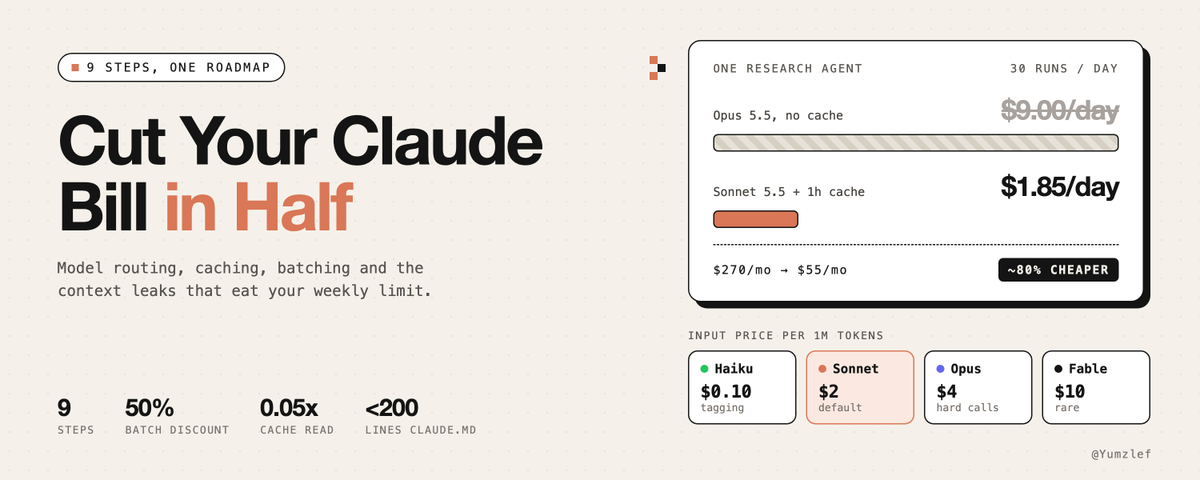
My satellites learned to take routes almost twice as long, and their packets arrived faster.
96 satellites in 8 orbital planes pass packets between 10 cities over laser links. I turned up one hot flow, New York to Tokyo, until the fixed shortest route choked.
Then each satellite started learning its own table: how long a packet to each city takes through each of its 4 lasers. No central controller. Each one only hears back from the neighbour it handed the packet to.
New York to Tokyo, same traffic:
- Shortest path: 6.4 hops, 50 ms median, 83% delivered
- Learned routes: 11.8 hops, 38 ms median, 96% delivered
Packets lost across the network fell from 7.4% to 1.2%. Two more seeds: 6.2% to 0.9% and 7.8% to 0.2%. Loss still spikes now and then.
Toy orbits and traffic, 1 tick counted as 1 ms.

Two galaxies collide over a billion years. 60,000 stars, and the only force in the code is gravity.
The tails come from tides. Each galaxy pulls harder on the near side of the other's disk than on the far side, and the rim stars get stretched into long streams. Alar and Juri Toomre worked this out in 1972 and used it to explain the tails of the Antennae galaxies.
Claude Opus 5.5 wrote the whole thing in 185 lines of JavaScript: the physics, the 3D camera, the glow, the titles. No libraries except ffmpeg for encoding. 22 seconds of 1080p video render in 100 seconds on my Mac.
Yumslef retweeted
A 22-YEAR-OLD SPENT JUST $20 ON CLAUDE TO BUILD TWO VIRTUAL AI GIRLS - AND PULLED $24,542 IN 30 DAYS
While most people are still arguing about AI art online, solo builders are quietly printing five figures a month on absolute autopilot:
• Virtual Girl One (Fanvue): Engineered using Claude to analyze target audience psychology. Automated photo and video generation on a strict schedule pulled 1,265 paying subscribers and $12,637 in revenue in a single month.
• Virtual Girl Two (Livestreams): Deployed live across TikTok, YouTube, and Kick utilizing real-time AI voice and visual morphing during broadcasts. Viewers dropped single donations up to $500, generating another $11,905.
Total revenue: $24,542 from characters that do not even exist in the physical world.
AI plus pure psychological leverage equals infinite money printing.
Bookmark this framework before everyone starts cloning this exact funnel.

A 22-YEAR-OLD SPENT JUST $20 ON CLAUDE TO BUILD TWO VIRTUAL AI GIRLS - AND PULLED $24,542 IN 30 DAYS
While most people are still arguing about AI art online, solo builders are quietly printing five figures a month on absolute autopilot:
• Virtual Girl One (Fanvue): Engineered using Claude to analyze target audience psychology. Automated photo and video generation on a strict schedule pulled 1,265 paying subscribers and $12,637 in revenue in a single month.
• Virtual Girl Two (Livestreams): Deployed live across TikTok, YouTube, and Kick utilizing real-time AI voice and visual morphing during broadcasts. Viewers dropped single donations up to $500, generating another $11,905.
Total revenue: $24,542 from characters that do not even exist in the physical world.
AI plus pure psychological leverage equals infinite money printing.
Bookmark this framework before everyone starts cloning this exact funnel.
Stop over-engineering your robotics fleet with complex auctions. Simple floor tape tripled my throughput
I simulated a warehouse floor with 60 robots fetching totes from 280 shelf faces across narrow, single-cell aisles.
When the aisles were two-way, robots constantly met head-on and gridlocked. On average, two-thirds of the entire fleet stood completely still doing nothing.
I tested three different routing policies on the exact same floor and robots:
Oldest order first: 10.0 orders/min
Auction algorithm (nearest robot wins): 9.8 orders/min
Every aisle one-way (simple arrows on the floor): 32.2 orders/min (with only 10% waiting)
The auction was smart and picked the closest robots, but it couldn't stop them from colliding head-on in narrow corridors. Turning aisles into one-way lanes eliminated deadlocks entirely and skyrocketed output by over 300%.
Sometimes the best optimization isn't an algorithm. It's just drawing an arrow. 👇
Merge sort put 300 shuffled numbers in order in 4,603 operations. Bubble sort needed 90,571 on the exact same list.
I raced six classic algorithms side by side. Every frame each one gets the same budget, where one comparison or one array write counts as one operation.
Merge sort: 4,603
Quicksort: 5,838
Heapsort: 8,435
Selection sort: 45,440
Insertion sort: 46,467
Bubble sort: 90,571
The bottom row is finished while the top row still looks like noise. That's n log n against n squared, and at 300 items it's already a 20x gap. On paper, at a million items that ratio grows to roughly 50,000 to 1.
Claude Opus 5.5 wrote it in Claude Code: 165 lines of JavaScript, no libraries, each algorithm a generator that pauses after every operation. Renders in 12 seconds.
My 24 firefighting drones all dumped their water on the same square of forest.
A wildfire on a toy island, wind blowing toward a village of 12 houses. Each drone flew to the burning cell nearest to it. They all took off from the same lake, so they all picked the same cell. 24 drops put out 13 flames.
Then a planner took over. It drew a line 9 cells ahead of the fire, coast to coast, and gave each drone its own point on that line to soak before the flames arrived.
Same seed, same fire:
- Nearest flame: 48% of the forest burned, 12 of 12 houses lost
- Firebreak: 30% burned, 0 houses lost
The drones flew at the same speed with the same water. The planner sent them to the ground the fire was about to reach. Three more seeds gave the same picture.
THIS IS NOT A SCI-FI UI. THIS IS WHAT A REAL-TIME AGENTIC REASONING LOOP LOOKS LIKE.
As autonomous coding agents evolve from linear prompt-response tools into multi-threaded orchestration systems, real-time telemetry is becoming critical infrastructure for agent visibility.
This 3D simulated telemetry schematic maps the inner mechanics of Claude Code (Opus 5.5) as it executes complex development tasks through an interactive "Agent Knot":
1. The Trefoil Agent Loop (The Core):
• A 3D rotating knot composed of 1,400 rainbow strands represents the agent's iterative reasoning cycle: Plan → Action → Verification.
• Pulses travel along the knot loops in real time, triggering event callouts like "SPAWN a-17 · one task → six scouts" or "TEST · 412 passed · 0 failed."
2. The Peripheral Tool Arc:
• An outer ring maps all core primitives: Read, Grep, Edit, Bash, Plan, Subagent, WebFetch, and MCP.
• Tool invocations ignite specific arcs, firing luminous data streams directly from the outer boundary into the knot's center.
3. Multi-Threaded Telemetry Matrix:
• Top & Side Panels: Track live token burn rates, execution tracks across main and subagent threads, context window distribution, and system parameters.
• Bottom Panels: Feature a subagent-by-tool matrix, real-time task queues, call distribution roses, and continuous test verification status.
The S&P 500 index is lying to you right now.
If you’re looking at headline market indices and assuming the entire market is in a broad bull rally, think again. In a recent segment on CNBC’s Halftime Report, the Investment Committee exposed a stark divergence hidden beneath the market's surface.
Here are 4 critical takeaways every investor needs to understand:
• The Bull Market Illusion: Only 41% of S&P 500 stocks are currently trading above their 200-day moving average. The majority of individual stocks are actually in negative territory, while a tiny handful of giants masks the underlying pain.
• Big Tech is the New "Safe Haven": When bond yields spike and macroeconomic uncertainty rises, institutional capital historically fled to bonds or defensive staples. Today, asset managers are treating Mega-Cap Tech (Mag 7) as their ultimate defensive trade.
• Bonds Are Failing as Safety Nets: With the 10-year Treasury yield surging ~50 basis points over the past month, bonds dropped nearly 8% in September alone-breaking traditional 60/40 portfolio protection strategies.
• Extreme Market Divergence: Over the last month, the equal-weighted S&P 500 fell 4.5% while the tech-heavy Nasdaq jumped almost 5%, pushing market concentration toward historical extremes.
Bottom Line: As long as interest rate yields remain elevated, this extreme market concentration isn't an anomaly-it is the status quo.
imagine beavers building a dam from GitHub repos
8 open-source GitHub projects for turning one local model into your own AI workspace
01 LocalAI
▸ github.com/mudler/LocalAI
→ one local server: text, image, voice
02 Open WebUI
▸ github.com/open-webui/open-w…
→ self-hosted chat for local + API models
FIND AND CITE
03 SearXNG
▸ github.com/searxng/searxng
→ private metasearch, no tracking
04 Vane
▸ github.com/ItzCrazyKns/Vane
→ web search + model → cited answers
GIVE IT FILES AND TOOLS
05 AnythingLLM
▸ github.com/Mintplex-Labs/any…
→ chat with your documents + agents
06 LibreChat
▸ github.com/LibreChat-AI/Libr…
→ many models + agents + code sandbox
HEAR AND TUNE
07 whisper.cpp
▸ github.com/ggml-org/whisper.…
→ laptop speech-to-text, no cloud
08 Unsloth
▸ github.com/unslothai/unsloth
→ run + fine-tune open models locally
log by log:
dictate → search → cite → retrieve → run → tune → review
521,893 stars combined, checked Oct 06
5 of 8 are MIT
7 of 8 updated within 4 days of that check
a subscription runs on someone else's servers
this dam goes up on yours ⭣

A dense 27B model on one RTX 3090 hit about 381 tok/s, speculative decoding with 16-token verification blocks, about 15 of 16 drafts accepted on a document task, and about 133 tok/s on ordinary chat.
I rebuilt the mechanism as a Monte Carlo. A drafter guesses a block, the big model checks the whole block in one pass and keeps the correct prefix plus one token of its own. I fitted the timing knobs and the chat acceptance rate to the post's 82, 260, 382 and 133 tok/s, then ran 200K passes per setup.
On chat only 4.6 of 16 drafts survive a pass. The fitted model says a block of 8 would beat 16 there, 152 tok/s against 133. Long blocks pay off when the answer is already in the prompt.
Acceptance is treated as independent per token, which is a simplification.
Claude Opus 5.5 wrote it in 195 lines of Python. It renders in 40 seconds.
Merge sort put 300 shuffled numbers in order in 4,603 operations. Bubble sort needed 90,571 on the exact same list.
I raced six classic algorithms side by side. Every frame each one gets the same budget, where one comparison or one array write counts as one operation.
Merge sort: 4,603
Quicksort: 5,838
Heapsort: 8,435
Selection sort: 45,440
Insertion sort: 46,467
Bubble sort: 90,571
The bottom row is finished while the top row still looks like noise. That's n log n against n squared, and at 300 items it's already a 20x gap. On paper, at a million items that ratio grows to roughly 50,000 to 1.
Claude Opus 5.5 wrote it in Claude Code: 165 lines of JavaScript, no libraries, each algorithm a generator that pauses after every operation. Renders in 12 seconds.
IQuest-Q1 is out, an open-source coding and agent model, a 320B sparse MoE with 15B parameters active per token.
That is under 5% of the weights per token, so the router decides a lot. I built a toy one: 64 experts, each token picks its top 2, each expert takes at most 1.25x its fair share, and experts learn only from the tokens they serve.
Left alone for 150 steps, 23 of 64 experts got no work and 34% of token slots overflowed and were dropped. Then I switched on a per-expert routing bias that lifts idle experts and damps busy ones. 300 steps later drops were down to 0.4%, all 64 experts had work, and the busiest one sat at 1.4x fair load.
The sizes and token clusters are made up, not IQuest's real layout.
Claude Opus 5.5 wrote it in 182 lines of Python. It renders in 40 seconds.
A 1% annual fee cost my simulated saver $283K. They only ever paid in $240K.
Setup: $500 a month for 40 years, 7% a year before fees, fees taken monthly from the balance. Same deposits, same returns, only the fee changes.
0.05% fee: $1.23M
1% fee: $943K
2% fee: $722K
The 1% saver ends with 23% less money. At 2% it's 41% less, about $503K gone.
For the first 15 years you can barely tell the three lines apart. The gap only opens late, because the fee is charged on the growth too, so it compounds against you the same way returns compound for you.
Check the expense ratio before the past performance.
Claude Opus 5.5 wrote the simulation and the chart in Claude Code: 96 lines of Python, rendered in under 4 seconds. 7% is an assumption, not a forecast, and there are no taxes in the model.
Merge sort put 300 shuffled numbers in order in 4,603 operations. Bubble sort needed 90,571 on the exact same list.
I raced six classic algorithms side by side. Every frame each one gets the same budget, where one comparison or one array write counts as one operation.
Merge sort: 4,603
Quicksort: 5,838
Heapsort: 8,435
Selection sort: 45,440
Insertion sort: 46,467
Bubble sort: 90,571
The bottom row is finished while the top row still looks like noise. That's n log n against n squared, and at 300 items it's already a 20x gap. On paper, at a million items that ratio grows to roughly 50,000 to 1.
Claude Opus 5.5 wrote it in Claude Code: 165 lines of JavaScript, no libraries, each algorithm a generator that pauses after every operation. Renders in 12 seconds.
I released 1,000 double pendulums from the same height. Each one starts a billionth of a radian away from its neighbour. For 9 seconds they move as one.
The counter in the corner tracks how far apart the tips are:
1 second: about 1 micrometre
10 seconds: 0.8 mm
13.7 seconds: over 1 metre
After that the single white arm explodes into a rainbow cloud filling the whole reachable disc. The math stays exactly the same. Energy is conserved to 3 parts in a billion. The motion is fully deterministic, and a millionth of a radian of uncertainty in the start still makes it unpredictable after 14 seconds.
That is why weather forecasts have a horizon no computer can push very far.
Claude Opus 5.5 wrote it in Claude Code: 151 lines of plain JavaScript, no libraries, RK4 at 1,200 steps per second, 1080p render in about 100 seconds.
Two galaxies collide over a billion years. 60,000 stars, and the only force in the code is gravity.
The tails come from tides. Each galaxy pulls harder on the near side of the other's disk than on the far side, and the rim stars get stretched into long streams. Alar and Juri Toomre worked this out in 1972 and used it to explain the tails of the Antennae galaxies.
Claude Opus 5.5 wrote the whole thing in 185 lines of JavaScript: the physics, the 3D camera, the glow, the titles. No libraries except ffmpeg for encoding. 22 seconds of 1080p video render in 100 seconds on my Mac.
FROM PROMPT ENGINEERING TO GENOME ENGINEERING: THIS IS WHAT MULTI-AGENT IN-SILICO DNA EDITING LOOKS LIKE
As AI agents transition into synthetic biology, real-time spatial visualization is becoming the control panel for gene editing pipelines.
This 3D telemetry interface ("Genome Lab" running on Claude Code Opus 5.5) tracks 6 autonomous bio-agents executing precision genomic modifications on a real-time B-form DNA model:
1. Precision 3D B-DNA Architecture (The Core):
• Physically accurate B-form double helix (10.5 bp/turn, 3.4 Å rise, Ø 20 Å) featuring purine/pyrimidine geometry, sugar-phosphate backbones, and hydrogen bonding.
• Automatic exploded-view breakdown: every 24 seconds, the helix temporarily deconstructs into antiparallel 5'→3' strands, deoxyribose bases, and phosphate groups for structural analysis.
2. Real-Time Autonomous Mutation Loops:
• 6 specialized agents execute live edits: Substitutions, Insertions, Deletions, and Safety Reverts[cite: 5].
• Variant callouts (e.g., `SNV · DMD c.2657T>A`) fire dynamically, mapping directly to a 24-chromosome ring based on the human reference genome (GRCh38)[cite: 5].
3. Full-Spectrum Bio-Telemetry:
• Real-time tracking of GC content (~41% human baseline), base composition, 96-context mutation spectrums, off-target alerts, and an active precision gauge (99.5%)[cite: 5].
• Agent-by-chromosome matrix and parallel execution tracks: Scan, Design, Edit, and Verify[cite: 5].
THIS IS NOT A SCI-FI UI. THIS IS WHAT A REAL-TIME AGENTIC REASONING LOOP LOOKS LIKE.
As autonomous coding agents evolve from linear prompt-response tools into multi-threaded orchestration systems, real-time telemetry is becoming critical infrastructure for agent visibility.
This 3D simulated telemetry schematic maps the inner mechanics of Claude Code (Opus 5.5) as it executes complex development tasks through an interactive "Agent Knot":
1. The Trefoil Agent Loop (The Core):
• A 3D rotating knot composed of 1,400 rainbow strands represents the agent's iterative reasoning cycle: Plan → Action → Verification.
• Pulses travel along the knot loops in real time, triggering event callouts like "SPAWN a-17 · one task → six scouts" or "TEST · 412 passed · 0 failed."
2. The Peripheral Tool Arc:
• An outer ring maps all core primitives: Read, Grep, Edit, Bash, Plan, Subagent, WebFetch, and MCP.
• Tool invocations ignite specific arcs, firing luminous data streams directly from the outer boundary into the knot's center.
3. Multi-Threaded Telemetry Matrix:
• Top & Side Panels: Track live token burn rates, execution tracks across main and subagent threads, context window distribution, and system parameters.
• Bottom Panels: Feature a subagent-by-tool matrix, real-time task queues, call distribution roses, and continuous test verification status.
GPT-6 ASTRA VS OPUS 5.5: I RAN BOTH AI ARCHITECTURES INSIDE A DIGITAL FLY BRAIN TO PROVE THE ULTIMATE SPEED VS ACCURACY TRADEOFF
What happens when you benchmark GPT-6 Astra against Opus 5.5 inside a biological neural circuit of Drosophila mushroom bodies? The Fly Probe Duel simulation runs the exact same fly brain circuit under two distinct hyperparameter presets to resolve the classic speed vs. precision debate.
Key Neural Architecture & Benchmark Breakdown:
* Spiking Biological Scaffold:
* Circuit Pipeline: 180 input sensory channels → divisive normalization → 720 Kenyon cells with APL inhibition → MBON outputs → drift-diffusion evidence accumulator.
* Plasticity & Attention: Dopamine signals convey prediction errors after every trial to update weights, while a ring attractor dynamically guides attention during hidden rule shifts every ~90 trials.
* Model Preset Tradeoffs:
* GPT-6 Astra ("Fast & Broad"): High learning rate (η = 0.90), 10% active Kenyon cells, low decision threshold (0.22).
* Opus 5.5 ("Slow & Sparse"): Moderate learning rate (η = 0.45), ultra-sparse 5% active Kenyon cells, high decision threshold (0.50).
* Benchmark Results:
* Equal Accuracy: Both architectures reach an identical 82% steady-state accuracy.
* Astra Wins on Speed: Responds 2x faster (121 ms vs 258 ms) and relearns significantly faster after rule shifts (72% vs 67%).
* Opus 5.5 Wins on Efficiency: Delivers higher precision per answer (87% vs 84%), consumes 40% fewer spikes (2.7k vs 4.4k/s), and rewrites 50% fewer weights.
Which trade-off is superior for future Edge AI agents-instant speed or energy-efficient precision? 👇