

Digital Electronics Technician & YouTuber with a passion for digital interfacing. Tinkering with 90’s era electronics & Retro Videogame Development kits.
Traveled back in time to 1997
Joined March 2013
- Tweets8.5K
- Following218
- Followers4.6K
- Likes16.6K




BehindTheCode with Gerry retweeted

あーなんかこんな機材で開発してたな
ハドソン製のPCE用のキャラツールがPC98用で、このハードで98と繋いでね
ゲーム画面はテレビにしか出力できないけど、ドット絵をこれに転送できたんだっけか
このツールがすごい使いやすくて、ファミコンもGBもドット絵は全部これで作ってましたね

Shown here is an Ultra Rare Turbo Grafx-16 / PC-Engine Midi Audio Development kit entitled: “Hu7D Midi” 😎🤘
Very little is known about this particular devkit, with limited documentation available. The only photos found online were from an old collector’s blog posting based out of Japan (1998). The backup screenshots below show off the kit hardware and its Midi interface.
If anyone has additional details, photos or documentation on this devkit, please do reach out.👍 #NEC #PCEngine #TurboGFX16 #gamedev #retrogaming


BehindTheCode with Gerry retweeted
Some additional hardware photos below from the Assemblergames archive.👇


BehindTheCode with Gerry retweeted

33 years ago today, the Stranger stepped onto the dock of Myst Island for the first time. We can still hear the water splashing against the pilings.

ALT The dock of Myst Island from the original version of the game. A wooden dock ends at a spiral staircase that leads up to giant gears on a hillside. A ship is sunk in the water on the right, and parts of buildings are visible on the left.
BehindTheCode with Gerry retweeted

この『ゴールデンアックスII』の制作風景写真、いつ撮影したんだろう。1991年末かな?
同期の藤井君(1枚目左上)が若くて笑う。
積まれた3.5inセガフロッピーの山は演出か。
Sega Japan Research & Development labs ~1988 during the making of the Arcade classic “Golden Axe”. The game was released in Arcades and on the Sega Genesis in 1989.😎🤘
Also showing a young Makato Uchida the Lead Game Designer & Programmer of Golden Axe (Circa 2002). #Sega #Genesis #gamedev #retrogaming


BehindTheCode with Gerry retweeted
This is the IS-AGB-MIDI development cartridge for #Gameboy Advance by Intelligent Systems.
This midi cartridge was used with the IS-AGB-EMULATOR kits by developers & producers. It allowed the testing of sounds and #MIDI musical tracks on real hardware.😎🤘#gamedev #RETROGAMING


BehindTheCode with Gerry retweeted
During the era of the Atari 2600, programmers primarily used DEC PDP-11 minicomputers, connected to an in-house "black box" hardware development system and logic analyzer.
They entered code in 6502 assembly on a TeleVideo 950 terminal and cross-assembled it on the PDP-11.
The compiled binary was then sent via a serial line to their in-house "black box”. This dev box contained RAM memory cards, a prototype #Atari 2600 with TV monitor port for testing. #gamedev #retrogaming


BehindTheCode with Gerry retweeted

That's a wrap! We had dedicated fans travel from all over to join us at Rochester, MN, for JagFest 2026. They hailed from California, Oregon, Missouri, Texas, Wisconsin, Michigan, Ohio, Virginia -- and even Canada!
We had five Jaguars connected for Aircars and Battlesphere, two Jaguars for Doom, and seven Lynxes for Slime World! Plus four players on Warlords and QuadraPong.
New games were teased or demoed for Lynx, Jaguar, and Nuon. More details on that coming soon. 😉
Thank you to everyone who attended in person or supported the online event. Such an amazing community of diehard fans, and I can't tell you how honored I am that you traveled all this way for a tiny gathering of retrogaming fans. You made this event great!


JagFest is returning to Rochester, MN, on Aug 21-22!
JagFest is a gathering of passionate Atari fans to celebrate their favorite systems, including the Jaguar, Lynx, and even Nuon. You can expect those systems on free play, high-score competitions, casual multiplayer gaming, demos of upcoming games, technical Q&A, and more.
Tickets are limited to only 100 attendees. Can't make it in person? Become a Virtual Supporter, and gain access to the private live stream and Discord channel.
Help spread the word, and let's make this the best JagFest ever!
songbird-productions.com/jag…

BehindTheCode with Gerry retweeted
Shown here are two Sega GameGear development cartridges by: “Realtime / Riverrun”.😎🤘
Not much is known about these cartridges or which studio designed and released them.
Back in 2013 in the SMSPower.org development forums, user “BOCK” posted a potential matching ISA interface card for these debug cartridges.
If anyone has any info or knows a developer that may have used these, please do forward any information my way.👍🙏 #Sega #gamegear #gamedev #retrogaming #gamedevelopment


BehindTheCode with Gerry retweeted

Well... this escalated quickly. ><
Since so many people are discovering Puck's Seamlessifier + Ripper, I have some good news:
🎉It's now officially on Steam!!
If you'd like to support the project, wishlisting it is the best way to help!
#gamedev #indiedev #gamedevtools #steam

I just released an all-in-one tool that lets you extract textures from any perspective, turn them into seamless textures, and use them on your 3D models.
#gamedev #indiedev #gamedevtools #itchio #indiegame
BehindTheCode with Gerry retweeted
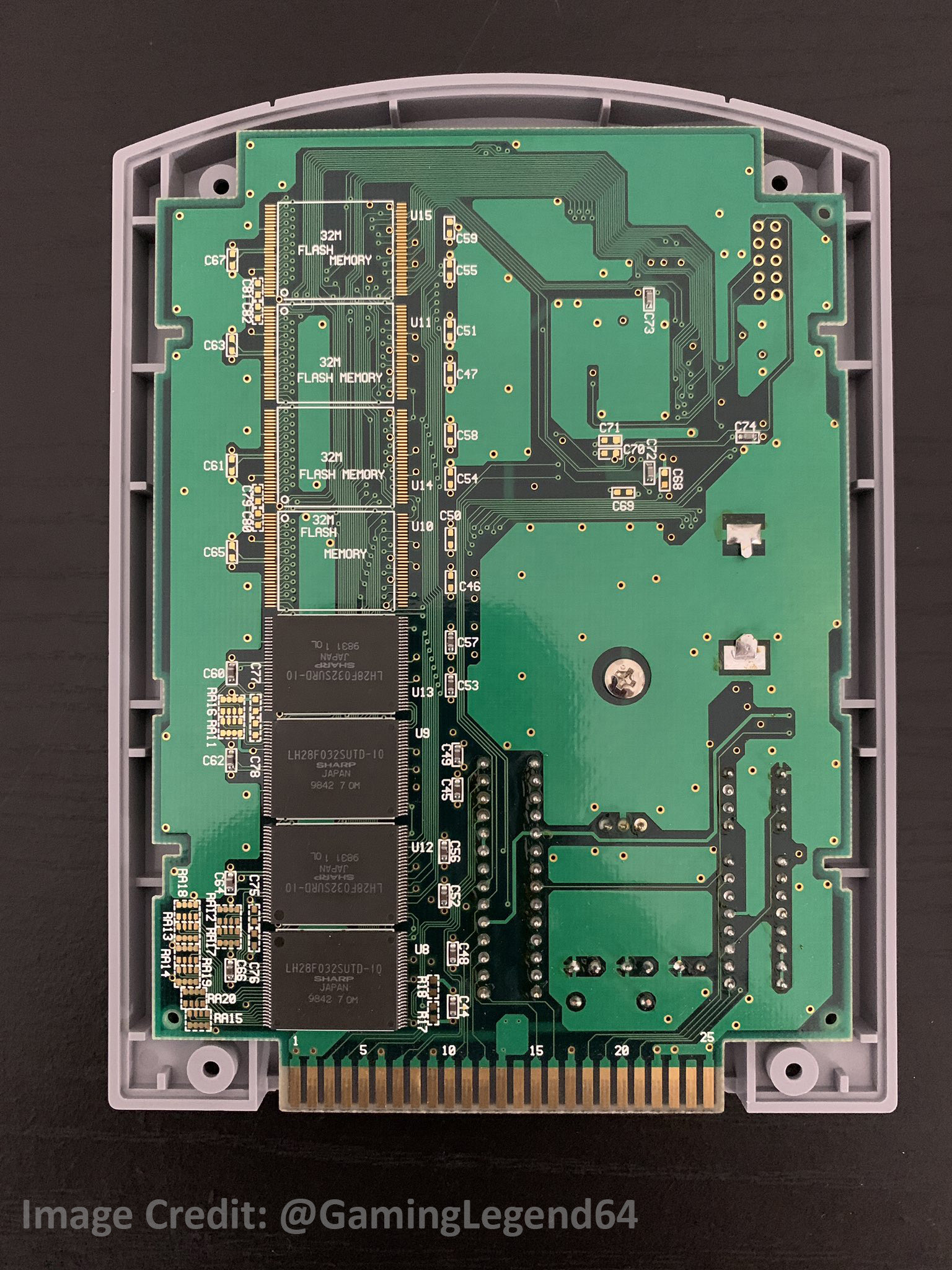
The NUS-16F32SB-01 boards can be populated with up to x16 Sharp LH28F032 32 Mbit flash chips (4MBytes each). The Altera MAX CPLD memory controller will accommodate memory up to 512Mbits.
So a 128Mbit flash cart (like the one shown above) will have x4 LH28F032 memory chips populated on the back side.
And of course, a 256MBit will have x8, and the extremely rare 512Mbit flash carts (64MBytes) have all x16 chips populated on both front and back sides of the cartridge PCBA. Again, the 512Mb cartridges are extremely rare.😎🤘#N64 #gamedev #retrogaming


BehindTheCode with Gerry retweeted
The SGI Challenge and Onyx models first came out in 1993. My deskside model was from that year. 😎👌👇

BehindTheCode with Gerry retweeted
If only X allowed more than x4 options in the poll. I’d have at least 8 kits listed…. Lol
😄👍

BehindTheCode with Gerry retweeted

MiSTer Physical CD Support v1.0.0 is out with major performance and compatibility improvements, stutter-free PSX FMVs, plus Neo Geo CD and 3DO support.
github.com/Anime0t4ku/Main_M…
Also coming to MiSTer Companion once its database refreshes.


BehindTheCode with Gerry retweeted
That’s still really cool. 👍
I recently dove into a couple courses on @pikuma website. These are really amazing! I’m still working through them, but I do highly recommend checking it out. He’s got so many cool game programming courses available. Super fun and well worth the investment.😎👌
👀👇
xitter.cf/pikuma?s=11

BehindTheCode with Gerry retweeted
Indeed!
It’s actually pretty amazing what the N64 homebrew community have been able to achieve the past few years.
The folks over at N64Brew on discord have made some pretty cool advances with the open source N64 SDK Libdragon. Their annual GameJam’s always pump out some really cool projects. Definitely check it out if you get a chance.😎🤘👇
N64Brew Discord Server invite link below:
discord.gg/nHjbc9d
BehindTheCode with Gerry retweeted
Years back some photos surfaced of a similar type of N64 addon unit. A concept design as well, but of a different design.
It was outfitted to connect to a TV via RF/composite video with stereo audio. It also appeared to use an internal IDE hard drive. 😎👌


BehindTheCode with Gerry retweeted
There was no real specific CPU model required for the Ultra64. Compatibility depended entirely on your operating system and compiler toolchain versions.
Because the actual N64 hardware (the VR4300 CPU and Reality Coprocessor) was built right onto the Ultra64 development board itself, the Indy's CPU only processed the IRIX operating system: (the MIPS C compiler (cc), and code compilation tasks.)
My setup ran IRIX V5.3, which was required for early versions of Ultra64 SDK. The Manuals recommended that your Indy workstation should use either a MIPS R4000, MIPS R4400 or MIPS R4600 to work properly with the Ultra64.
So an Indy equipped with an R4400 at 150 MHz or 175 MHz paired with 64MB to 128MB of RAM would be a safe bet. 😎🤘
I just added some more details about the debugger to the post. 👀👇
xitter.cf/_behindthecode/status/…
The debugger for the Ultra64 supported source code level debugging, and was called the "GameShop" debugger, which works through RMON; a thread injected by libultra.
RMON was later used by the ique for usb communications and debugging.😮👌
The manuals also mention that the Ultra64 had a debugger which was a graphically oriented source-level debugger called "gvd" and a separate program called "dbgif"…(the debugger interface.) This was for the hardware to communicate with the target environment on the host.
It supported various real-time analysis of registers and memory, and the ability to set breakpoints using a program called the "trap manger".


BehindTheCode with Gerry retweeted
The #Sega 32X itself that comes as part of the #SNASM CartDev development kit, is actually a Modified version.
It contains additional digital logic boards and many re-routed tie-lines to help support the debugging functionality of the system. (Reset / Interrupt signals etc.)
I’m currently working on mapping out all the needed modifications and will add all my findings to my website once completed.
😎🤘
Huge thanks to @bigevilboss for his assistance with this endeavour.
behindthecode.ca


