

What happened today in the past? 📚 Follow for a daily lesson! 🧠 Please consider supporting me via the link below 👇🙏
Joined July 2023
- Tweets9.1K
- Following61
- Followers1.5K
- Likes2.5K




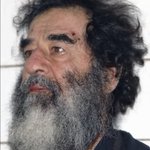


On November 5, 2006, an Iraqi court found Saddam Hussein and two of his co-defendants guilty of crimes against humanity for their roles in the persecution and killing of residents of al-Dujail in 1982: 🧵

ALT As a bailiff tried to restrain him after the verdict, Saddam Hussein shouted: "Long live the people! Long live the nation! Down with the occupiers!" Credit...Pool photo by David Furst
The verdict was upheld by the Iraqi Appeals Chamber on December 26, 2006. Saddam Hussein was executed by hanging on December 30. Barzan al-Tikriti and Awad al-Bandar were executed on January 15, 2007.

The al-Dujail trial established legal accountability for the persecution of the town's residents, but the conduct of the proceedings also raised serious questions about the fairness of the new Iraqi judicial system.
Follow the page for more daily history!
#SaddamHussein #DujailMassacre #Iraq #IraqiHistory #HumanRights #OnThisDay

ALT Samir, a 34-year-old Iraqi-American military interpreter, who helped find Saddam and pulled him from his hideaway in December 2003
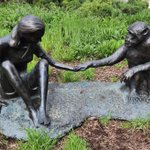
For centuries, humans were considered the only animals capable of making tools. On November 4, 1960, Jane Goodall made an observation in Tanzania that challenged that. While studying wild chimpanzees, she witnessed one using a modified piece of vegetation to extract termites from a mound: 🧵

In 1965, Goodall received a doctorate in ethology from the University of Cambridge, despite not having completed an undergraduate degree. She continued her research at Gombe for decades and established the Jane Goodall Institute in 1977 to support wildlife research and conservation.
Goodall's work fundamentally changed how scientists understood chimpanzees and their relationship to humanity.
Follow the page for more daily history!
#JaneGoodall #Chimpanzees #AnimalIntelligence #Tanzania #ScientificDiscovery #OnThisDay

ALT A sculpture of Jane Goodall and David Greybeard outside Chicago's Field Museum of Natural History