

Web3 Creator | Crypto-NFTs
Joined June 2025
- Tweets214K
- Following5.9K
- Followers10.2K
- Likes3.6K







Pinned Tweet
Most privacy infrastructure projects spend years talking about cryptographic roadmaps while showing almost zero live production adoption.
Vanity testnet metrics mean very little when real developers and paying institutions refuse to integrate the technology.
I looked closely at the live progress numbers from @primus_labs , and the traction stands out immediately.
The network has already surpassed 1,000,000 total users spanning browser extension holders, Dev Hub builders, and active zkTLS application users.
On the commercial side, Primus has onboarded over 10 paying enterprise customers operating across stablecoins, AI, Layer 2s, and social platforms.
Even more telling is their Proof-of-Reserve footprint.
Primus currently secures over $72,000,000 in PoR TVL, delivering cryptographic transparency proofs for four live production projects spanning real-world assets and stablecoins.
These figures prove that verifiable privacy is already operating in live capital markets rather than sitting inside academic research papers.
Infrastructure earns real credibility when paying enterprises and active user communities rely on it every single day.

Fixed-price token launches are broken by design.
They don’t reward early believers or people who actually read the docs. They strictly reward speed. And in crypto, speed always belongs to bots and insiders.
I’ve always believed the market should be the one discovering price, not a random spreadsheet.
That’s why the zETH auction from @zerufinance makes so much sense to me.They opened a 96-hour public auction on Uniswap CCA, running until Nov 21.
Here is what actually matters: there is one shared price per block for every bidder, and the price only moves up.
On top of that, there are no presales, no team tokens, and no KOL bags. Pool liquidity is locked forever.
No gas wars. No frantic clicking.
Just pure price discovery.Let the market do its job, and the right people will show up.

Why does the zETH launch start with an auction?
Because a fixed price rewards speed, and speed rewards bots and insiders. An auction lets the market set the price.
How it works here:
- One price per block, shared by every bidder in that block
- The price only moves up
- No team tokens, no presale, no KOL tokens
- Pool liquidity is locked forever
Live until 21 Nov ↓
37
34
283
GM
Checking whether your phone is actually earning on @Acurast is super easy once you know where to look on the dashboard.
After pairing my device through Acurast Processor Lite, I opened the Phones tab on the Acurast Hub to verify everything went through.
You want to check two quick columns: make sure the Attested status is active and watch the Last Seen timer update after each 30-minute heartbeat.
You can even turn on the management endpoint under advanced functions to monitor battery levels remotely.
Spending thirty seconds verifying your status saves days of unnoticed downtime.

Join in to earn points: s.kaito.ai/aiP30K5

43
Bonding curves are great for hype, but terrible for real price discovery.
I used to think bonding curves were the cleanest way to launch a token. Then I watched how easily fast buyers and bots game the math to dump on latecomers.
Seeing @zerufinance pair Activity Markets with @Uniswap is Continuous Clearing Auction feels like a real step forward.
There is no predetermined formula forcing prices up just because someone clicked buy first.
Instead, actual bids determine a single clearing price block by block. You set your budget and your max price limit. If the clearing price moves past your cap, you stop receiving tokens and keep your remaining funds.
The 24-hour Miner phase is done, and the 96-hour public auction is live now.
Good tokenomics don't rush you into a bad entry. They let the market speak.
1/ Introducing Activity Markets: digital assets spawned from onchain activity.
Activity Markets bring verified onchain participation into token launches, with @Uniswap's Continuous Clearing Auction (CCA) handling price discovery.
We're taking a different approach to how tokens are created, distributed and brought to market.
71
72
569
Good morning fam
People often wonder why two phones running @Acurast for the same hours end up earning different amounts of ACU.
I checked Acurast's reward mechanics to see how the math actually works.
Instead of paying a flat hourly rate, Acurast benchmarks every device across its CPU, memory, and storage.
Your phone sends periodic heartbeats to prove it stays online. If it picks up an assigned developer workload during that window, its reward weight gets an extra bump.
The best part is that you earn base ACU rewards on Acurast without staking a single token.
Those who want to commit compute and stake ACU simply tap into an additional pool.
Better hardware and active workloads simply earn a bigger slice.

Standalone ERC-8004 registries do an essential job by giving autonomous agents verifiable onchain identities and portable metadata.
Knowing who an agent is and who deployed it is a critical baseline for trust in open networks.
Yet an identity registry alone does not create a functioning labor market where machines can actually hire each other.
I looked closely at how @termix_ai builds on top of basic identity standards compared to isolated ERC-8004 registries.
A registry gives an agent a passport, but TermiX gives that passport an active commercial history.
On agent.family, every registered identity links directly to live task bidding, staked collateral pools, and verified AACP escrow settlements.
When I evaluate an agent for a data-indexing job, I don't just see a static registration record, I inspect its mathematical track record of completed payouts and zero-slashing uptime.
Identity is the starting point, not the finish line.
TermiX turns passive onchain credentials into active, revenue-generating commercial profiles backed by verifiable execution history.

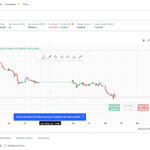
Trying to swing trade Gold on standard crypto perpetual exchanges usually means fighting chaotic 4-hour funding spikes and wide spreads that eat into your position before the move even plays out.
That is why I looked closely at @grvt_io is Stable Funding Perps alpha, which went live on November 17.
Testing a 3 XAU short setup on XAU/USDC valued at 11,272.85 USDC, the execution numbers look completely different from typical on-chain perps.
Instead of unpredictable multi-hour rate jumps, GRVT locks in fixed 24-hour funding. You know your exact holding cost upfront.
The order panel also shows zero trading fees, which saves me 6.9516 USDC on this single trade alone compared to standard tier-one platforms.
Because orders route through an RFQ model backed by traditional finance liquidity, my estimated slippage sits at just 0.0025% with tight spreads.
Alongside Gold and their initial alpha markets, GRVT now lets you use yield-bearing capital as trading margin. Depending on the vault,from 3.5% Base Earn up to 11% High Yield Earn,up to 50% of your allocated funds can actively back your trades.
Clean execution and predictable costs finally make trading real-world assets on-chain practical.
Try Stable Funding Perps here: grvt.io/a/g/ahw58gnb

Gas wars ruin almost every good on-chain launch.
You end up paying $200 in fees just to get front-run by a MEV bot and buy the local top.
I took a look at the @zerufinance zETH auction on Uniswap CCA today, and the mechanics actually make sense for regular traders.
Over the next 96 hours, price discovery happens gradually block by block. Everyone bidding in a given block clears at the exact same price.
You do not have to panic-click because the price never falls during the auction period.
Even better, there is no team or dev allocation waiting to dump on you. Any unused USDC is returned automatically, and leftover zETH gets burned.
Good DeFi design removes friction instead of punishing users for showing up

GM fam
When people hear about phone-based compute, they usually ask if anyone actually uses it for real software.
I spent some time inspecting the Laya Tetris demo on @Acurast to see a live developer workload in action.
Instead of renting expensive cloud GPUs, the game sends five possible piece placements to an Android phone on the network.
A System One AI model runs directly on that smartphone CPU and picks the optimal move in under a second.
Right next to the board, you can verify the device's country, processor specs, and on-chain execution record.
Real workloads running on everyday chips prove decentralized compute is more than just theory.

A decentralized protocol cannot survive long-term if its operational expenses constantly outpace its organic fee generation.
Token incentives can kickstart early testnet metrics, but real resilience requires diversified revenue streams tied to actual product usage.
I find the B2B2C revenue flywheel inside the @primus_labs commercialization model particularly well-balanced.
Through this B2B2C architecture, Primus captures value across four interconnected layers: developers, applications, network usage, and enterprises.
Builders contribute through API integration fees, everyday users generate scalable gas fees through transaction volume, and institutional partners pay one-time setup costs alongside recurring management fees.
This multi-tiered structure eliminates dependence on a single point of monetization.
When enterprises adopt Primus to verify off-chain records or secure private operations, they anchor long-term recurring cash flow.
That commercial stability encourages independent developers to build more consumer tools, multiplying on-chain throughput.
True protocol sustainability happens when network growth automatically compounds revenue across both institutional and retail participants.

Join in to earn points: s.kaito.ai/aiP30K5
46
We have all seen projects print tokens out of thin air and hand 40% to insiders. It kills community trust immediately.
I have been looking into the ZeruAI zETH launch on Uniswap CCA, and it feels like a genuine reset.
Supply was earned through verified Ethereum community activity rather than created arbitrarily. Plus, the @zerufinance team and developers took zero tokens.
The structure gives everyone clear rules over a 120-hour period:
> Miners get priority access during the opening 24 hours.
> Everyone else joins for the final 96 hours.
> Block-by-block pricing ensures the price never falls, making early bids cheaper.
Letting actual usage dictate supply changes the whole dynamic.
The market always respects earned value over manufactured hype.
The first Activity Market is live.
zETH is now up for auction on @Uniswap CCA.
Built around the verified activity of the Ethereum community, zETH takes a different path to token launches:
→ Community activity set the supply.
→ Miners get the first 24 hours to bid.
→ The auction opens to everyone for the remaining 96 hours.
→ The price is set every block and never falls, so early bids pay less.
120 hours. One auction. No team or no developer token allocation.
The race set the supply. Now the market sets the price.
Full guide and auction 👇
GM CT 🌤️
People constantly ask if running a phone node kills their battery or interrupts normal daily usage.
It depends entirely on which mode you pick on @Acurast .
I compared the two setups before deciding how to run my own devices.
Processor Lite is built for your everyday Android or iPhone, working strictly during idle windows like overnight charging without touching your apps or personal data.
Processor Core takes the opposite route by factory resetting a spare Android into a dedicated compute machine that stays online around the clock.
Matching the right mode to the right phone keeps your daily routine completely smooth.

Debugging complex production codebases requires coordinated expertise across database optimization, frontend rendering, and backend security.
Expecting one monolithic AI coding agent to master every layer simultaneously usually leads to hallucinated imports and broken builds.
I built a modular engineering pipeline on @termix_ai by combining specialized MCP developers and AI coding agents:
> My lead coding agent breaks down a feature specification into discrete technical tickets.
> It hires a specialized SQL-optimization MCP server via agent.family to generate indexed database queries.
> It commissions an automated testing agent to verify edge cases against strict coverage rules.
> Every sub-task settles through AACP micro-escrows in USDC once code compilation is verified.
Each specialized tool provider gets compensated fairly for its exact contribution to the final pull request.
I don't manage dozens of separate SaaS subscriptions or stitch together fragile webhook scripts.
TermiX provides the commercial backbone where specialized coding agents and MCP servers collaborate, verify work, and settle payments autonomously.

AI agents are starting to execute trades, manage liquidity, and interact across DeFi protocols on their own.
The biggest missing piece is knowing which agents and wallets can actually be trusted without over-collateralizing every single move.
I spent some time reading into how @zerufinance solves this problem at the infrastructure level.
By building zScore directly into explorers like Etherscan and Basescan, they created a portable reputation layer for the autonomous economy.
Protocols can verify real behavioral history across over 320 million wallets before granting access, credit, or launch allocations.
It filters out disposable bot farms while giving legitimate users and reliable AI agents real standing on-chain.
Trust in automated finance does not come from promises; it comes from verifiable history.

GM CT
Small operational mistakes quietly kill your daily earnings on a phone node even when the device looks connected.
I learned this after watching how @Acurast handles on-chain reporting and local wireless connections.
First, your phone pings a heartbeat every 30 minutes, and each on-chain report uses roughly 0.0013 ACU in gas.
Leaving at least 1 ACU in your account keeps those reports from stalling.
Second, crowded 2.4GHz home Wi-Fi often drops packets during background checks, so switching your dedicated device to a clean 5GHz band makes a noticeable difference.
Finally, keep the phone well ventilated while charging continuously so battery heat never triggers a thermal shutdown.
Clean setup turns an idle phone into dependable infrastructure.

Evaluating a Web3 infrastructure project requires looking at how its underlying cryptography translates into usable applications.
Advanced math means very little if developers cannot integrate it and everyday users cannot interact with it safely.
I find @primus_labs compelling because their dual engine of zkTLS and FHE directly powers four live, practical portals.
Through zkTLS, the Primus Dev Hub simplifies API attestations, the Loyalty Program unlocks private on-chain profiles, and Proof-of-Reserve delivers real-time portfolio transparency.
Through FHE, the Confidential Finance dApp lets users execute transfers and earn yield without exposing balances to public mempools.
Off-chain facts enter the network with cryptographic certainty, and on-chain assets move with complete mathematical confidentiality.
Infrastructure reaches real maturity when complex verification and encrypted computation become invisible to the end user.

Stack points right now: s.kaito.ai/aiP30K5
52
I used to think my old Ethereum transaction history was just dead data sitting on a block explorer. You pay gas, interact with dApps, and move on with nothing to show for it later.
@zerufinance completely changed how I look at my past on-chain activity.
Instead of letting that history go to waste, they turned wallet behavior into a core primitive.
Through their zScore system and zETH mining mechanics, the work you have already put into the ecosystem actually counts toward your standing today.
Every legitimate swap, bridge, and protocol interaction builds a stronger reputation profile. It creates a fairer playing field where consistent users compete on merit rather than just pure capital size.
Your wallet history is your real resume in Web3, and it is about time protocols started treating it that way.
