

Husband to One, Dad to Three, Pastor to the Saints at Foothill Bible Church.
Upland, CA
Joined March 2013
- Tweets18.4K
- Following4.5K
- Followers4.7K
- Likes38.7K







T. S. Sinclair retweeted

God's holiness means He can't change the standard.
Grace doesn't mean our best efforts are enough for heavenly reward.
We need someone else to meet that standard.
T. S. Sinclair retweeted

Brothers and sisters, “As sure as the Bible is true, God will not leave you.”
- Charles Spurgeon

T. S. Sinclair retweeted

Many Christian teachers treat the good news as though it’s bad news for Christian obedience, when in fact it’s the 𝘰𝘯𝘭𝘺 thing that enables Christian obedience.
T. S. Sinclair retweeted

“‘We were well instructed, but we feel poorly nourished.’
“Their phrasing stuck me as an apt analysis of one pitfall in preaching—
“exposition that is no more than educational instruction but never reaches the affections.”
— Sinclair Ferguson
T. S. Sinclair retweeted
In this week’s episode, @CT_Lenard is joined by @PastorPerks for part #2 of our series on the 5 Solas of the Reformation.
🔗’s to Apple, Spotify. & YouTube in comments👇🏽

T. S. Sinclair retweeted

There is no true believing or trusting to the report of the gospel, but what is the effect of the working of a divine power on the soul for that end.
- Thomas Boston
T. S. Sinclair retweeted

“I supposed it very necessary to put you in remembrance of certain points, which are: that ye well understand what these words mean…
Deeds and faith; Lest we ascribe to the one that which belongeth to the other,
and make of Christ Moses,
of the gospell the Law,
despise grace and rob faith:
and fall from meek learning unto idle despicions, brawling and scolding about words.”
- William Tyndale
T. S. Sinclair retweeted
“As God is the first and final cause of all things in the order of being, the doctrine of God is the first and final doctrine in the Reformed system of theology.
All other doctrines are derived from the doctrine of God. All other doctrines are ordered to the glory of God's name.
The governing rule of Reformed systematic theology is this: ‘From him and through him and to him are all things. To him be glory forever. Amen’ (Rom. 11:36).”
- Scott Swain
T. S. Sinclair retweeted

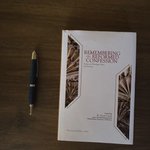
Many thanks to @RScottClark for the thoughtful gift of Remembering the Reformed Confession: Essays on Theology, Piety, and Practice, edited by @PastorPerks.
I’m looking forward to reading this collection and sharing a review on Reformed Dogmatika!

T. S. Sinclair retweeted
Horton is right. It’s shocking how many pastors have detailed views on geopolitical or cultural matters, but aren’t sure if the Nicene Creed is biblical.
“It is amazing what a lot of Christians (including many pastors) seem absolutely certain about and what they regard as up in the air.
Although there is not a single passage in the Bible that tells us what Jesus would do on a whole host of personal and social issues of morality, economics, politics, and law, we often hear confident jeremiads and assertions by the same people who express ambiguity (disguised as humility) about matters clearly addressed and treated as matters of great importance in Scripture.”
- Michael Horton

T. S. Sinclair retweeted

According to the Roman Catholic Church, justification is acquired instrumentally through the sacraments. The Reformers responded that the instrumental cause of our justification is not baptism or penance; it is faith in Christ.
T. S. Sinclair retweeted
Saving faith is the faith of God's elect; the special gift of God to them, wrought in them by his Spirit.
- Thomas Boston
T. S. Sinclair retweeted

Christ was imputed, reckoned to be a sinner, though he himself committed no sin. By the same logic, we in Christ are reckoned, counted to be righteous, though we have no deeds that should merit such a standing before God. @RevKevDeYoung
T. S. Sinclair retweeted

Either Jesus did it all, or he didn’t.
It’s either all of Christ, or it’s all of us.
We’re either trusting him or something else.
It really is that simple. And, for what it’s worth, we don’t sing, “Jesus paid a lot.”
T. S. Sinclair retweeted

Conf on adoption & sanctification, Rom 7 believer or unbeliever?, sanct: monergistic, synergistic, or a third thing?, 🌮, 📕 , etc.
scrbpc.org/
T. S. Sinclair retweeted
“What peculiarly tends to illustrate and recommend to us the eternal and unmerited grace of election is the the express testimony of sacred Scripture,
“that not all, but some only, are elected, while others are passed by in the eternal decree;
“whom God, out of his sovereign, most just, irreprehensible and unchangeable good pleasure, has decreed to leave in the common misery into which they have willfully plunged themselves, and not to bestow upon them saving faith and the grace of conversion; but permitting them in his just judgment to follow their own way;
“at last, for the declaration of his justice, to condemn and punish them forever, not only on account of their unbelief, but also for all their sins.
“And this is decree of reprobation, which by no means makes God the author of sin (the very thought of which is blasphemy), but declares him to be an [awe-inspiring], irreprehensible, and righteous judge and avenger.”
— Canons of the Synod of Dordt, I.15
T. S. Sinclair retweeted

“[Eastern] Orthodoxy’s apparent denial of original guilt and its reticence toward legal categories cannot help but lead to a denial of the imputation of Christ’s righteousness, or “justification.” … [It] fails to develop an adequate understanding of sin and, consequently, rejects juridical categories and collapses justification into [the] process of theosis.”
-Michael Horton