

✍️ Plato's Workout newsletter 🎯 Lessons in cultivating virtue from the Great Books 💼 Tech Exec, West Point grad, Western Tradition recovery
Exercise virtue →
Joined June 2009
- Tweets4.8K
- Following2K
- Followers537
- Likes1.4K




Pinned Tweet
Plato's Workout offers a classical approach to virtue and human excellence, in leadership and life.
* Goal: I help you go beyond modern self-help to cultivate virtue and achieve human excellence (arete), in leadership and life.
* Strategy: I share timeless wisdom and “transcultural truth” from the 300 Great Books of the Western Tradition, starting with the Ancient Greeks.
* Protocol: A holistic program - body, soul and mind - to exercise virtue and close the GAP to personal excellence:
Gymnastiki - body & physical excellence
Askesis - soul & spiritual excellence
Philosophia - mind & moral/intellectual excellence
Check out my Start Here post to learn more.
"How Plato, the US military and C.S. Lewis helped me find the missing piece to my daily workout.''
Why you need to add a cultural-reading workout to complement your physical and spiritual work
platosworkout.com/p/how-plat…

1
74
Most of us train our bodies. Fewer of us train our minds with the same seriousness.
Plato had a name for the person who gets both right: a virtuoso.
7
When I left the Army, I kept the morning PT habit.
I thought that was enough.
Then I re-read Plato. Turns out I was doing about a third of his leadership program.
8
To build a genuinely robust mind, you cannot afford to skip any part of the classical canon
C.S. Lewis famously advised alternating between old and new books.
“It is a good rule, after reading a new book, never to allow yourself another new one till you have read an old one in between."
My rule is simpler: cross-train your reading.
Before you dive into another modern novel, open a dialogue of Plato. Before picking up another biography of Rome’s conquerors, read an epic poem.
Specialization breeds blind spots; intellectual cross-training builds real perspective.
platosworkout.com/p/the-bigg…

Why read the Great Books: Cultivate Virtue and Human Excellence
"Real literature is something much better than a harmless instrument for getting through idle hours. The purpose of great literature is to help us to develop into full human beings." - Russell Kirk
The Great Books are not museum pieces; they are training partners.
Learning from the Great Books is a form of leverage. Very few people learn from the classics or history. But true learning is not just memorizing information. It’s changing behavior. That’s where the struggle (agon in Greek) comes from and the need to consider this type of reading more than an act of leisure but rather a real workout. Reading the Great Books well has the power to cultivate virtue.
Most importantly, Great Books reading is a way of life, not a one-off activity. Like the Marines’ professional reading list, it builds a cadence: steady, deliberate, cumulative. You read to become more capable in your virtuous vocation, more loyal in your friendships, more patient in your trials. You read to recover words for realities our age forgets—honor, magnanimity, piety, duty—and to test them against the hardest cases.
Read on to discover how you can create your own ‘’unread library" ...
platosworkout.com/p/the-grea…

35
This is a great post on ancient Greek wisdom.
Here is another way to package and manage the best ancient Greek classics for your reading list.
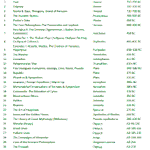
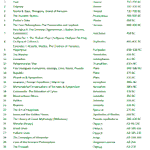
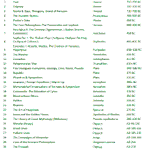
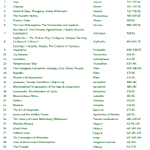
I've created a a list of the 30 best ancient Greek ''books,'' organized as actual individual books.
So instead of reading 2 books on Hesiod, you can get 1 book (241 pages) that covers the two books in the list - Works and Days and Theogony and adds a third - The Shield of Herakles.
The same logic applies to Plato's 5 dialogues (160 pages) and Plutarch's Greek lives (450 pages).
I personally love Plutarch's Noble Lives, but that work is over 1200 pages (may be daunting for some new readers).
I also added some books not on the list - like Xenophon's Cyropaedia: The Education of Cyrus and Plotinus' Enneads.


50 Greatest Ancient Greek Books Ever Written.
1. The Iliad — Homer (c. 750 BC)
2. The Odyssey — Homer (c. 750 BC)
3. Theogony — Hesiod (c. 700 BC)
4. Works and Days — Hesiod (c. 700 BC)
5. The Histories — Herodotus (c. 440 BC)
6. Oedipus Rex — Sophocles (c. 429 BC)
7. Antigone — Sophocles (c. 441 BC)
8. Agamemnon — Aeschylus (458 BC)
9. The Libation Bearers — Aeschylus (458 BC)
10. The Eumenides — Aeschylus (458 BC)
11. Prometheus Bound — Aeschylus (c. 450 BC)
12. Medea — Euripides (431 BC)
13. The Bacchae — Euripides (405 BC)
14. Alcestis — Euripides (438 BC)
15. Lysistrata — Aristophanes (411 BC)
16. The Clouds — Aristophanes (423 BC)
17. The Birds — Aristophanes (414 BC)
18. History of the Peloponnesian War — Thucydides (c. 400 BC)
19. The Apology — Plato (c. 399 BC)
20. The Symposium — Plato (c. 385 BC)
21. The Republic — Plato (c. 380 BC)
22. Meno — Plato (c. 380 BC)
23. Phaedo — Plato (c. 360 BC)
24. Timaeus — Plato (c. 360 BC)
25. Nicomachean Ethics — Aristotle (c. 350 BC)
26. Politics — Aristotle (c. 350 BC)
27. Rhetoric — Aristotle (c. 350 BC)
28. On the Soul — Aristotle (c. 350 BC)
29. Metaphysics — Aristotle (c. 350 BC)
30. Physics — Aristotle (c. 350 BC)
31. Poetics — Aristotle (335 BC)
32. The Anabasis — Xenophon (c. 370 BC)
33. Memorabilia — Xenophon (c. 371 BC)
34. Electra — Sophocles (c. 410 BC)
35. Ajax — Sophocles (c. 450 BC)
36. Against the Sophists — Isocrates (c. 390 BC)
37. Philippics — Demosthenes (351 BC)
38. On the Crown — Demosthenes (330 BC)
39. Elements — Euclid (c. 300 BC)
40. Letters — Epicurus (c. 300 BC)
41. On the Sizes and Distances of the Sun and Moon — Aristarchus (c. 270 BC)
42. The Sand Reckoner — Archimedes (c. 250 BC)
43. Geography — Strabo (c. 20 BC)
44. Discourses — Epictetus (c. 108 AD)
45. Enchiridion — Epictetus (c. 125 AD)
46. Lives of the Noble Greeks and Romans — Plutarch (c. 100 AD)
47. Moralia — Plutarch (c. 100 AD)
48. Description of Greece — Pausanias (c. 150 AD)
49. Outlines of Pyrrhonism — Sextus Empiricus (c. 200 AD)
50. Daphnis and Chloe — Longus (c. 200 AD)
1
49
How do you create a library of ancient Greek classics?
For those ambitious readers who want build a relatively complete library of the Ancient Greek cannon, I've created a list for you to help you get started.
You'll find a list of the title, author and estimate date.
I've grouped the works into individual 'book' versions that you should able to complete within one month.
Hesiod's three main works can be found in one book. The same with Plato's first five dialogues.
I've included part of Plutarch's works focused on the Greeks: Greek Lives and Hellenic Lives. Oxford publishes these with Robin Waterfield translations.
I have an even longer list that includes lyric poetry, oratory, geography, more Platonic dialogues, and additional tragedies of Aeschylus, Sophocles, and Euripides.
Let me know if interested.


50
The wisdom to really see, not just to talk or think.
“The greatest thing a human soul ever does in this world is to see something and tell what it saw in a plain way. Hundreds of people can talk for one who can think, but thousands can think for one who can see. To see clearly is poetry, prophecy and religion, all in one.”
- John Ruskin’s Modern Painters

32
Will the fans of Christopher Nolan’s The Odyssey be open to learn about the original Achilles?
There has been a lot of controversy recently about Christopher Nolan’s upcoming version of The Odyssey. Much of it has been about the ‘’rumored’’ actor playing Achilles and whether they look like Brad Pitt’s portrayal from the movie Troy (2004).
Achilles appears only briefly in The Odyssey. His most famous line is one of remorse and regret. He seems to be rejecting his heroic glory in Hades:
"I would rather follow the plow as thrall to another man, one with no land allotted him and not much to live on, than be king over all the perished dead.”
- Odyssey 11.488–491 (Lattimore)"
It’s a small but memorable role sharing the real cost of glory. Achilles would rather be alive in humble service on a farm versus ruling in Hades.
But to get the complete and full picture of Achilles you need to engage and read The Iliad.
Here are 5 lessons on leadership and life from Homer’s first hero Achilles and the men he led. 🧵 ⬇️

ALT Achilles fighting against Memnon, Leiden Rijksmuseum voor Oudheden, Public Domain
4. The Holistic Life of Warriors: Soldiers in War, Athletes in Peace
He stood upright and spoke his word out among the Argives: “Rise up, two who would endeavor this prize.’’ - Achilles, Book 23, 707-708
The Iliad is a war poem, but it is not only a war poem.
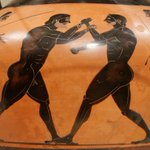
If we only see Homer’s heroes “where men win glory” between two armies, we miss another arena where virtue is tested and formed: The athletic field. The same men who stand in the front lines under a rain of spears also race chariots, box, wrestle, and throw the discus.
Homer’s heroes are soldiers in war and athletes in peace.
Their bodies are not just instruments of killing, but instruments of competition, training, and ritual. In the funeral games for Patroklos in Book 23, we see the fullest picture of this holistic life: warlike energy is channeled into ordered contests; rage becomes ritual; individual honor becomes communal bonding.
Go now, and honor the death of your companions with contests. - Nestor to the Greek warriors, Book 23, 646
This warrior‑athlete ideal challenges us to train our whole selves, to recognize role‑specific excellence, and to build arenas of fair competition where character is forged long before the crisis comes.
In our world, we often separate “sports” from “serious life.” Homer does not. For him, contests are a microcosm of the city. The way men race chariots and throw spears reveals how they will lead, follow, and reconcile. ➜

ALT Boxers, side B from an Attic black-figure amphora of Panathenaic shape, circa 520 BC Public Domain.
1
1
52
5. The Transformation of Achilles — From Rage to Humility
So he spoke, and stirred in the other a passion of grieving for his own father.
He took the old man’s hand and pushed him
gently away, and the two remembered,
as Priam sat huddled
at the feet of Achilleus and wept close for manslaughtering Hektor
and Achilleus wept now for his own father,
now again for Patroklos.
The sound of their mourning moved in the house.
- Book 24, 507-514
The Iliad begins with the rage of Achilles; it ends with the tears of Achilles. The arc of the poem is the arc of this man’s soul. By Book 24, after all the broken oaths, ruined bodies, and funeral fires, Homer brings us into the quiet interior of Achilles’ transformation.
The “best of the Achaeans” is no longer simply the man “where men win glory,” but the man who has learned how to weep, to pity, and to honor an enemy as a fellow mortal.
Book 24 gives us the Iliad's most astonishing scene: Achilles and Priam, killer and victim's father, alone together in a tent at night, weeping. This is not the Achilles we met in Book 1, threatening to kill his own commander. This is not the Achilles of Book 22, dragging Hector's corpse behind his chariot in savage triumph. Something has changed.
The greatest warrior of the Greeks moves from uncontrolled wrath to something far rarer in epic literature: genuine compassion for an enemy. The poem opens with Achilles dishonoring a priest and a king; it closes with Achilles honoring a father and a corpse.
For us, the lesson is clear: The greatest leaders are those who can be transformed by suffering, who can extend mercy without losing strength, and who remember that all of us—friend and foe alike—are bound by the same mortal fate.

ALT Priam at the feet of Achilles, Jérôme-Martin Langlois, Priam aux pieds d'Achille, 1809, Paris, Ecole Nationale Supérieure des Beaux-Arts. Public Domain
1
36
Tom Pappas retweeted
I reread The Republic first to find my way out of the cave, and later to remember why I should go back in.
The first time I read The Republic, it felt like an escape plan: how to break free from illusion and see clearly.
Reading it again later in life, it feels more like a responsibility.
Not just to leave the cave, but to return—to face the darkness again, help others question the shadows, and accept that they may resist the light.
It’s not just a story about awakening. It’s about what you owe once you’ve awakened.

This week West Point grads celebrate their alma mater’s birthday (16 Mar 1802).
Local West Point societies worldwide hold events to honor the academy’s history and graduates’ sacrifices.
It’s a great time to reflect on what makes it a special institution that we can all learn from … in leadership and life!
@WestPoint_USMA

What makes West Point the preeminent leadership development institution in the world?
Discover the 11 timeless principles that shaped the leadership of Generals, Presidents and CEOs... (thread) 🧵

113


Cool timeline of the Western Roman Empire! But where’s the Eastern half (Byzantine Empire) that survived until 1453? Full Rome needs both.
Not only culturally but theologically as well.
Pope John Paul II coined the metaphor of the Church (and our culture) needing to “breathe with her two lungs,” referring to the complementary Eastern and Western Christian traditions for the Church’s full vitality.
Map of the Byzantine Empire (the Eastern Roman Empire) in 1025. It was the last year of Emperor Basil II’s reign


