





Matthew Yang retweeted

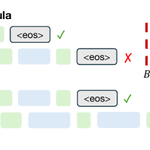
Multi-Token Prediction (MTP) can be done much better.
🚀 Turn out,you can recover the gradient for KL self-distillation to next-token prediction (NTP) for free without ever computing the KL. You just need a one-line code change:
h_ntp += h_mtp.detach() - h_mtp
Soft Multi-Token Prediction is pretty much a free lunch for MTP.
📜 Paper: arxiv.org/abs/2610.38331
💻 Code: github.com/JaydenTeoh/Soft-M…
🤗 HuggingFace: huggingface.co/papers/2610.3…

ALT Soft Multi-Token Prediction Illustration
Matthew Yang retweeted

Machine Studying on the Weaviate Podcast 🎙️ thanks @CShorten30!
(yall can tell I had a great time there from the thumbnail!)

What should 24/7, "always on" agents actually be doing when nobody is asking them for anything? 👾♻️
I am SUPER EXCITED to publish the 148th episode of the Weaviate Podcast featuring Jacob X. Li (@jacobli99), a Ph.D. student @MIT_CSAIL! 🔥
Jacob's paper frames the answer as Machine Studying. Similarly to how a student prepares for an exam they haven't seen, an agent studies a corpus (code base, drug discovery papers, system logs, ....) without knowing the downstream task! 📚📝
Instead of leaning entirely on inference-time compute, can an agent build arbitrarily deep understanding ahead of time?
I loved the paper's definition of expertise. An expert efficiently uses inference-time compute, measured as the area under the performance-vs-compute curve of a ReAct agent loop. Studying intelligence! 📐
Jacob lays out three bets every studying method makes: synthetic data, weight updates (LoRA, KV-cache cartridges, a trained retriever), and amortized context like notes and cheat sheets. 🛠️
We also discussed why evaluation as a science matters once recursive self-improvement happens in domains with no benchmark at all. 🧪
This was a super fun conversation, I learned so much from Jacob, and I really hope you find it interesting!
YouTube: youtu.be/9iZIl0vZvvk
Spotify: spotifycreators-web.app.link…

Matthew Yang retweeted

This is Genie 4, our most realistic and interactive world model yet. 🌐
Explore dynamic environments in real time to see how the scene responds, sounds, and how the people in it move, react, and speak.
Matthew Yang retweeted

We found a way to scale humanoid control that reduces GPU-hours by more than 1000×.
Across 129,514 motions, SuperMimic surpasses the state of the art (128 GPUs, 7 days) with 1 GPU in 3 hours.
Project: supermimic.github.io
Demo: supermimic.github.io/demo/
Matthew Yang retweeted

How about having some fun with this "𝐋𝐨𝐨𝐩𝐞𝐝 𝐌𝐨𝐝𝐞𝐥 𝐀𝐭𝐥𝐚𝐬"? 📖
Fold depth into temporal recurrence, watch connections flow like a magic circle, and see how each paper handles its KV cache.
Safe travels! Don't get lost in the Sea of Recurrence 🌀
Link below 👇
Matthew Yang retweeted

We're open-sourcing RL360, the RL infrastructure behind K2 Horizon's six domain experts: 8,192 concurrent sandboxes, 150 steps in 7 days, ~1.3M rollouts.
Long-horizon agentic RL runs thousands of agents in real sandboxes on tasks that take minutes. Some of those sandboxes crash mid-task, and a crash arrives as the same low score as a wrong answer.
Without infrastructure that can keep up, GPUs are underutilized and the model gets penalized for system crashes rather than its own mistakes.
RL360 is built for this. We share how it works, what broke at scale, and what we learned in the thread.
Code: github.com/ifm-ai/RL360
Run: wandb.ai/mbzuai-llm/rl360-pu…


Matthew Yang retweeted

🚀 Introducing DeepInfer, our in-house inference framework, now fully open source!
Powering DeepSeek-V4.1-Flash at scale with high throughput and low latency. We’re sharing our production stack to help the community lower compute costs, reduce energy use, and make AI more affordable.
🔗 github.com/deepseek-ai/DeepI…
1/4

Matthew Yang retweeted

1/11 Can a single-token importance weight preserve the target of full-sequence correction? With Future-KL, we prove that both updates share the same unique stationary policy. We also contribute the promising empirical results we observed.
arxiv.org/abs/2610.18738
Matthew Yang retweeted

Surprising new results:
Giving tools to LLMs makes them less able to say NO!
We tested 11 multimodal LLMs (Claude, GPT, Gemini, ...). With tools, every one fails to refuse harmful requests more often, up to 68.7% more!
Details and possible reasons 🧵
To appear at NeurIPS’26.

Matthew Yang retweeted

How much do LLMs’ watermarks distort your output? 🔍
We present SimpleMark: a fast multi-bit text watermark that bounds the distortion of every token to a chosen f-divergence budget. Our watermark’s text distribution stays statistically close to what the model would have written without a watermark while remaining competitive in all benchmarked performance categories.
Matthew Yang retweeted

We’re releasing a broad range of new mathematical results produced by an internal frontier model.
We’ve been consulting with the independent Advisory Group on Mathematics and Artificial Intelligence at the Institute for Advanced Study, and we have drawn on their advice and public recommendations to inform how we release these results.
github.com/openai/math

Matthew Yang retweeted

Is Jev secretly learning a Value function?
A model can always choose “A” without being certain that “A” is correct. That distinction matters when an agent must decide whether to act fast or switch to deeper reasoning.
We spent some time exploring:
1. How Jev fits into System 1/2 decision-making and why calibration matters for knowing when to switch
2. Why maximising expected reward in RL does not guarantee calibrated probabilities.
3. How predicting eventual task success in agentic tasks connects to a familiar RL quantity: the Q-function.
Could value prediction help build a calibrated System 1—and could that be part of the story behind Jev?
Link: souradip-chakraborty.github.…
#Jev #RLCD #System1

Matthew Yang retweeted

SFT is not dead! 🥳
We found a way to make SFT rival current prevailing posttraining methods, often generalizing better and forgetting less than RL and OPSD. 🤯
Following our prior work on reasoning with sampling, we now introduce sampling to the posttraining stack.
1/n
Matthew Yang retweeted
🔁 𝐖𝐡𝐚𝐭 𝐢𝐟 𝐥𝐨𝐨𝐩𝐞𝐝 𝐋𝐌𝐬 𝐜𝐨𝐮𝐥𝐝 𝐮𝐬𝐞 𝟑× 𝐟𝐞𝐰𝐞𝐫 𝐩𝐚𝐫𝐚𝐦𝐞𝐭𝐞𝐫𝐬 𝐚𝐧𝐝 𝐚 𝟑× 𝐬𝐦𝐚𝐥𝐥𝐞𝐫 𝐊𝐕 𝐜𝐚𝐜𝐡𝐞 𝐚𝐧𝐝 𝐬𝐭𝐢𝐥𝐥 𝐛𝐞 𝐜𝐨𝐦𝐩𝐚𝐫𝐚𝐛𝐥𝐞 𝐭𝐨 𝐚 𝐬𝐭𝐚𝐧𝐝𝐚𝐫𝐝 𝐓𝐫𝐚𝐧𝐬𝐟𝐨𝐫𝐦𝐞𝐫?
Introducing 𝐑𝐞𝐭𝐡𝐢𝐧𝐤𝐢𝐧𝐠 𝐚𝐭 𝐅𝐢𝐱𝐞𝐝 𝐏𝐨𝐢𝐧𝐭𝐬. We argue that looped LMs don't have to pay for every loop. They can scale by adding FLOPs at constant memory.
The key is the fixed point of the loop. We introduce:
– 𝐅𝐢𝐱𝐞𝐝-𝐏𝐨𝐢𝐧𝐭 𝐒𝐡𝐨𝐫𝐭𝐜𝐮𝐭𝐬: what fixed points buy a looped model in training (pre-training, post-training) and inference (prefill, decoding)
– A 𝐥𝐞𝐚𝐫𝐧𝐞𝐝 𝐝𝐞𝐩𝐭𝐡 𝐩𝐫𝐢𝐨𝐫 and 𝐨𝐫𝐭𝐡𝐨𝐠𝐨𝐧𝐚𝐥 𝐢𝐧𝐣𝐞𝐜𝐭𝐢𝐨𝐧: two ways to shape those fixed points
🧵 Long thread ahead (0/n).

Matthew Yang retweeted
🥳 xLLM intro video, made entirely by Claude Opus 5.5.
Best viewed on desktop; on mobile, rotate to landscape.
(Sorry, the voice is robotic; better one next time.)

Matthew Yang retweeted

Wrote a short blog about the "shape" of language models, and the tradeoffs they may present in the future. I genuinely think it's a valuable research direction to start thinking about now, especially w.r.t. harness design.
alexzhang13.github.io/blog/2…

Matthew Yang retweeted

Starting tomorrow, our lab will hold an open-source week: 2 software frameworks, 4 papers, all building a coherent ecosystem.
The theme: Frontier AI on Hardware You Own
Blog post: timdettmers.com/2026/09/21/d…
SoTA results in:
Autocompaction
Autonomous Research
Model compression
Test-time scaling
Deep Research
And a healthcare RL environment giving you a new level of complexity to train healthcare agents.
The ecosystem that we will release is built to be as usable as possible. Agent sessions that run overnight and go on for tens of millions of tokens is made easy. Model compression of a model is automatic: you just get a good model that runs fast locally -- no expertise required. An autonomous research that works out of the box.
Our ecosystem enables a new level of work that can be done locally.