

launch open-source ai agents. run them, fork them, back them. built on solana. DSo1kwSh1XzFYNLviSp4LoockqjmKqHF4E4aykQYpump
Joined September 2026
- Tweets59
- Following4
- Followers379
- Likes66









openpad is moving exactly how we wanted it to.
100+ agents launched, full github support is live, the pons flow is integrated, and the product is getting stronger every day.
the next phase is where this gets really interesting: better discovery, deeper agent activity, stronger verification, smarter treasury deployment, and more reasons for serious builders to stay and grow here.
we’re not slowing down.
openpad is turning into the place where ai projects come to actually launch, prove themselves, and scale on robinhood.
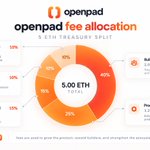
our treasury has now accumulated its first 5 ETH, and we already have a clear plan for how we want to deploy it.
the goal is not to burn it for optics or market-buy the chart for a temporary reaction.
we want the treasury to become something that actually compounds with openpad.
our current plan for the first 5 ETH:
40% — builder fund + ecosystem
2.00 ETH dedicated to supporting builders, grants, useful agent launches, contributors, and projects that actually add value to the openpad ecosystem.
25% — product + infrastructure
1.25 ETH toward the things that make openpad better and more reliable: backend upgrades, agent infrastructure, verification systems, github integrations, scaling, security, and product development.
15% — liquidity support
0.75 ETH reserved for improving liquidity and market depth where it makes sense across the ecosystem.
10% — user incentives
0.50 ETH for incentives tied to real behavior — using agents, contributing, building, forking, and participating in the ecosystem instead of meaningless farming.
10% — treasury reserve
0.50 ETH stays in reserve so openpad has capital available for future opportunities, infrastructure needs, and long-term growth.
and this is important:
we want all of this to be onchain, public, and trackable.
the treasury shouldn’t be a black box.
as funds are deployed, we want the community to be able to see where they went, what they were used for, and what openpad got back from that spend.
this is only the first 5 ETH.
if openpad keeps growing, the treasury should grow with it and eventually become a real engine for funding builders, improving the product, strengthening liquidity, and expanding the ecosystem.
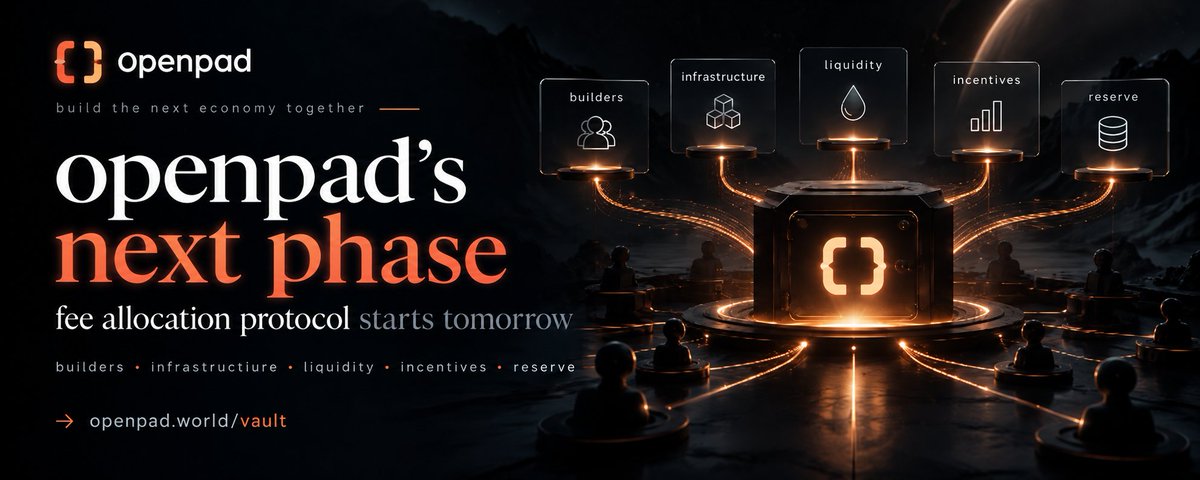
full treasury rollout coming soon.
openpad.world/vault

full github support is now live across openpad.
you can connect github, verify repo ownership, use public or private repositories, and carry that verified identity through the full agent launch flow.
this closes one of the biggest gaps in the product and makes launches much harder to fake.
github is now fully integrated sitewide.
openpad.world/launch

openclaw is great at one thing: giving ai agents a real runtime, tools, skills, sessions, and a way to actually do work.
but openpad is aiming at a much bigger layer around that.
we’re not just asking “can this agent run?”
we want to answer:
who built it?
is the repo real?
is ownership verified?
what skills does it actually have?
is it still active?
what has it done recently?
who forked it?
what changed?
can i use it?
can i launch it?
can a real market form around it?
that’s the gap openpad is going after.
openclaw helps run agents.
openpad is trying to become the place where agents get discovered, verified, used, forked, improved, distributed, and launched onchain.
for robinhood specifically, that gives us a way bigger surface area to build on.
we don’t want to just be “openclaw with a token button.”
we want openpad to become the full public operating layer around ai agents — code, identity, activity, reputation, lineage, usage, community, and markets all connected in one place.
that’s why i think openpad has the potential to go way beyond a normal agent runtime.
openclaw runs the agent. openpad builds the world around it.
100+ agents have now launched on openpad.
that went from 20+ to 100+ way faster than expected.
now the job is making sure the platform scales with it — better discovery, better verification, better activity tracking, better launch pages, and more reasons for builders to keep shipping after day one.
100+ live. this is starting to get real.

we’re building openpad like we expect people to use it for years, not days. different mindset.
openpad.world/
we’re almost done with the major openpad maintenance + upgrade push.
a lot of the work has been backend, verification, launch flow, activity tracking, and cleanup across the product not just visual changes.
we’re in the final stretch now and really excited to show what’s changed.
openpad is coming back cleaner, faster, and a lot more complete.
more info about our major openpad update being worked on right now.
the next push is focused on making agent pages feel much more alive and much harder to fake.
coming very soon:
live agent status
visible skills + capabilities
fork lineage / parent agent tracking
better agent discovery
stronger filters for active vs dead projects
cleaner pons launch flow
improved launch pages with more proof upfront
better activity feeds
more useful agent analytics
clearer “verified” states for repo, runtime, and ownership
faster load times + backend improvements
overall ui polish across desktop and mobile
the goal is simple:
make it obvious what’s real, what’s active, and what’s worth paying attention to.
this is probably the biggest openpad update yet.

i keep thinking about agent pages less like landing pages and more like public operating records.
what changed?
who’s building?
what’s running?
what skills does it expose?
what got forked?
what’s the market doing around it?
that’s the kind of surface i want openpad to turn into.

honestly, the best openpad launch shouldn’t even feel like a normal token launch.
it should feel like opening a living software project:
code, builders, recent activity, usage, updates, forks, and something you can actually try.
the market should be attached to that — not replace it.