

Crypto Enthusiast • Web3 Guy • Defi • AI • RWA • Gamefi • Multichain Analysis • Marketing Strategist • NFA • Threador 🧵🦅
space
Joined November 2010
- Tweets24.3K
- Following2.6K
- Followers21.1K
- Likes39.1K


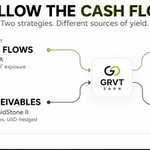


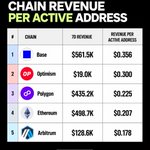

Pendle’s opportunity is making tokenized assets useful beyond simply holding them. Tradable yield gives onchain capital more ways to generate value.
spacebyte ⛓ retweeted

One of my stronger convictions in RWA-Fi is that @pendle_fi is positioning itself at the forefront of the next wave of onchain capital markets.
We're talking about trillions $$$ in potential tokenised asset supply over the coming years, but bringing assets onchain is only half the equation.
The real opportunity lies in unlocking their productivity once they're there.
Its obvious that Pendle is increasingly becoming a fundamental layer for that.
A few developments worth highlighting:
1. From yield tokenisation to broader asset productivity
PTs have already established themselves as a core DeFi primitive for fixed-yield exposure + capital-efficient looping strategies.
With PendleLoop, that utility is expanding beyond traditional yield-bearing assets into leveraged exposure across BTC, ETH + tokenised equities.
Tokenised stock long strategies on @base now integrate borrowing through @aave, (up to ~4.2x leverage) enabling users to trade yield expectations towards helping them deploy capital more efficiently across different asset classes.
2. Becoming a value discovery layer for RWAs
From tokenised treasuries + private credit to AI infrastructure, reinsurance + equities, Pendle has reportedly listed 100+ RWA markets YTD.
*FYI: RWAs now account for >80% of its TVL.
What stands out is the breadth of exposure being brought into DeFi.
As more institutional assets come onchain, Pendle provides a venue where their yields can be priced, traded + incorporated into broader DeFi strategies.
Tokenisation creates asset availability, yield markets help turn that availability into financial utility.
3. Institutional credibility as a compounding advantage
The growing roster of asset managers is particularly notable:
🔸 Janus Henderson (deJAAA)
🔸 Franklin Templeton (FLHYon)
🔸 Partners Group (NGI+)
🔸 Bitwise (PPLUS)
Alongside its RWA Insights series featuring institutions such as Grayscale, Pendle is building relationships with some of the most established names entering tokenised finance.
This matters wayy beyond the immediate TVL contribution.
Institutional relationships bring credibility + differentiated asset supply, which can attract more liquidity, improve market depth + strengthen Pendle's position as a destination for future RWA listings.
And that's where the reinforcing flywheel gets interesting.
More institutional assets → broader yield markets → deeper liquidity + capital utility → greater incentive for new issuers to participate.
Ofc, the flywheel depends on actual market demand + sustainable liquidity, not simply the number of listings.
But the direction is pretty clear.
As tokenised assets proliferate, the opportunity increasingly shifts from who can bring assets onchain to who can make those assets productive.
Pendle is building a pretty compelling position at that intersection.
A 24/7 yield discovery layer for an increasingly onchain financial system.
Best part of this? We're still vv early in this transition.
Pendle 🫡

Same gold, different prices.
On October 27, @Tether’s XAUT traded at a 0.16% discount to spot gold, while @Paxos’ PAXG traded at a 0.05% premium.
That’s a 0.21 percentage-point gap between two tokens backed by the same commodity.
Their market values also differ considerably:
→ XAUT: $2.97B
→ PAXG: $1.77B
PAXG offers monthly reserve attestations and direct redemption fees starting at 0.125%. XAUT provides quarterly attestations and charges 0.25% for direct redemption.
But for retail holders who aren’t redeeming physical bullion, execution price and secondary-market liquidity could outweigh those differences.
XAUT has the larger market presence, while PAXG offers more frequent reserve reporting.
At what price difference would you actually choose one over the other?

I’d watch whether XAUT supply holds steady through further downside. Low redemptions suggest holders aren’t rushing out, but concentrated minting could reflect a few large buyers rather than broad demand.
The multipliers could influence where traders route orders. The real question is whether the extra points outweigh the fees and execution costs of switching venues.
Crypto doesn’t need another blockchain. It needs protocols that put existing infrastructure to work.
That’s the idea behind @Oly_Dao.
OLY combines ETH staking through Lido, Uniswap liquidity fees and trading-tax revenue to build around real DeFi activity.
Now, it’s expanding its role on Robinhood Chain, where $OLY already trades against tokenized NVIDIA and Tesla stocks, alongside BTC and ETH.
These markets need liquidity to function well. OLY wants to become one of the chain’s largest liquidity providers.
But the next chapter raises another question: why is a DeFi protocol creating the Bank of OLY with just 1,000 NFT Charters?
That’s the part I’m curious to learn more about.
🤝 Paid partnership

The key distinction is whether rewards come from sustainable external revenue or depend on trading taxes generated within the same ecosystem. For Oly, I’d track how much each source contributes and whether liquidity provision remains profitable when trading activity cools.
spacebyte ⛓ retweeted

.@Raydium’s revenue more than tripled in Q3, but memecoins are no longer its biggest source of swap fees.
According to Blockworks Research, Raydium generated $8M in net revenue during Q3 2026, with tokenized assets becoming its largest source of swap fees.
The numbers:
+ Q3 net revenue: $8M
+ Revenue growth: More than 3x
+ Annualized net revenue: $32M
+ Largest swap fee category: Tokenized assets
For a DEX historically tied to Solana’s speculative trading cycles, the changing revenue mix is arguably more important than the growth itself.
Consider $1B in trading volume.
+ At 5 bps: $500K in gross swap fees
+ At 20 bps: $2M in gross swap fees
That’s four times the fee generation without any increase in volume.
Of course, gross swap fees aren’t Raydium’s net revenue. LP allocations and protocol take rates determine how much the business retains.
But this illustrates how a different trading mix can improve fee generation without requiring equivalent growth in volume.
Tokenized assets also introduce different liquidity requirements, market-making costs and trading behavior, so their long-term profitability remains unproven.
Still, Raydium is developing another meaningful revenue source beyond memecoin trading.
If that continues across market cycles, it could change how investors assess Raydium’s business and the economics behind $RAY.

The fee mix shift is the bigger signal here. If tokenized assets can sustain higher-value trading beyond speculative cycles, Raydium could build a steadier revenue base, but repeat volume and LP profitability will determine whether that growth lasts.
Private companies now have trillion-dollar valuations trading on crypto exchanges, even before their shares become publicly available.
Anthropic’s IPO filing has brought these markets back into focus, and October 27 data shows how differently exchanges are pricing exposure to Anthropic and OpenAI.
Anthropic’s last reported funding valuation was $965B. Its perpetual markets are now implying almost twice that amount.
→ @extendedapp : $1.877T (+94.5%)
→ @variational_io : $1.877T (+94.5%)
→ @binance : $1.880T (+94.8%)
→ @bitget : $1.882T (+95.0%)
→ @Lighter_xyz : $1.934T (+100.5%)
OpenAI shows a similar pattern against its last reported $852B valuation.
→ Extended: $1.410T (+65.5%)
→ Variational: $1.411T (+65.6%)
→ Binance: $1.413T (+65.8%)
→ Bitget: $1.438T (+68.7%)
→ Lighter: $1.501T (+76.1%)
What’s striking is how much the prices differ between exchanges.
Anthropic’s implied valuation varies by approximately $58B across these venues. For OpenAI, the difference reaches $90B.
And liquidity tells another part of the story.
Binance has around $50M in open interest on its Anthropic contract, compared with $2.4M on Lighter and just $24K on Extended.
So one of the lowest quoted valuations comes from a market with very little outstanding exposure.
These contracts aren’t private shares. They’re derivatives whose prices depend on liquidity, funding rates, margin requirements and settlement terms.
Without a publicly traded underlying share price to anchor arbitrage, large pricing differences can persist.
Pre-IPO perps are bringing continuous price discovery to private companies, but a quoted valuation is only as meaningful as the liquidity and settlement mechanics behind it.

Tokenized equities need more than an onchain ticker. They need assets people can actually use.
@Swisscheese_fn is building on Polygon, combining tokenized stocks with swaps, staking and borrowing. Its security measures include smart contract audits, cold storage, encrypted data and 2FA.
Reliable pricing, liquidity and compliance will determine how far this model can go.
With $SWCH listed on MEXC and Gate.io, SwissCheese is building its presence in the wider crypto market.
The goal is to make stocks functional assets within DeFi, not just put them onchain.

The separation between raw footage and the finished 3D model is important for privacy, but coverage quality will determine whether buyers can actually use the output. How does Vangrid handle disputed captures when a requester rejects a reconstruction that meets the submission requirements?
Funding can quietly turn a profitable trade into a mediocre one over time. Yield-bearing margin helps address the idle-capital problem, but the real comparison is net return after funding, borrowing costs and liquidation risk.
TPS is a capacity metric, not proof of value. For prediction markets, the stronger signal is whether more participants improve accuracy and produce useful signals without letting whales or thin liquidity distort the odds.
I’d call it a reshuffle for now, not a decline in the category. The bigger question is whether crypto-native prediction markets can retain users when regulated platforms offer easier access, especially in sports. Total volume can grow while the original venues lose relevance.
You’ll need to check through Forever’s official mint page or ask @0xMontBlanc to confirm whether there’s a wallet eligibility checker. With only 500 NFTs, I’d verify your wallet before mint day and avoid any unofficial links asking you to connect or sign transactions.
spacebyte ⛓ retweeted

𝗧𝗼𝗸𝗲𝗻𝗶𝘇𝗲𝗱 𝘀𝘁𝗼𝗰𝗸𝘀 𝗮𝗿𝗲 𝗺𝗼𝘃𝗶𝗻𝗴 𝗯𝗲𝘆𝗼𝗻𝗱 𝗵𝗼𝗹𝗱𝗶𝗻𝗴 𝗮𝗻𝗱 𝘁𝗿𝗮𝗱𝗶𝗻𝗴.𝗬𝗼𝘂 𝗰𝗮𝗻 𝗻𝗼𝘄 𝗯𝗼𝗿𝗿𝗼𝘄 𝗮𝗴𝗮𝗶𝗻𝘀𝘁 𝘁𝗵𝗲𝗺 𝗮𝗻𝗱 𝗯𝘂𝗶𝗹𝗱 𝗹𝗲𝘃𝗲𝗿𝗮𝗴𝗲𝗱 𝗲𝗾𝘂𝗶𝘁𝘆 𝗽𝗼𝘀𝗶𝘁𝗶𝗼𝗻𝘀 𝗱𝗶𝗿𝗲𝗰𝘁𝗹𝘆 𝗼𝗻𝗰𝗵𝗮𝗶𝗻.
I spent some time researching the latest development from @pendle_fi, and what caught my attention wasn't just the leverage. It was how three pieces of financial infrastructure are now working together on Base.
On October 22, Pendle introduced PendleLoop, allowing eligible users to build leveraged positions in tokenized US equities through @aave V4.
The supported assets include:
• AAPLc — Apple
• NVDAc — Nvidia
• GOOGLc — Alphabet
• TSLAc — Tesla
• AMZNc — Amazon
• MSFTc — Microsoft
• METAc — Meta
Here's what I found.
➊ 𝗙𝗶𝗿𝘀𝘁, 𝗵𝗼𝘄 𝗱𝗼𝗲𝘀 𝘁𝗵𝗲 𝗹𝗲𝘃𝗲𝗿𝗮𝗴𝗲 𝘄𝗼𝗿𝗸?
@aave already introduced lending markets for these equities in September.
@pendle_fi didn't create a new lending market. It built an interface that combines the transactions required to increase exposure.
Instead of manually buying tokens, supplying collateral, borrowing and repeating the process, users can manage the position through PendleLoop.
The mechanism works like this:
→ Purchase a tokenized stock.
→ Supply the tokens as collateral on $Aave V4.
→ Borrow $USDC against that collateral.
→ Use the borrowed $USDC to purchase additional stock tokens.
→ Repeat within the permitted collateral limits.
The result is a larger equity position than the capital initially committed.
At launch, available leverage ranged from approximately 2.6x to 4.2x, depending on the asset.
But leverage isn't free. Borrowing rates are variable, and a decline in collateral value can trigger liquidation.
➋ 𝗪𝗵𝗮𝘁 𝗮𝗰𝘁𝘂𝗮𝗹𝗹𝘆 𝗯𝗮𝗰𝗸𝘀 𝘁𝗵𝗲𝘀𝗲 𝘁𝗼𝗸𝗲𝗻𝗶𝘇𝗲𝗱 𝘀𝘁𝗼𝗰𝗸𝘀?
This is another detail worth understanding.
@coinbase Tokenized Stocks aren't simply synthetic assets following equity prices.
Each token represents a certificate issued by Coinbase Onchain SPV Ltd, with underlying shares held through Alpaca Securities (an SEC-registered broker-dealer).
The issuer holds those shares under a trust arrangement for token holders.
Corporate actions are also accounted for.
For example:
Dividends are reinvested into additional underlying shares (after applicable fees and taxes),rather than distributed directly to token holders.
This means the tokens provide economic exposure to the underlying equities, although their legal rights and redemption arrangements differ from holding ordinary shares through a brokerage account.
➌ 𝗡𝗼𝘄, 𝘄𝗵𝗮𝘁 𝗮𝗯𝗼𝘂𝘁 𝘁𝗵𝗲 𝗹𝗲𝗻𝗱𝗶𝗻𝗴 𝗺𝗮𝗿𝗸𝗲𝘁?
Aave V4's Equities Hub on @base supports the seven stocks as collateral for USDC borrowing.
At launch, the market had approximately:
• $29M in aggregate equity collateral caps.
• $32M USDC supply cap.
• $21M USDC borrow cap.
• Collateral factors ranging from 65% to 79%.
These are market limits, not actual deposits or borrowing volume.
And the collateral factors matter because they determine how much borrowing capacity each asset receives.
A token with a lower collateral factor generally requires more collateral for the same loan.
This also explains why PendleLoop cannot offer identical leverage across every stock.
➃ 𝗪𝗵𝗮𝘁 𝗱𝗼𝗲𝘀 𝘂𝘀𝗶𝗻𝗴 𝗣𝗲𝗻𝗱𝗹𝗲𝗟𝗼𝗼𝗽 𝗰𝗼𝘀𝘁?
Pendle is currently waiving its service fees on eligible non-PT looping positions until December 31, 2026.
However, that doesn't eliminate the cost of leverage.
Users still face:
• Variable USDC borrowing interest
• Transaction costs and slippage
• Liquidation risk when collateral values decline
Pendle has also announced borrowing incentives distributed through @Merkl_xyz.
Those incentives can reduce effective financing costs for qualifying positions, but they shouldn't be treated as permanent income.
➎ 𝗢𝗻𝗲 𝗿𝗶𝘀𝗸 𝗜 𝘁𝗵𝗶𝗻𝗸 𝗱𝗲𝘀𝗲𝗿𝘃𝗲𝘀 𝗺𝗼𝗿𝗲 𝗮𝘁𝘁𝗲𝗻𝘁𝗶𝗼𝗻
The lending market operates 24/7, but the underlying US stock market doesn't.
Aave uses Chainlink's tokenized equity price feeds, which publish prices 24/5.
During weekends and US market holidays, the feeds retain their last published prices.
That creates a pricing gap:
• A stock could experience a major development outside regular market hours
• while its onchain collateral valuation remains unchanged until the feed updates.
For leveraged positions, a sharp repricing when the feed resumes can become a liquidation problem.
So 24/7 access doesn't mean continuous price discovery or protection from market gaps.
✦ Conclusion
What I find significant is how the responsibilities are divided:
→ @coinbase handles the tokenized equity structure.
→ @aave provides the collateral and borrowing infrastructure.
→ @pendle_fi makes the transactions accessible through one interface.
Each component existed before this integration, but combining them reduces the work required to use tokenized equities in DeFi. And I think that distinction matters.
Issuing more tokenized stocks doesn't necessarily create more demand for them. The stronger test is whether holders are willing to supply those assets as collateral, borrow against them, and maintain positions after promotional incentives expire.
That's what I'll be monitoring:
▸ collateral deposits
▸ actual borrowing demand
▸ utilization
▸ how these markets behave during periods of equity volatility
Because the ability to tokenize a stock has already been demonstrated. Whether that stock can support a liquid, sustainable lending market is the more important question.
