




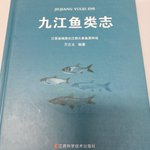





孔夫子で自分の購入の購入した本のリストが見れることに気づき、300冊を超えていたことを初めて知った。
他のところで買ったものも合わせると中国の淡水魚関係だけで400冊近い蔵書があるかも。

1
22
979


ヨシノボリニュース2
韓国のゴクラクハゼがR. koreensisとして新種記載。
ただし済州島のだけは日本と同種R. similis。

#NewSpeciesAlert - 𝑅ℎ𝑖𝑛𝑜𝑔𝑜𝑏𝑖𝑢𝑠 𝑘𝑜𝑟𝑒𝑒𝑛𝑠𝑖𝑠, a new species of paradise goby (Gobiidae), is described from the inland rivers of South Korea.
🔒 link.springer.com/article/10…
"While recent international taxonomic databases have synonymized several East Asian populations under 𝑅. 𝑠𝑖𝑚𝑖𝑙𝑖𝑠, our integrative analysis reveals that certain Korean populations are phenotypically and genetically distinct."
𝗥𝗲𝘀𝗲𝗮𝗿𝗰𝗵 𝗧𝗶𝘁𝗹𝗲
A New Species of the Paradise Goby (𝑅ℎ𝑖𝑛𝑜𝑔𝑜𝑏𝑖𝑢𝑠, Gobiidae) from Inland Freshwaters of Korea
𝗖𝗶𝘁𝗮𝘁𝗶𝗼𝗻
Moon, I.J., Yun, S.W. & Park, J.Y. A New Species of the Paradise Goby (𝑅ℎ𝑖𝑛𝑜𝑔𝑜𝑏𝑖𝑢𝑠, Gobiidae) from Inland Freshwaters of Korea. J. Ichthyol. (2026). doi.org/10.1134/S00329452256…
𝗔𝗯𝘀𝘁𝗿𝗮𝗰𝘁
Fishes of the genus 𝑅ℎ𝑖𝑛𝑜𝑔𝑜𝑏𝑖𝑢𝑠 are widely distributed across the Korean Peninsula, including inland freshwater systems and Jeju Island. While recent international taxonomic databases have synonymized several East Asian populations under 𝑅. 𝑠𝑖𝑚𝑖𝑙𝑖𝑠, our integrative analysis reveals that certain Korean populations are phenotypically and genetically distinct.
Here, we describe these unique populations as a new species, 𝑅ℎ𝑖𝑛𝑜𝑔𝑜𝑏𝑖𝑢𝑠 𝑘𝑜𝑟𝑒𝑒𝑛𝑠𝑖𝑠 sp. nov. This species is distinguished from its congeners by a suite of morphological characteristics: a relatively small body size (approximately 40.0 mm standard length (SL)), adult males possessing broad yellow transverse stripes on the dorsal and caudal fins, and seven to eight reddish-brown longitudinal stripes on the caudal fin. Diagnostic features also include numerous yellow spots on the mid-lateral scales, several short transverse rows in row a, and a uniserial row in the posterior half of row c of the cutaneous sensory papillae on the cheek. Furthermore, 𝑅. 𝑘𝑜𝑟𝑒𝑒𝑛𝑠𝑖𝑠 is morphometrically distinguished from its closely related congeners by a narrower body width at the anal fin origin (13.0% SL), shorter pectoral fin (23.2% SL), longer caudal fin (24.7% SL), larger eye diameter (25.2% head length (HL)), narrow interorbital width (3.8% HL), and a shorter snout (31.0% HL).
Phylogenetic analysis based on mitochondrial DNA confirms that the Korean 𝑅. 𝑘𝑜𝑟𝑒𝑒𝑛𝑠𝑖𝑠 population forms a robust, monophyletic clade distinct from those in Japan and China, supporting its recognition as a separate evolutionary unit despite low interspecific genetic distances.
𝗣𝗵𝗼𝘁𝗼 𝗖𝗿𝗲𝗱𝗶𝘁
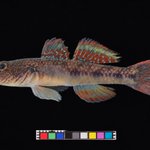
Preserved specimens of 𝑅ℎ𝑖𝑛𝑜𝑔𝑜𝑏𝑖𝑢𝑠 𝑘𝑜𝑟𝑒𝑒𝑛𝑠𝑖𝑠, ( a ) male, ( b ) female.
© 2026 the Author(s). Published in the Journal of Ichthyology.
#NewSpecies #Ichthyology #Taxonomy #Biodiversity #AquariumHobby #Fishkeeping #Aquarist #TropicalFish #ParadiseGoby #Rhinogobius #Gobiidae #TeamGoby #Gobies #Korea #SouthKorea #Goby

ALT Preserved specimens of 𝑅ℎ𝑖𝑛𝑜𝑔𝑜𝑏𝑖𝑢𝑠 𝑘𝑜𝑟𝑒𝑒𝑛𝑠𝑖𝑠, ( a ) male, ( b ) female.
ヨシノボリニュース1
四川のヨシノボリ新種。
szechuanensisの色違い。
#NewSpeciesAlert - 𝑅ℎ𝑖𝑛𝑜𝑔𝑜𝑏𝑖𝑢𝑠 𝑚𝑒𝑛𝑔𝑦𝑎𝑛𝑔𝑒𝑛𝑠𝑖𝑠, a new species of river goby (Gobiidae) is described from the Tuojiang River and the Minjiang River, two tributaries of the Changjiang River, Sichuan Province, southwestern China.
🔓 zookeys.pensoft.net/article/…
𝑅ℎ𝑖𝑛𝑜𝑔𝑜𝑏𝑖𝑢𝑠 𝑚𝑒𝑛𝑔𝑦𝑎𝑛𝑔𝑒𝑛𝑠𝑖𝑠 occurs sympatrically with 𝑅ℎ𝑖𝑛𝑜𝑔𝑜𝑏𝑖𝑢𝑠 𝑠𝑧𝑒𝑐ℎ𝑢𝑎𝑛𝑒𝑛𝑠𝑖𝑠 in the Minjiang River basin, representing a sympatric sister-species pair.
𝗥𝗲𝘀𝗲𝗮𝗿𝗰𝗵 𝗧𝗶𝘁𝗹𝗲
𝑅ℎ𝑖𝑛𝑜𝑔𝑜𝑏𝑖𝑢𝑠 𝑚𝑒𝑛𝑔𝑦𝑎𝑛𝑔𝑒𝑛𝑠𝑖𝑠: a new species of freshwater goby (Teleostei, Gobiidae) from Sichuan Province, southwestern China
𝗖𝗶𝘁𝗮𝘁𝗶𝗼𝗻
Liu X, Chen Z-G, Shu Y-F, Huang J-H, Liu K, Yu Y (2026) 𝑅ℎ𝑖𝑛𝑜𝑔𝑜𝑏𝑖𝑢𝑠 𝑚𝑒𝑛𝑔𝑦𝑎𝑛𝑔𝑒𝑛𝑠𝑖𝑠: a new species of freshwater goby (Teleostei, Gobiidae) from Sichuan Province, southwestern China. ZooKeys 1280: 333-347. doi.org/10.3897/zookeys.1280…
𝗔𝗯𝘀𝘁𝗿𝗮𝗰𝘁
A new species of freshwater goby, 𝑅ℎ𝑖𝑛𝑜𝑔𝑜𝑏𝑖𝑢𝑠 𝑚𝑒𝑛𝑔𝑦𝑎𝑛𝑔𝑒𝑛𝑠𝑖𝑠 sp. nov., is described from the upper Changjiang River basin in Sichuan Province, China, based on comparative morphology and molecular phylogeny. The new species is sister to 𝑅ℎ𝑖𝑛𝑜𝑔𝑜𝑏𝑖𝑢𝑠 𝑠𝑧𝑒𝑐ℎ𝑢𝑎𝑛𝑒𝑛𝑠𝑖𝑠 Tchang, 1939 and can be distinguished from its congeners by the following combination of characters: absence of sensory canals and pores on head; cheeks and operculum without spots or stripes; second dorsal fin with 9–11 longitudinal rows of inverted V-shaped or dash-like brown markings; incomplete brownish edges on flank scales below second dorsal fin; branchiostegal membrane bright yellow.
𝗘𝘁𝘆𝗺𝗼𝗹𝗼𝗴𝘆
The species is named after its type locality, Mengyang Town. The authors suggest 濛阳吻虾虎鱼 (méng yáng wěn xiā hǔ yú) as a Chinese vernacular name.
𝗣𝗵𝗼𝘁𝗼 𝗖𝗿𝗲𝗱𝗶𝘁
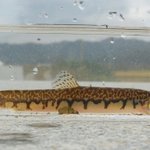
Top - 𝑅ℎ𝑖𝑛𝑜𝑔𝑜𝑏𝑖𝑢𝑠 𝑚𝑒𝑛𝑔𝑦𝑎𝑛𝑔𝑒𝑛𝑠𝑖𝑠 sp. nov. alive. A . Male, Tuojiang River basin (holotype, IHB 0202506006); B . Female, Tuojiang River basin (Paratype, IHB 0202506007); C . Male, Qingyijiang River basin; D . Female, Qingyijiang River basin.
Bottom - Comparison of the colouration between 𝑅ℎ𝑖𝑛𝑜𝑔𝑜𝑏𝑖𝑢𝑠 𝑠𝑧𝑒𝑐ℎ𝑢𝑎𝑛𝑒𝑛𝑠𝑖𝑠 and 𝑅ℎ𝑖𝑛𝑜𝑔𝑜𝑏𝑖𝑢𝑠 𝑚𝑒𝑛𝑔𝑦𝑎𝑛𝑔𝑒𝑛𝑠𝑖𝑠 sp. nov. A. 𝑅ℎ𝑖𝑛𝑜𝑔𝑜𝑏𝑖𝑢𝑠 𝑠𝑧𝑒𝑐ℎ𝑢𝑎𝑛𝑒𝑛𝑠𝑖𝑠; B. 𝑅ℎ𝑖𝑛𝑜𝑔𝑜𝑏𝑖𝑢𝑠 𝑚𝑒𝑛𝑔𝑦𝑎𝑛𝑔𝑒𝑛𝑠𝑖𝑠 sp. nov.
© 2026 the Author(s). Published in the journal ZooKeys. This is an Open Access article, distributed under the terms of the Creative Commons Attribution 4.0 International (CC-BY-4.0) licence.
creativecommons.org/licenses…
#NewSpecies #Ichthyology #Taxonomy #Biodiversity #AquariumHobby #Fishkeeping #Aquarist #TropicalFish #Rhinogobius #TeamGoby #FreshwaterGobies #Gobies #Goby #China #ChangjiangRiver #SichuanProvince #Gobiidae

ALT Liu X, Chen Z-G, Shu Y-F, Huang J-H, Liu K, Yu Y (2026) 𝑅ℎ𝑖𝑛𝑜𝑔𝑜𝑏𝑖𝑢𝑠 𝑚𝑒𝑛𝑔𝑦𝑎𝑛𝑔𝑒𝑛𝑠𝑖𝑠: a new species of freshwater goby (Teleostei, Gobiidae) from Sichuan Province, southwestern China. ZooKeys 1280: 333-347. https://doi.org/10.3897/zookeys.1280.188225


zse.pensoft.net/article/1521…
Iksookimia longicorpaとI. hugowolfeldiは遺伝的分化がかなり小さく、後者は前者のシノニムではないか。さらにこれらとより分化した集団があり、未記載種ぽい...とのこと。

あーこれクロダハゼなんだ。

Q.生態園の生きものの中で“推し”とその理由は?
A.魚類担当研究員K「クロダハゼ。かわいいし、分類も生態もよくわからなくて面白いから。」
#千葉県立中央博物館 #生態園35年展 #研究員の推しの生きもの

