
Doutor em Economia(FGVSP) com sanduíche(visiting research student) no St Antony’s College, Oxford. Católico. Mainstream Economics .Prof deEconomia na PUCSP.
são paulo
Joined June 2009
- Tweets29.4K
- Following1.1K
- Followers1.2K
- Likes26.1K







antonio carlos alves dos santos retweeted
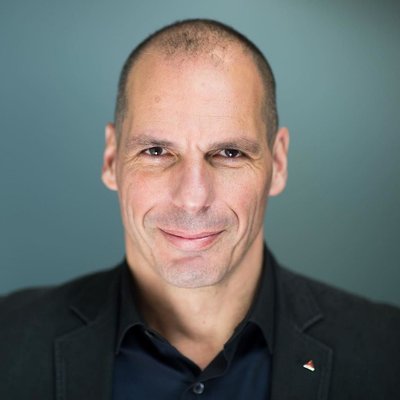
I am going to write something below that should be seen as the musings of one who celebrated – and still celebrates – Lula’s victory over Bolsonaro Jr. Here it goes:
I cannot for the life of me justify why o why Brazil’s courts had to demand of Bolsonaro that he hands over his passport the moment he lost the election. That he disputed the veracity of the election result is a sign of a faulty character, evidence that he is a bad loser. BUT, he had every right to being a bad loser; to dispute, rightly or wrongly, any result.
As for the argument that he was being investigated for other misdemeanours or crimes, that doesn’t wash either: What would have happened if Bolsonaro had won the election? Would the judges also prevent him from travelling abroad, as President-elect? I very much doubt that – which means that the judges were conflating executive and judicial powers.
To those who tell me that the Bolsonaro clan is a fascistic, criminal family, my reply is: You and I may very well think that. Alas, the judiciary has no right to use its powers to indict and to pursue someone because – or immediately after – they lost an election. It is shameful, to be precise. And it is also dangerous for those of us on the left who know what it means to be banned and hounded by rogue judges and police commissioners.
But I also have a message to Bolsonaro supporters, or those sitting on the fence, who assume that Lula is somehow behind the judges. He is not! This is the same court that imprisoned, falsely, Lula himself. What we have in Brazil is a judiciary that overreaches and habitually crosses the line that ought to separate judicial from political power.
It is such a shame that a judge took it upon himself to go after Bolsonaro on the eve of his defeat and, in doing so, to sully Lula’s stupendous victory.
One last point that my comrades in Brazil should note: If Bolsonaro and Rubio wanted to mount a campaign against Lula and Brazilian democracy they could never have been aided better than by that judge’s reckless writ.

WHAT LULA’S RE-ELECTION TELLS US: The Class War Need Not End in Fascism
On Sunday, Brazilians did something that the commentariat had told us was a lost cause. On the eve of his eighty-first birthday, Luiz Inácio Lula da Silva, a former metalworker, turned the Trumpist, evangelical, neofascist, Zionist tide in Latin America to get re-elected President of Brazil.
Three weeks earlier, he had come second in the first round, behind Flávio Bolsonaro, son and political heir of the man who trumpeted the merits of fascism, who had embraced Trump as his lord and master, who plotted a cynical coup against Brazilian democracy – moreover, the main candidates that were eliminated were rightists whose voters were meant to move to Bolsonaro. Yesterday, Lula overturned this deficit and won with a margin of nearly four and a half million votes.
I want to use Lula’s victory to tell a broader story. A story about a war, the class war that the few are waging against the many across the Western world. And a story about how that war need not end, as so many now fear, in a neofascist revival.
THE HIDDEN CLASS WAR
“There’s class warfare, all right,” Warren Buffett once said, “but it’s my class, the rich class, that’s making war, and we’re winning.” Mr Buffett was not exaggerating. For almost four decades, Western governments and central banks have pulled every policy lever in the same direction: to make the assets of the few burgeon at the expense of the incomes of the many.
Consider the numbers. Between 1952 and 1988, economic growth explained nearly all the gains of the West’s stock market. From 1989 onwards, growth explains only about a quarter. The largest share, around 40 per cent, came from income diverted from workers to shareholders. Another third came from cheaper money and lower perceived risk. That is not wealth creation. It is wealth extraction: a transfer from those who work to those who own, inflated by cheap money and paraded on the evening news as “a strong economy”.
Then look at the rescues. 2001, 2008, 2020, the British gilt crisis of 2022, Silicon Valley Bank in 2023: each time, the state rushed in to save the asset holders. Together they reveal the rule: to save the economy, you must save the wealth of those who own it – not those who produce stuff, not even productive companies. In the United States, the top tenth own almost 90 per cent of all shares. The Fed and the US federal government insure it for them, doing ‘whatever it takes’ to prop them up whenever their prices tank. The rest of us in the West pay the premium, in the form of the austerity that always follows the bailout.
And the owners need never sell. Why do billionaires pay so little tax? Because they do not earn incomes - they accumulate capital gains, taxed only when sold. So they borrow against their soaring assets at 1 or 2 per cent and live on the loan. Then they die and pay no tax on their capital gains, passing on the loot to their kids at ridiculously low inheritance taxes. Meanwhile, to pay bills and put food on the table, the worker borrows on a credit card at 20 per cent, her debts the mirror image of their fortunes.
Then, a large chunk of these accumulating assets seek even higher rents in places like Brazil where the US government intervenes to ensure that the local governments will also place the defence of these assets’ values above all else.
CAPITAL IS NOT A THING, NOT MERELY AN ASSET
Why does austerity keep returning, even though it is economically self-defeating? Marx tells the story of Thomas Peel, who in 1829 sailed to Western Australia’s Swan River with £50,000 of provisions and three hundred working-class men, women and children. On arrival, his workers walked off into the bush and worked for themselves. Peel had brought money, tools and labour, but he could not bring capitalism along, because his workers had an alternative.
Capital, Marx concluded, is not a thing but a social relation: the power of those who own to get those who don’t own to do things they’d rather did not do. Austerity is not an economic policy. It is a disciplinary device, keeping the many sufficiently insecure and indebted to accept whatever is on offer. The ruling class’s deepest fear is not inflation or debt. It is to end up like Peel: rich, but without the power to compel.
IS FASCISM INEVITABLE?
Here is the part of the story that keeps so many of us awake at night. When centre-left politicians, from Bill Clinton, Barack Obama and Tony Blair to Gerhard Schröder, Francois Hollande and Andy Burnham abandoned the language of class, a void opened up in the working-class heartlands of the West. Into that void stepped a venomous storyteller with a century of experience in filling such voids: the recalcitrant far right, the rebranded fascists. They offer left-behind workers a story of dignity, then redirect their fury away from the owner who shipped their factory abroad or sold their council house to some fund and towards the migrant next door. It does not end the class war. It merely divides one side – the workers – to rule over them. It camouflages it.
From the red suburbs of Paris to south Piraeus, from England’s red wall to Italy’s rust belt in Taranto, from the American rust belt to eastern Germany, the pattern seems relentless. And so, a fatalism has set in: the class war waged from above, we are told, must inevitably end in a neofascist, racist, misogynist revival.
Brazil has just refuted this fatalism. Brazil knows the monster intimately. It lived through four years of Jair Bolsonaro, with his nostalgia for the military dictatorship. On 8 January 2023, his followers stormed the Congress, the Supreme Court and the presidential palace. Brazil’s far right is not a fringe. Unlike Trump’s rag tag storm troopers, they had years of running a dictatorship. It won the first round of this election. They had the White House fully behind them, while the US Democrats, once again demonstrating their irrelevance, stayed mute. And yet, yesterday, they were defeated.
How? Not by hand-wringing about “populism”, nor by a centrist promise to manage the status quo more efficiently. Lula won because he did what the Western centre-left forgot how to do: he spoke the language of class, and backed it with policies that shifted power, however modestly, from the few to the many. His government exempted those earning up to five thousand reals a month from income tax and paid for it with a minimum tax on the very richest. During Brazil’s G20 presidency, it proposed a global minimum tax on billionaires. When Lula tells Brazilian workers that the elites have rigged the game, he points his finger upwards, at the rentier and the speculator, not sideways, at the migrant or the poor.
PIX – AN EXAMPLE OF AN ANTI-OLIGARCHY DIGITAL TOOL
But the most innovative weapon in Brazil’s arsenal is one that few outside Latin America have heard of. It is called Pix.
Every time you tap a card to pay for a coffee, a toll is levied. Visa, Mastercard and the banks take a cut, often 2 or 3 per cent, from every transaction. Multiply this by billions of purchases a day and you grasp one of the most lucrative rent-extraction machines ever devised. These are not profits made in competitive markets but rent extracted by those who own the digital rails on which our economic lives now run. It is part of what I call technofeudalism.
Unlike Britain, Europe or, of course, America, Brazil’s central bank moved to limit this rabid exploitation. It launched an alternative: a public, instant payment system, free for individuals and with capped fees for merchants. A Brazilian pays a street vendor in Salvador or sends money to her mother in Recife, instantly, using Pix from her phone, with no card company or bank taking its slice. Brazilians took to it with astonishing enthusiasm. Last year, Pix processed almost 80 billion transactions and overtook credit cards as the most popular way to pay online.
Pix is, in effect, the Swan River of the digital age. It gave tens of millions of Brazilians, including the poorest, who had never had a bank card, an alternative to the toll booths of Big Finance. And, like Peel, the toll collectors did not take it lying down. This summer, Washington imposed 25 per cent tariffs on most Brazilian exports, and its trade representative explicitly named Pix as a grievance, complaining that it “unfairly disadvantaged” American payment companies! The most powerful government on Earth deployed its trade arsenal against a free public service for being too successful at denying rents to Visa and Mastercard.
Lula did not blink. He defended Pix as a Brazilian public good, and Brazilians rewarded him for it. Here, at last, is a concrete example of limiting the power of Big Business, Big Finance and Big Tech: not with slogans, but by building public digital infrastructure that removes the opportunity to extract rent in the first place.
NOT A REVOLUTION, BUT AN AUSPICIOUS PORTENT
Let me not romanticise. Lula is no revolutionary. His margin was narrow. Brazil’s Congress remains in the grip of agribusiness and evangelical blocs. Its central bank still keeps interest rates punishingly high, a weapon of the class war if ever there was one. Lula himself has compromised much too much with these vested interests, and lost support as a result.
But Brazil has shown three things the rest of us must learn. First, the class war waged against the many does not have to end in fascism. Fascism wins only when the left vacates the battlefield of class. Second, a progressive government can win by pointing upwards, at those who extract rent, rather than downwards, at those who suffer. And third, Big Business can be defeated, at least forced to lose some battles, by building public alternatives to its rent-extracting machines.
So, here is the challenge to Britain, to Europe, to the people of the United States.
-Build your own Pix: public payment rails that end the tolls of Visa and Mastercard.
-Tax capital gains, ill-gotten wealth that is, not just income.
-Make every rescue conditional, with the public receiving real, permanent equity in return.
-Create a public investment bank as an alternative to the bond markets. Restore the bargaining power of the workforce. And give working people what Peel’s workers found at Swan River: an alternative, and the freedom to say no.
Buffett was right. There is a class war, and his class has been winning hands down. But yesterday, in Brazil, it lost a battle though not the war. It lost because a working-class president dared to name the war and fight it using weapons fashioned to defend the many.
unherd.com/2026/10/why-lula-…

antonio carlos alves dos santos retweeted

"What is the nature of metaphysics?" leiterreports.com/2026/10/28…

antonio carlos alves dos santos retweeted

Netanyahu’s victory is a huge problem for those who wanted him as the scapegoat for the horrors of last three years. After all the Israeli public reelected him - and all the other war criminals

antonio carlos alves dos santos retweeted

Brazil's Federal Police issues a statement that Flavio Bolsonaro is not considered a "fugitive" from justice because he has not been charged with any crimes and there was no order issued for his arrest when he left Brazil for the US.
Part of the motive here is to explain away the embarrassment that Brazilian authorities had no idea what was going on in their country all day, but it is also true that -- contrary to many prevailing media and political narratives in the US -- Flavio has not been charged with (let alone convicted of) crimes and no arrest order had yet been issued when he left.


A pacificação do pais passa pela aposentadoria do Kassio e do Moraes. O resto é papo pra boi dormir…
No catolicismo popular, o sofrimento aceito é caminho de redenção. Lula e Bolsonaro aprenderam isso em casa: a prisão vira cruz, e a cruz anuncia a volta. Eduardo e Flávio cresceram longe dessa matriz. Para eles, sofrer é só perder. Por isso deixaram o país
antonio carlos alves dos santos retweeted

The use of Marxist terminology and jargon phrases sharply increased after 1917 as per ngram, thereby lending support to the thesis that Lenin put Marx on the map.

antonio carlos alves dos santos retweeted

The two most relevant questions about Flávio Bolsonaro's decision to flee to the United States are: 1. How will Brazil's right reorganize? 2. How will it impact US-Brazil relations, which are already rocky?
antonio carlos alves dos santos retweeted
The US today is the refuge of every international criminal. Quite something
antonio carlos alves dos santos retweeted

One in prison. Two in self-imposed exile. And three in congress. What a peculiar family.
antonio carlos alves dos santos retweeted

This is a very compelling read.
theconversation.com/friday-e…

antonio carlos alves dos santos retweeted
Flávio Bolsonaro has left Brazil after losing to Lula, defying a Supreme Court travel ban while under investigation for money laundering. It’s an opening for São Paulo governor Tarcísio de Freitas, long seen as the right’s best bet against Lula, to lead the opposition.
antonio carlos alves dos santos retweeted
Brazil is only two weeks away from developing nuclear weapons
antonio carlos alves dos santos retweeted
Brazilian authorities and media are trying to find out where Flavio Bolsonaro is.
Brazil's notorious authoritarian Judge Alexandre de Moraes -- before the votes were counted -- already had an order prepared to seize Bolsonaro's passports and bar him from leaving the country even though **he's been charged with no crime** (there are various pending financial investigations). Moraes signed the order barring Bolsonaro from leaving Brazil SEVEN MINUTES after Lula was declared the winner on Sunday night.
A media outlet in Argentina this morning reported that Bolsonaro entered Argentina to fly to the US. His friends and allies deny this, but Flavio could easily just appear in Brazil or even by video and has not done so. Argentina is being sketchy, evasive and somewhat uncooperative with Brazil's federal police (Lula and Milei are obviously not allies).
Whatever else is true, it is not exactly a sign of a healthy, normal or functioning democracy when the candidate who narrowly loses a presidential race -- and concedes defeat -- is suddenly barred from leaving the country by a Supreme Court Judge now globally notorious for censoring, imprisoning and otherwise persecuting his critics and opponents of Lula's government. It is also worth noting that Bolsonaro's party dominates the Senate, having run on a vow to impeach Moraes, and this is seen by many as a kind of leverage/hostage ploy by Moraes to cling to power.
Derrotada a barbarie neopentecostal é preciso focar novamente no STF. Moraes e Kassio não tem condições de continuar no STF. Aposentadoria seria a opção menos traumática.
antonio carlos alves dos santos retweeted

I think B16’s language skills were under appreciated by a lot of people bc he was so shy…
antonio carlos alves dos santos retweeted

🚨 NEW: Respect Orders are now live across England and Wales
People who cause harassment, alarm or distress to others can receive bans from town centres, anger management courses or unlimited fines
Anyone who breaches an Order can be arrested and jailed for up to 2 years